
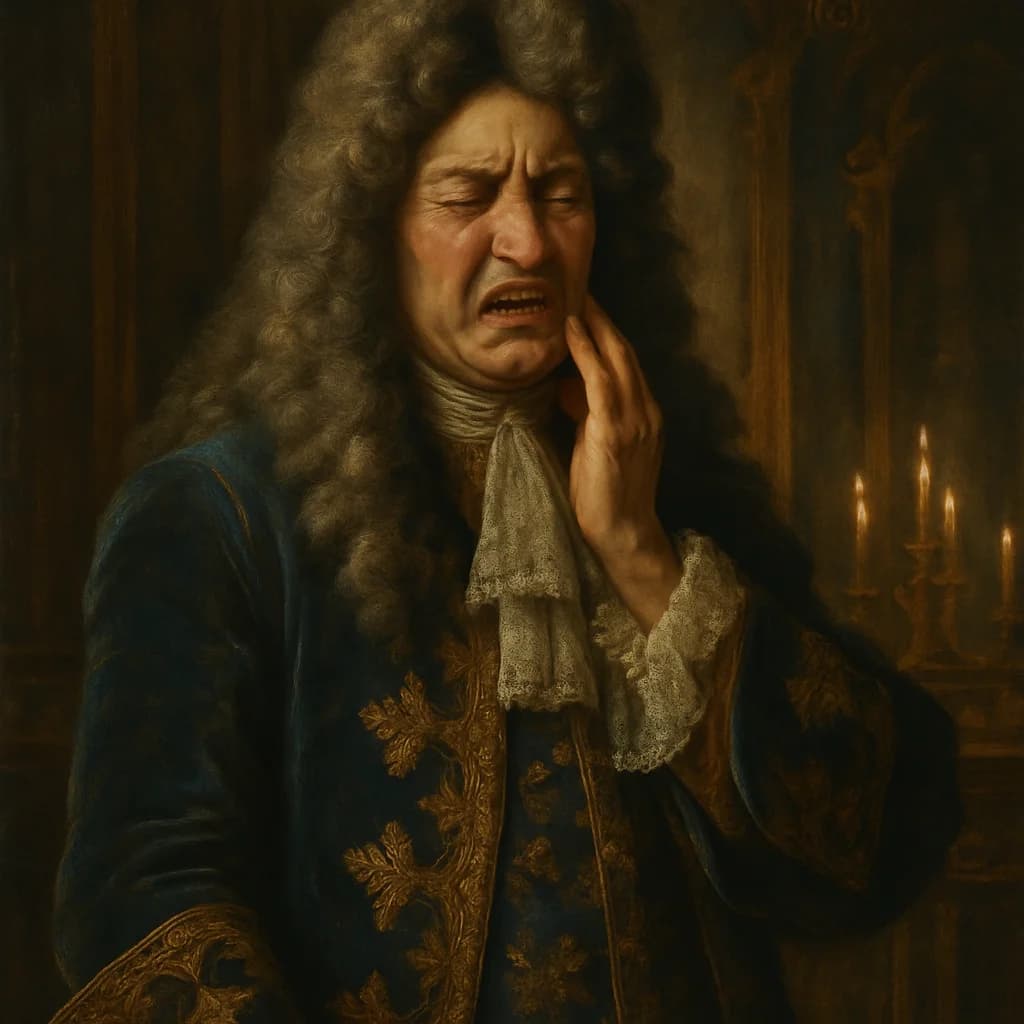
Louis XIV
The Sun King spent more on his teeth than most kingdoms spent on their armies.
Louis XIV lost his first tooth at age eight and his last one at sixty-eight, enduring six decades of excruciating dental procedures that shaped both his personality and his policies. Court physicians regularly pulled his teeth without anesthesia, cauterized his gums with red-hot irons, and once accidentally punctured through to his nasal cavity during a particularly brutal extraction. The king's chronic dental agony explains his obsession with soft foods, his development of elaborate court etiquette as distraction therapy, and his notorious temper tantrums that terrified European diplomats.
This physical suffering drove Louis to construct Versailles not as a mere palace, but as the world's most expensive medical distraction. Every mirror, every garden path, every ceremonial bow was designed to occupy his mind during moments when the pain became unbearable. The famous Hall of Mirrors served a practical purpose: Louis could monitor his facial expressions to ensure courtiers never witnessed his wincing. His insistence that nobles attend his morning lever wasn't royal vanity. It was calculated performance art, forcing him to maintain composure despite constant agony.
The king's dental disasters had profound political consequences. His 1688 decision to revoke the Edict of Nantes, driving French Protestants into exile, came during a period of particularly severe oral surgery. His war-making became more erratic as his mouth pain intensified, leading to the ruinous War of Spanish Succession that bankrupted France. Court records show that diplomatic meetings were scheduled around his dental appointments, and foreign ambassadors learned to read the king's jaw movements to gauge France's negotiating position.
By his death in 1715, Louis had spent more on dental procedures than the annual revenue of most German principalities. His final words, reportedly about his teeth hurting, encapsulated a reign where personal suffering and imperial grandeur became inseparably intertwined.
Louis XIV's dental problems were so severe that he could only eat soup and soft bread for the last fifteen years of his life, forcing French court cuisine to innovate entirely new cooking techniques that later influenced global culinary traditions.
Why untold: Medical records were considered too undignified to preserve in official royal histories, and later historians focused on his political achievements rather than the physical realities that shaped his decision-making.
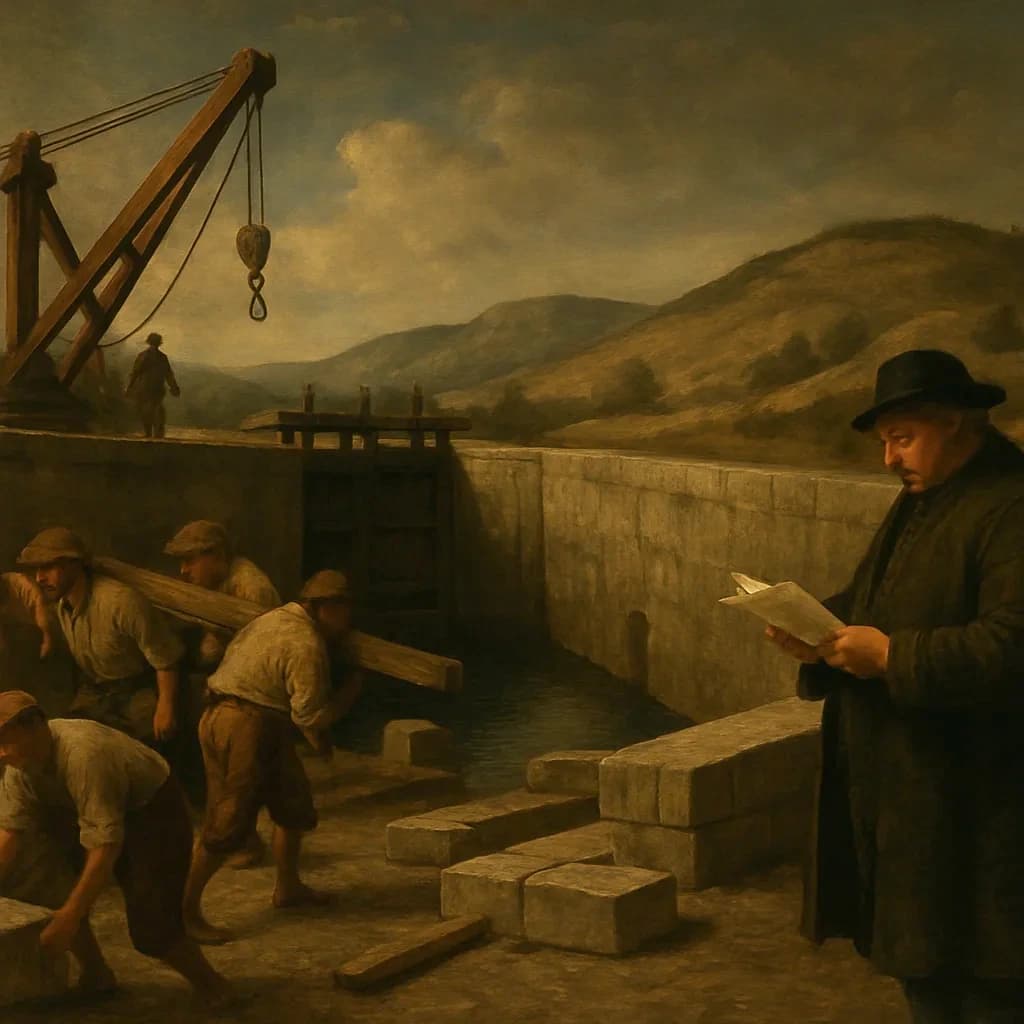
He Mortgaged Everything to Link France's Two Seas
A tax collector with no engineering training solved an impossible water problem in 1666, and, in doing so, accidentally invented the concept of the professional bureaucrat.
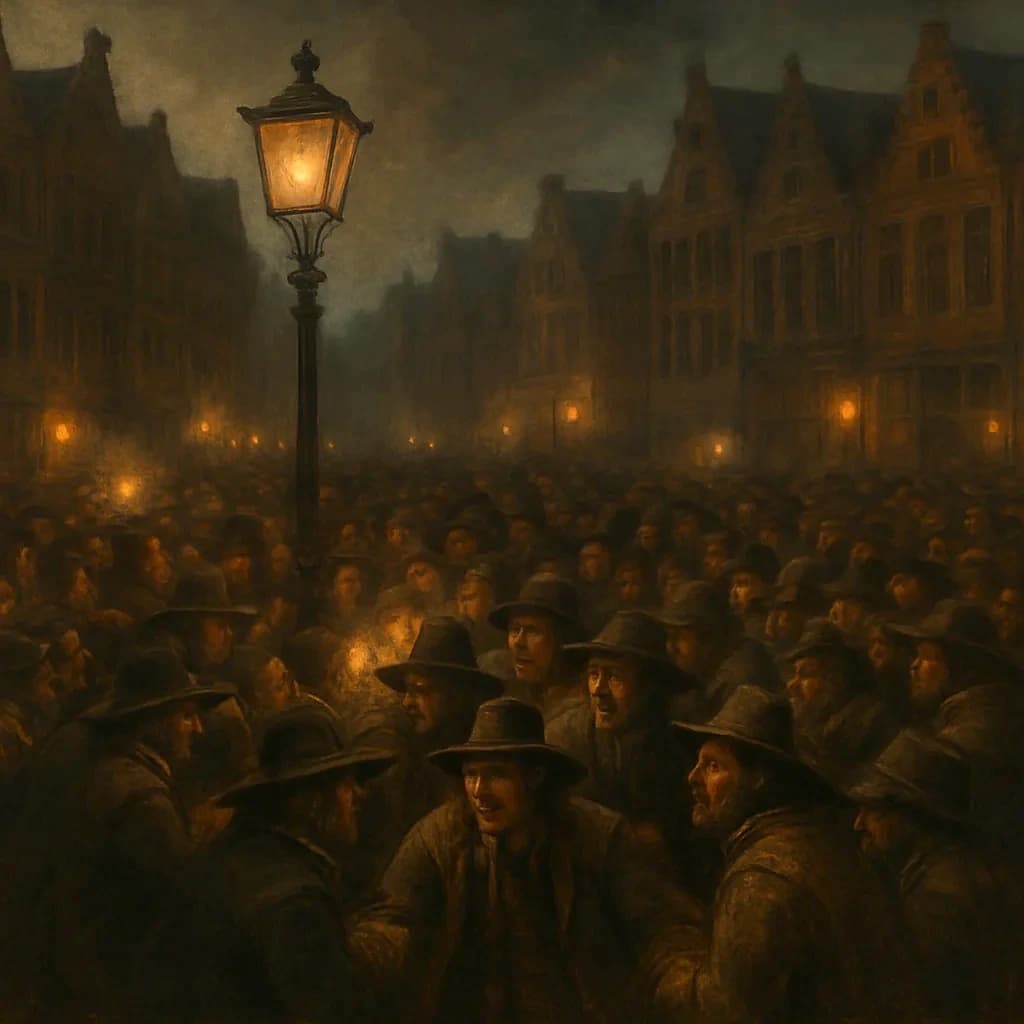
Johan de Witt Held the Republic in His Head
A Dutch mob tore Johan de Witt apart with their bare hands in 1672. And the republic he'd built died with him, because nobody had thought to write down how it actually worked.

Versailles Was Built as Revenge for One Party
A finance minister threw the most extravagant party in French history, and it cost him everything.
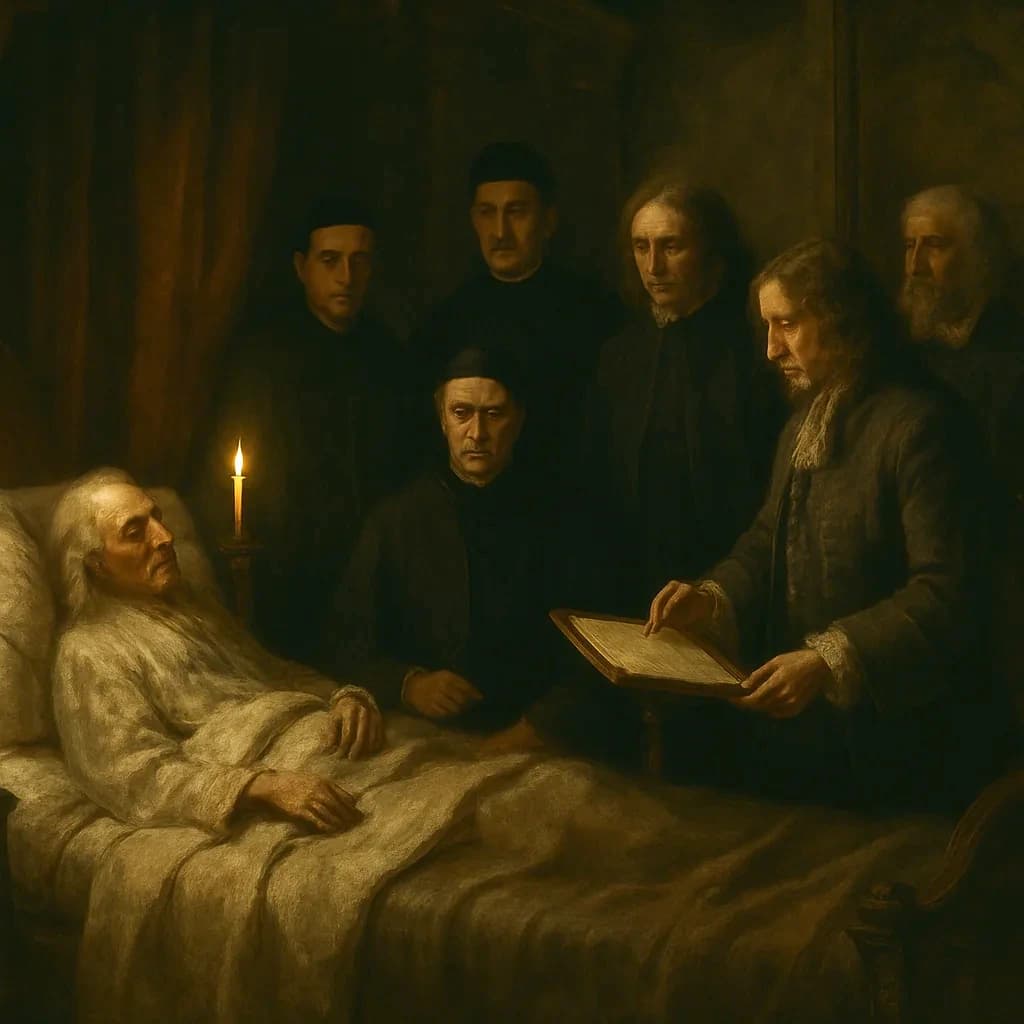
A Dying King's Bedside Chat Reshuffled Every Throne in Europe
A dying king's bedside conversation in 1700 reshuffled every throne in Europe, and nobody planned any of it.

France Faked a Poisoner's Execution to Keep Her Chemistry
A convicted murderer drew a comfortable government salary for thirty years, because her poisons had solved France's biggest problem.
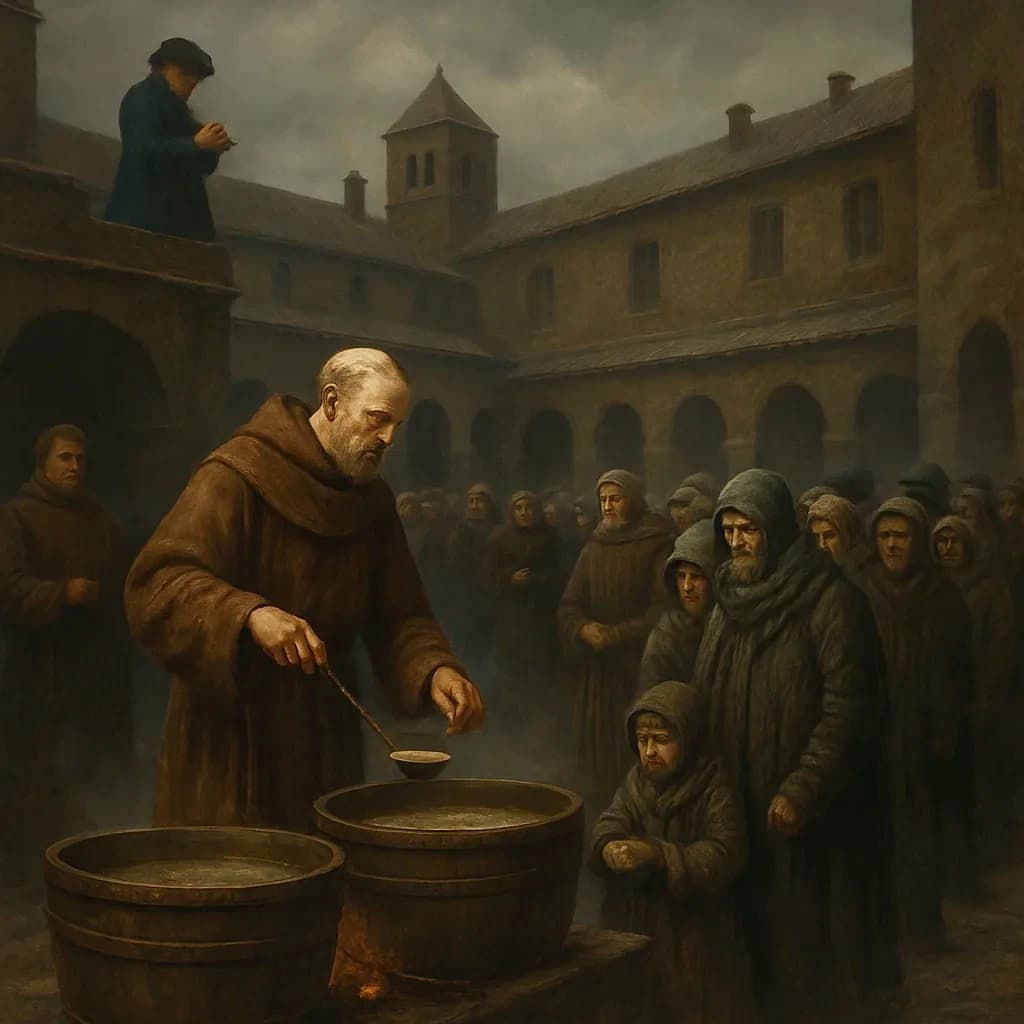
Five Loaves, Ten Thousand Guns
A French priest's charitable food distribution accidentally created one of history's most efficient killing machines.
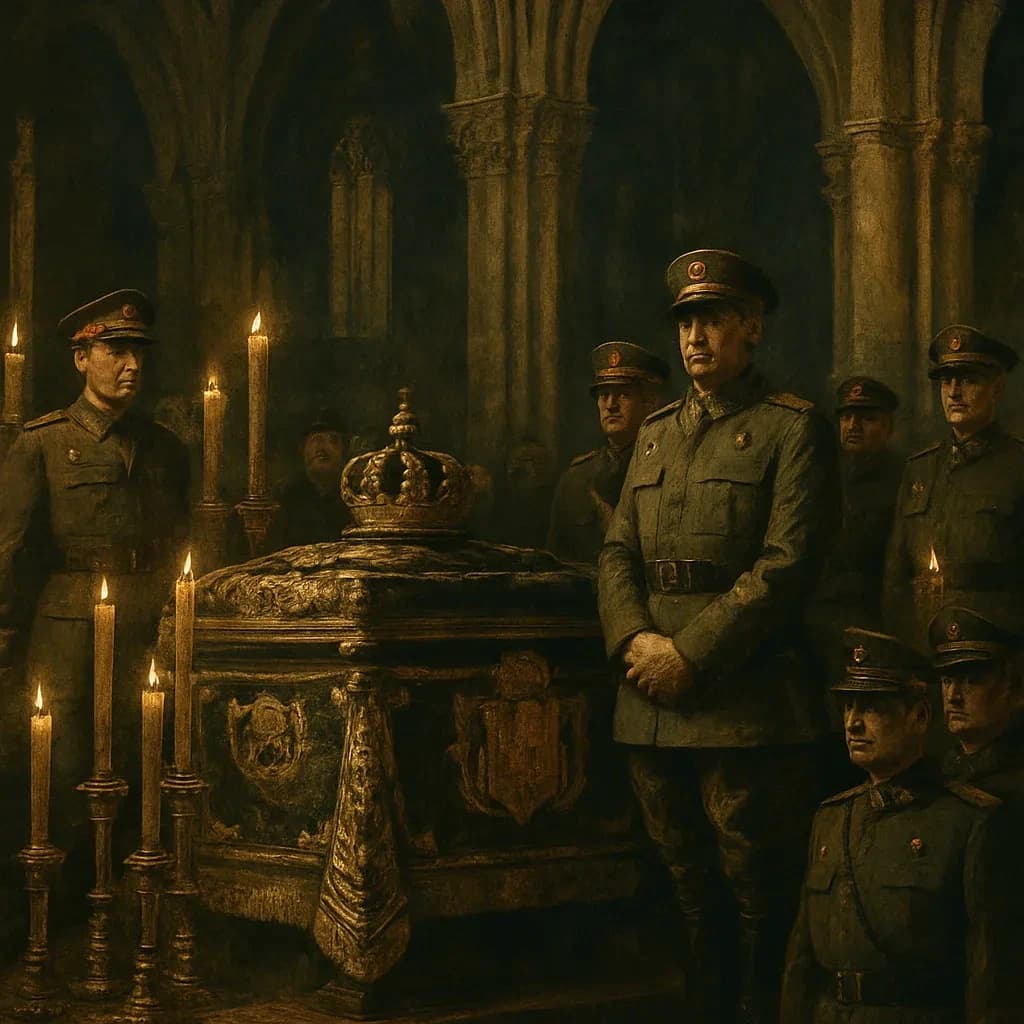
A Dead Spanish King Kept Making Decisions for Two Centuries
A dead Spanish king kept making new political decisions for nearly two centuries after his burial.
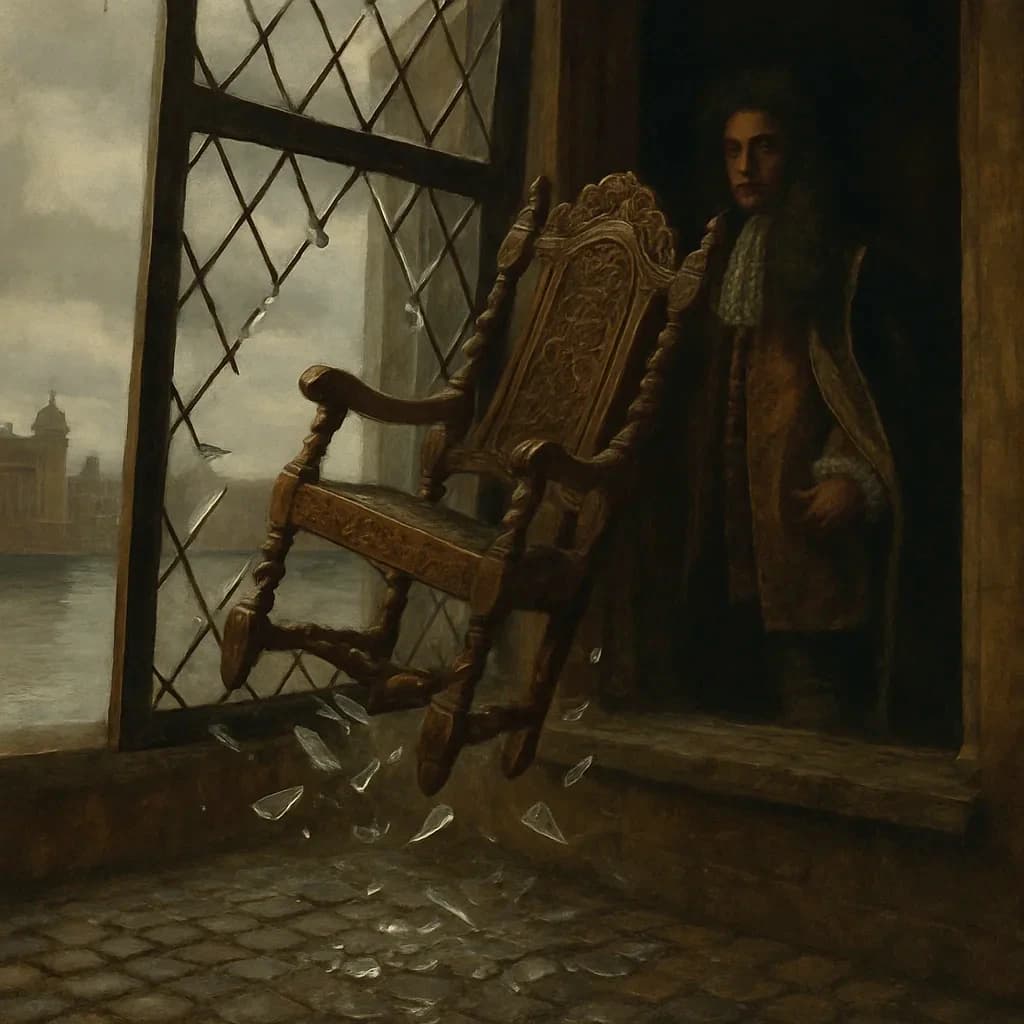
James II Threw England's Royal Seal Into the Thames
A single piece of flying furniture changed the course of English history forever.
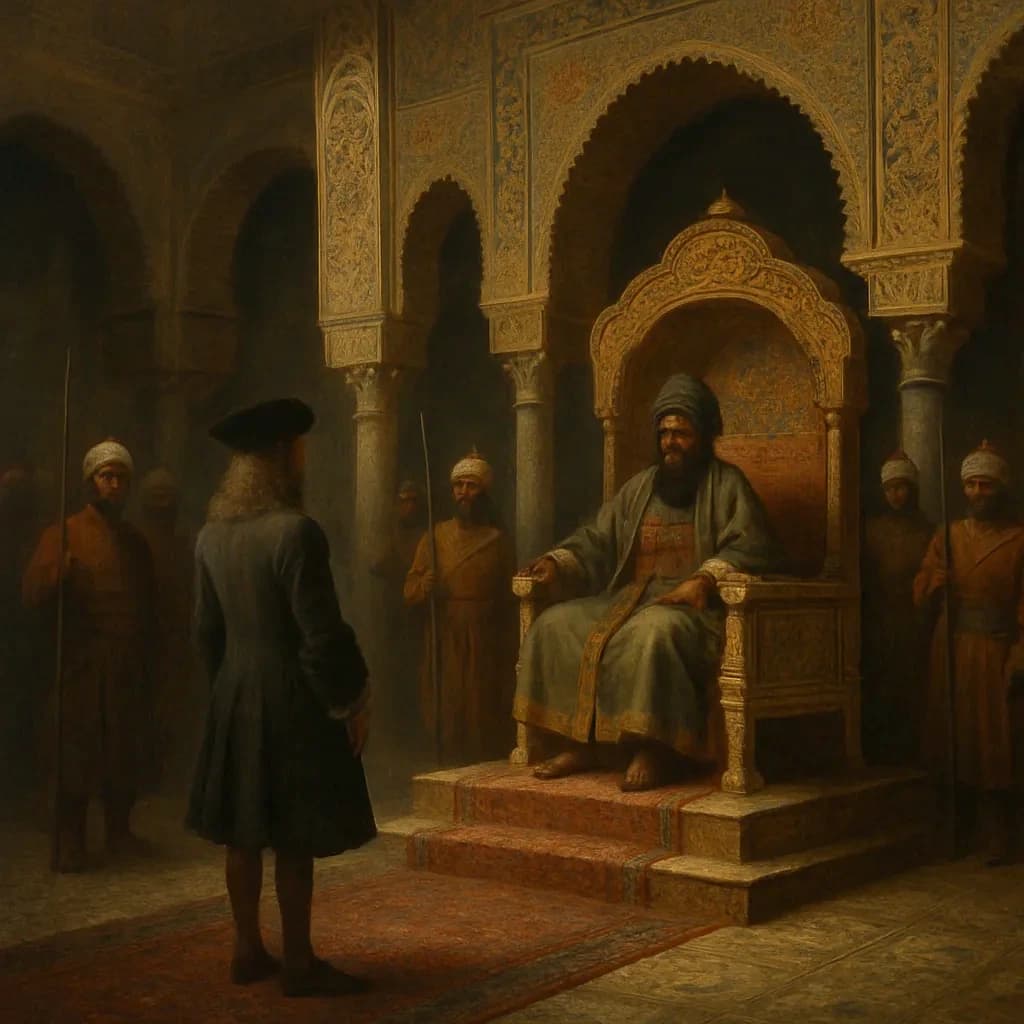
Europe's Mapmakers Erased Morocco for Thirty Years
For thirty years, the most sophisticated cartographers in Europe convinced themselves that an entire kingdom had vanished.

When Bavaria Almost Ate Europe
A bankrupt duke's gambling debts nearly made German the official language of France.
- Nancy Mitford, 'The Sun King: Louis XIV at Versailles' (1966)
- Simon Schama, 'Citizens: A Chronicle of the French Revolution' (1989)
- Archives Nationales de France, Correspondence of the Royal Physicians, Series O1