
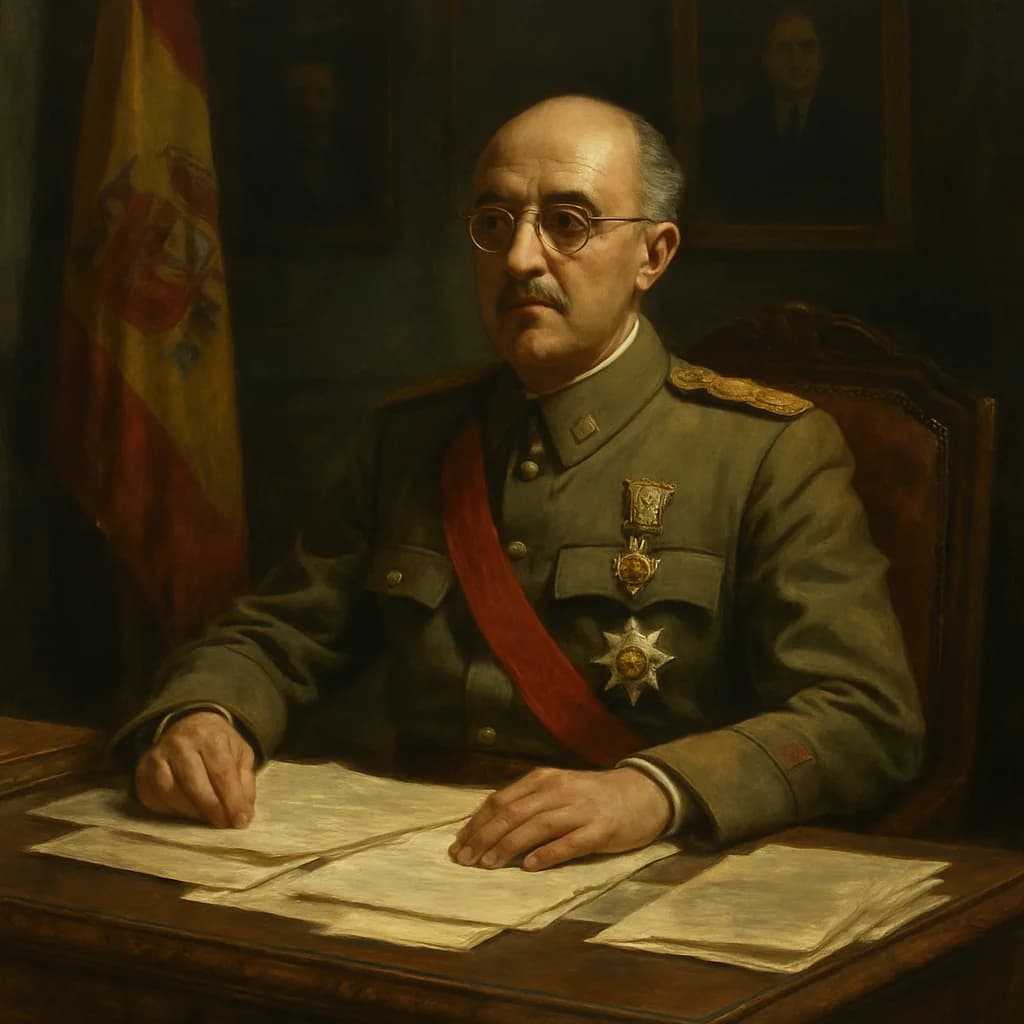
Francisco Franco
The man who ruled Spain for nearly four decades never wanted to be a politician. He dreamed of being an artist.
Francisco Franco enrolled at the Toledo Infantry Academy in 1907 only because his father refused to pay for naval school, crushing the boy's maritime dreams. Art school was never even discussed. The reluctant soldier threw himself into military life with the methodical precision of someone following a blueprint rather than a passion, graduating 251st out of 312 cadets, hardly the stuff of future dictators.
Franco's rise came through sheer persistence rather than charisma. While other officers played politics in Madrid's cafes, he volunteered for Spain's brutal colonial wars in Morocco, where survival meant mastering logistics over rhetoric. He earned his reputation not through stirring speeches but by ensuring his men had ammunition when they needed it. By 33, he was Europe's youngest general, promoted for competence rather than connections.
The Spanish Civil War transformed this methodical administrator into something he'd never intended to become. When the military uprising began in July 1936, Franco was initially reluctant to join, spending crucial days weighing his options while other conspirators grew impatient. His eventual leadership of the Nationalist cause came almost by accident: rival generals eliminated each other through death and miscalculation, leaving the careful Franco as the last man standing.
Once in power, Franco governed Spain like a meticulous accountant managing a vast, dysfunctional household. He micromanaged everything from film scripts to local festival permits, personally reviewing documents that other dictators would have delegated to subordinates. His regime lasted 39 years not through revolutionary fervor but through bureaucratic persistence, the triumph of paperwork over passion.
Franco personally censored thousands of films, often rewriting dialogue himself and once changing the ending of 'Casablanca' so that the Humphrey Bogart character stayed with Ingrid Bergman instead of letting her leave with her husband.
Why untold: His image as a charismatic fascist leader obscures the reality that he was essentially a reluctant bureaucrat who stumbled into dictatorship.
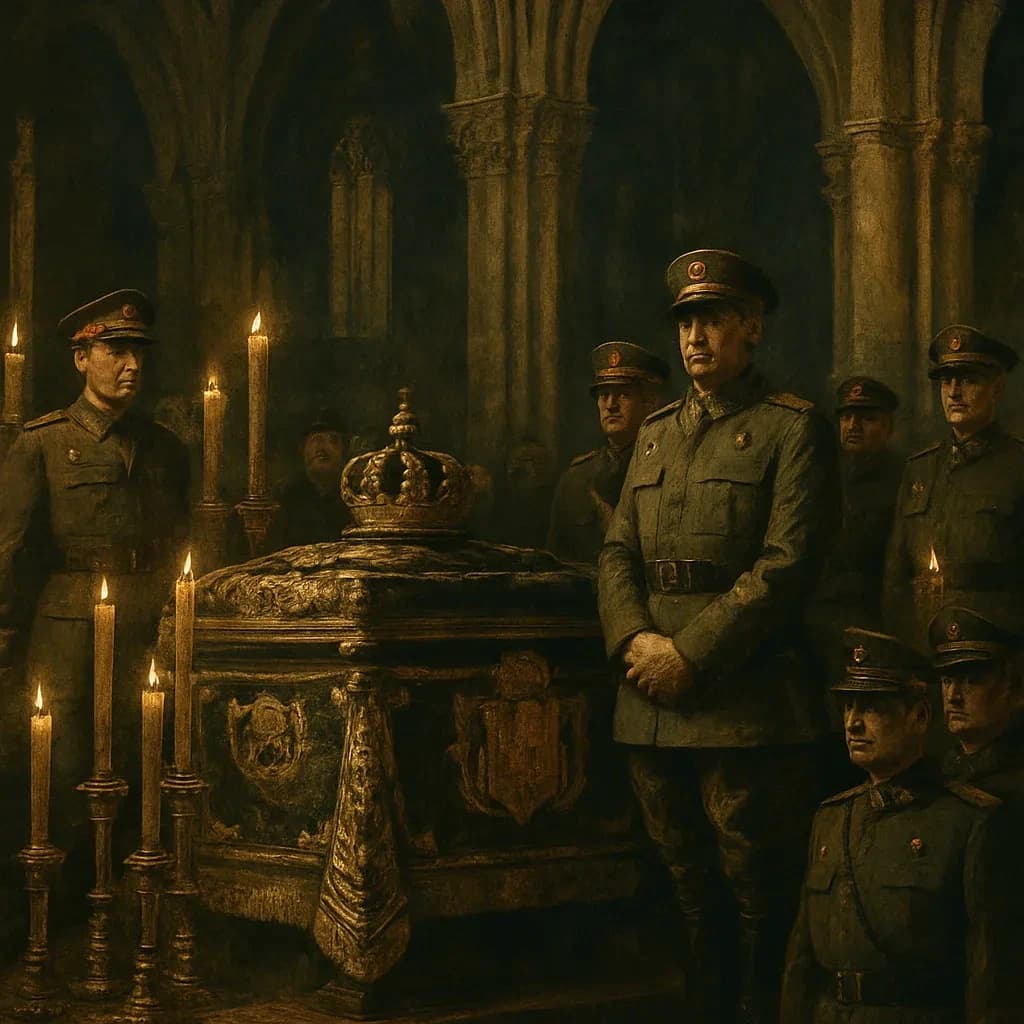
A Dead Spanish King Kept Making Decisions for Two Centuries
A dead Spanish king kept making new political decisions for nearly two centuries after his burial.
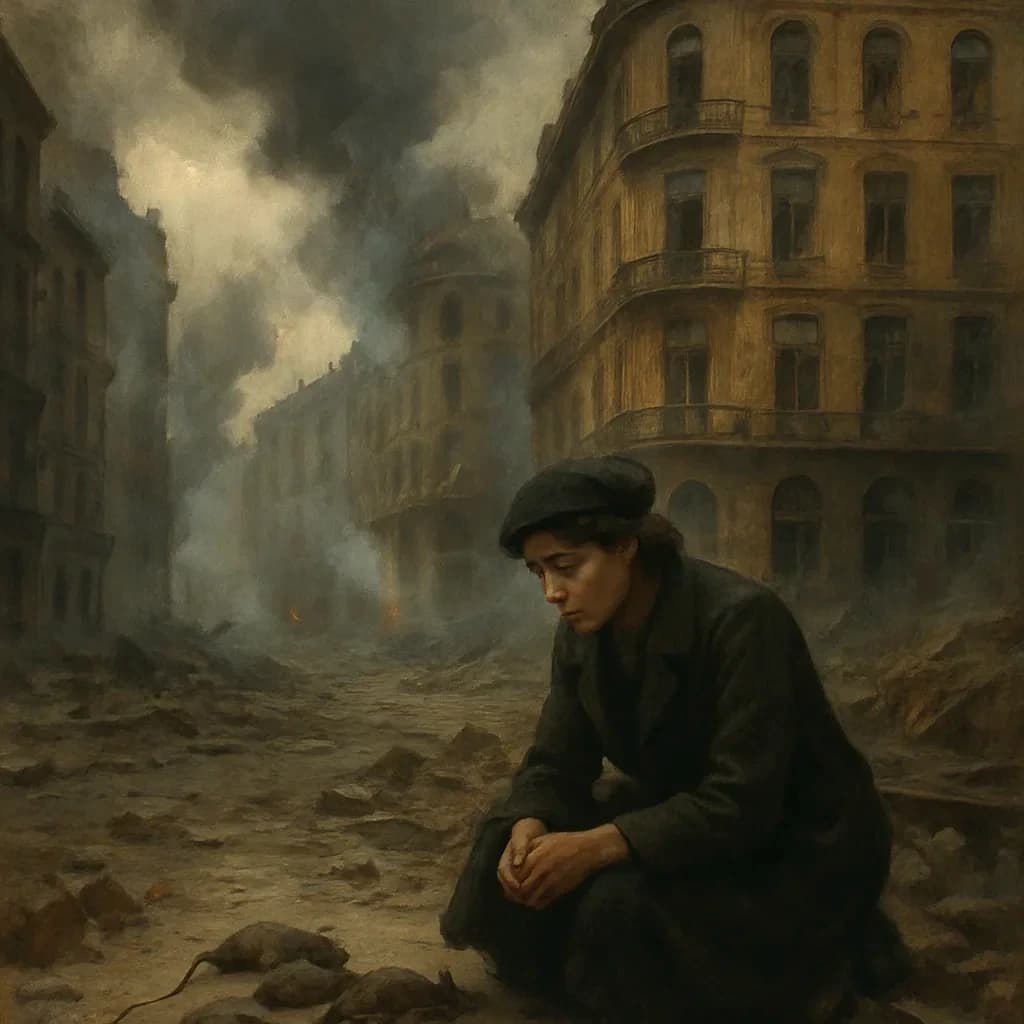
One Flea Jump Decided Which Madrid Neighborhoods Starved
A single flea jump in 1937 Madrid decided which neighborhoods would starve and which would feast during the longest siege of the Spanish Civil War.
- Paul Preston, 'Franco: A Biography' (1993)
- Gabrielle Ashford Hodges, 'Franco: A Concise Biography' (2000)
- Stanley Payne, 'Fascism in Spain, 1923-1977' (2001)