
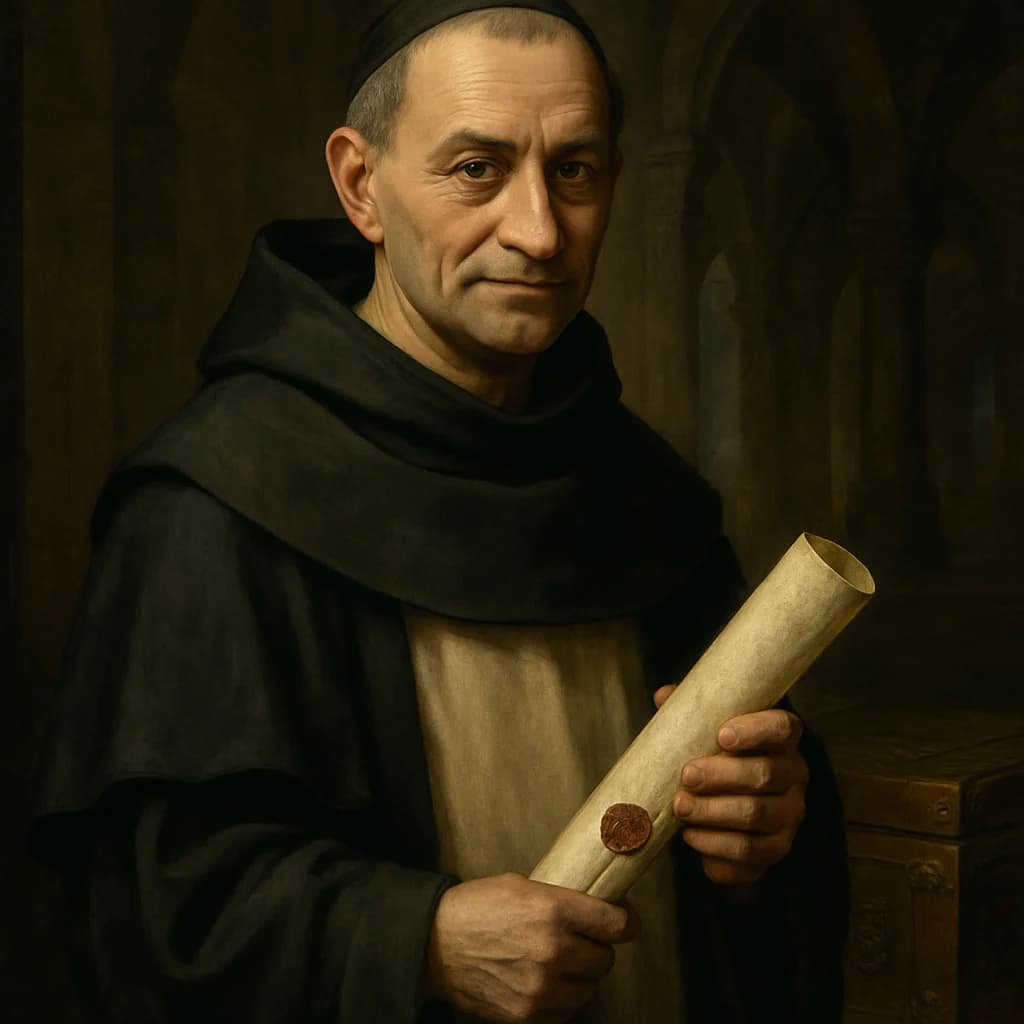
Johann Tetzel
The man who turned forgiveness into a franchise operation sold salvation door-to-door with the marketing genius of a carnival barker and the moral flexibility of a loan shark.
Johann Tetzel understood something profound about human nature: people will pay anything to escape consequences. By 1517, this Dominican friar had transformed the ancient practice of selling indulgences into medieval Germany's most profitable business model. He didn't just sell papers promising reduced time in purgatory. He created an entire theatrical experience around spiritual commerce.
Tetzel's genius lay in his sales technique. He arrived in towns with a brass-bound chest, a portable altar, and a jingle that became the marketing slogan of the age: "As soon as a coin in the coffer rings, the soul from purgatory springs." But his real innovation was psychological. He sold indulgences not just for the buyer's sins, but for their dead relatives already suffering in purgatory. Parents could literally purchase their children's salvation. The grieving could buy relief for their departed spouses. It was emotional manipulation weaponized for profit.
What's overlooked is how methodical Tetzel was. He didn't wander randomly. He followed carefully planned routes, avoided territories where local bishops might interfere, and maintained detailed price lists. Different sins carried different rates. Murder cost more than adultery. He even sold "future sin" packages, essentially spiritual insurance policies for crimes not yet committed. When Martin Luther posted his 95 Theses, he wasn't just challenging Catholic theology. He was attacking Tetzel's business empire.
Tetzel died in 1519, two years after Luther's protest, his reputation in ruins. But by then, his carnival of salvation had already generated enough outrage to fracture Christianity forever. He'd proven that even faith could be industrialized, franchised, and sold to the highest bidder.
Tetzel sold indulgences with printed price lists that included bulk discounts for multiple family members and payment plans for customers who couldn't afford the full amount upfront.
Why untold: His role gets overshadowed by Luther's theological fame, reducing him to a caricature rather than recognizing him as history's first mass marketer of salvation.
An Accountant's Breakfast Meeting Redrew Europe's Religious Map
A mild-mannered financial clerk's routine morning appointment changed the religious map of Europe forever.
When Florence Caught God Counterfeiting
A Renaissance banker discovered that the Pope's indulgences were printed using stolen currency plates.
A Monk's Side Business in Salvation Created Modern Banking
A German monk's side business in salvation turned the Catholic Church inside out and accidentally created modern banking.
- Carter Lindberg, The European Reformations (Blackwell, 1996)
- Andrew Pettegree, Brand Luther: How an Unheralded Monk Turned History's Greatest Marketing Campaign (Penguin, 2015)
- Berndt Hamm, The Reformation of Faith in the Context of Late Medieval Theology and Piety (Brill, 2004)