
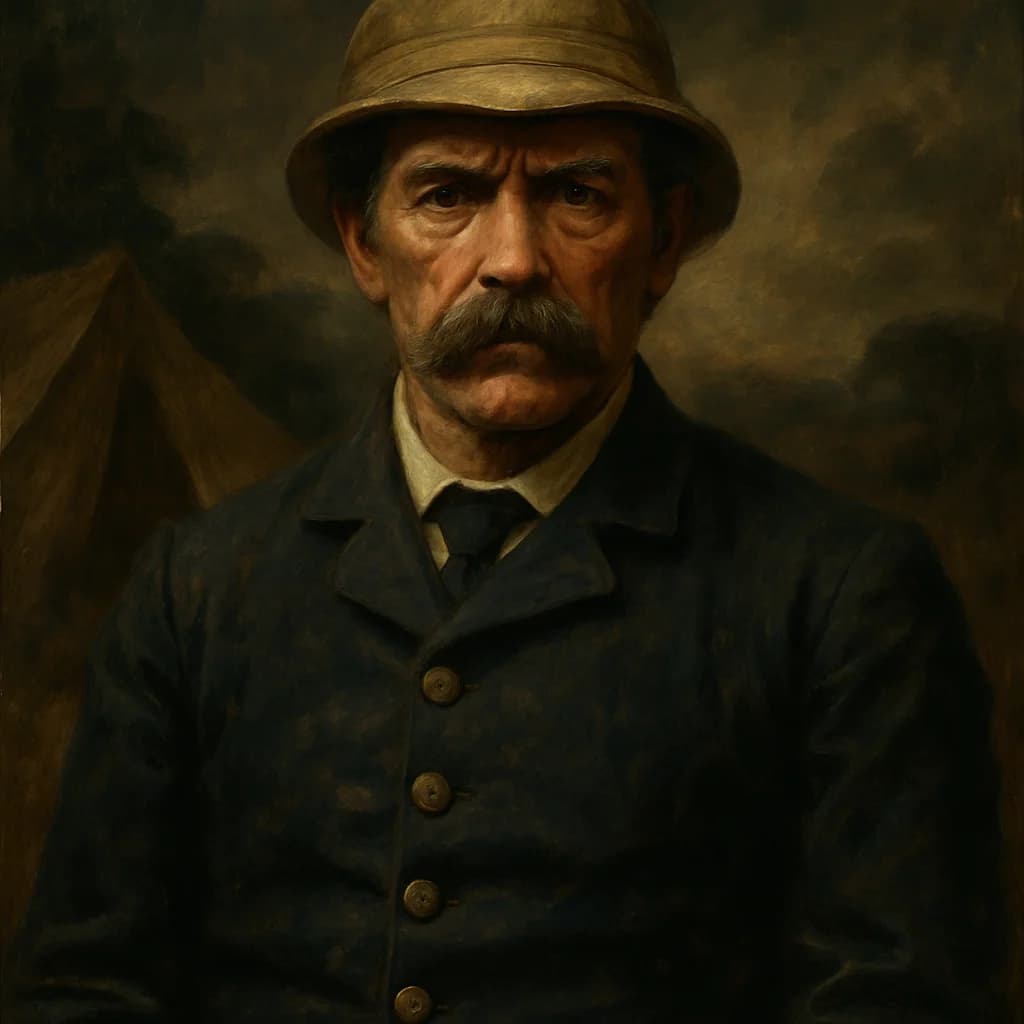
Henry Morton Stanley
The man who uttered history's most famous greeting was an imposter whose real name, birthplace, and childhood were all lies.
When Henry Morton Stanley supposedly said "Dr. Livingstone, I presume?" in 1871, he was performing the greatest act of his life, and performance was something John Rowlands knew intimately. Born in a Welsh workhouse to an unmarried teenager, he reinvented himself so thoroughly that even today, most people don't know his real story.
Rowlands fled Wales as a teenager, jumped ship in New Orleans, and convinced a cotton merchant named Henry Stanley to adopt him. When his benefactor died, Rowlands simply kept the name and invented an entire American backstory. He fought on both sides of the Civil War (first for the Confederacy, then the Union after being captured), deserting whenever convenient. His talent wasn't loyalty; it was survival through spectacular dishonesty.
The meeting with Livingstone made Stanley world-famous, but it also made him something far more dangerous: Leopold II's perfect weapon. The Belgian king needed someone morally flexible enough to secure the Congo Basin through treaties with African chiefs. Stanley delivered, using his explorer's reputation to mask what was essentially a real estate swindle. He convinced over 450 tribal leaders to sign contracts they couldn't read, written in languages they didn't speak, surrendering sovereignty over territory larger than Western Europe.
Stanley genuinely believed he was bringing civilization to Africa, a delusion that made him more effective than any cynical mercenary. His detailed maps and firsthand accounts of Congolese geography became Leopold's blueprint for extraction and control. The man who built his entire identity on lies ultimately authored truths that enslaved millions, proving that sometimes the most devastating honesty comes from the most dishonest people.
Stanley's famous greeting "Dr. Livingstone, I presume?" was never actually recorded. He invented it years later for dramatic effect in his bestselling memoir.
Why untold: His role as Leopold's chief enabler in the Congo gets overshadowed by his romantic image as a brave explorer finding a lost missionary.

A Brussels Clerk's Night Reading Doomed the Congo
A young postal worker's after-hours reading sparked the most systematic slaughter in African history.
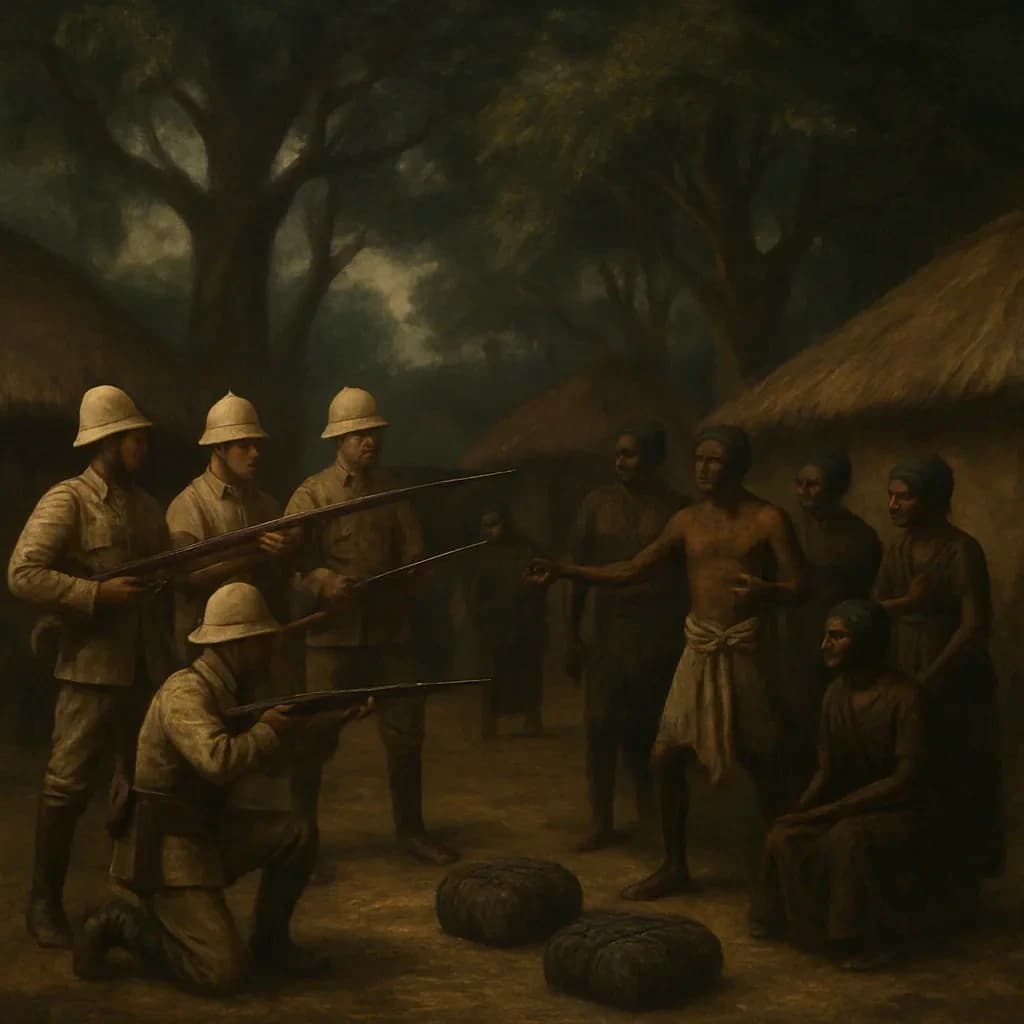
Leopold II Ran a Genocide as a Charity
Leopold II of Belgium convinced the world he was running a charity while orchestrating history's most profitable genocide.
- Tim Jeal, Stanley: The Impossible Life of Africa's Greatest Explorer (2007)
- Adam Hochschild, King Leopold's Ghost: A Story of Greed, Terror, and Heroism in Colonial Africa (1998)
- John Bierman, Dark Safari: The Life Behind the Legend of Henry Morton Stanley (1990)