
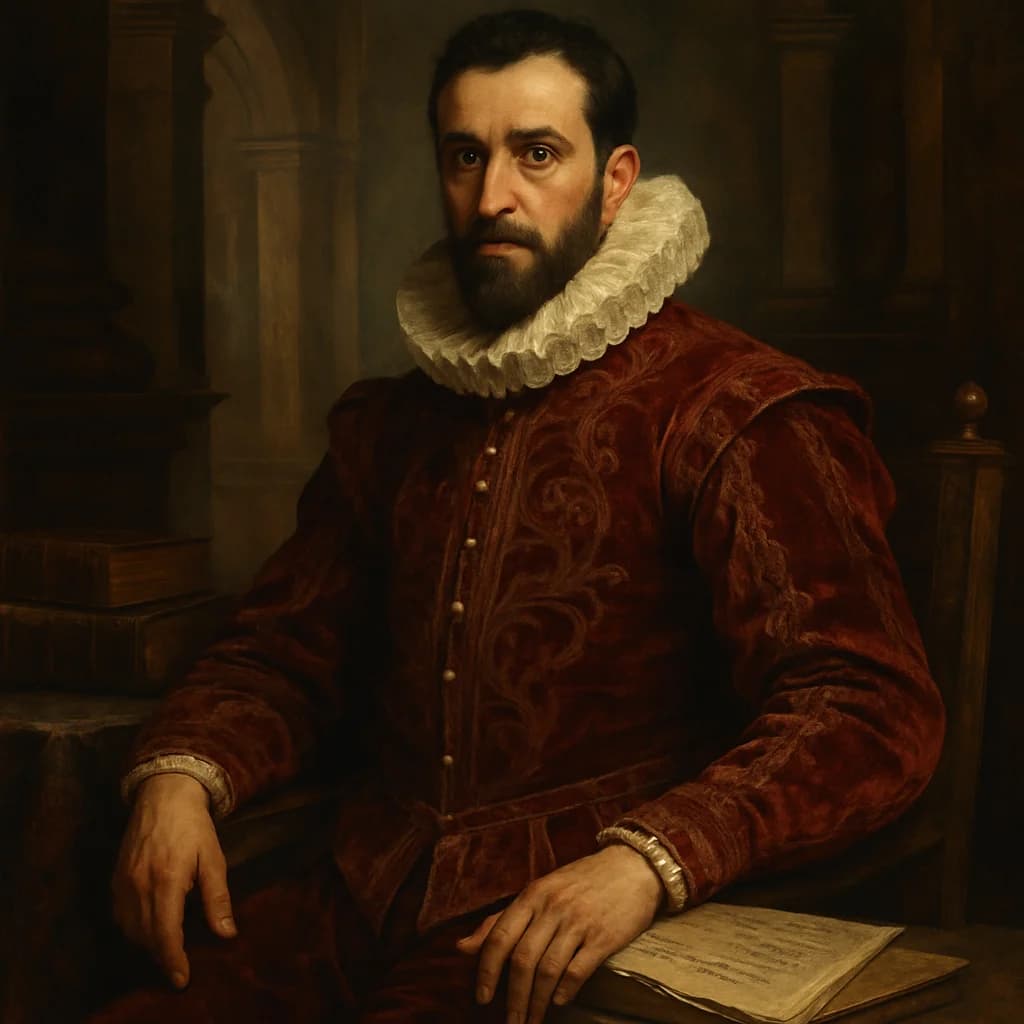
Giovanni Bardi
The man who accidentally invented opera was trying to recreate ancient Greek drama and ended up changing music forever.
Giovanni Bardi spent his inheritance on the most expensive book club in history. The Florentine count gathered poets, musicians, and scholars in his palazzo every week during the 1570s and 1580s, convinced they could resurrect the lost art of Greek tragedy. They called themselves the Camerata, and they were obsessed with a single question: how did the ancients make audiences weep with song?
Bardi had read Plato's complaints about musicians who prioritized pretty melodies over clear words. The count decided that Renaissance polyphony (with its intricate weaving of multiple vocal lines) was exactly what was wrong with music. Words got lost in the complexity. Emotion got buried under technique. So his circle began experimenting with something radical: one singer, one melody, words you could actually understand.
The breakthrough came around 1597 when Jacopo Peri, one of Bardi's protégés, set the myth of Daphne to music using their new style. Instead of the elaborate madrigals popular at court, Peri wrote simple, speech-like melodies that followed the natural rhythms of Italian. The result was supposed to be ancient Greek drama. What they actually created was Daphne, the first opera.
Bardi never realized what he'd unleashed. He thought they were archaeologists, not inventors. By the time Monteverdi's Orfeo premiered in 1607 (ten years after Daphne), opera houses were sprouting across Italy like expensive weeds. The count had died in 1612, still convinced he'd simply rediscovered something the Greeks had lost. He never knew his weekly gatherings had created an entirely new art form that would dominate European culture for centuries.
Bardi's Camerata included Galileo's father, Vincenzo Galilei, who wrote a treatise attacking Renaissance polyphony as mathematically inferior to ancient Greek monody.
Why untold: Music histories focus on the composers who wrote the first operas rather than the amateur scholar whose dinner parties made them possible.
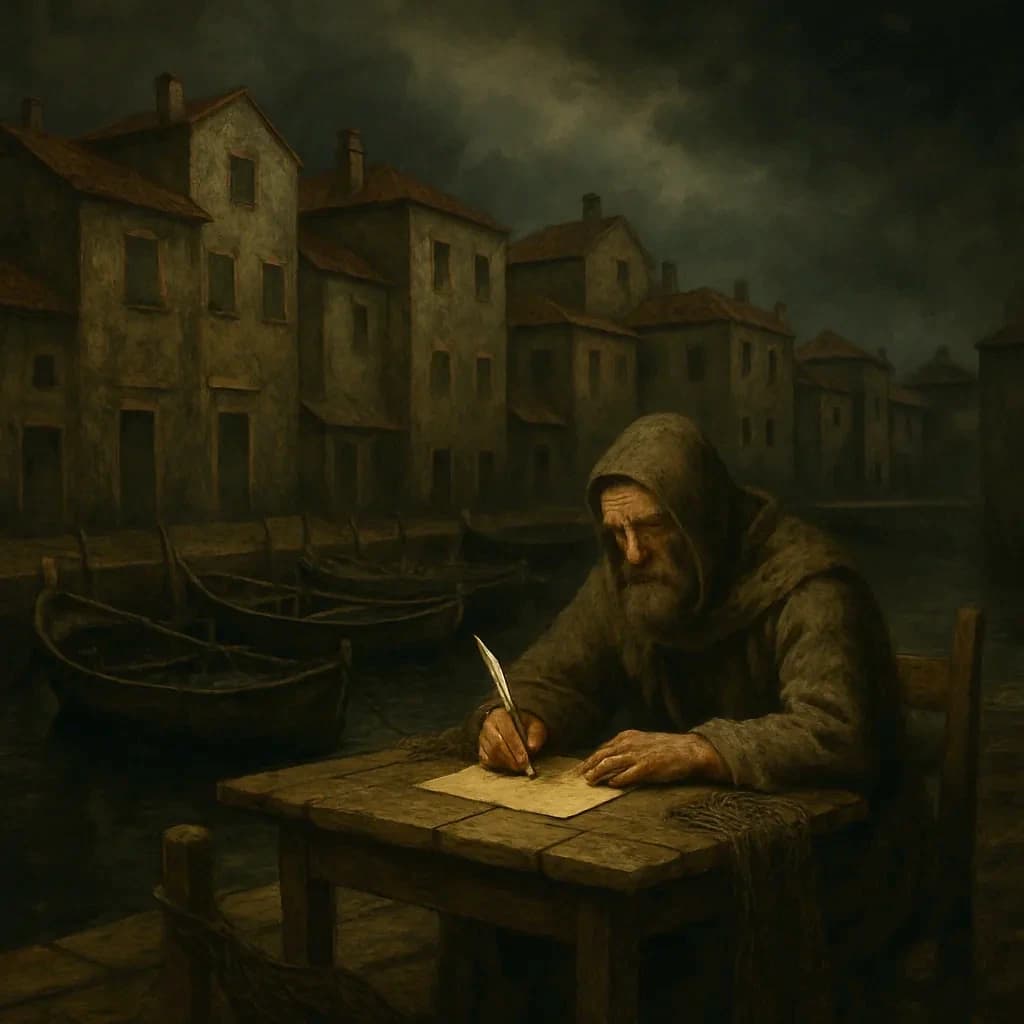
Empty Nets: How a Plague-Era Lie Built Insurance
When the plague reached his village, one man's desperate lie about fish stocks accidentally created modern insurance.
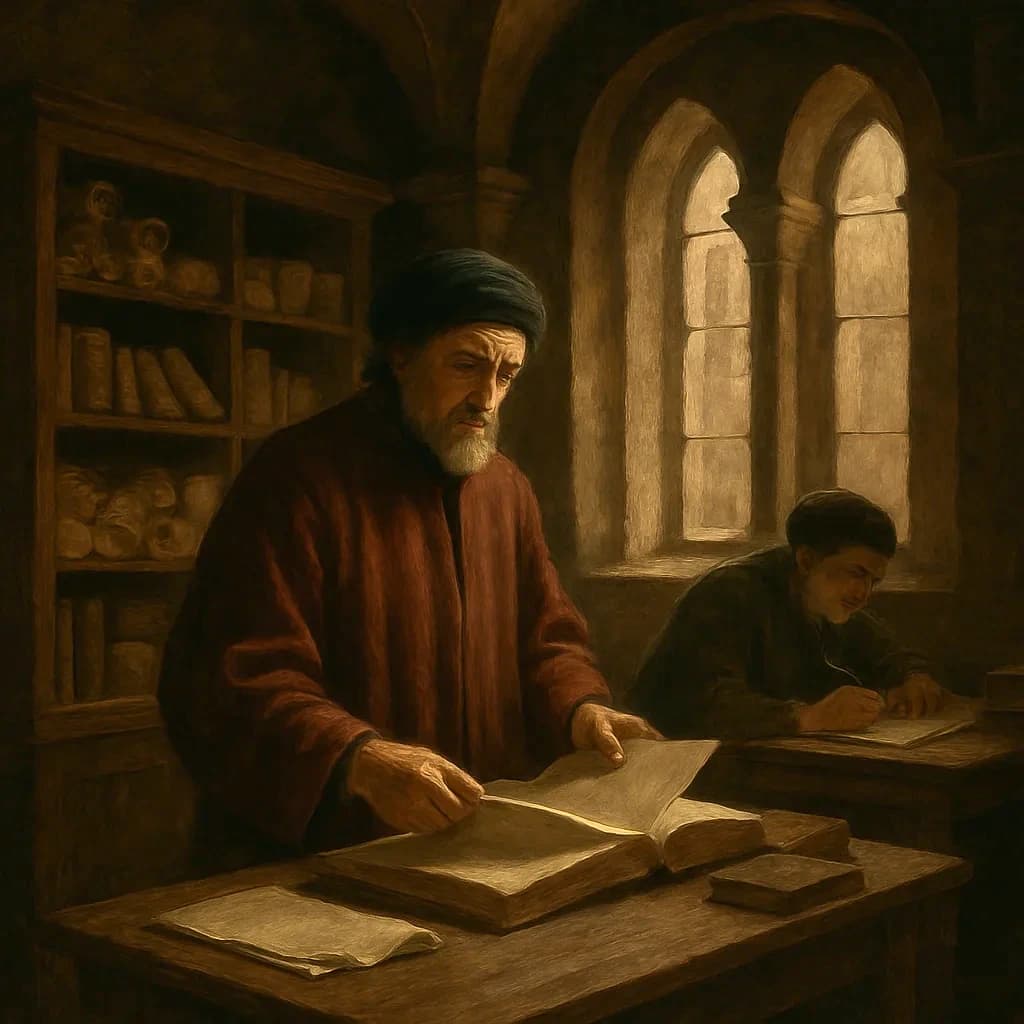
Edward III Refused to Pay His Florentine Bankers
A Florentine financier left his desk for an hour, and the most powerful family in Europe went bankrupt.
- Warren, Charles W. Music at the Court of Francesco Caccini. Brepols Publishers, 2003.
- Palisca, Claude V. The Florentine Camerata: Documentary Studies and Translations. Yale University Press, 1989.
- Hanning, Barbara Russano. Of Poetry and Music's Power: Humanism and the Creation of Opera. UMI Research Press, 1980.