
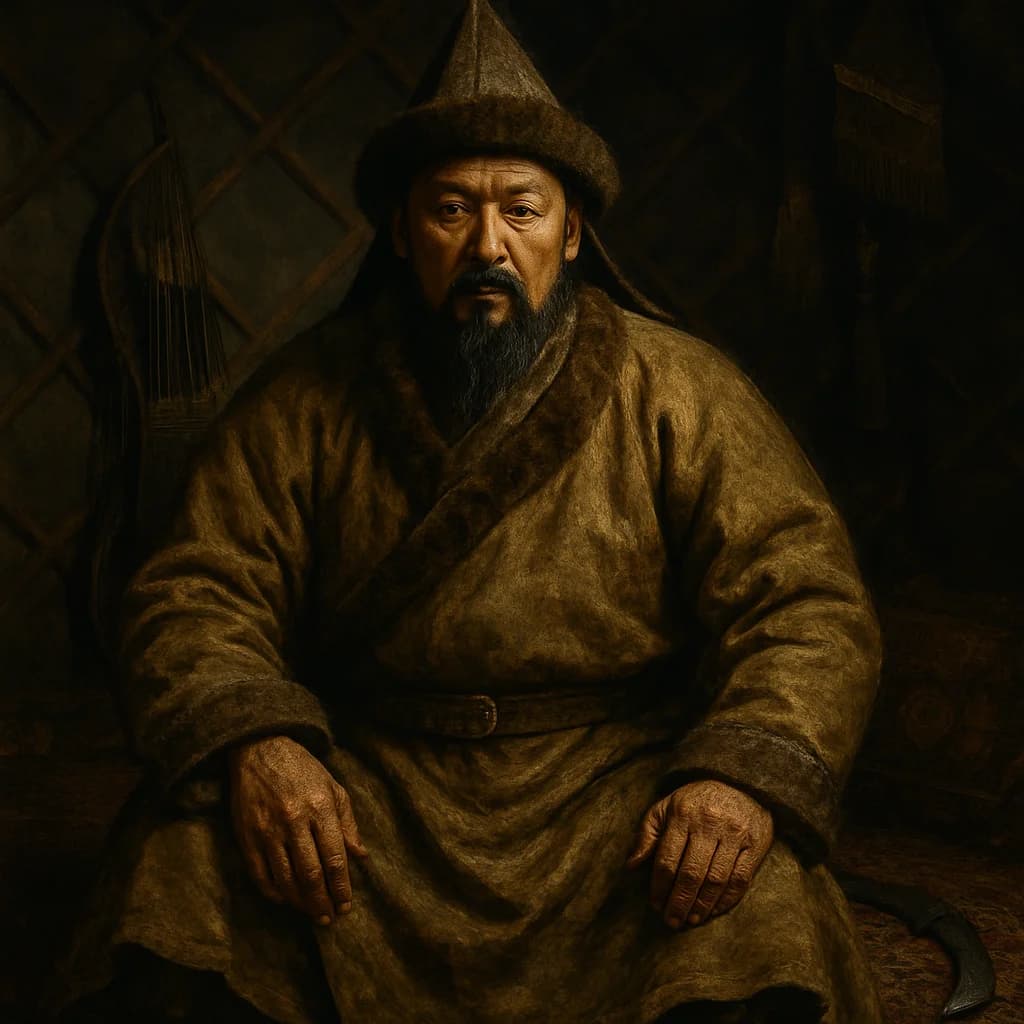
Genghis Khan
The man who conquered half the world couldn't read his own name.
Temüjin spent his childhood eating roots and field mice after his father was poisoned and his clan abandoned his family to starve on the Mongolian steppes. The boy who would become Genghis Khan learned early that survival meant adapting to whatever resources you could find, a lesson that would reshape his entire approach to empire-building.
When he finally united the fractious Mongol tribes in 1206, he did something unprecedented: he threw out the aristocratic bloodline system entirely. Merit trumped birth. A shepherd could command armies if he proved his worth. But more remarkably, Genghis Khan built the first truly multicultural war machine. His armies included Chinese engineers, Muslim administrators, and Christian scribes. He didn't just tolerate other religions. He actively recruited their expertise.
His real genius wasn't military tactics, though those were formidable. It was logistics. While European knights still relied on baggage trains that moved at a crawl, Mongol warriors carried everything they needed: dried meat, fermented mare's milk, and portable cooking equipment that could turn grass and water into sustaining meals. Each warrior maintained multiple horses, switching mounts to maintain devastating speed across impossible distances. They moved like a hurricane because they had solved the ancient problem of feeding an army on the march.
The illiterate nomad died in 1227, having created an empire that stretched from Eastern Europe to the Pacific Ocean. But his most lasting contribution wasn't territorial. It was the Pax Mongolica, a period of unprecedented trade and cultural exchange along the Silk Road. Ideas, technologies, and diseases flowed freely across Eurasia for the first time in human history, fundamentally altering the genetic and cultural makeup of entire continents.
Genghis Khan established the first international postal system, with relay stations every 25-30 miles that allowed messages to travel from one end of his empire to the other in just a few weeks.
Why untold: His illiteracy and humble origins contradict the typical narrative of great leaders, while his administrative innovations are overshadowed by his reputation for brutality.
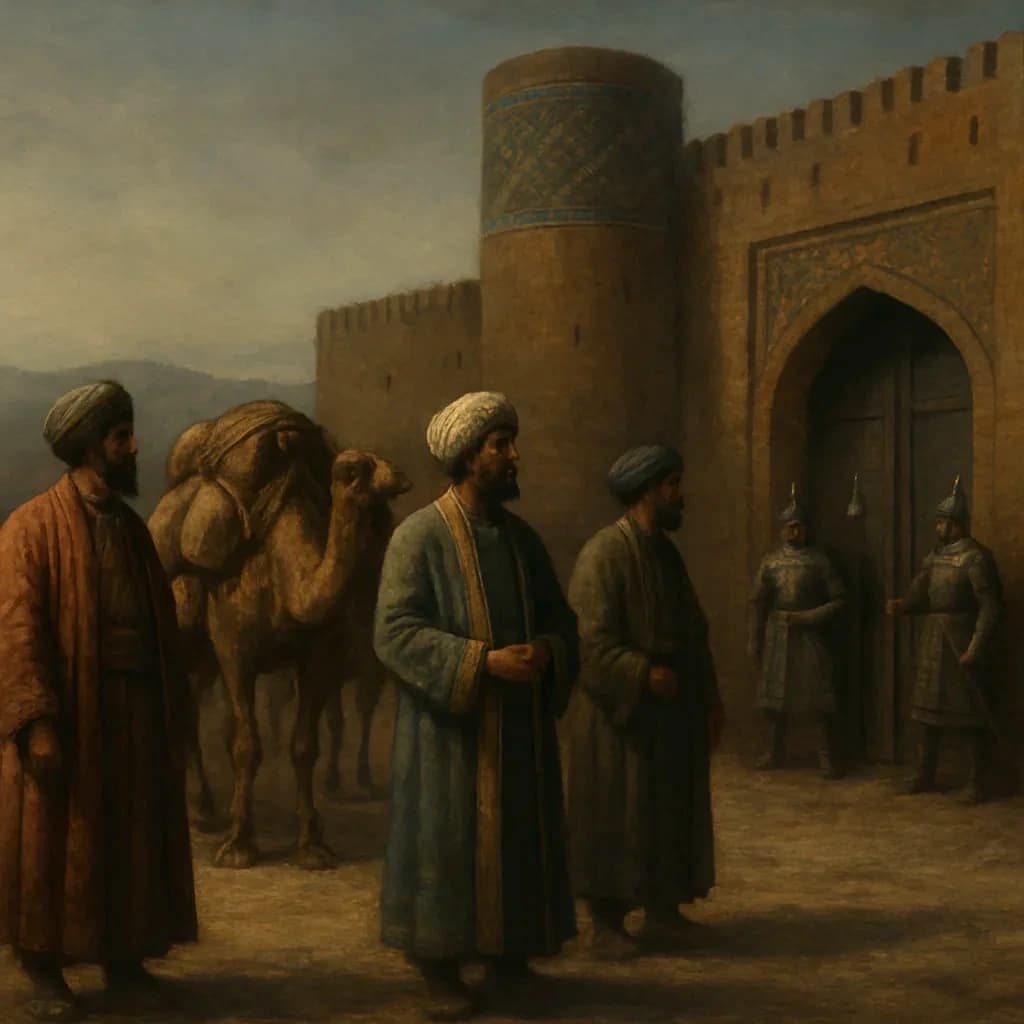
Why Genghis Khan Erased an Empire Over a Shaved Beard
A single broken promise between a Mongol warlord and a merchant prince shut down the most profitable trade network in human history.
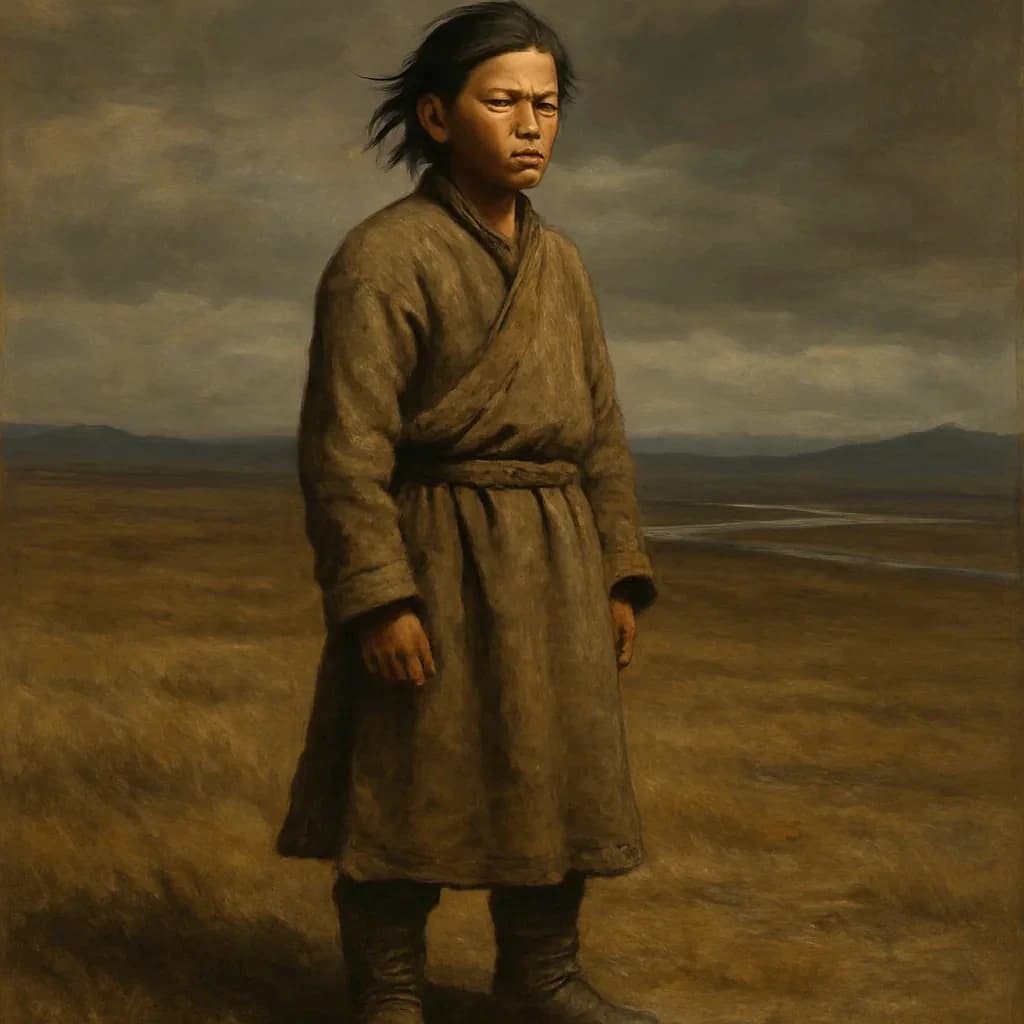
Genghis Khan Started With Eight Stolen Horses
A Mongol warlord's brother stole his horses; by 1206 the argument that followed had set in motion the deaths of forty million people.
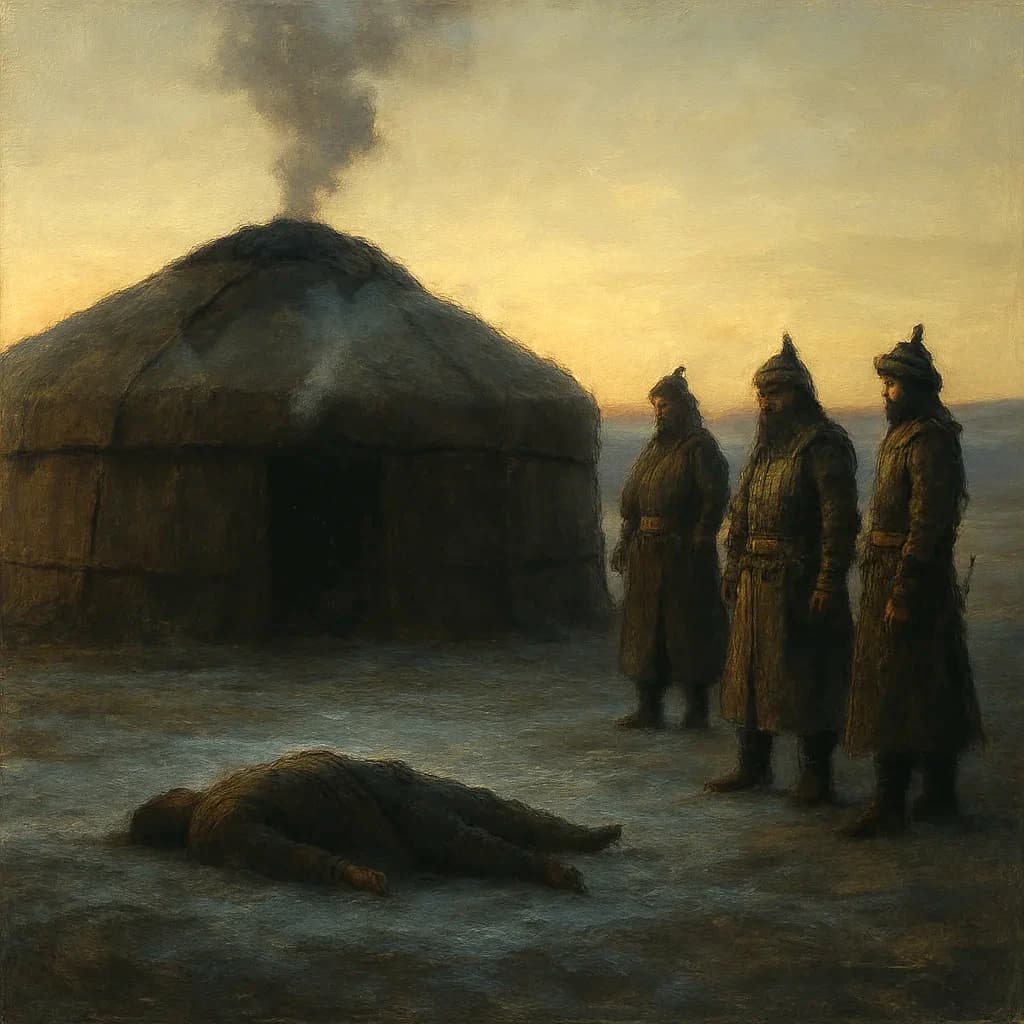
Genghis Khan's Most Dangerous Ally
Genghis Khan united the Mongol steppe in 1206. But the man who almost stopped him walked into his tent, knelt down, and offered a completely different world.
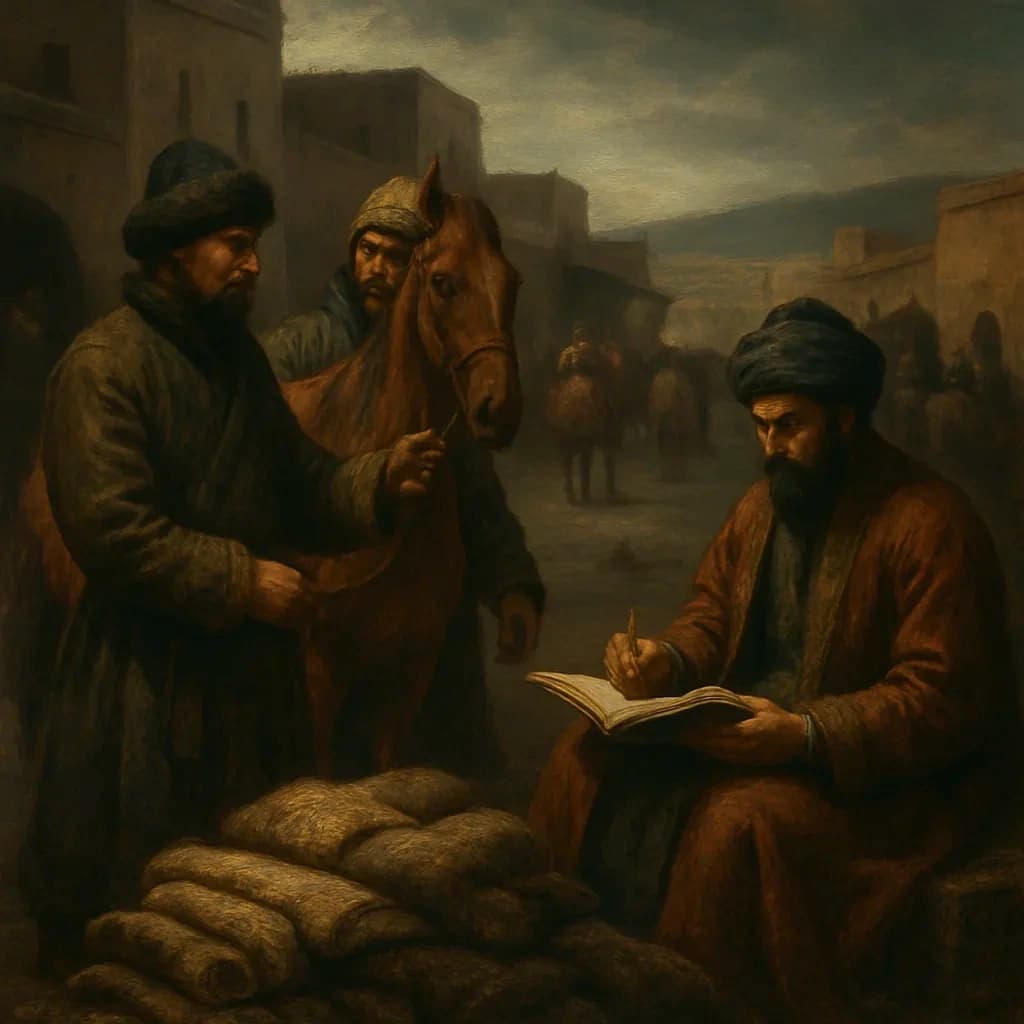
Forty-Seven Horses That Built the Mongol Empire
A single line in a medieval account book records the sale that turned salt traders into the most feared cavalry in history.
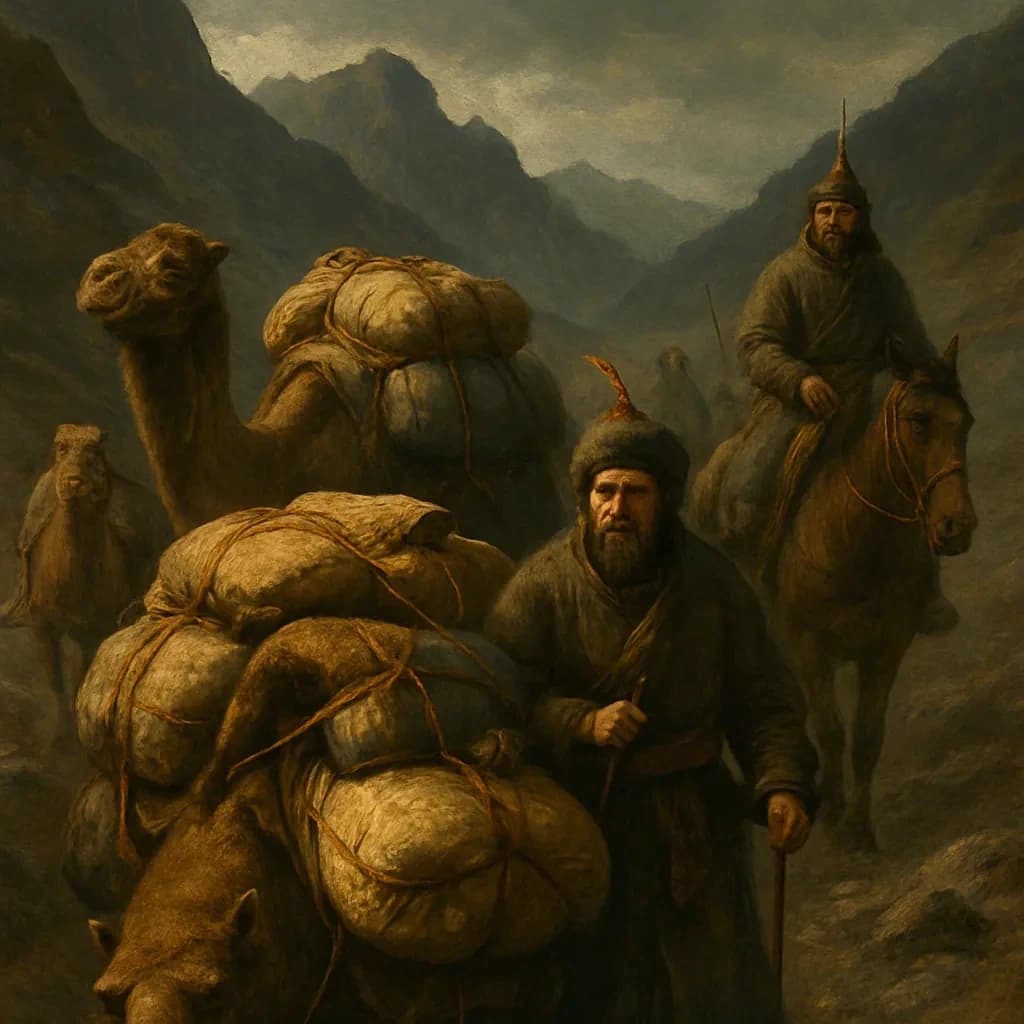
The Mongols Left Behind History's Greatest Biological Exchange
After conquering half the known world, the Mongols left behind something no one talks about: the greatest biological exchange in human history.
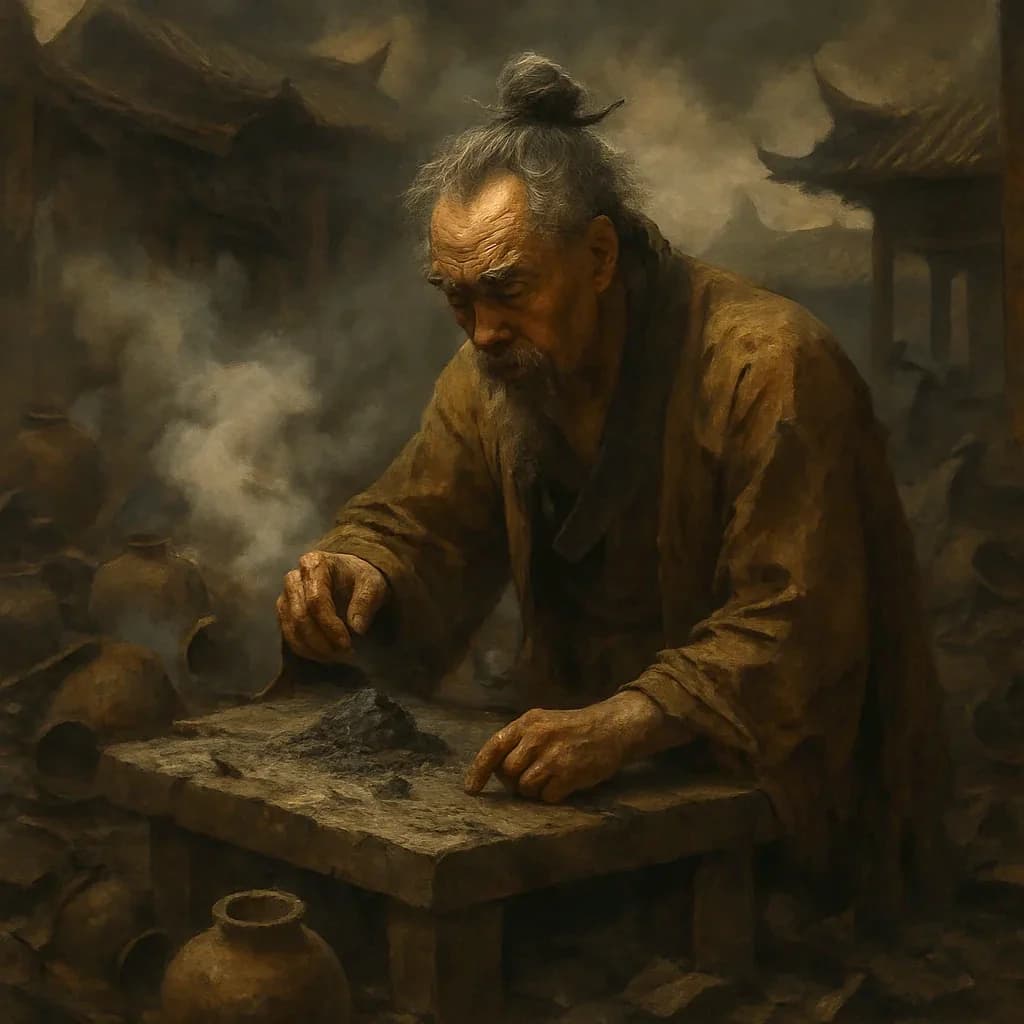
Searching for Immortality, He Invented Gunpowder
A single recipe, discovered by accident in a Chinese kitchen, would eventually topple every bronze-wielding empire from the Mediterranean to the Indus Valley.
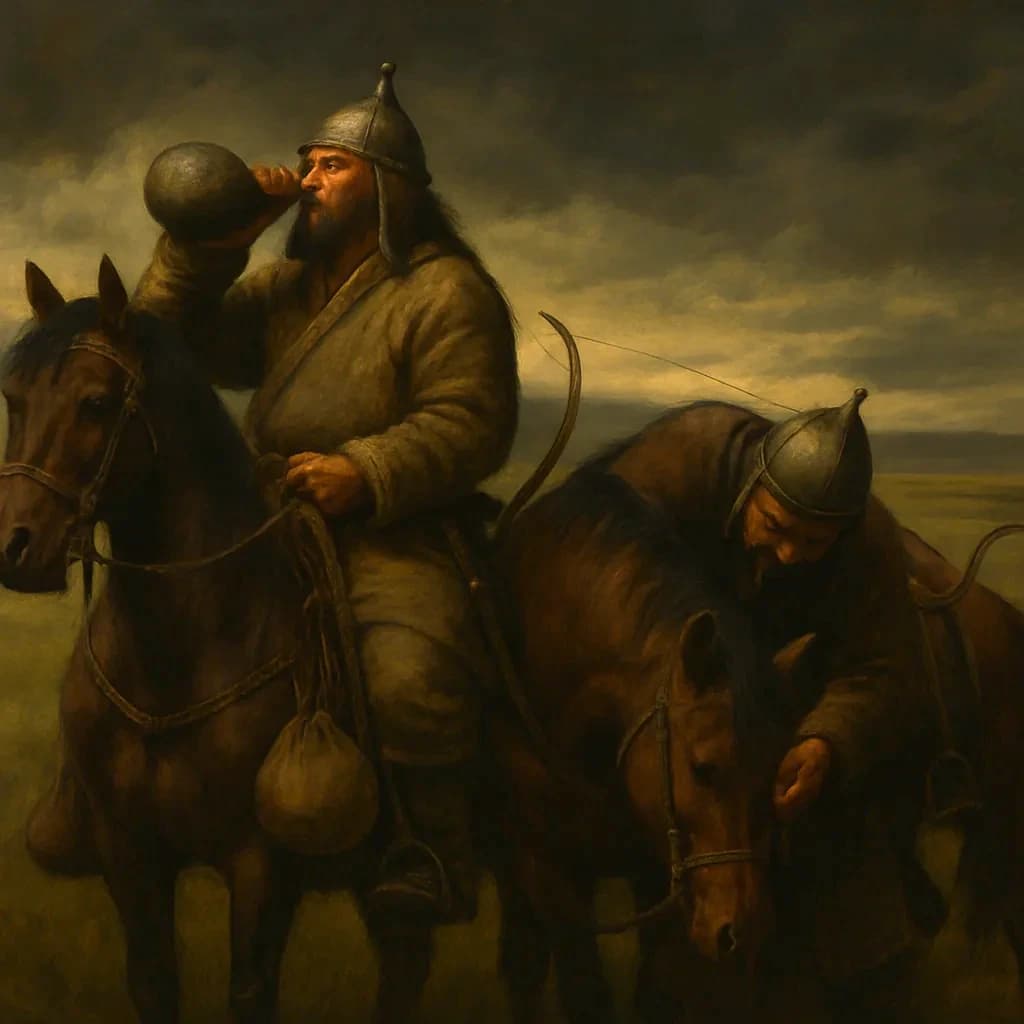
Genghis Khan's Secret Weapon Was Dried Milk
The Mongol Empire's secret weapon wasn't horses or arrows. It was a portable kitchen that could feed an army anywhere on earth.
- Jack Weatherford, Genghis Khan and the Making of the Modern World (2004)
- Paul Ratchnevsky, Genghis Khan: His Life and Legacy (1991)
- Timothy May, The Mongol Conquests in World History (2012)