
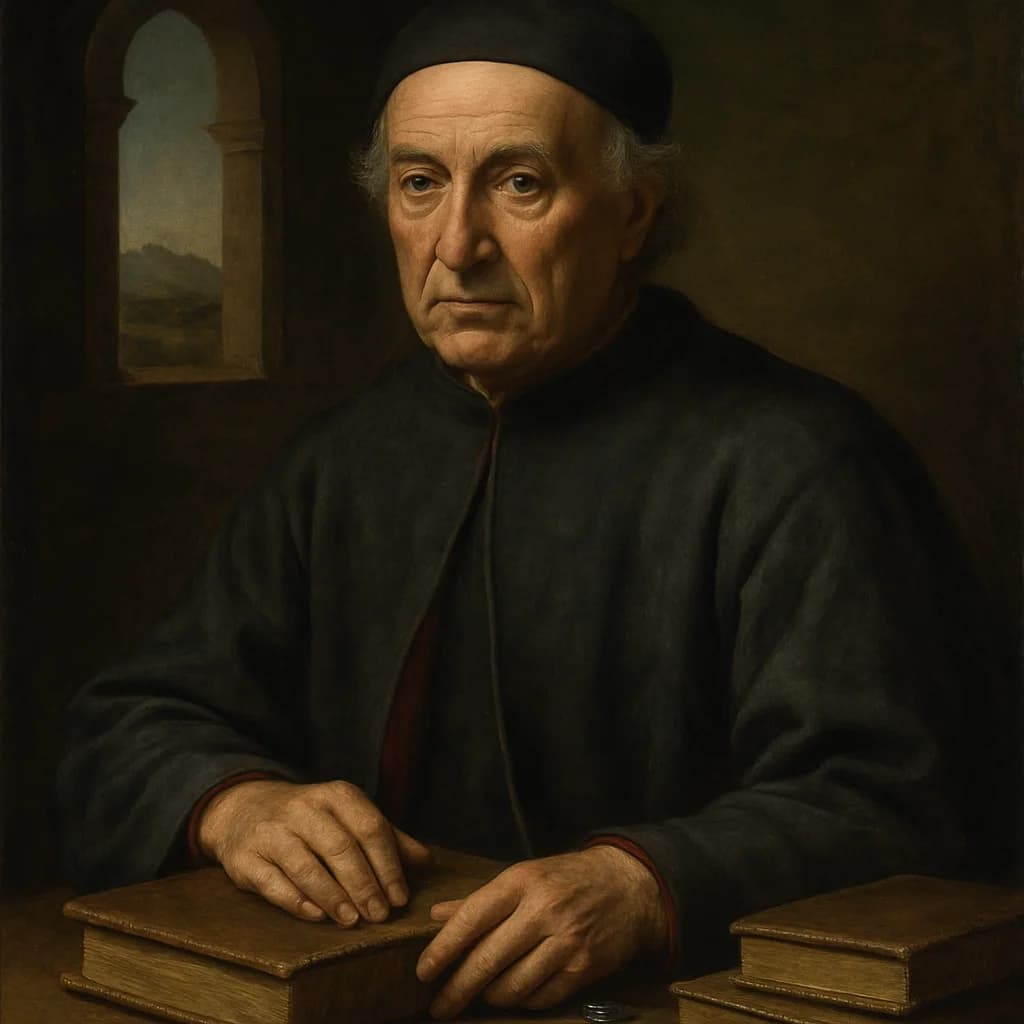
Francesco Sassetti
He managed the most powerful bank in the world and spent his private fortune commissioning a chapel that was really just an elaborate apology to God.
Francesco Sassetti was the general manager of the Medici Bank for nearly three decades, which sounds like a straightforward career until you understand what the Medici Bank actually was in the 1460s and 70s. It was less a financial institution than a sovereign power operating without a flag. It held the papal account. It moved money across eight countries. Kings owed it favors. Sassetti ran all of it from Florence, and he ran it badly enough that by the time Lorenzo de' Medici finally pushed him aside in 1490, the bank's northern branches were collapsing one after another like dominos in slow motion.
The Lyon branch. The Bruges branch. The London branch. Each one hemorrhaging money through a combination of bad loans to unreliable aristocrats and, in the case of Bruges, a manager named Tommaso Portinari who Sassetti trusted far too long and who made spectacularly catastrophic decisions that would have been obvious to anyone paying attention. Sassetti was paying attention to other things. Specifically, he was paying attention to his own legacy, his image, his posthumous reputation, the 15th-century Florentine equivalent of obsessing over how you'll be remembered.
This is where the chapel comes in. Sassetti commissioned Domenico Ghirlandaio to paint the family chapel in Santa Trinita between 1483 and 1486, and what Ghirlandaio produced was something genuinely strange: a fresco cycle depicting the life of Saint Francis that somehow also contained detailed portraits of Lorenzo de' Medici, various Florentine luminaries, and Sassetti himself, kneeling, in the presence of the divine. It was devotion and social climbing stitched into the same image. The frescoes are extraordinary. They are also a document of a man trying to paint himself into a version of history more flattering than the one the ledgers were writing.
What the ledgers wrote was damning. Historians examining Medici Bank records have traced much of the institution's late-century decline directly to Sassetti's supervisory failures: his reluctance to discipline branch managers, his preference for personal loyalty over financial oversight. He died in 1490, the same year his tenure officially ended. The bank outlasted him by four years, barely.
The Sassetti Chapel frescoes in Santa Trinita include what is considered one of the earliest accurate depictions of Florence's Piazza della Signoria, making Ghirlandaio's paintings an accidental piece of urban historical documentation.
Why untold: Sassetti has been absorbed almost entirely into art history (studied for the chapel he paid for rather than the institution he mismanaged), which means his role in the decline of the most consequential bank of the Renaissance remains largely invisible outside specialist economic history.
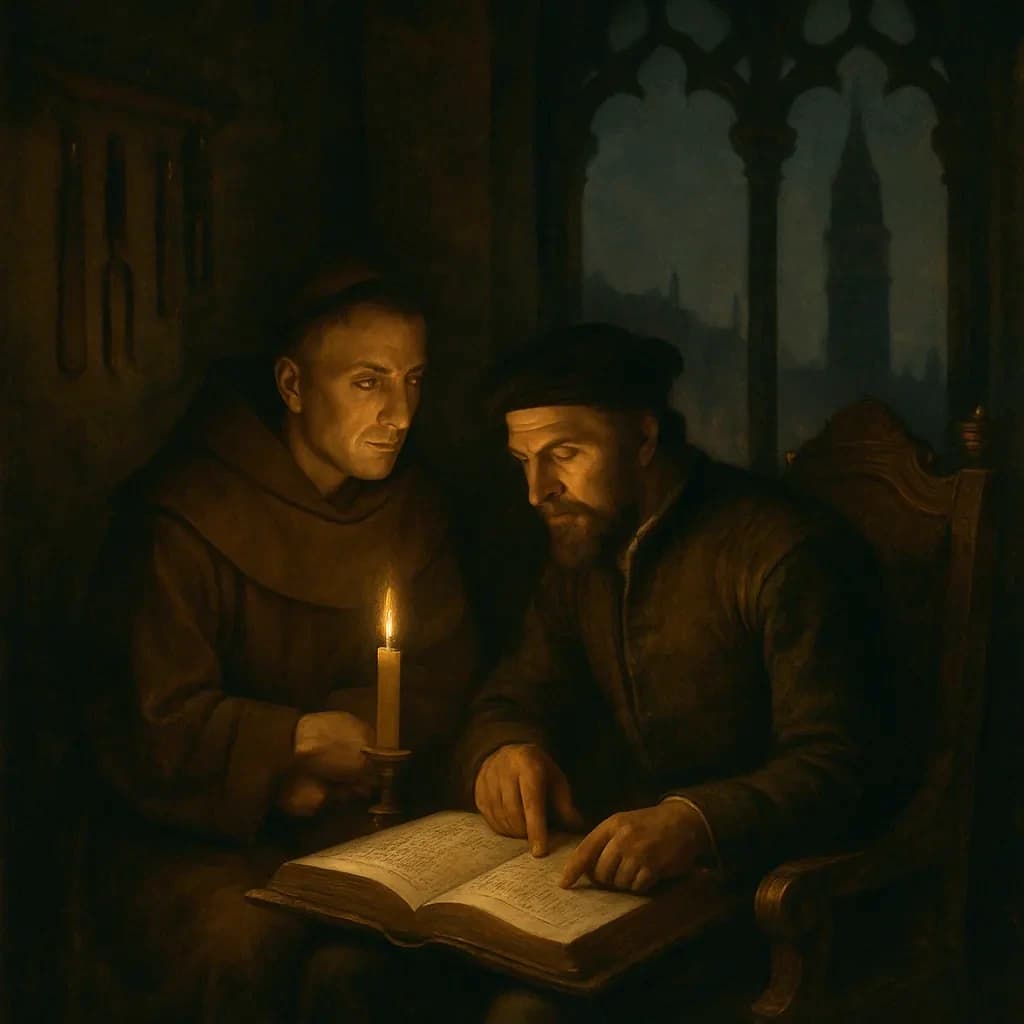
Double-Entry Bookkeeping Was Born in a Barbershop
A Venetian barber doing his midnight calculations in 1450 would reshape how Europe counted money forever.
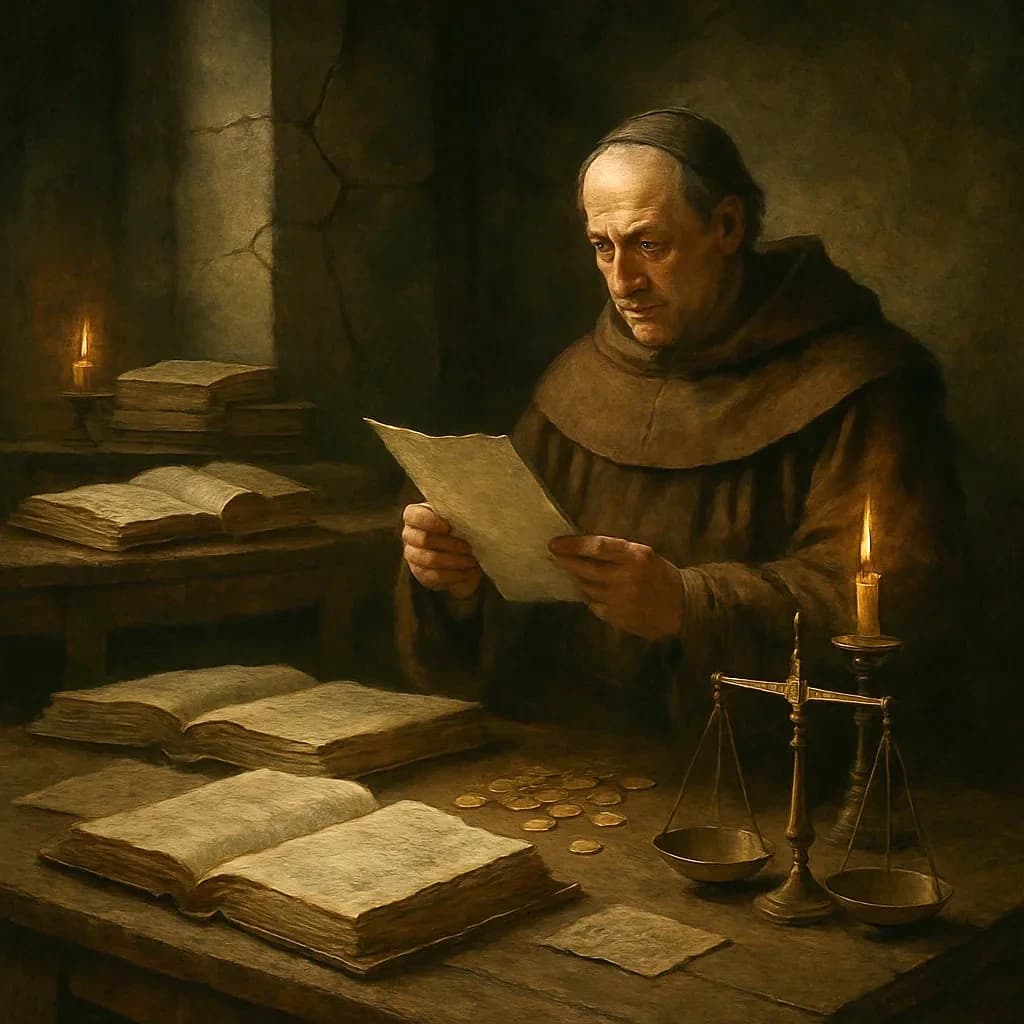
A Banker's Casual Loan Created the Modern Financial World
A Florentine banker's casual loan in 1343 accidentally created the modern financial world.
- Raymond de Roover, 'The Rise and Decline of the Medici Bank, 1397-1494' (Harvard University Press, 1963)
- Felix Gilbert, 'The Pope, His Banker, and Venice' (Harvard University Press, 1980)
- Eve Borsook and Johannes Offerhaus, 'Francesco Sassetti and Ghirlandaio at Santa Trinita, Florence' (Davaco Publishers, 1981)