
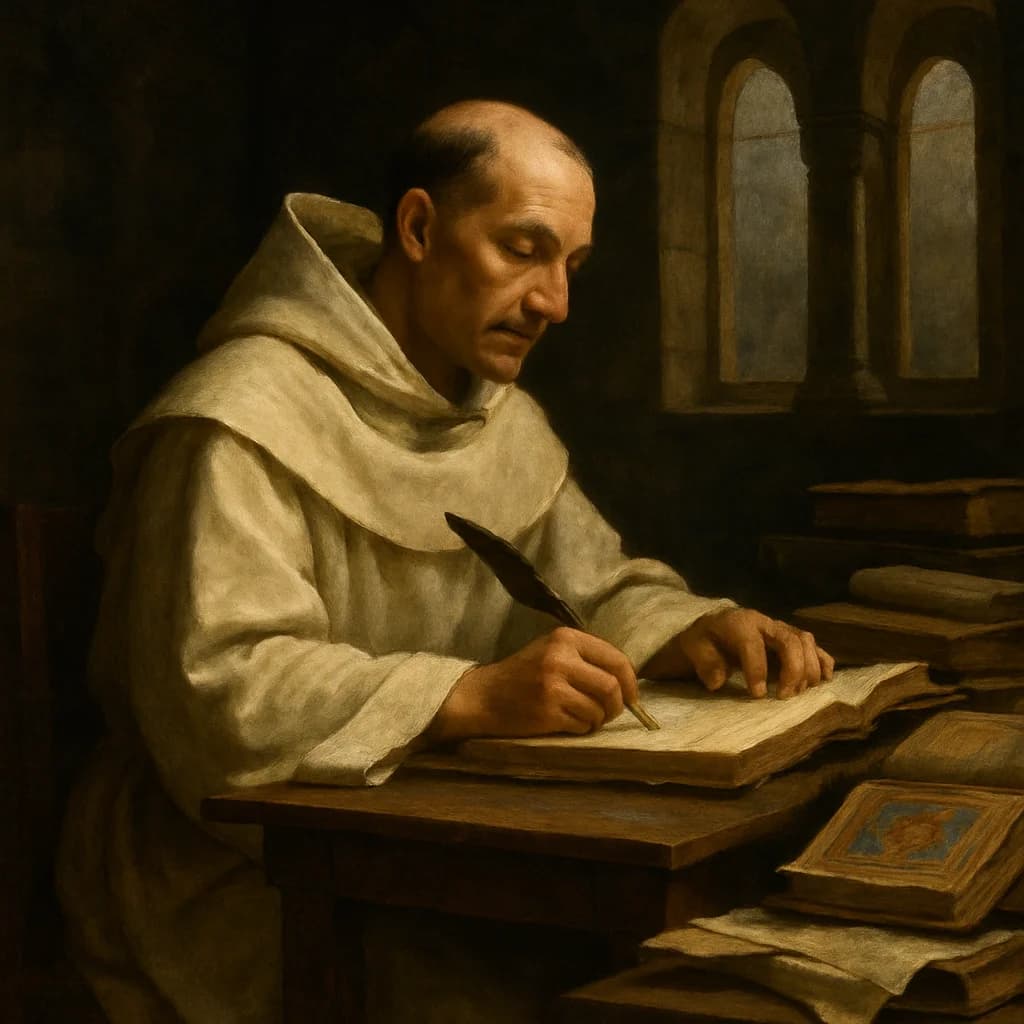
Fra Mauro
The Venetian monk who drew the world from his monastery cell never traveled farther than the Italian mainland, yet his map launched a thousand ships toward imaginary continents.
Fra Mauro spent his days behind the walls of San Michele monastery on the island of Murano, copying manuscripts and illuminating prayer books. But in 1459, something extraordinary happened: the most powerful men in Europe began asking a cloistered monk to redraw their understanding of the world.
His masterpiece was a circular map six feet across, painstakingly drawn on parchment and filled with over 3,000 place names. Portuguese navigators had been sending him sketches from their voyages down the African coast, and Mauro combined these fragments with ancient texts, traveler tales, and his own mathematical calculations. The result was revolutionary: he placed south at the top, showed Africa as circumnavigable, and compressed the distance to Asia by thousands of miles.
But Mauro's most consequential decision was born from incomplete information. Working with outdated measurements and secondhand accounts, he calculated that sailing west from Europe to Asia would take just weeks, not months. His map showed a deceptively narrow Atlantic, with Cipangu (Japan) floating tantalizingly close to European shores. When Christopher Columbus studied this map decades later, he saw confirmation of his own theories about a western route to the spices of the East.
Mauro died in 1464, never knowing that his mathematical miscalculation would redirect the course of human history. His "small" Atlantic Ocean became the foundation for Columbus's pitch to Spanish monarchs, launching the age of American exploration. The monk who never left his monastery had accidentally designed the blueprint for discovering a continent he never imagined existed.
Fra Mauro's world map included detailed illustrations of mythical creatures and fantastical cities, including a thriving African kingdom complete with elaborate palaces that existed only in his imagination.
Why untold: His crucial role in enabling Columbus's voyage has been overshadowed by focus on the explorer rather than the mapmaker whose miscalculations made the journey seem feasible.
Penance for the Pope: A Bankrupt Merchant's Map of Asia
Fleeing his creditors, a bankrupt Florentine merchant handed the Western world its first accurate picture of the Indian Ocean, and nobody noticed for two hundred years.
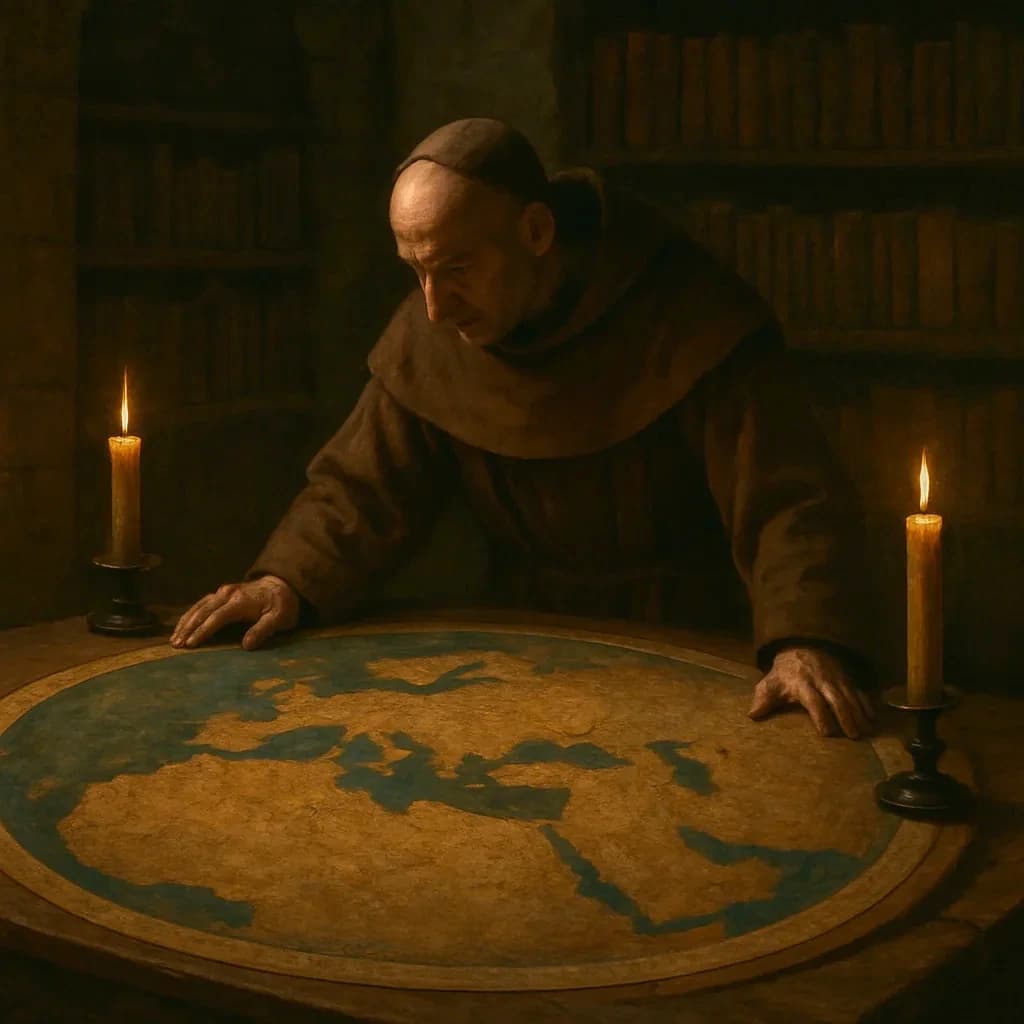
The Monk Who Mapped a Route Before Anyone Sailed It
A Venetian monk completed the most detailed map of the known world in 1459, and his patron immediately tried to suppress it.
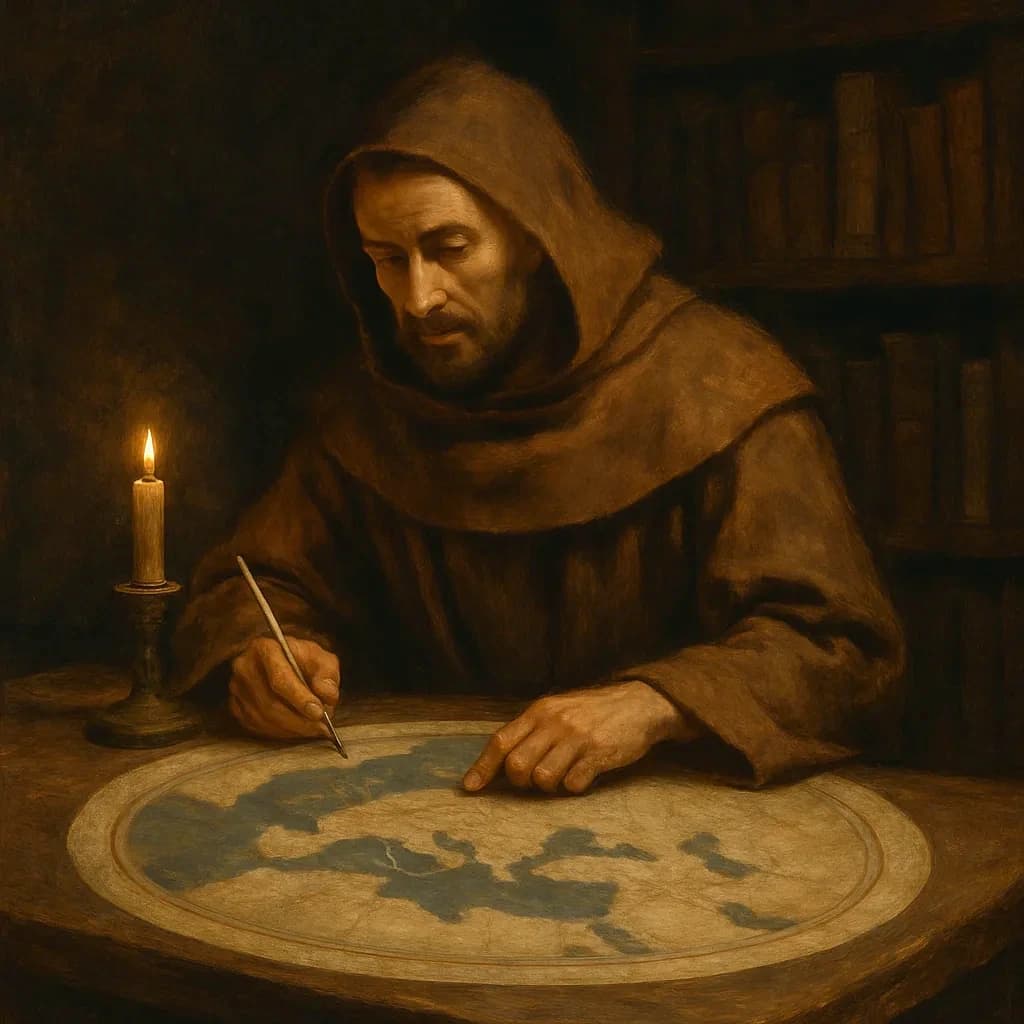
Off by 9,000 Miles: The Map That Sent Columbus West
A Venetian monk's handwritten map convinced Columbus that Asia was only 3,000 miles away, half the actual distance.
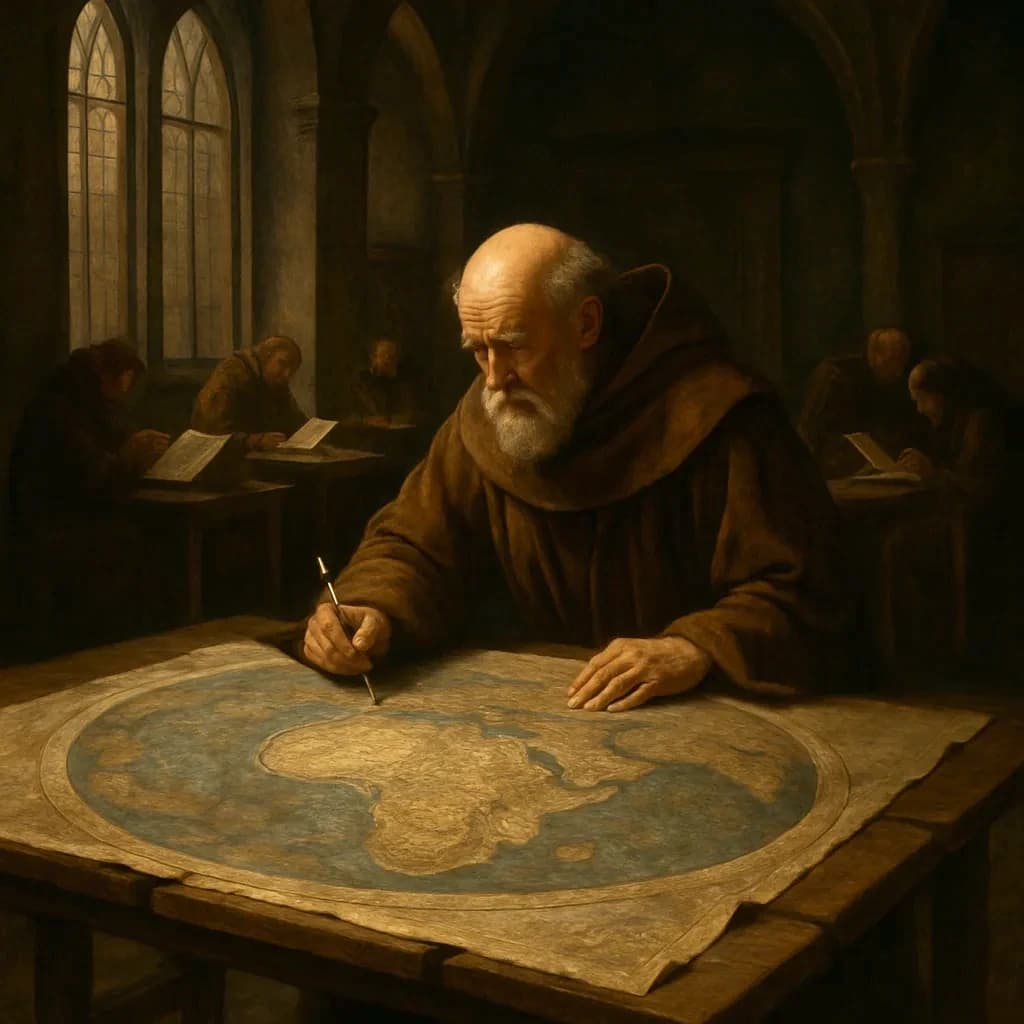
The Empire Europe Mapped but Never Found
For three centuries, European maps showed a thriving civilization in the heart of Africa, complete with cities, trade routes, and a powerful king who never lived.
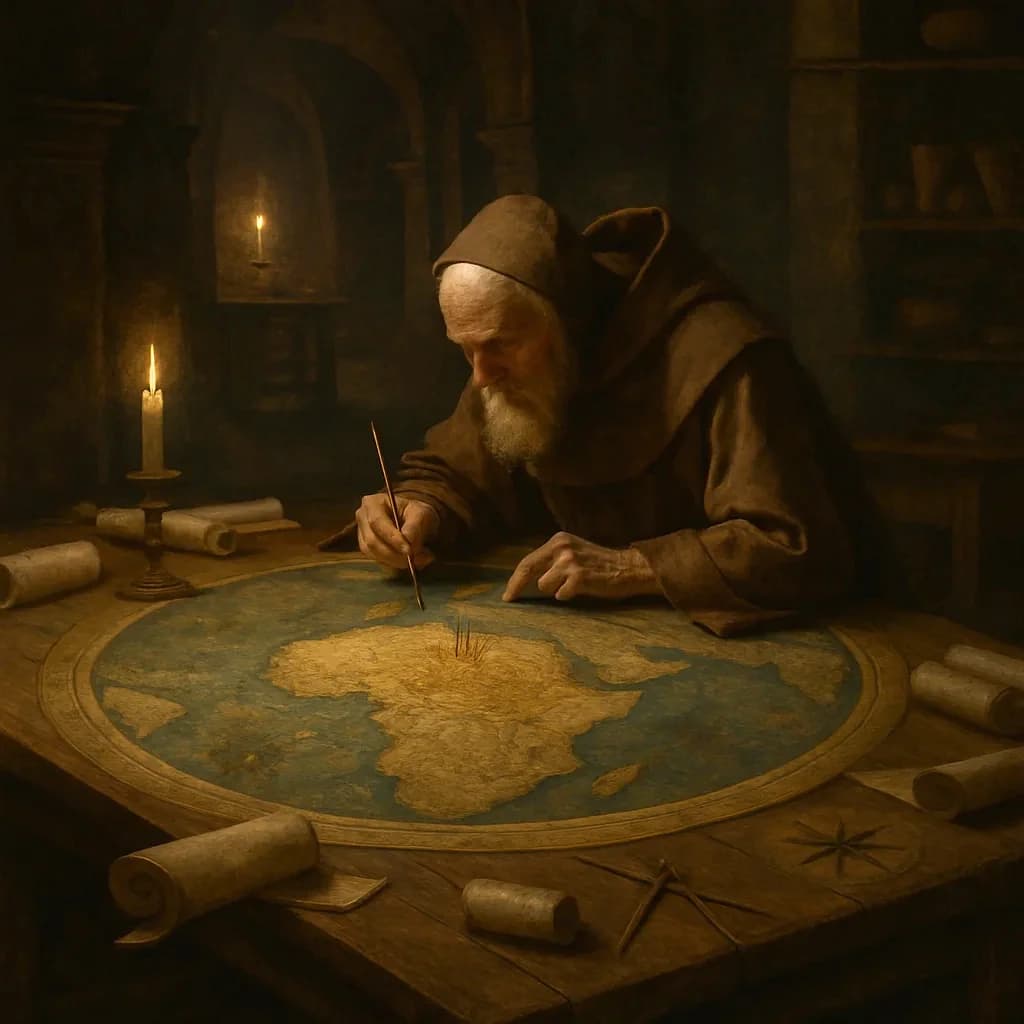
Europe Hunted a City a Monk Invented
For centuries, European maps showed a thriving metropolis in the heart of Africa that existed only in the imagination of a Portuguese priest.
- Ptak, John F. 'Fra Mauro's Mappa Mundi and the Discovery of America.' Journal of Historical Geography, 1991.
- Cattaneo, Angelo. 'Fra Mauro's Mappa Mundi and Fifteenth-Century Venice.' Brepols Publishers, 2011.
- Falchetta, Piero. 'Fra Mauro's World Map.' Biblioteca Nazionale Marciana, 2006.