
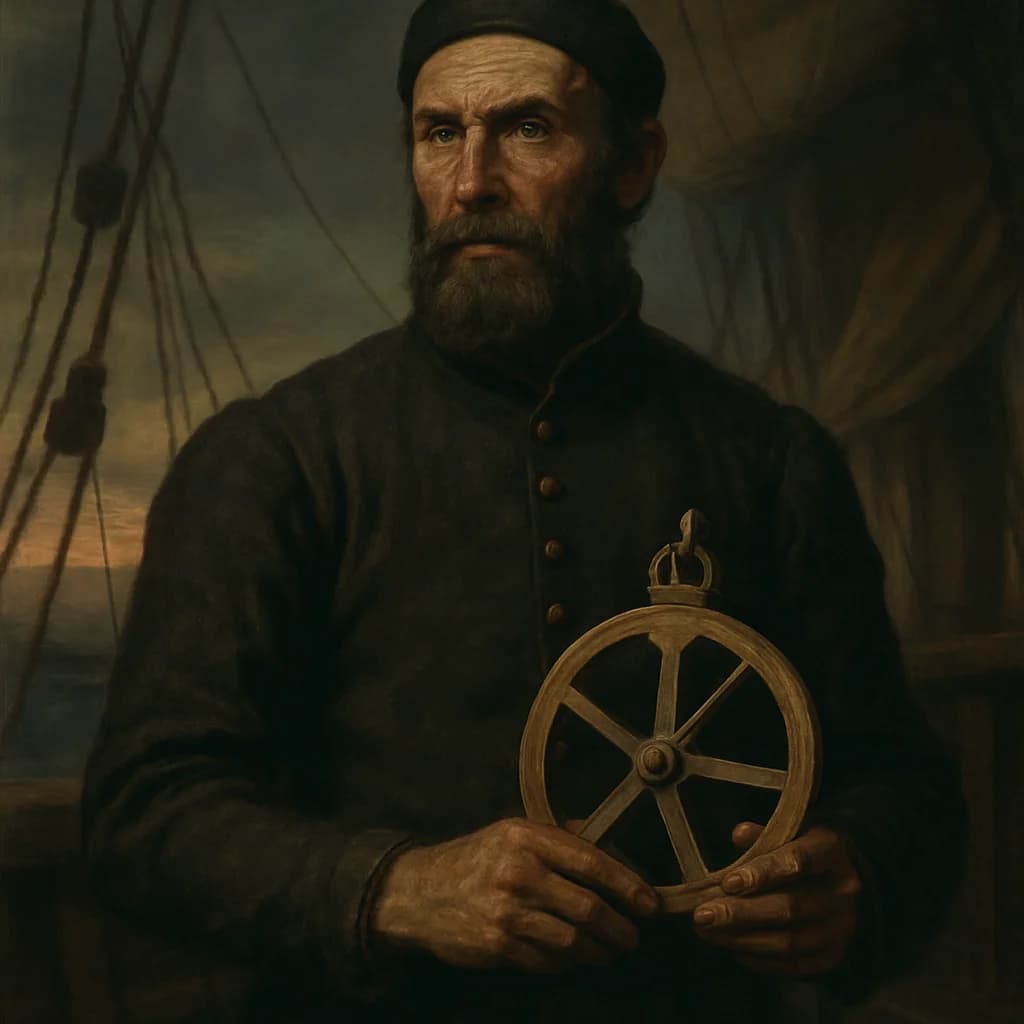
Ferdinand Magellan
The man credited with the first voyage around the world never made it halfway.
Ferdinand Magellan died on a beach in the Philippines, three years into what would become history's first circumnavigation. He'd convinced the Spanish crown to fund his expedition by lying about geography, claiming the Spice Islands were closer than anyone thought. The truth was messier: this Portuguese navigator had defected to Spain after his own king rejected his plans, burning every bridge behind him.
Magellan's genius wasn't seamanship. It was salesmanship. He pitched his voyage as a shortcut to riches, knowing full well he was guessing about distances across an unmapped ocean. When his fleet of five ships left Seville in 1519, he'd already survived a decade of brutal service in the Portuguese empire's Asian outposts, where he'd learned that the spice trade was worth any risk. His scarred, limping frame told the story of a man who'd fought pirates and participated in the massacre at Malacca.
The expedition nearly collapsed before reaching the Pacific. His Spanish captains, suspicious of their Portuguese leader, attempted mutiny in Patagonia. Magellan crushed the rebellion with shocking brutality, executing one captain and marooning another. When they finally found the strait that would bear his name, it took thirty-eight days of threading through icy, treacherous channels. One ship deserted and fled back to Spain.
By the time Magellan reached the Philippines, he'd transformed from explorer to conquistador, inserting himself into local political conflicts. He died trying to subjugate a chief named Lapulapu, struck down by poisoned arrows and bamboo spears in knee-deep water. His cook, Juan Sebastián Elcano, would eventually complete the journey with just eighteen survivors. Magellan had planned the impossible voyage but never saw its end, leaving others to claim the glory of proving the world was round and smaller than anyone imagined.
Magellan's expedition brought back just 381 pounds of cloves, but their sale in Europe still generated enough profit to cover the entire cost of the three-year voyage that killed 237 of the original 260 crew members.
Why untold: The myth of the great explorer overshadows the reality that Magellan was essentially a defector who sold geographical lies to fund a revenge mission against his former employer.
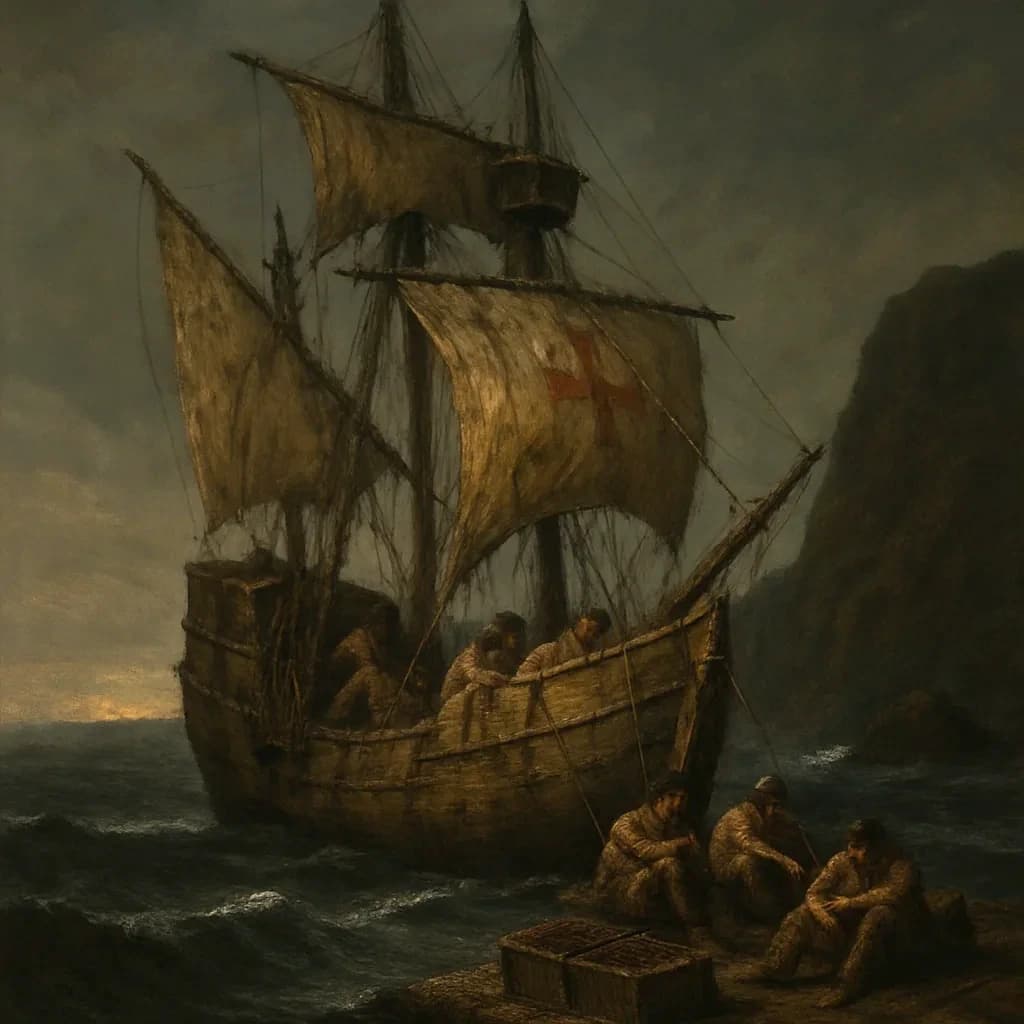
Magellan's Circumnavigation Was Completed by His Own Prisoner
Ferdinand Magellan's circumnavigation succeeded, but Magellan himself never finished it, and the man who did was supposed to be his prisoner.
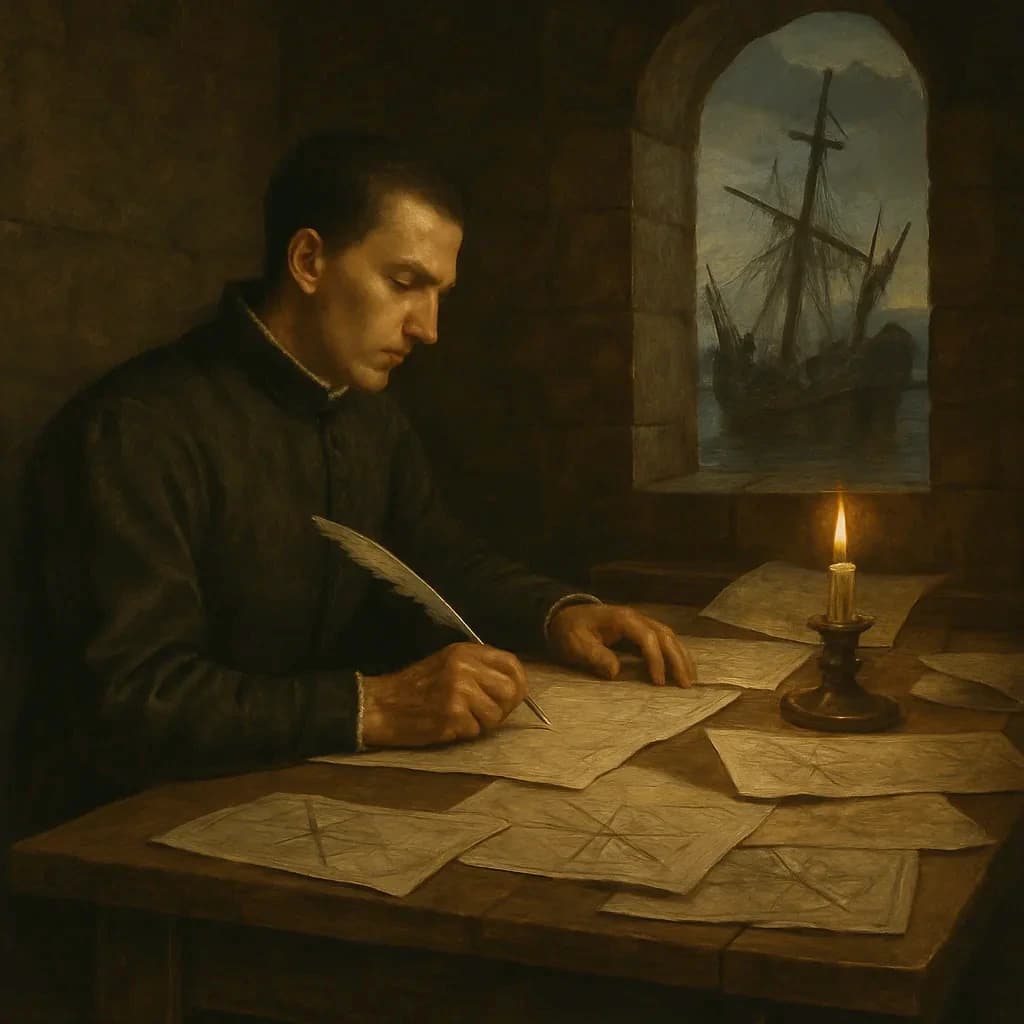
The Missing Day That Proved Earth Spins
A single battered ship returned in 1522 with its calendar off by exactly one day, and a Spanish mathematician realized those missing hours were empirical proof the world was round.
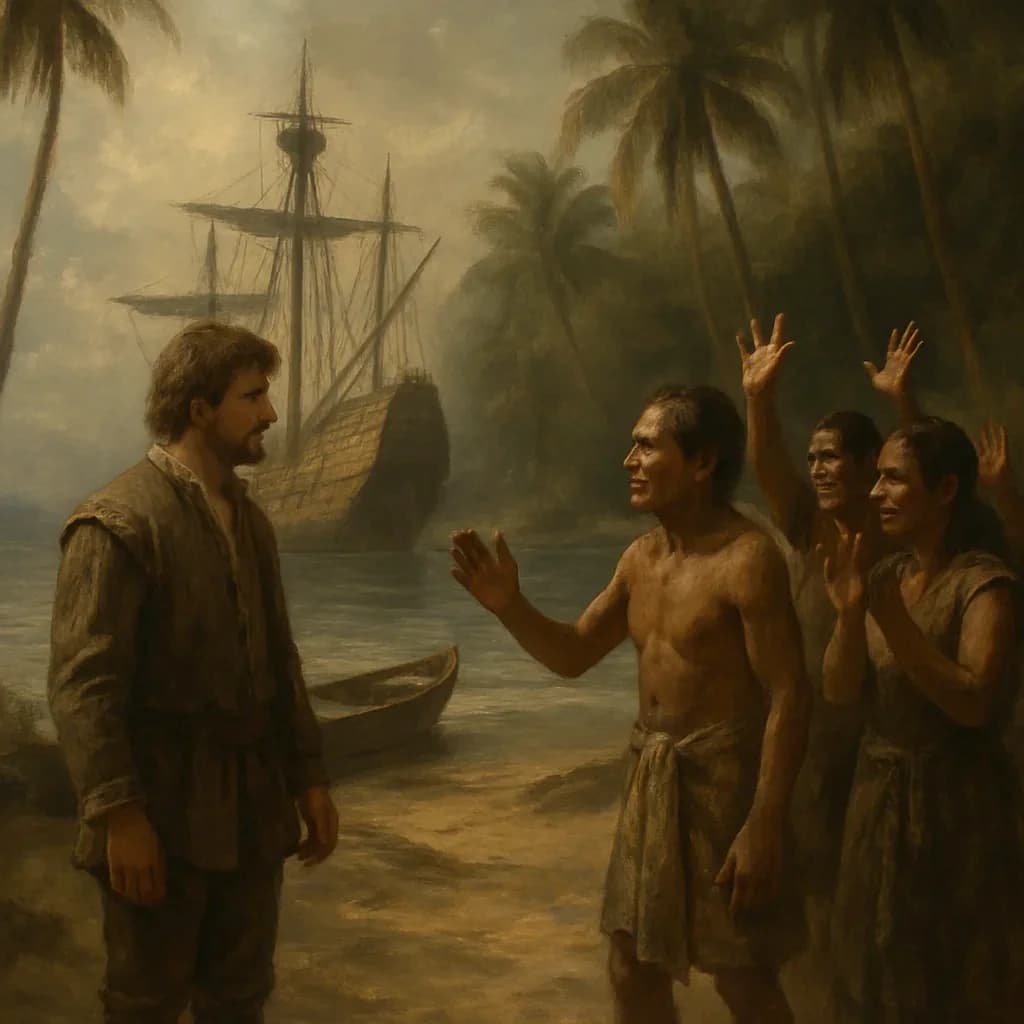
The Enslaved Man Who Circled the Globe First
A young enslaved man from West Africa stepped ashore in what is now Brazil in 1519, and became the first person to circumnavigate the globe.
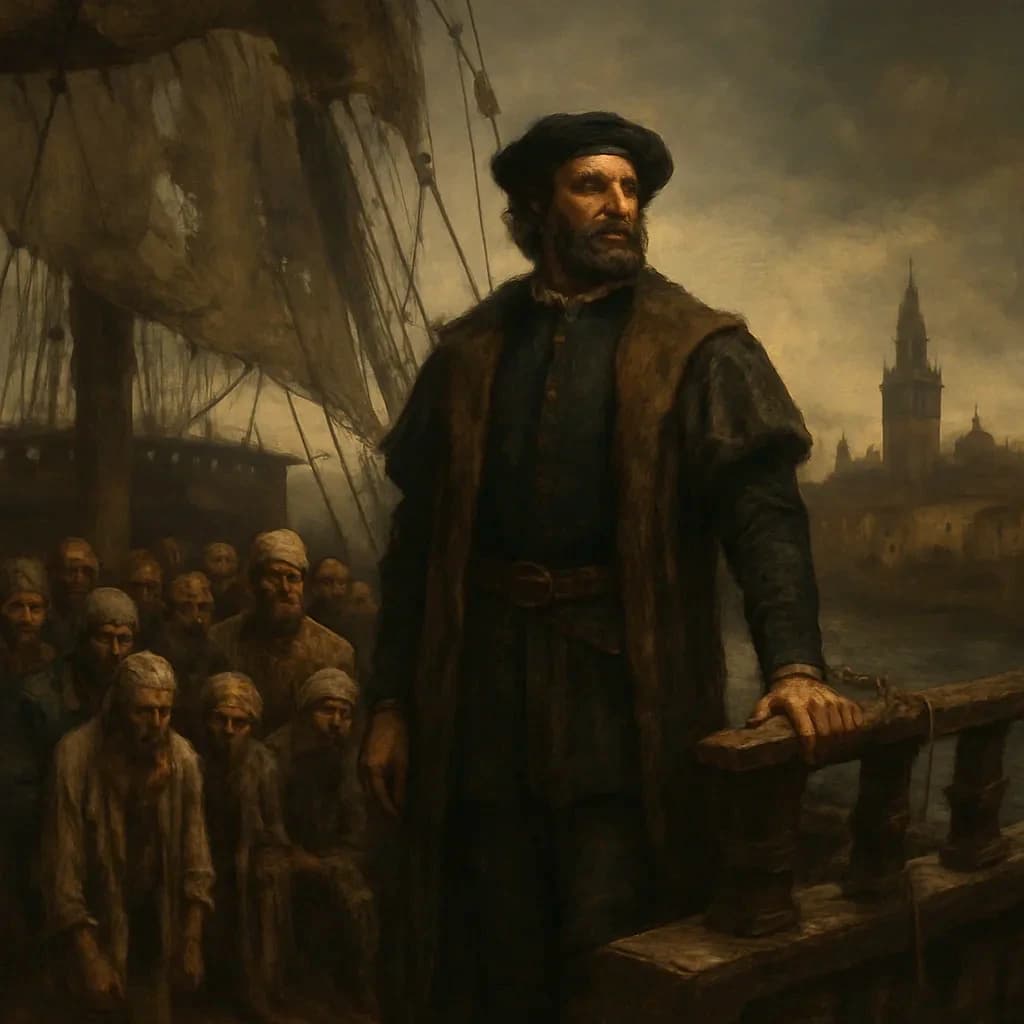
When Magellan's Cook Conquered the World
A ship's cook with no nautical training became the first person to circumnavigate the globe.
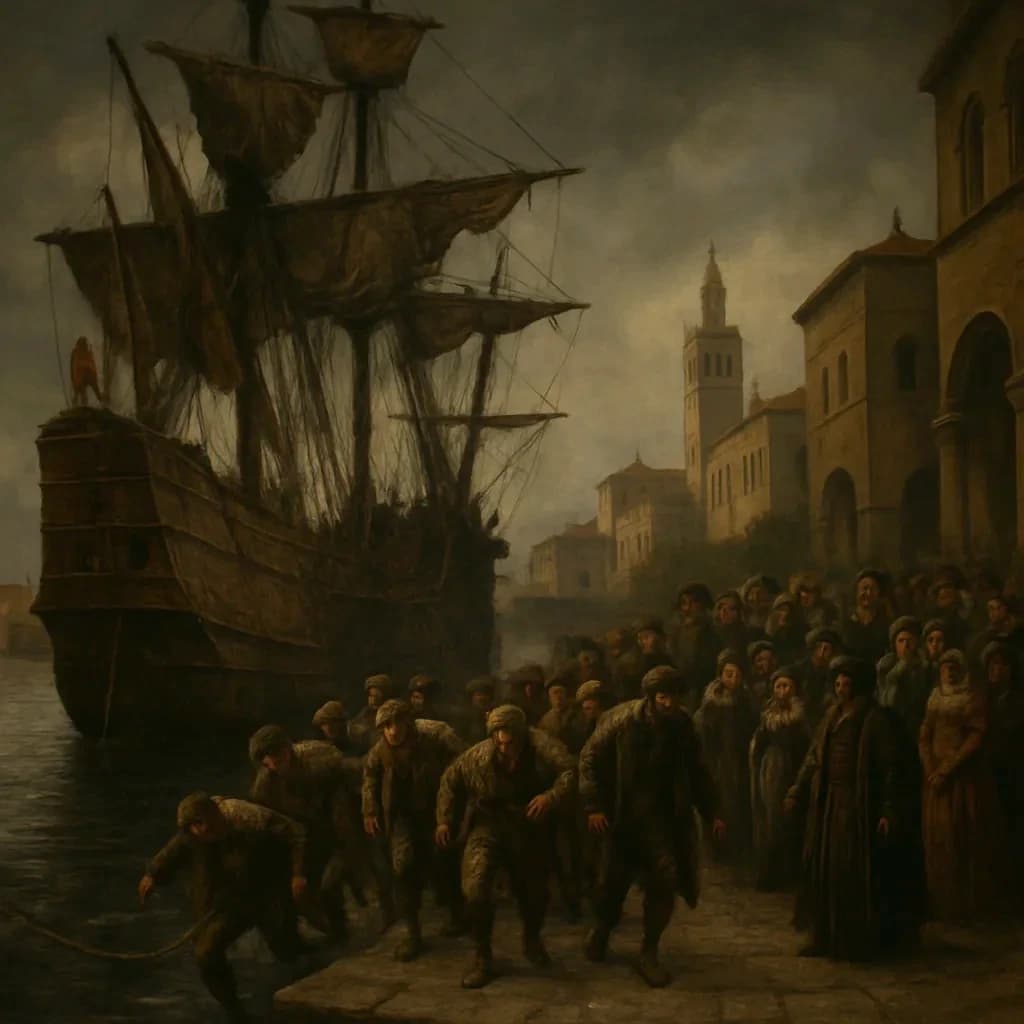
Magellan Never Made It Around the World. His Cook Did.
Ferdinand Magellan never completed the first voyage around the world, but his cook did.
- Bergreen, Laurence. Over the Edge of the World: Magellan's Terrifying Circumnavigation of the Globe. William Morrow, 2003.
- Levenson, Thomas. The Measure of All Things: The Seven-Year Odyssey and Hidden Error That Transformed the World. Free Press, 2002.
- Ptak, Stefan. The Magellan Fallacy: Globalization and the Emergence of Asian and African Literature in Spanish. University of Michigan Press, 2017.