
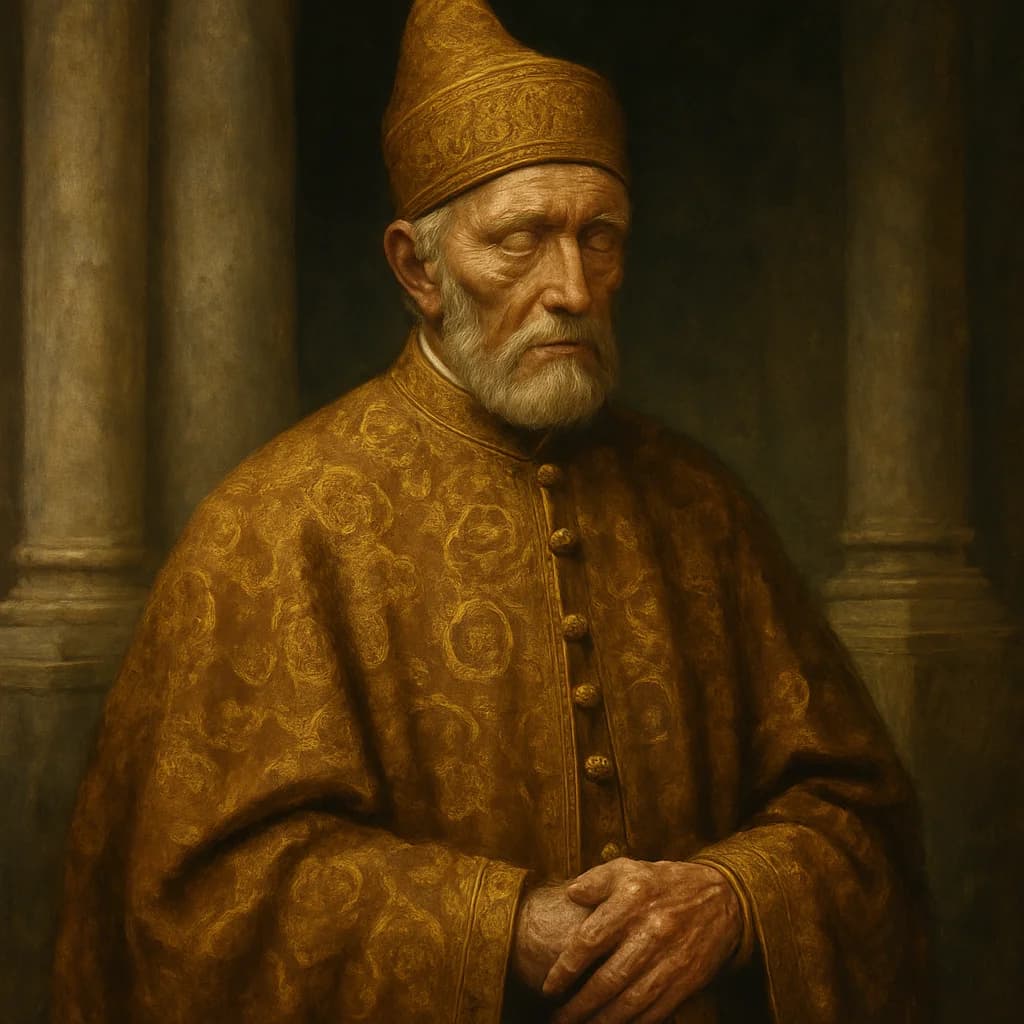
Enrico Dandolo
The blind man who destroyed Byzantium was ninety-six years old and had never intended to conquer Constantinople at all.
Enrico Dandolo became Doge of Venice in 1192 at age eighty-five, when most men were preparing for their deathbeds. By then, he was completely blind, not from age, but from a brutal assault decades earlier during a diplomatic mission to Constantinople, where Byzantine officials had allegedly thrown sand mixed with lime into his eyes. The injury should have ended his political career. Instead, it sharpened his focus into a blade.
When the Fourth Crusade arrived in Venice in 1202, desperately short of funds to pay for their passage to the Holy Land, Dandolo saw an opportunity that had nothing to do with religious war. The Crusaders owed Venice 85,000 silver marks, an impossible sum. Rather than cancel the expedition, Dandolo proposed a detour: help Venice recapture the rebellious city of Zara, and the debt would be forgiven. It was extortion dressed as piety, and it worked.
But Zara was just the appetizer. Through a web of Byzantine court intrigue involving a deposed emperor and his son, Dandolo maneuvered the Crusade toward Constantinople itself. When the city's new emperor couldn't pay the bribes he'd promised, Dandolo convinced the Crusaders that God clearly wanted them to take the city by force. In April 1204, he personally led the assault from the prow of his galley, a blind nonagenarian directing the fall of the world's greatest city.
The sack that followed was so thorough that Constantinople never recovered. Dandolo didn't just defeat Byzantium. He carved it up like a merchant dividing inventory, keeping the choicest pieces for Venice. He died in Constantinople a year later, buried in Hagia Sophia itself, the ultimate insult to the empire he'd destroyed.
Dandolo's tomb marker in Hagia Sophia was deliberately defaced by Ottoman Sultan Mehmed II in 1453, who considered the Doge's desecration of the city worse than any Muslim conquest.
Why untold: His story is overshadowed by the Crusades themselves, making him appear as a minor player rather than the mastermind who redirected Christian holy war for Venetian profit.
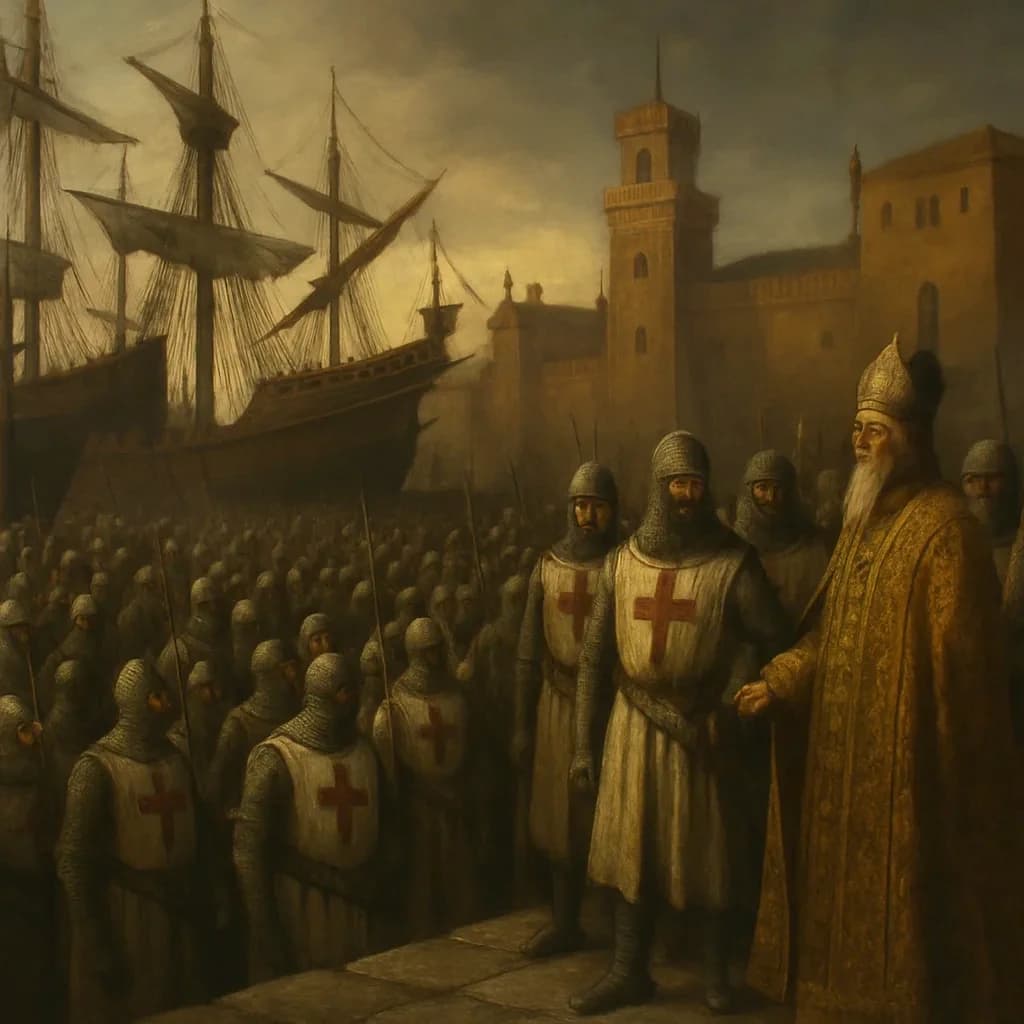
Too Broke for Jerusalem: A Crusade Sacks Constantinople Instead
Mid-journey to Jerusalem, a Flemish count ran out of money, and the invoice he couldn't pay redrew the map of the medieval world.
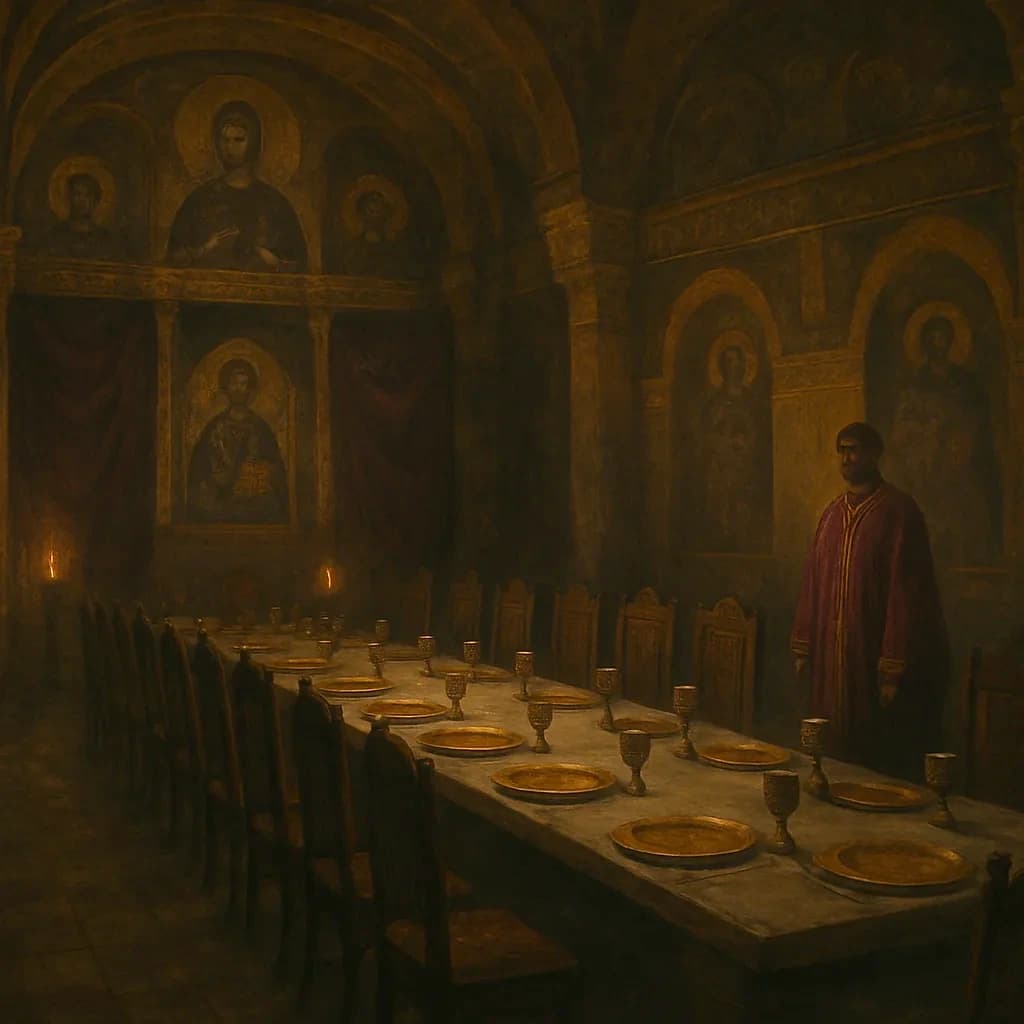
The Dinner That Could Have Saved Byzantium
The most powerful men in Europe were invited to a 1204 feast that would decide the fate of the Byzantine Empire, and not one of them showed up.
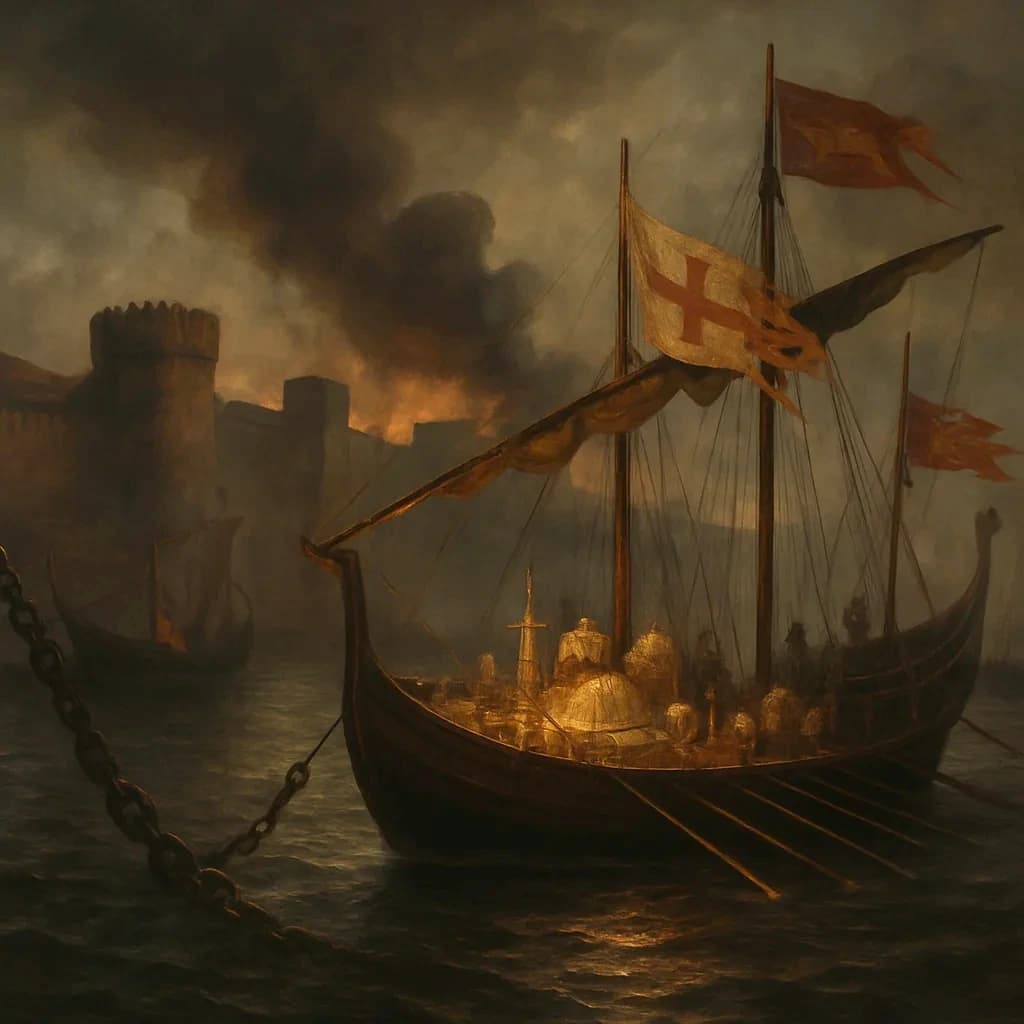
When Venice Auctioned the Byzantine Empire
A debt collector's sale notice would reshape the Mediterranean forever.
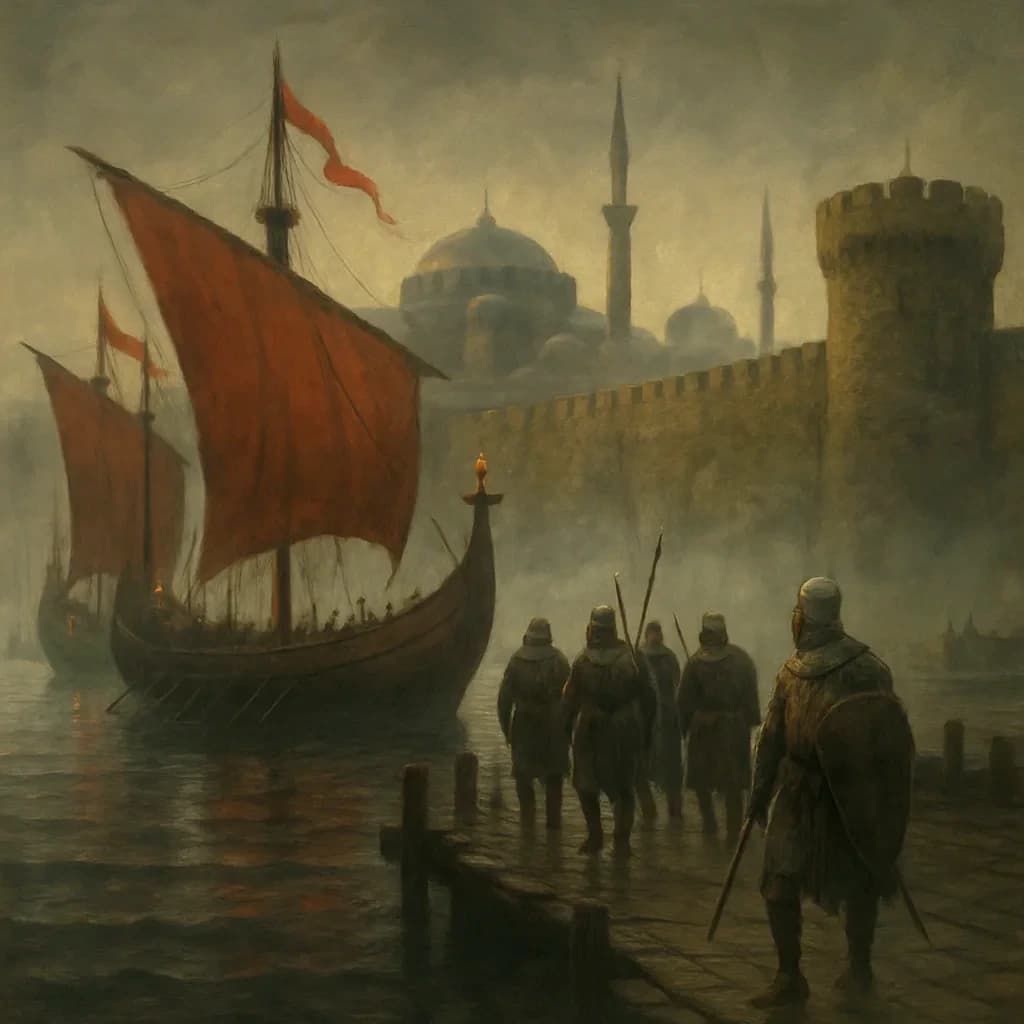
How a Tailor's Unpaid Bill Ended Byzantium
A humble seamster's unpaid bill triggered the bloodiest siege in medieval history and ended a thousand-year empire.
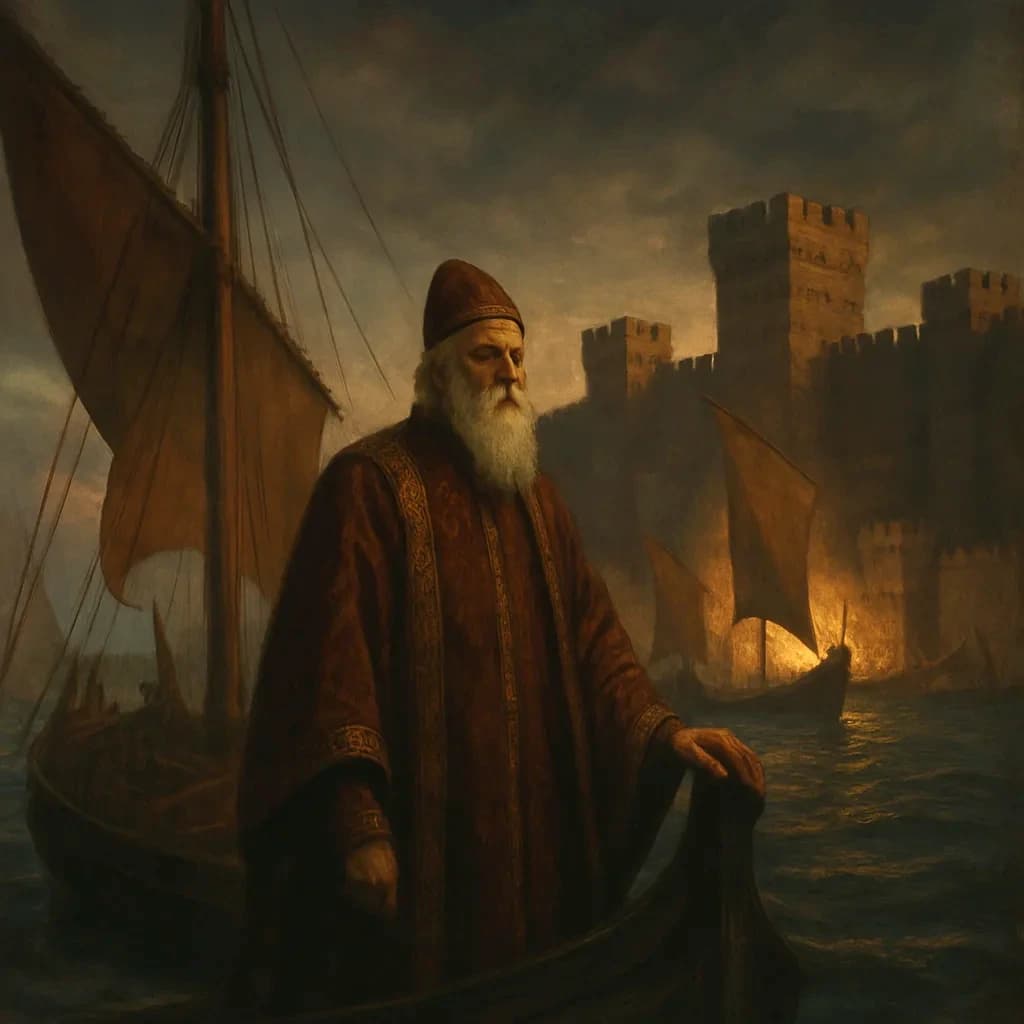
Blind at Ninety-Six, He Led the Assault on Constantinople
At ninety-six and completely blind, Enrico Dandolo led the largest naval assault Constantinople had ever seen.
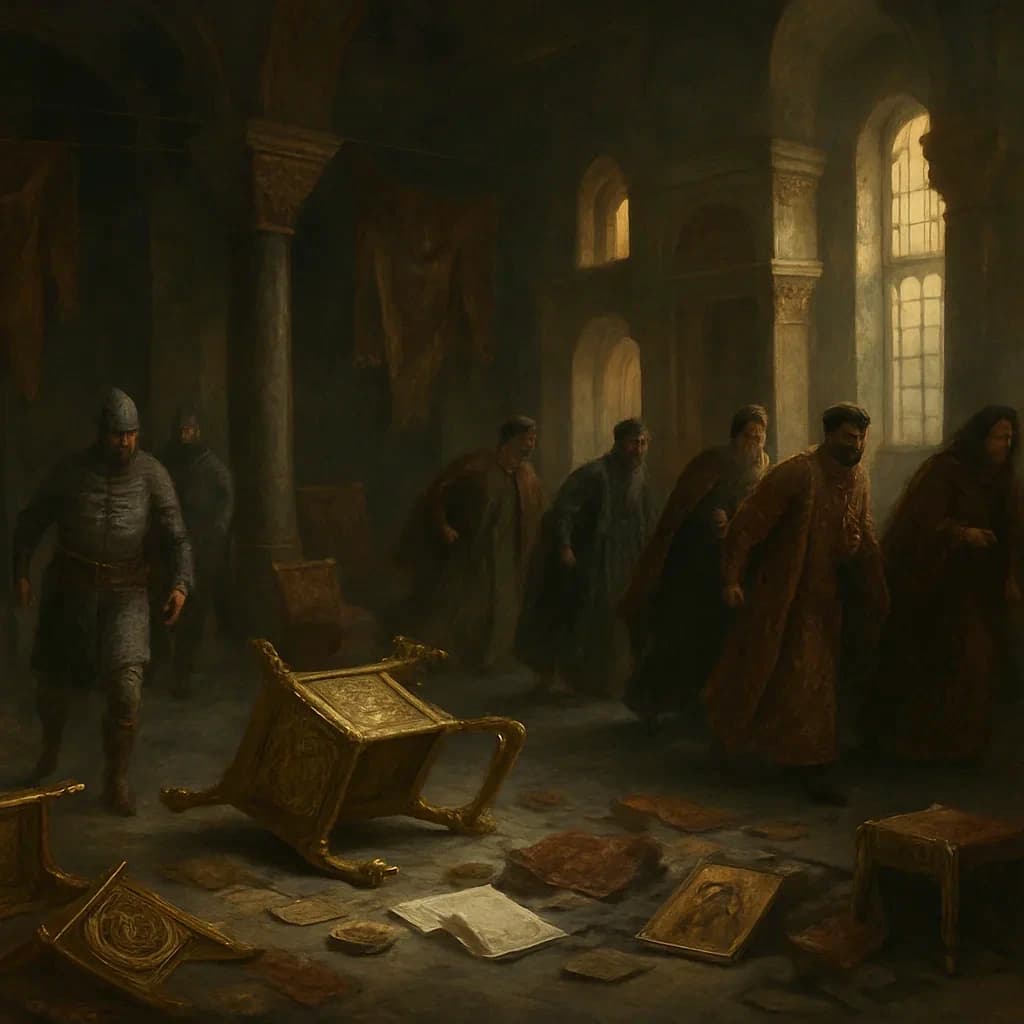
The Emperor Had Seventeen Palaces and Nowhere to Sleep
The most powerful man in the world had seventeen palaces, a million subjects, and absolutely nowhere to sleep.
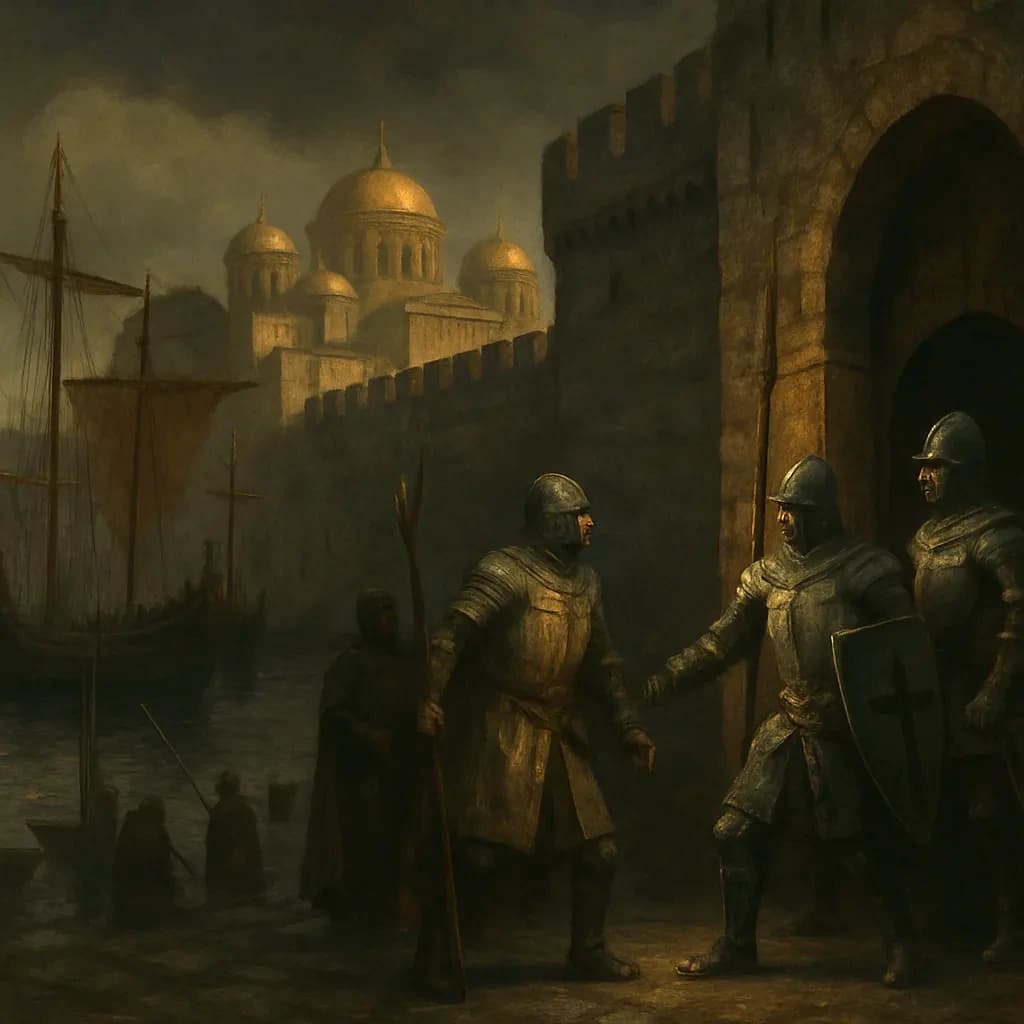
A Snubbed Dinner and the Sack of Constantinople
A single dinner invitation, sent across Constantinople in 1204, became the most expensive meal in Byzantine history.
- Thomas F. Madden, 'Enrico Dandolo and the Rise of Venice' (2003)
- Geoffrey de Villehardouin, 'The Conquest of Constantinople' (contemporary chronicle)
- Jonathan Phillips, 'The Fourth Crusade and the Sack of Constantinople' (2004)