
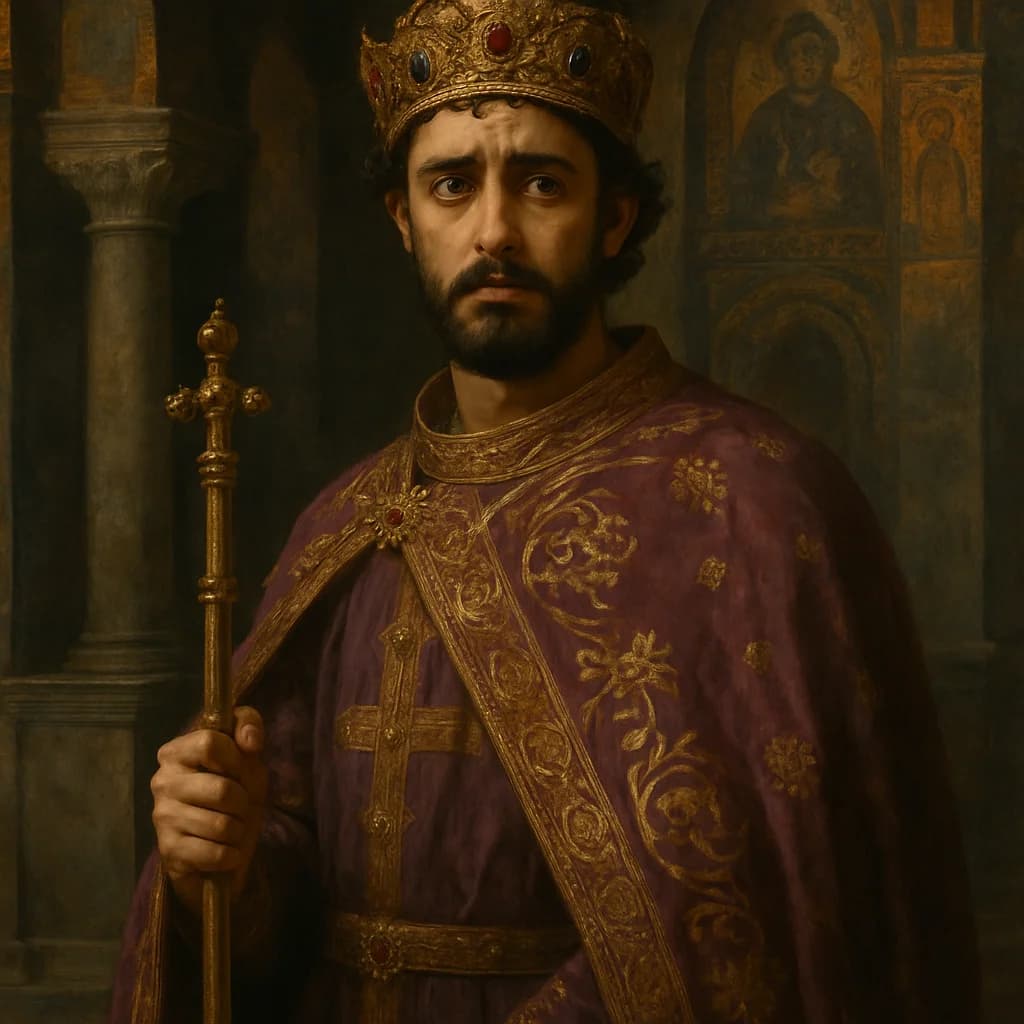
Alexios IV Angelos
The man who destroyed an empire by asking for help had never wanted to be emperor in the first place.
Alexios IV Angelos spent most of 1203 as the most dangerous dinner guest in Europe. Exiled as a teenager when his father Isaac II was deposed and blinded, Alexios had fled to the court of his brother-in-law Philip of Swabia, clutching a claim to the Byzantine throne and absolutely no way to enforce it. Then the Fourth Crusade arrived at his door, short on funds and heavy on ambition.
What happened next was the medieval equivalent of hiring a motorcycle gang to help you move furniture. Alexios promised the Crusaders 200,000 silver marks, provisions for their army, and 10,000 Byzantine troops for their holy war. The price? They just had to help him reclaim Constantinople. It seemed reasonable. It was catastrophically naive.
The Crusaders delivered their end of the bargain with terrifying efficiency, storming Constantinople in July 1203 and installing Alexios as co-emperor alongside his restored father. But the treasury Alexios thought would fund his promises had been systematically looted by the previous regime. The taxes he imposed to pay the Crusaders sparked riots. The military he'd pledged was more interested in defending against the armed foreigners now camped outside the city walls than marching to Jerusalem.
By January 1204, Constantinople was a powder keg with Alexios holding the match. When he finally tried to break his contract with the Crusaders, his own nobles strangled him in his sleep and threw his body to the dogs. Three months later, those same Crusaders sacked the greatest city in the Christian world, ending an empire that had survived for over a thousand years. Alexios had gotten exactly what he asked for: he'd become emperor of Byzantium. He just hadn't considered that Byzantium might not survive the process.
Alexios IV ruled for only six months, but his reign cost the Byzantine Empire roughly 100,000 pounds of gold in payments to the Crusaders, more than most emperors spent in their entire lifetimes.
Why untold: His story is overshadowed by the more dramatic sack of Constantinople that followed his death, making him appear as a footnote rather than the catalyst of Byzantine collapse.
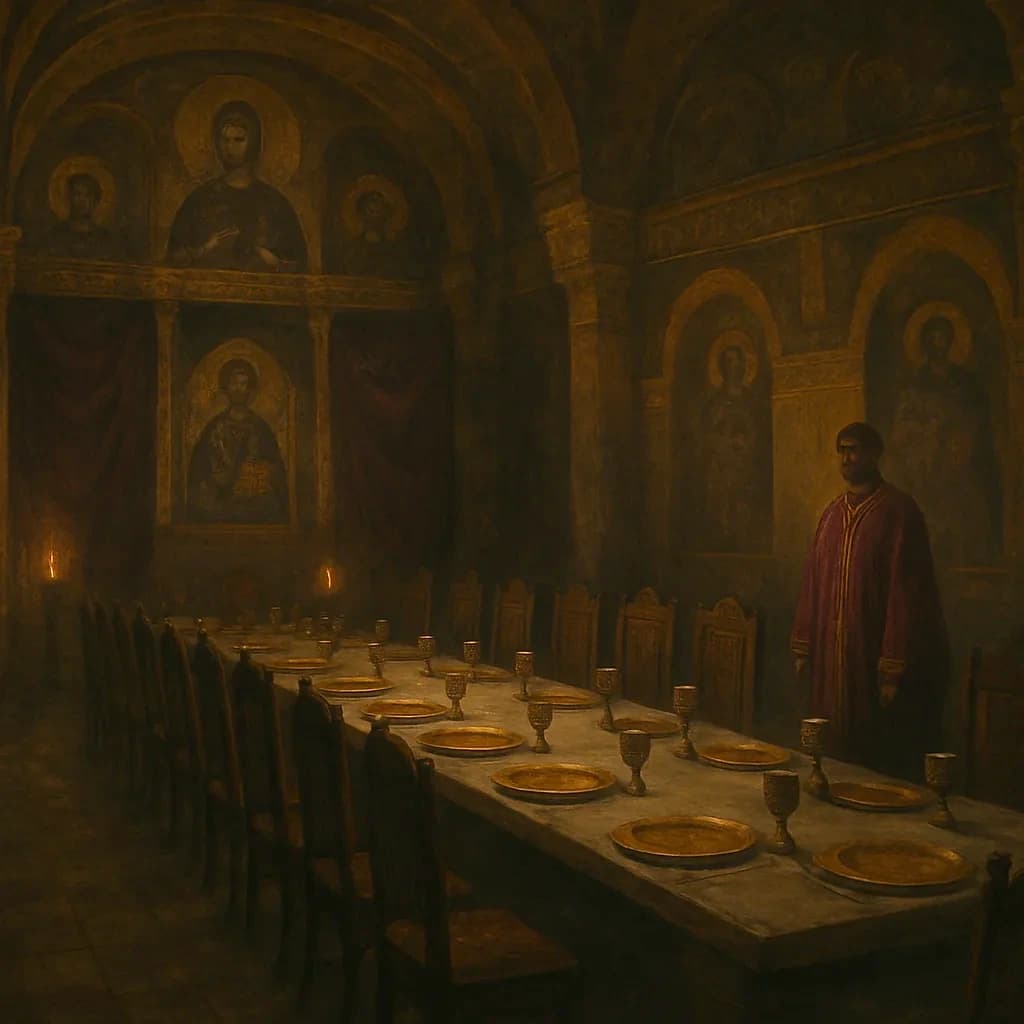
The Dinner That Could Have Saved Byzantium
The most powerful men in Europe were invited to a 1204 feast that would decide the fate of the Byzantine Empire, and not one of them showed up.
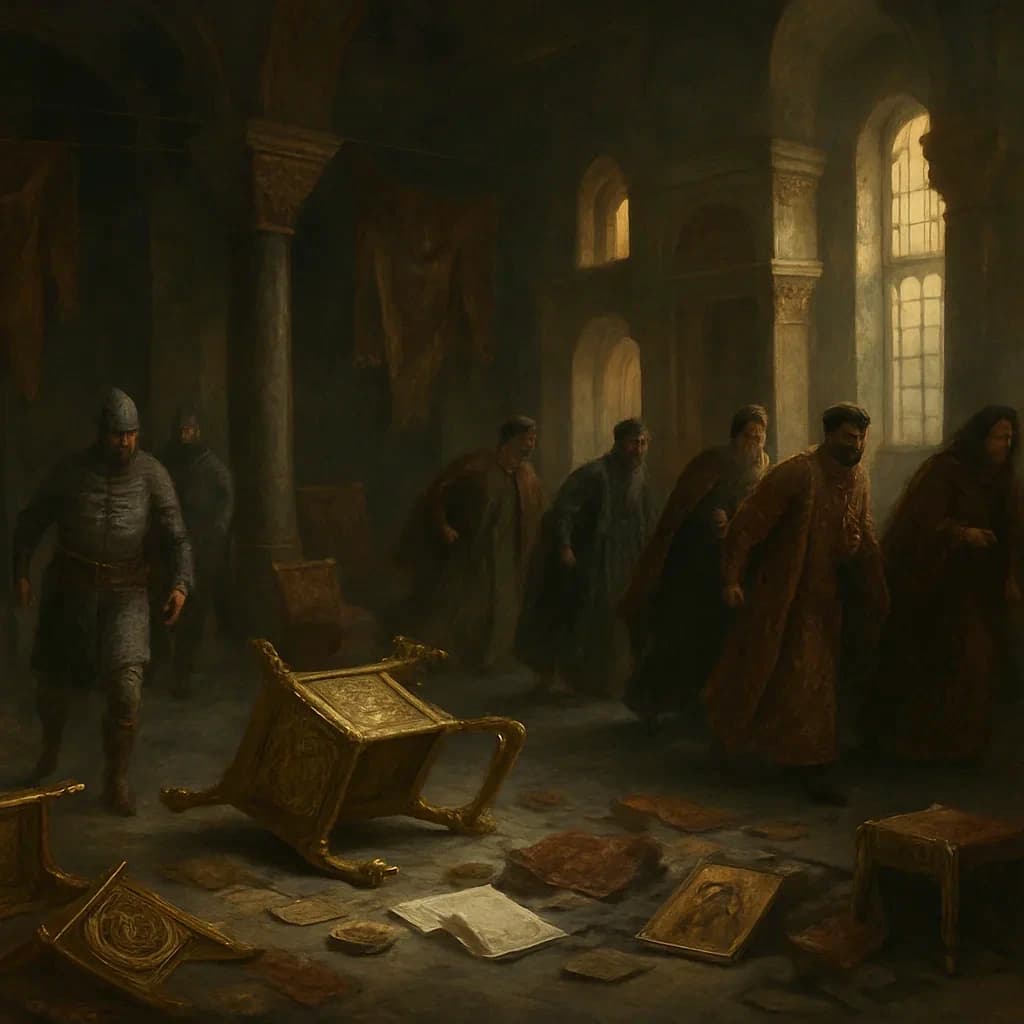
The Emperor Had Seventeen Palaces and Nowhere to Sleep
The most powerful man in the world had seventeen palaces, a million subjects, and absolutely nowhere to sleep.
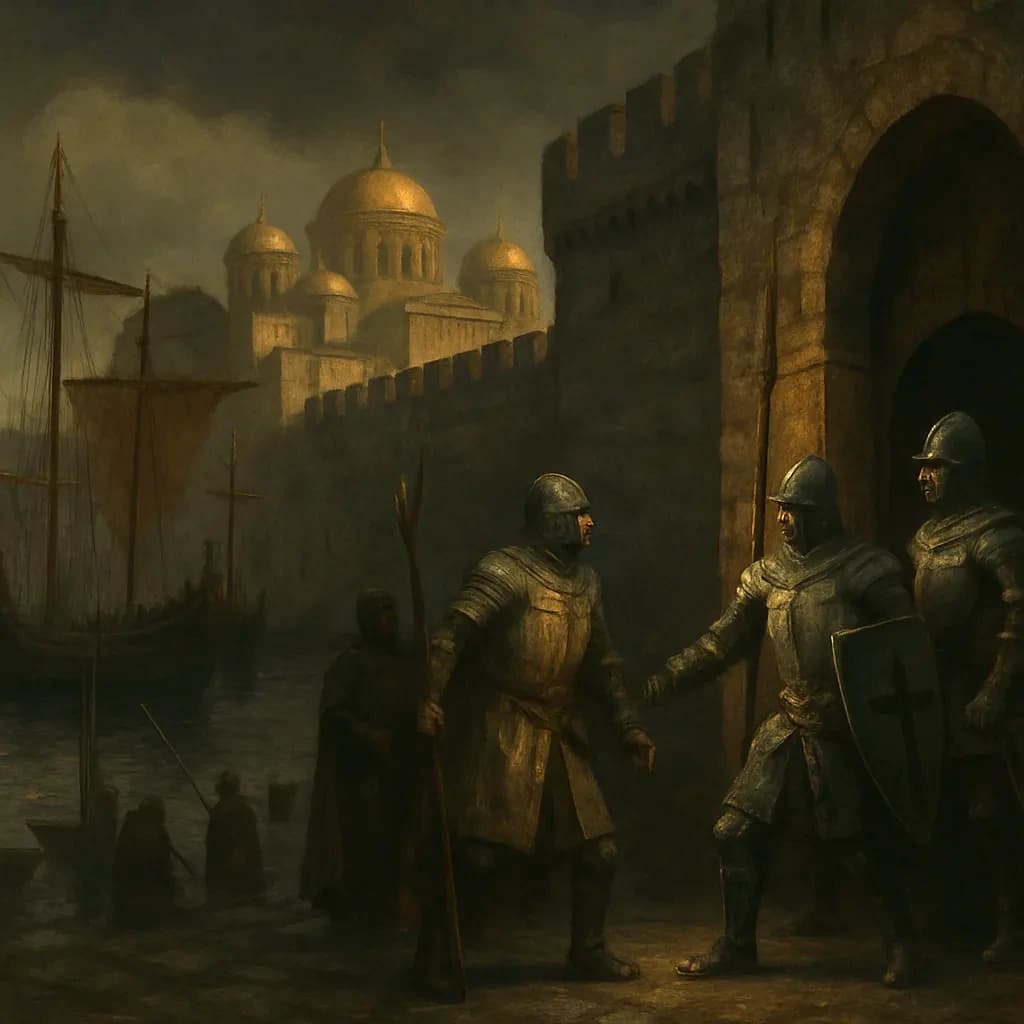
A Snubbed Dinner and the Sack of Constantinople
A single dinner invitation, sent across Constantinople in 1204, became the most expensive meal in Byzantine history.
- Nicetas Choniates, 'O City of Byzantium: Annals of Niketas Choniates', trans. Harry J. Magoulias
- Geoffrey de Villehardouin, 'The Conquest of Constantinople', trans. M.R.B. Shaw
- Jonathan Phillips, 'The Fourth Crusade and the Sack of Constantinople'