
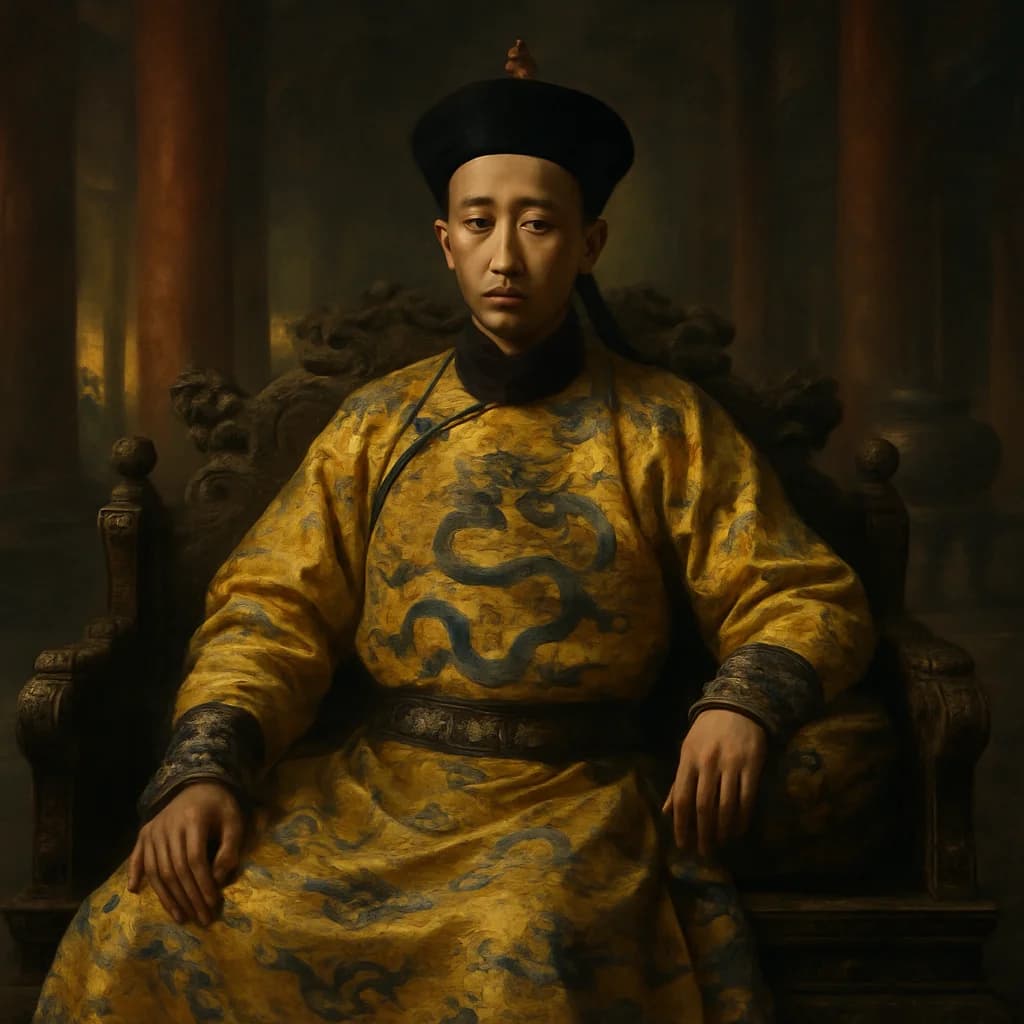
Emperor Guangxu
The only emperor in Chinese history who tried to abolish his own empire died under house arrest, possibly poisoned by the woman who put him on the throne.
Zaitian never wanted to be emperor. In 1875, at age four, he was plucked from obscurity by his aunt, the Empress Dowager Cixi, who needed a malleable puppet to maintain her grip on power. She chose him over the rightful heir specifically because he wasn't in the direct line of succession, a violation of Qing dynasty law that would haunt the empire's final decades.
For twenty-three years, Guangxu lived as emperor in name only, watching Cixi conduct audiences from behind a yellow silk screen while he sat silent on the Dragon Throne. But in 1898, everything changed. The twenty-seven-year-old emperor suddenly seized actual power and launched the most radical reform program in Chinese history. In just 103 days, he issued forty major edicts: abolishing the traditional examination system that had governed China for over a millennium, establishing modern universities, building railways, creating a constitutional monarchy, and even considering the abolition of the imperial system itself.
Cixi struck back with surgical precision. She declared Guangxu mentally ill, placed him under house arrest on a small island in the Forbidden City's lake, and reversed every single reform. For the next ten years, the emperor who had tried to modernize China lived as a prisoner in his own palace, forbidden from seeing anyone without Cixi's permission, reduced to writing desperate secret letters to his brother begging for poison to end his misery.
On November 14, 1908, Guangxu died at age thirty-seven, officially from illness. Cixi died the next day, a coincidence that fooled no one. Modern forensic analysis of Guangxu's remains revealed lethal levels of arsenic. The reformer emperor had been murdered just as the dynasty he'd tried to save was entering its final collapse.
Guangxu's 103-day reform period moved so fast that he sometimes issued three major edicts in a single day, completely restructuring institutions that had existed unchanged for centuries.
Why untold: Chinese Communist historians downplayed Guangxu's reforms because they portrayed imperial attempts at modernization, while Western accounts focused on the more dramatic Boxer Rebellion that followed his downfall.
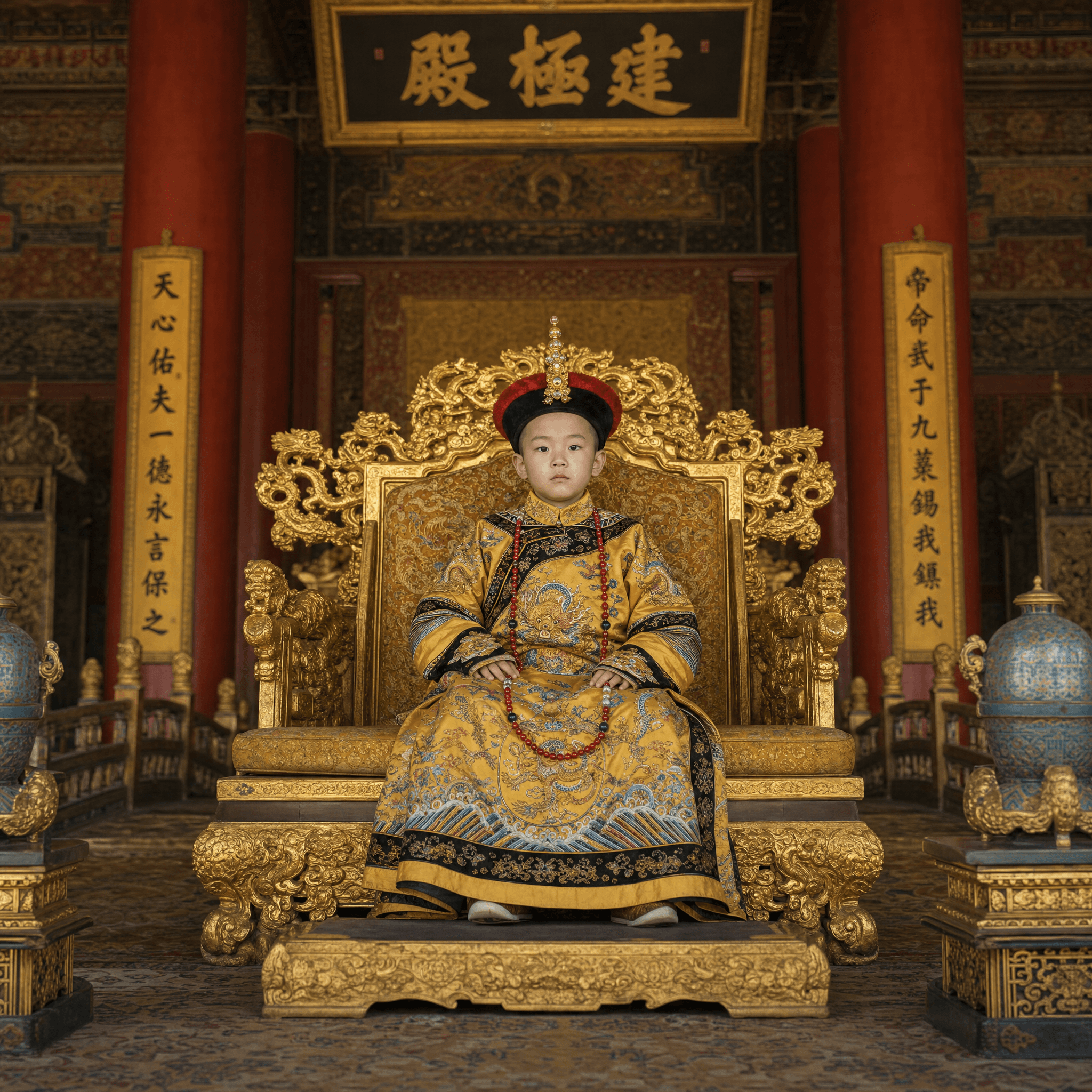
The Baby Who Outlived Three Empires
A six-month-old infant became emperor of the world's largest empire, ruled for sixty-one years, and watched three different dynasties claim his throne.
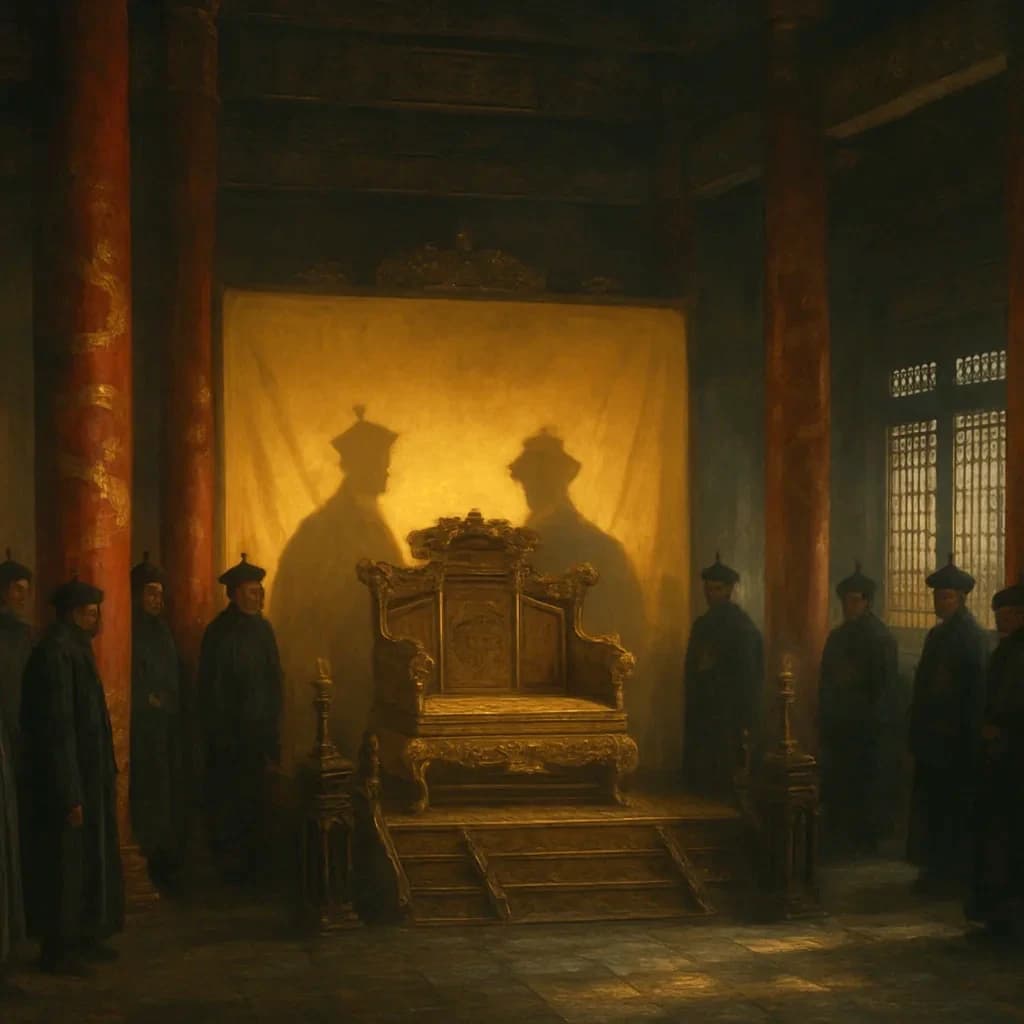
The Concubine Who Owned the Emperor
She wasn't supposed to leave her quarters, speak in council, or even look at other men, but by the time she died, she controlled every appointment in the Chinese Empire.
- Orville Schell and John Delury, 'Wealth and Power: China's Long March to the Twenty-first Century' (2013)
- Sterling Seagrave, 'Dragon Lady: The Life and Legend of the Last Empress of China' (1992)
- Derling, Princess, 'Two Years in the Forbidden City' (1911)