
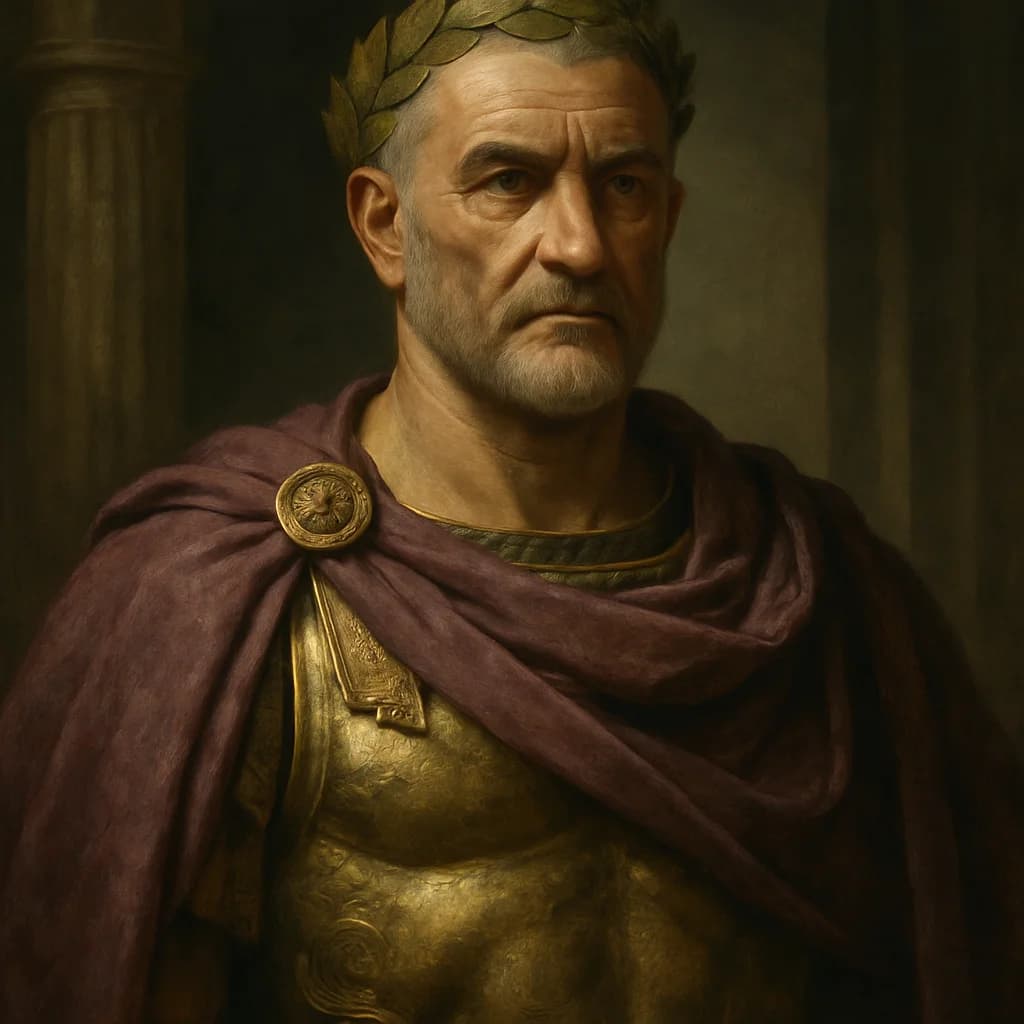
Emperor Diocletian
He built the most powerful administrative machine in Roman history, then walked away from it to grow cabbages.
Gaius Aurelius Valerius Diocletianus was born around 244 AD in Dalmatia (modern Croatia) to a family so obscure that ancient sources couldn't agree whether his father was a scribe or a freed slave. That origin mattered. It meant that when Diocletian clawed his way to the purple in 284 AD after the assassinated Emperor Numerian left a power vacuum, he had no inherited mythology to lean on. He had to build everything himself. And so he did, with a kind of bureaucratic ferocity the Roman world had never quite seen.
The empire he inherited was a wreck. The third century had produced something like fifty emperors in fifty years, most of them dead by violence before they could unpack. Diocletian's solution was radical and almost comically logical: if one emperor kept getting killed, have four. The Tetrarchy (two senior Augusti, two junior Caesars) was his invention, a franchise model for imperial power. He also doubled the size of the civil bureaucracy, restructured the provinces into smaller, more manageable units, and imposed the Edict on Maximum Prices in 301 AD, a sweeping attempt to control inflation across the entire empire. It failed spectacularly, as price controls tend to, but the audacity of trying it across millions of square miles of territory says everything about how his mind worked.
What gets buried under all this administrative genius is what happened in 305 AD. Diocletian did something no Roman emperor had ever voluntarily done: he resigned. He abdicated at a ceremony in Nicomedia, handed power to his successors, and retired to a palace he'd built for himself in Split. When his former colleagues later begged him to return and stabilize the collapsing Tetrarchy, his reported reply was essentially that they should come see his cabbages. He was not joking. He spent his last years gardening in Dalmatia, watching the system he built tear itself apart in civil war, and apparently finding this acceptable.
He died around 311 AD, possibly by suicide, possibly of illness. Sources disagree. What's certain is that he outlived his own creation, which is a particular kind of Roman ending. The calendar that a monk named Dionysius Exiguus would construct two centuries later, the one that accidentally misfiled the birth year of Christ and threw medieval Europe's chronology into chaos, used the old Roman consular dating system Diocletian had helped codify. His administrative fingerprints were everywhere, long after the cabbages had gone to seed.
Diocletian's retirement palace in Split, Croatia is so structurally intact that roughly three thousand people live inside its ancient walls today, in apartments, restaurants, and shops built into the original Roman stonework.
Why untold: Diocletian's retirement (one of the most psychologically strange acts in Roman history) gets collapsed into a footnote about administrative reform, because histories of Rome are structurally biased toward men who kept fighting rather than men who chose to stop.
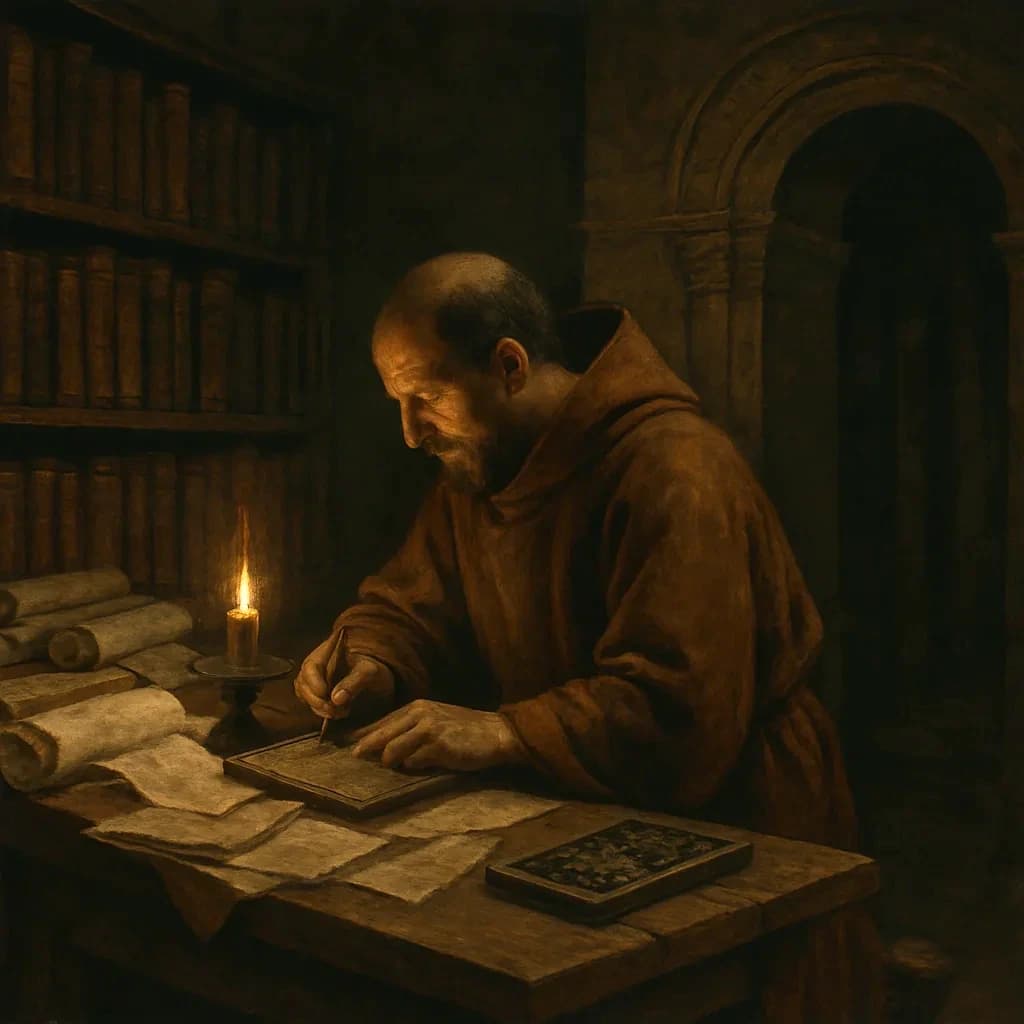
When Half of Europe Forgot How to Count
A single monk's calculation error in 525 AD left medieval Europe dating everything wrong for eight centuries.
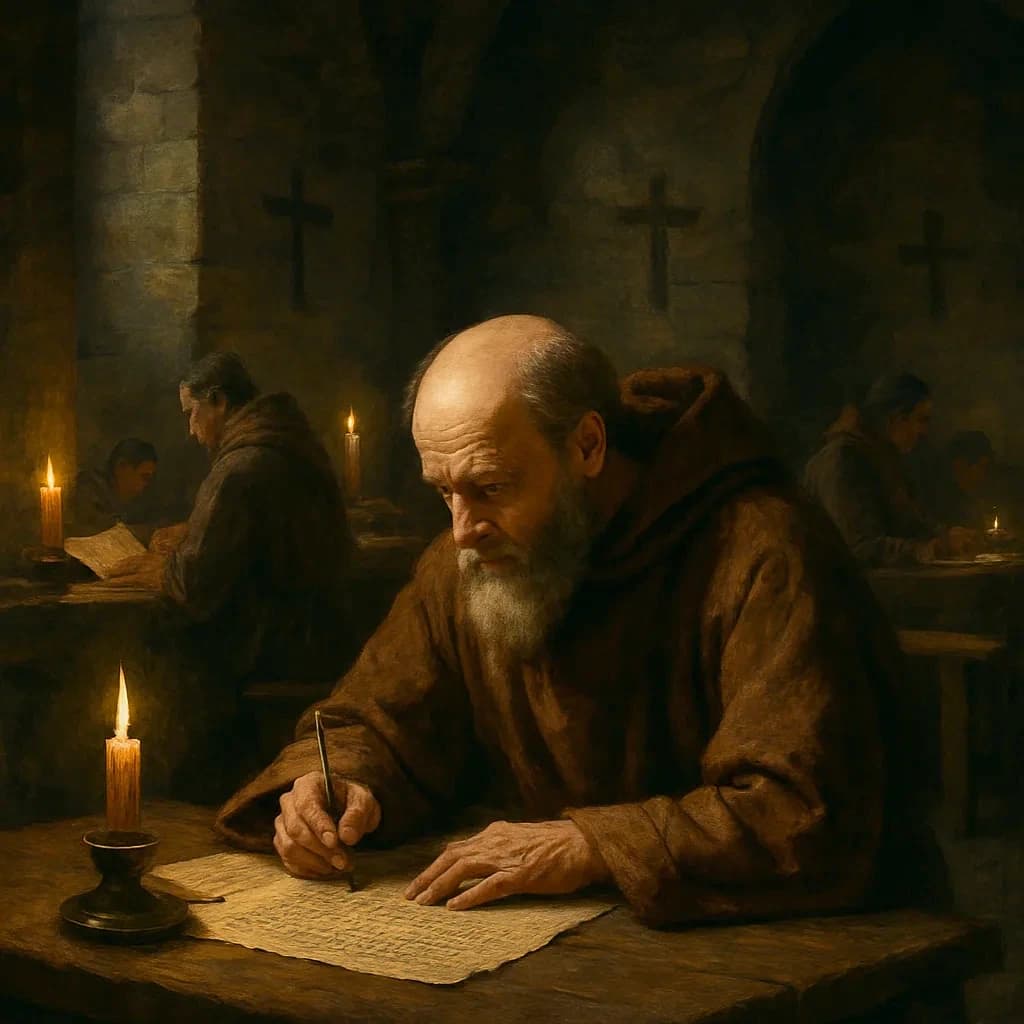
A Monk's Math Error Became the World's Calendar
When a sixth-century monk made an arithmetic error while calculating Easter, he accidentally created the calendar system that would rule the world for fifteen hundred years.
- Stephen Williams, Diocletian and the Roman Recovery (Routledge, 1985)
- A.H.M. Jones, The Later Roman Empire 284-602: A Social, Economic and Administrative Survey (Blackwell, 1964)
- Roger Rees, Diocletian and the Tetrarchy (Edinburgh University Press, 2004)