
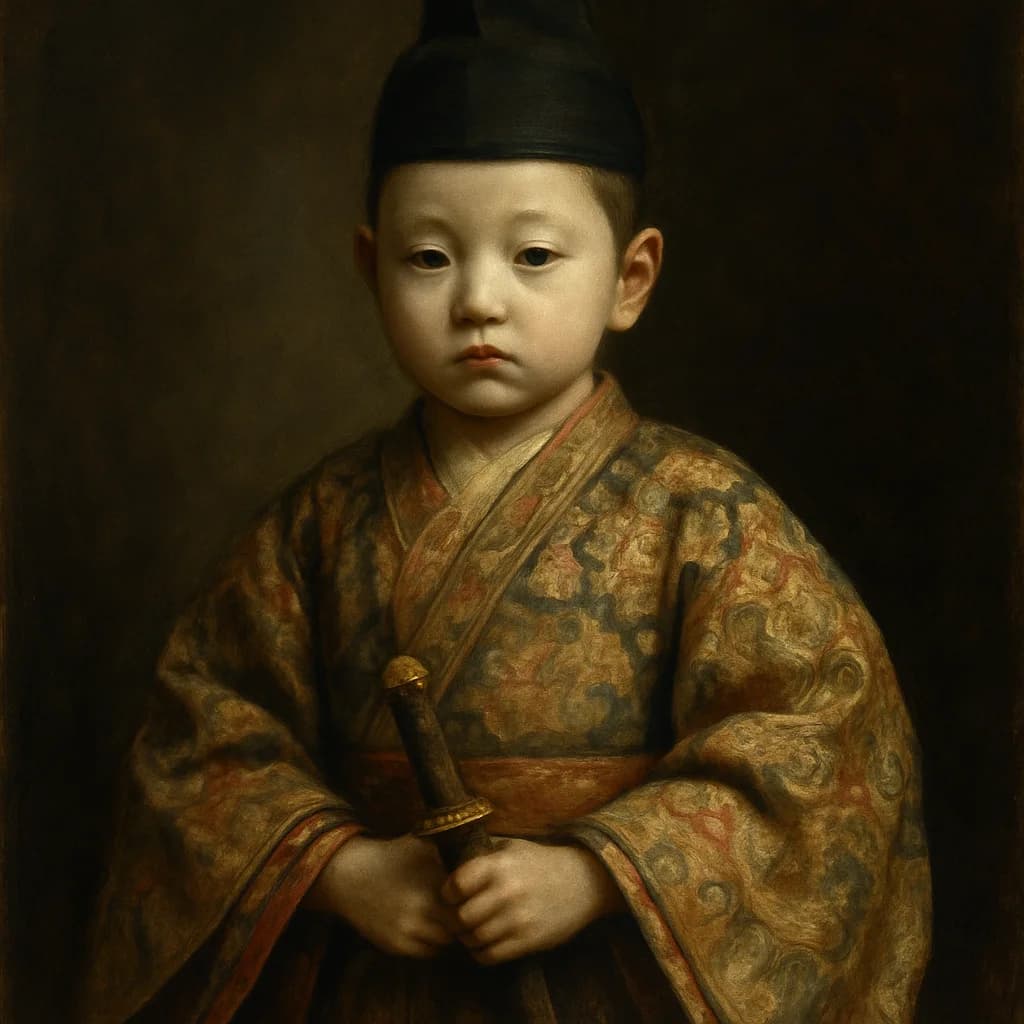
Emperor Antoku
The youngest emperor in Japanese history drowned at age six, clutching the sacred sword that made him divine, and took a thousand-year dynasty down with him.
Antoku became Emperor of Japan at two years old, a toddler thrust onto the Chrysanthemum Throne during the bloodiest period in medieval Japanese history. His grandfather Taira no Kiyomori had seized control of the imperial court, installing his own grandson as a puppet ruler while the Minamoto clan sharpened their swords for war. The child emperor never learned to read the classical Chinese texts that defined imperial education. He spent his brief reign being carried from battlefield to battlefield as his Taira relatives fought desperately to maintain their grip on power.
When the final naval battle came at Dan-no-ura in 1185, six-year-old Antoku found himself aboard a sinking ship surrounded by enemy vessels. His grandmother Taira no Tokiko made a decision that would haunt Japan for centuries: rather than let the sacred imperial regalia fall into enemy hands, she would take them (and the emperor) to the bottom of the sea. According to the chronicles, she told the terrified child that beneath the waves lay a beautiful palace where he would be happy.
Antoku drowned clutching the Kusanagi sword, one of the three sacred treasures that legitimized imperial rule. The sword was never recovered. For the first time in Japanese history, an emperor died without passing on the complete regalia that proved divine mandate. The Minamoto victors installed a new emperor, but the missing sword created a constitutional crisis that echoed for generations. Every subsequent emperor ruled with the knowledge that their legitimacy rested on incomplete foundations.
The child's death marked more than the end of a life. It shattered the myth of imperial invincibility and began Japan's age of military rule that would last seven centuries.
Antoku is the only Japanese emperor to have died in battle, and his death created such a supernatural crisis that fishermen in the area still report catching crabs with human faces, believed to be the souls of drowned Taira warriors.
Why untold: His story is overshadowed by romanticized tales of samurai honor at Dan-no-ura, obscuring how a child's death fundamentally broke Japanese imperial legitimacy.
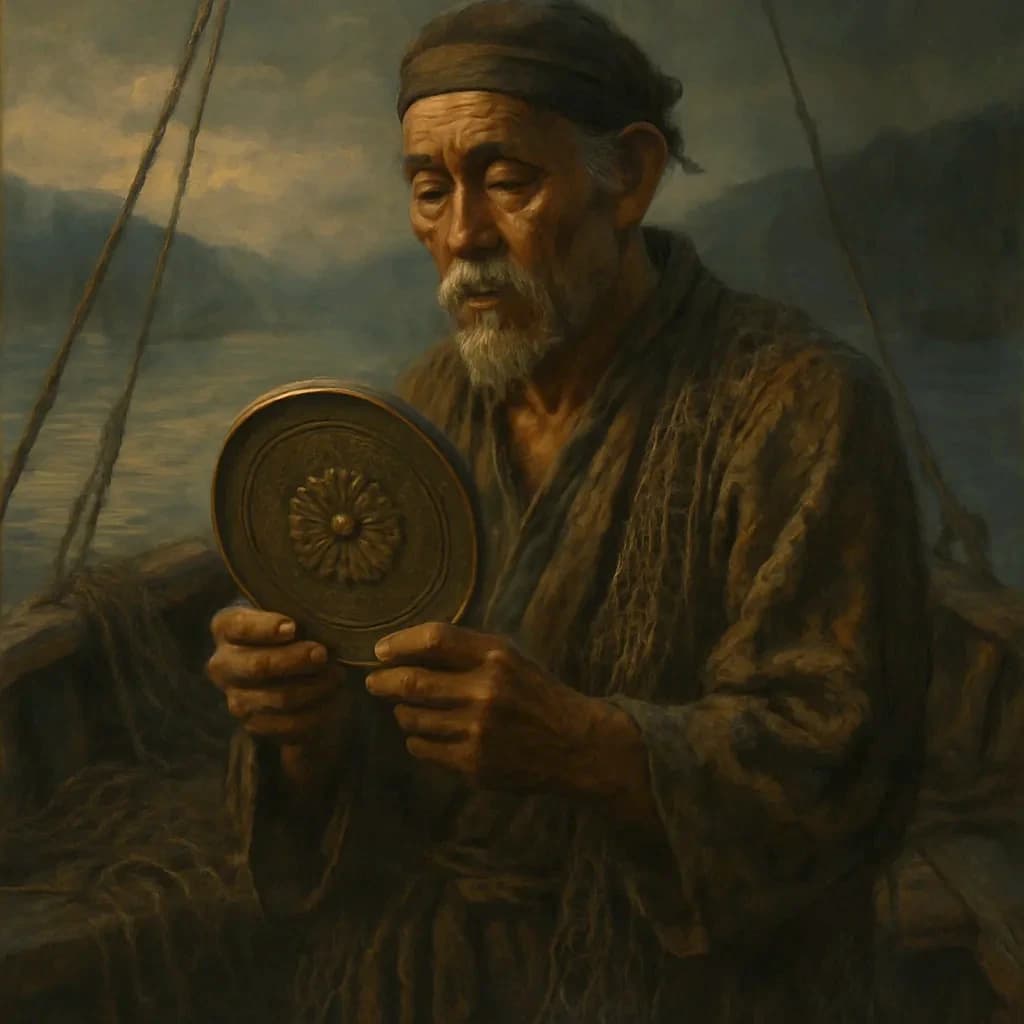
Did This Fisherman Net Japan's Lost Sacred Mirror?
One haul of a fishing net in a remote Japanese village brought up something that could shake the foundations of an ancient faith.
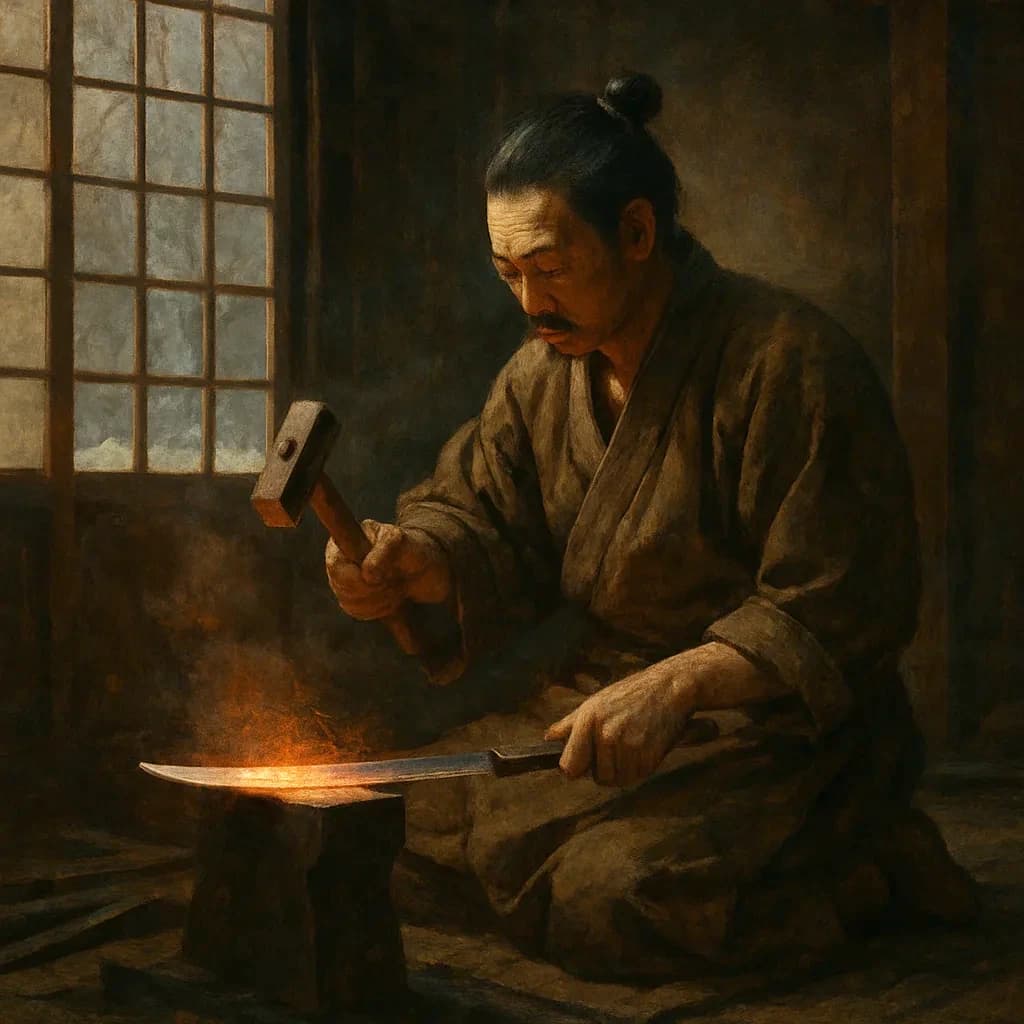
How a Lost Sword Became Japan's Silent Emperor
A blacksmith's apprentice forged a blade that would decide the fate of Japan, but nobody knew his name, and the sword itself became the emperor.
- Sansom, George. A History of Japan to 1334. Stanford University Press, 1958.
- McCullough, Helen Craig, translator. The Tale of the Heike. Stanford University Press, 1988.
- Farris, William Wayne. Heavenly Warriors: The Evolution of Japan's Military, 500-1300. Harvard University Asia Center, 2009.