
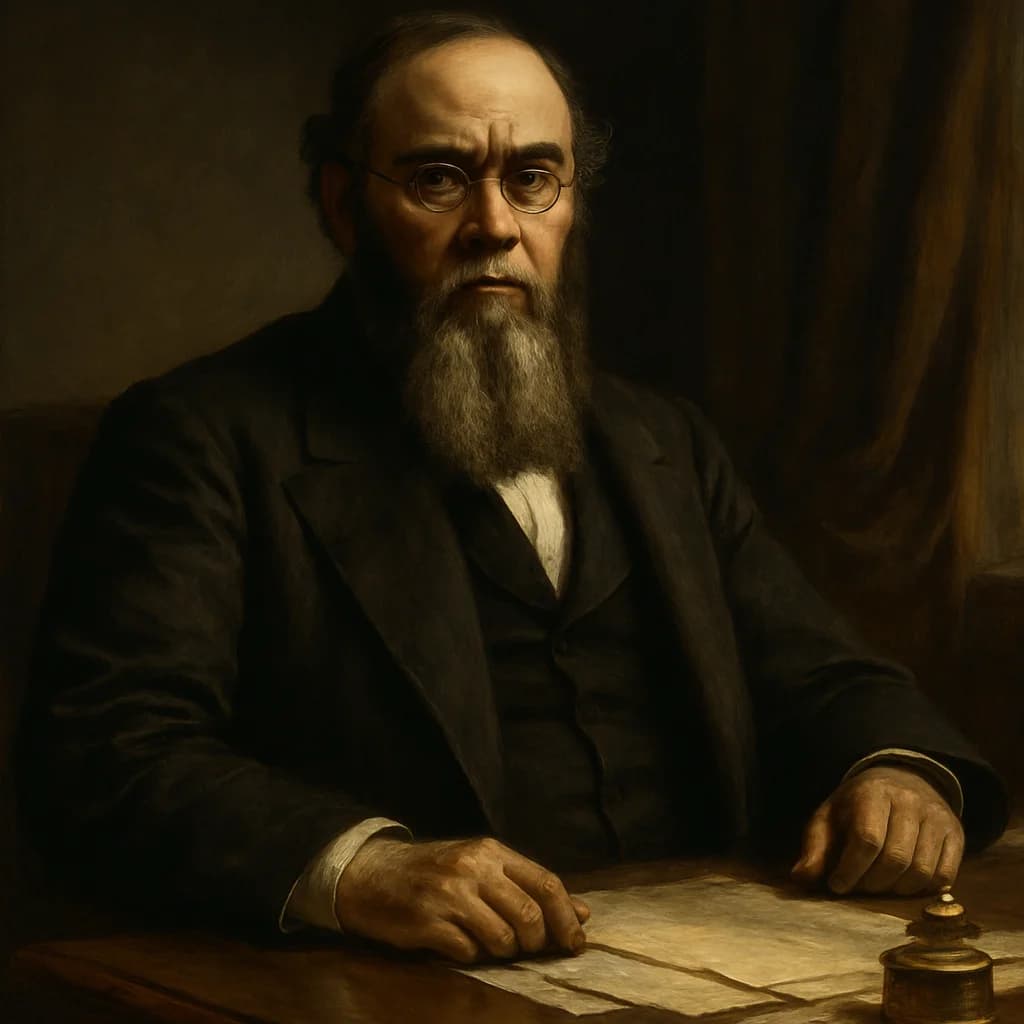
Edwin Stanton
The man who held Lincoln's dying body also spent the next three years methodically destroying everyone who asked too many questions about that night.
Edwin Stanton came to the Secretary of War job in 1862 as a Democrat, a former attorney general under Buchanan, and a man who had once called Abraham Lincoln a 'long-armed creature' not worth his time. Lincoln appointed him anyway. It was one of the stranger partnerships in American executive history, and one of the most consequential. Stanton rebuilt the War Department from a corrupt shambles into a functioning military bureaucracy, essentially inventing the administrative infrastructure that won the Civil War. He controlled troop movements, telegraph lines, and the flow of information out of Washington with something close to total authority. By 1865, there was an argument to be made that Stanton ran more of the war than Grant did.
What gets buried under the mythology of that night at Ford's Theatre is how completely Stanton controlled the aftermath. Within hours of the shooting, he had seized the scene, taken witness statements, and begun directing the manhunt, all before Lincoln had stopped breathing. He famously said, standing over the body, 'Now he belongs to the ages,' though some historians think the word was actually 'angels' and the transcription smoothed it into something more quotable. Either way, Stanton was already shaping the narrative. He suppressed portions of John Wilkes Booth's diary after its capture. Eighteen pages were missing by the time the diary entered official record, and Stanton's War Department had been the last to handle it. He never explained the gap. No one with the authority to press him ever really did.
Stanton survived Lincoln, survived Andrew Johnson, and survived Johnson's attempt to fire him, the act that triggered impeachment proceedings in 1868. He barricaded himself inside the War Department for months, sleeping on a cot, refusing to vacate his office, daring the President of the United States to physically remove him. Johnson couldn't. After Grant won the presidency, Stanton was nominated to the Supreme Court. He was confirmed within days. He died four days later, on December 24, 1869, before ever taking the seat. The timing was almost too neat: a man who had spent years holding the machinery of power suddenly given the one job where he could do nothing with it, and then gone before he ever had to try.
Stanton had previously represented the defense in one of the most sensational murder trials of the 1850s: the case of Congressman Daniel Sickles, who shot his wife's lover in broad daylight across from the White House and was acquitted on the first-ever successful temporary insanity defense in American legal history.
Why untold: Stanton's image was calcified by sympathetic postwar biographers into that of Lincoln's loyal guardian, which made the missing diary pages and his wartime autocracy inconvenient details that subsequent generations found easier to omit than explain.
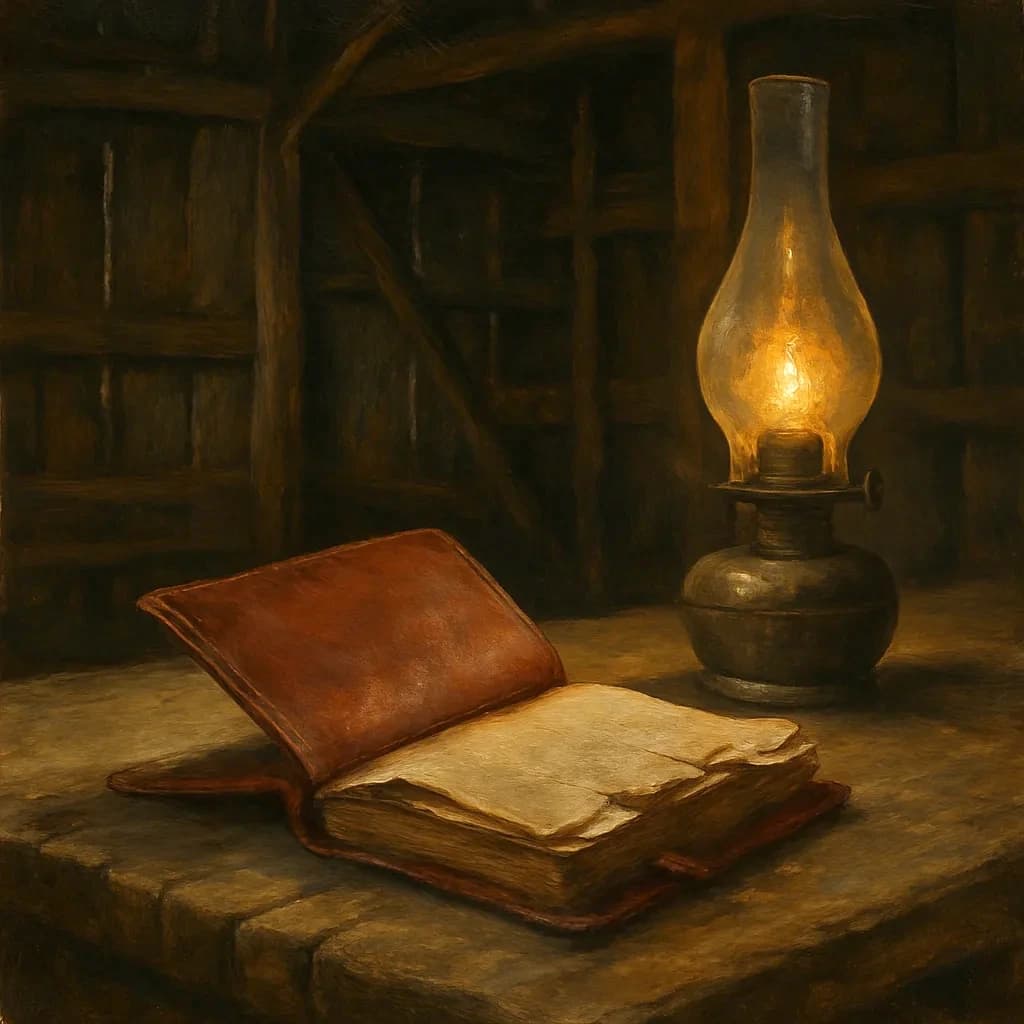
Booth's Diary Came Back Missing Eighteen Pages
John Wilkes Booth escaped Washington with a broken leg, a co-conspirator, and a diary, and then the diary's missing pages became an explosive secret in American political history.
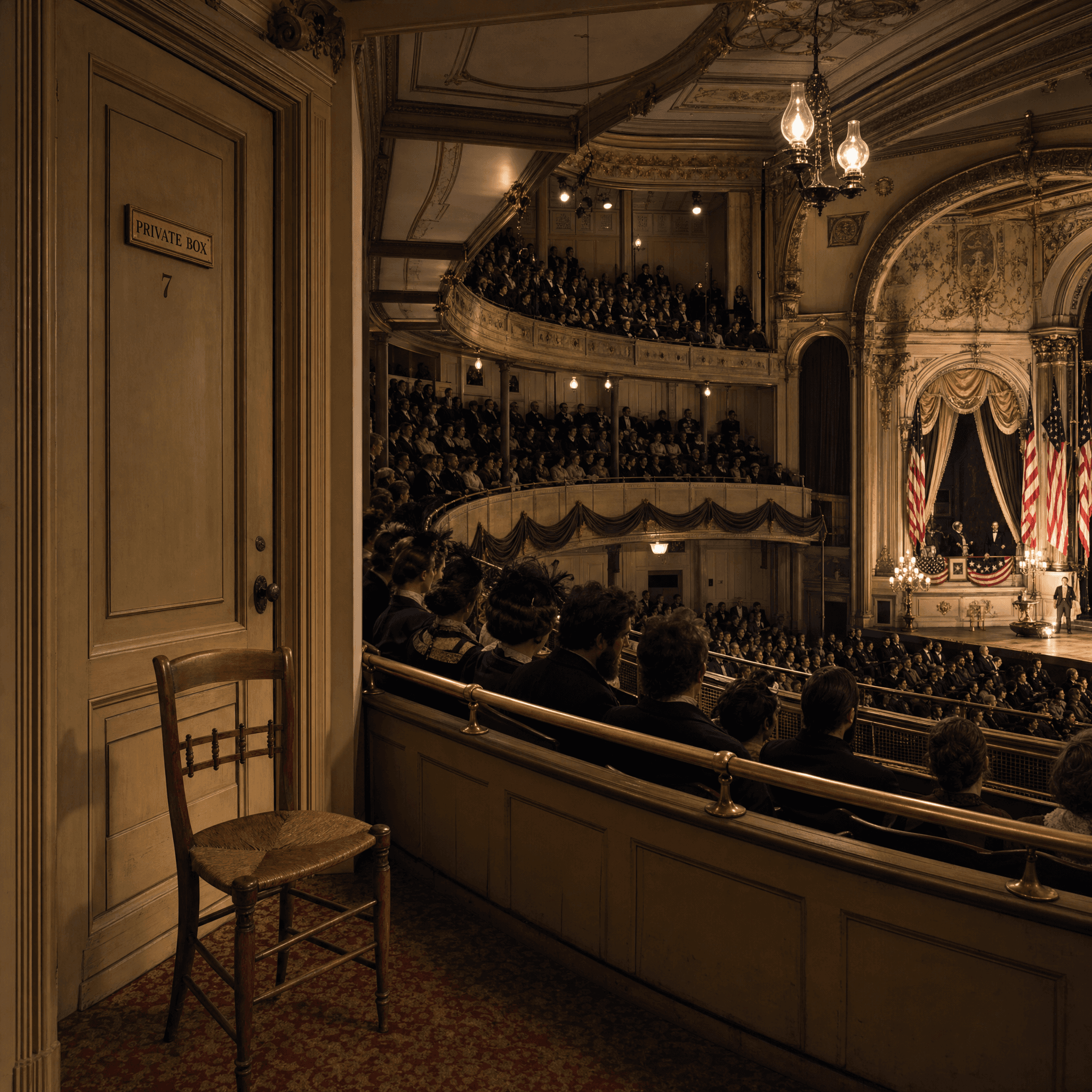
Lincoln's Bodyguard Stepped Out for a Drink at Intermission
Lincoln's bodyguard stepped out for a drink at intermission, leaving the President alone in his box.
- Benjamin P. Thomas and Harold M. Hyman, Stanton: The Life and Times of Lincoln's Secretary of War (Alfred A. Knopf, 1962)
- David O. Stewart, Impeached: The Trial of President Andrew Johnson and the Fight for Lincoln's Legacy (Simon & Schuster, 2009)
- Edward Steers Jr., Blood on the Moon: The Assassination of Abraham Lincoln (University Press of Kentucky, 2001)