
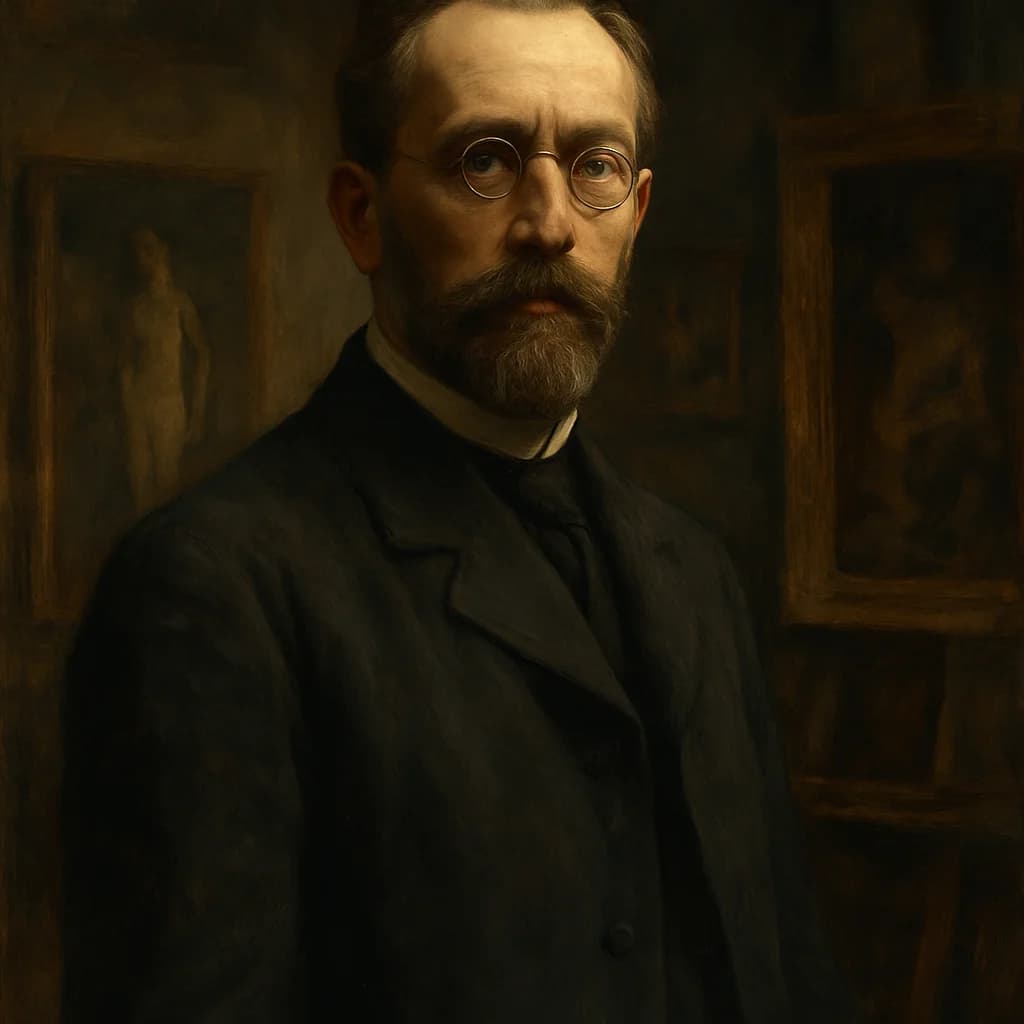
Christian Griepenkerl
The art professor who rejected Hitler twice never knew he'd helped create the most murderous dictator in history.
Christian Griepenkerl spent his days teaching proper brushwork and classical composition at the Vienna Academy of Fine Arts, where aspiring artists lined up each October hoping to transform their provincial dreams into professional careers. A respected painter of historical scenes and portraits, he'd built a quiet reputation depicting Austrian nobility and biblical tableaux with meticulous attention to detail. His students knew him as demanding but fair, a man who could spot talent in a rough sketch and nurture it into mastery.
In October 1907, Griepenkerl sat on the admissions committee reviewing portfolio after portfolio. Among the hopefuls was an intense eighteen-year-old from Linz named Adolf Hitler, whose architectural sketches showed technical skill but whose figure drawings revealed a fundamental inability to capture human emotion. Griepenkerl and his colleagues rejected the application. The young man returned the following year with improved work, but again failed to meet the academy's standards. The committee's assessment was brief and professional: insufficient talent for fine arts, perhaps better suited for architecture.
Griepenkerl continued teaching until his death in 1916, painting commissioned works and guiding students through the rigorous academic tradition that had shaped European art for centuries. He never learned that his rejected applicant had abandoned artistic pursuits for politics, rising through Munich's beer halls to become chancellor of Germany. The professor who could discern artistic potential in a charcoal study had unknowingly redirected one of history's most destructive figures away from easels and toward podiums.
History turned on Griepenkerl's professional judgment, not because he was wrong about Hitler's artistic limitations, but because he was right.
Griepenkerl died in 1916, just as Hitler was beginning his political career in Munich, meaning the art professor never knew the global consequences of his academic decision.
Why untold: His role is overshadowed by Hitler's infamy, reducing him to a footnote rather than examining his actual life and artistic career.
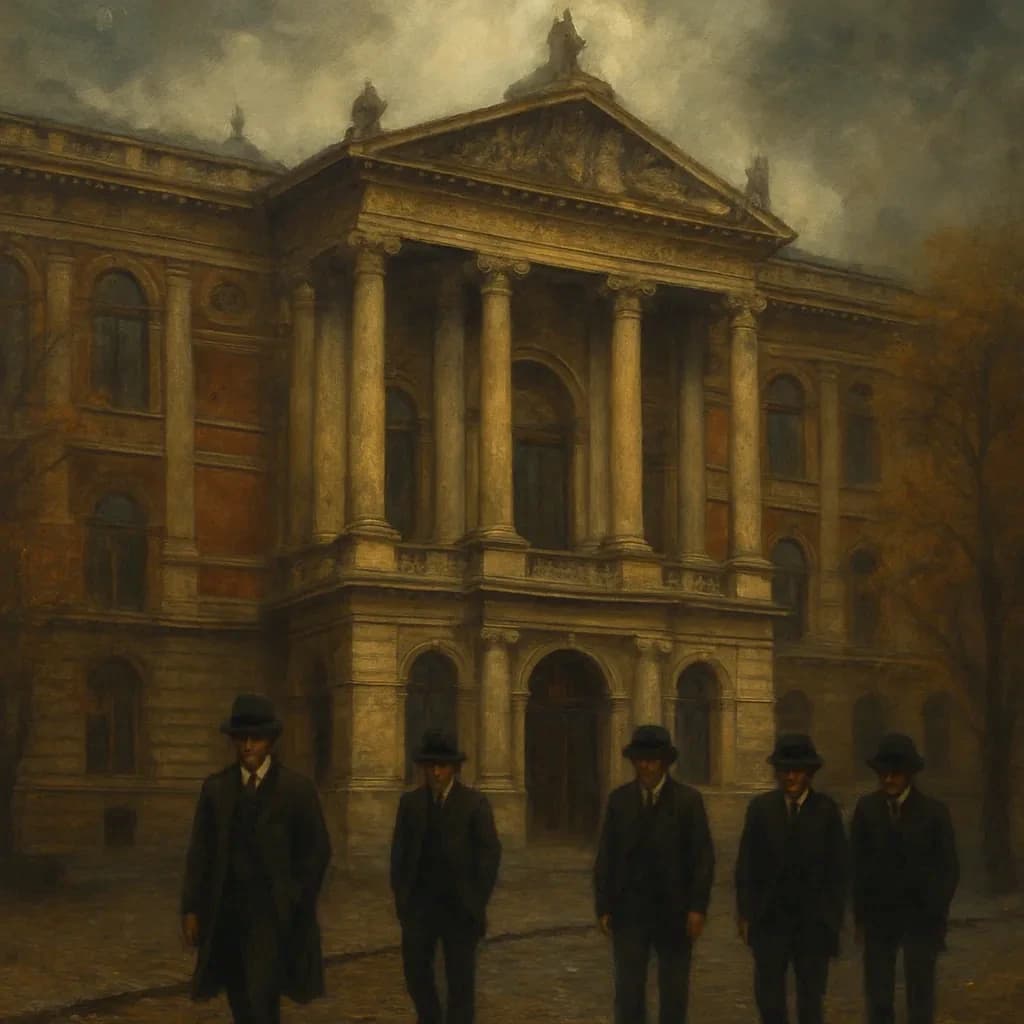
Rejected Twice by Vienna's Art Academy
A frustrated young man walked out of the Vienna Academy of Fine Arts in October 1907 after his second rejection, and changed the course of the 20th century.
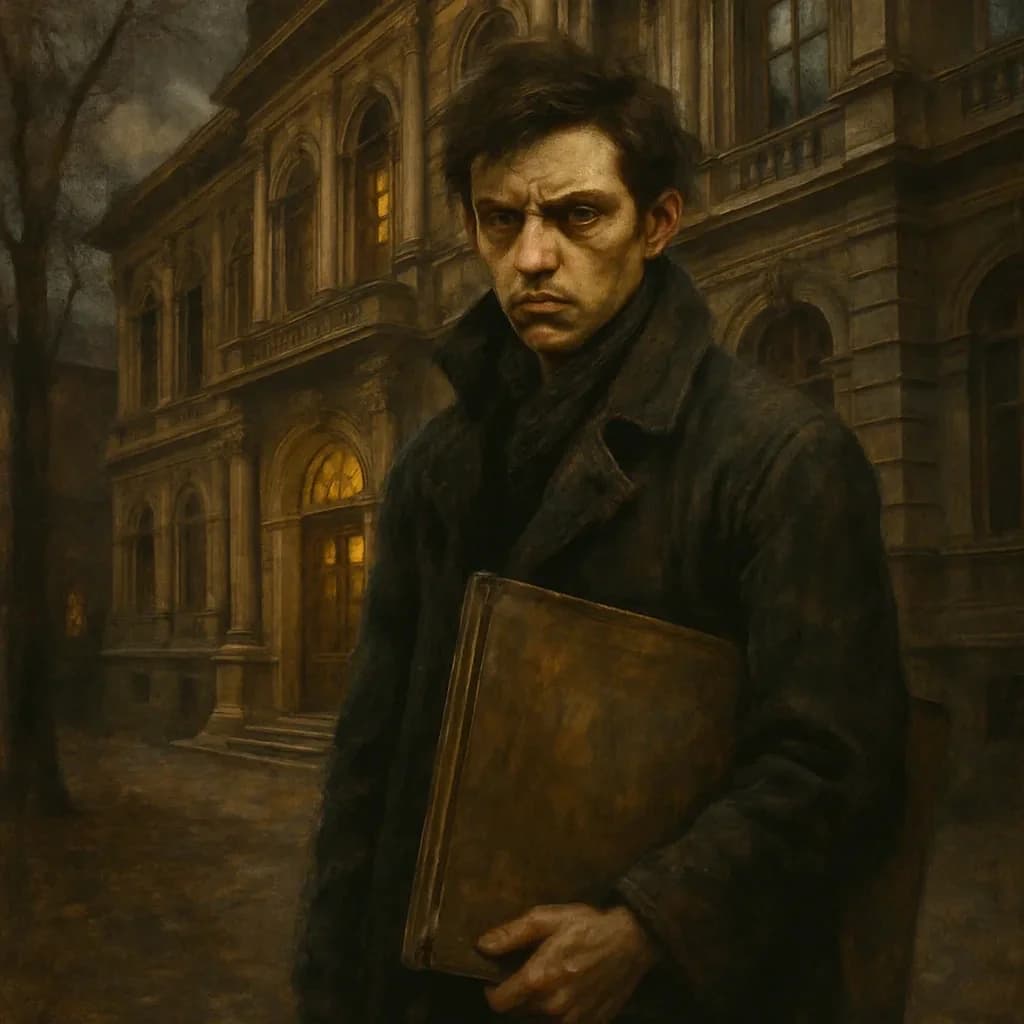
Hitler's History-Changing Rejection Was Never About His Paintings
Adolf Hitler's art teacher said he lacked talent, but the rejection letter that changed history was never about his paintings.
- Brigitte Hamann, Hitler's Vienna: A Dictator's Apprenticeship (1999)
- August Kubizek, The Young Hitler I Knew (1955)
- Vienna Academy of Fine Arts Archives, Admission Records 1907-1908