
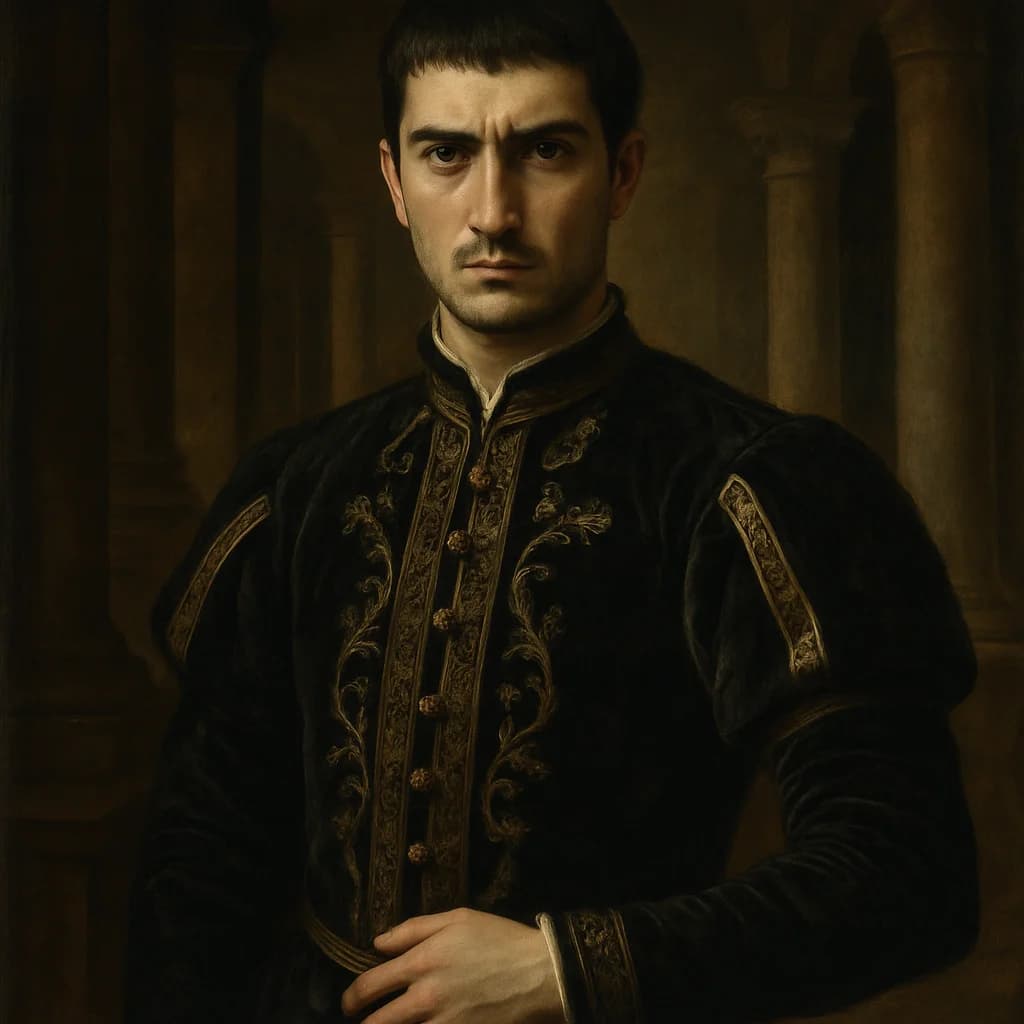
Cesare Borgia
The man Machiavelli called the perfect prince died at 31, forgotten on a Spanish battlefield, clutching a coat of arms that wasn't even his own.
Cesare Borgia spent his entire life escaping the boxes others built for him. Born the illegitimate son of a future pope, he was handed a cardinal's hat at seventeen, not for piety, but because red looked good with the family ambitions. He became the first person in Church history to voluntarily resign from the cardinalate, trading his sacred robes for a soldier's armor and a French dukedom his father bought him through papal diplomacy.
What made Cesare dangerous wasn't his cruelty. Renaissance Italy had cruelty in abundance. It was his patience. While other condottieri burned through territories like wildfire, Cesare built institutions. He imported French military engineers, established uniform legal codes, and created the first professional standing army in Italy. His conquest of the Romagna wasn't a rampage; it was a corporate restructuring with swords. Local lords found themselves not just defeated but obsolete, replaced by salaried administrators who answered to Rome.
The speed of his fall matched the precision of his rise. When Pope Alexander VI died suddenly in August 1503, Cesare controlled more territory than any Italian ruler since the Lombards. Within eighteen months, he was a fugitive. His mistake wasn't trusting the wrong pope. It was believing that institutions could survive their creator. His carefully built bureaucracy evaporated the moment his father's protection ended, leaving him with nothing but enemies and a reputation that outlived his relevance.
He died in 1507 at the siege of Viana, fighting as a simple knight for the King of Navarre, a position so beneath his former status that chroniclers barely bothered recording the details. The man who had reimagined Italian statecraft ended his days settling border disputes in northern Spain, his revolutionary administrative system already being copied by the very enemies who destroyed him.
Cesare Borgia was the first Renaissance ruler to use portable artillery as a systematic siege weapon, importing French cannons that could reduce medieval fortresses in days rather than months.
Why untold: His administrative innovations were absorbed by his successors while his personal reputation was buried under centuries of moral condemnation by Church historians.
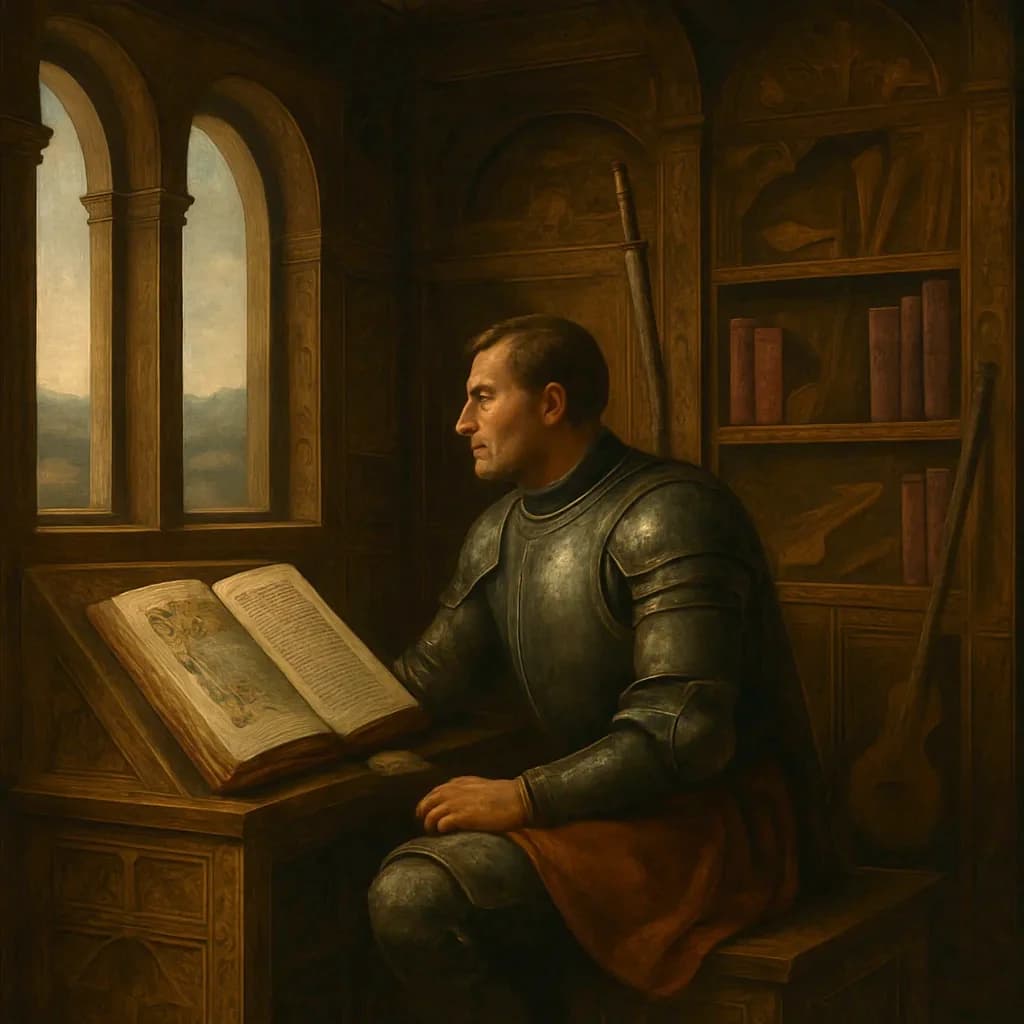
He Fought Wars to Buy Books
Federico da Montefeltro was the most celebrated soldier in Renaissance Italy. Then he became something stranger.
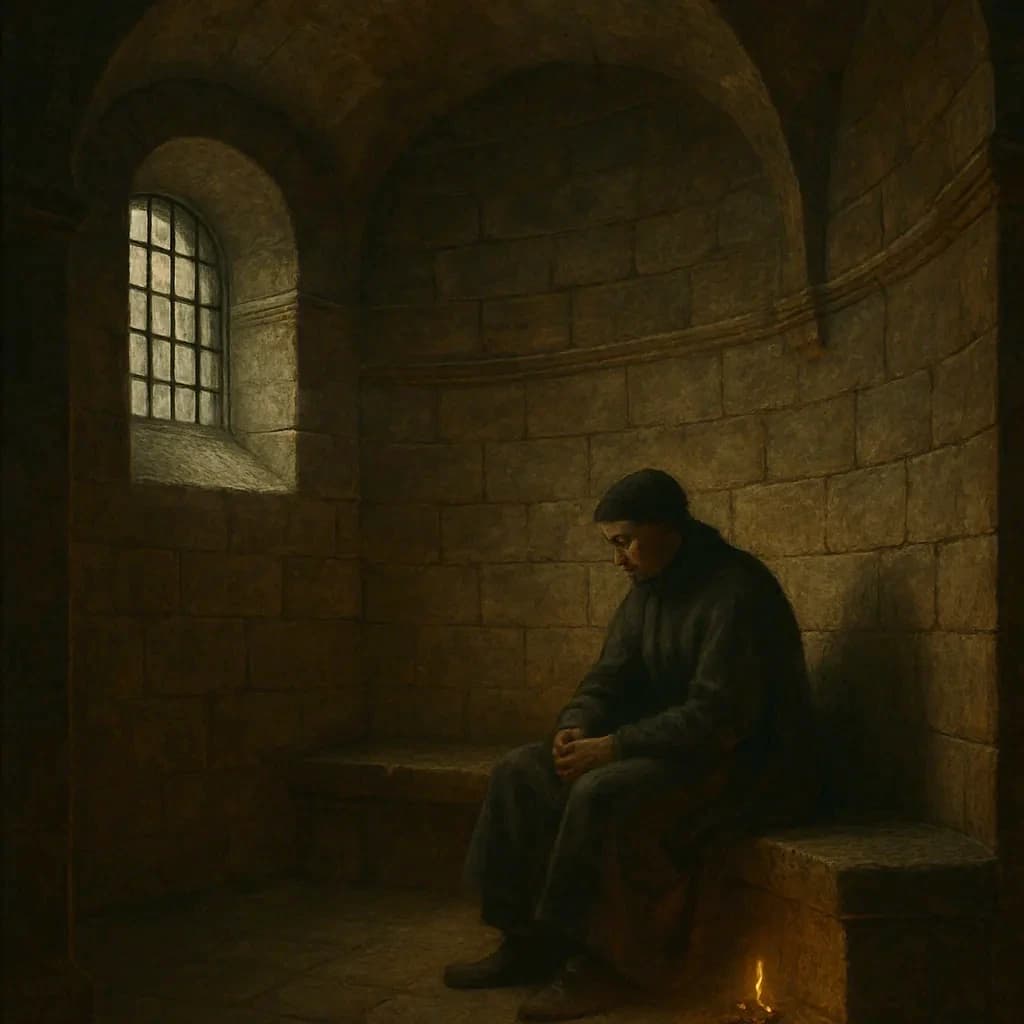
The Architect Who Built His Own Prison
The man who designed the most feared dungeon in Renaissance Italy ended up as its first notable prisoner.
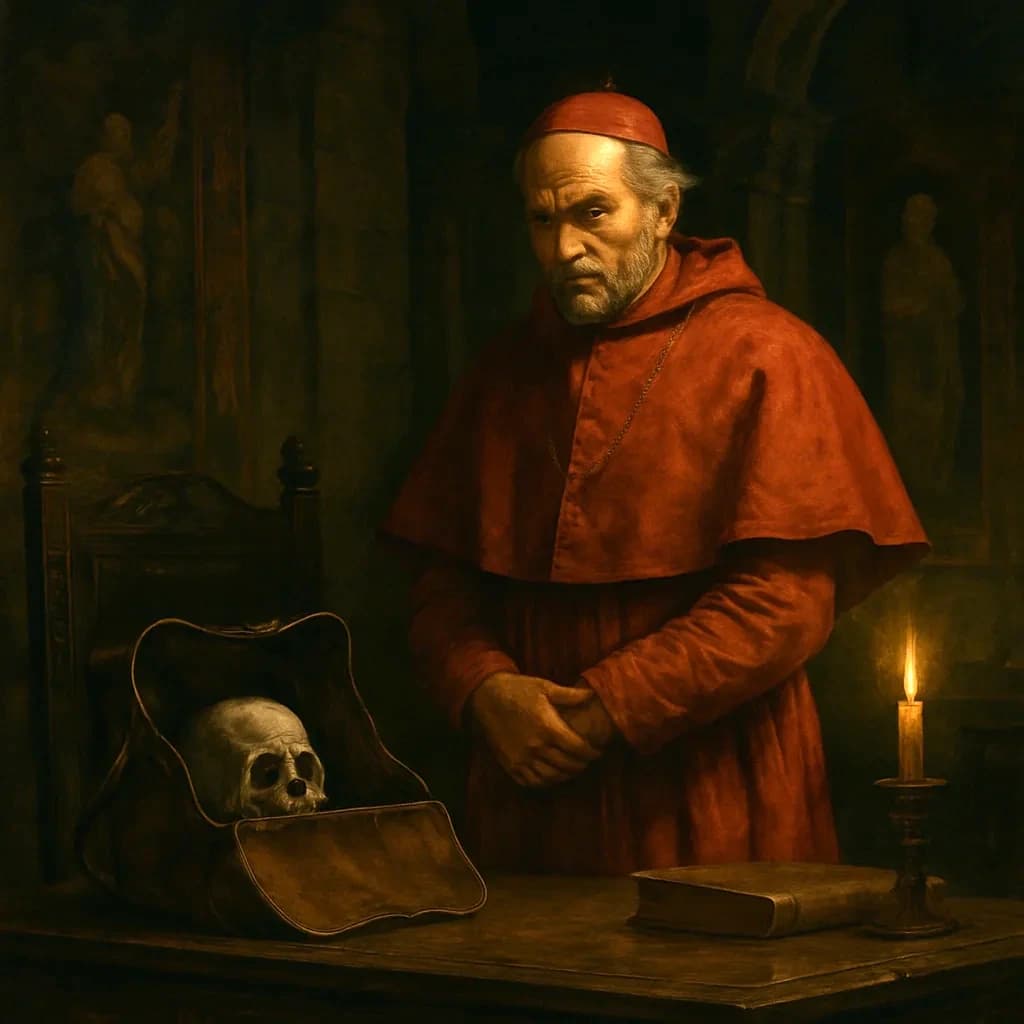
How a Severed Head Broke the Borgia Empire
A bandit's macabre trophy became the secret weapon that unified Renaissance Italy under papal rule.
How a Fake Dinner Invitation Toppled the Borgias
A forged invitation to a feast that never happened brought down the most powerful family in Renaissance Italy.
- Sarah Bradford, Cesare Borgia: His Life and Times (1976)
- Michael Mallett, The Borgias: The Rise and Fall of a Renaissance Dynasty (1969)
- Ivan Cloulas, The Borgias (1989)