
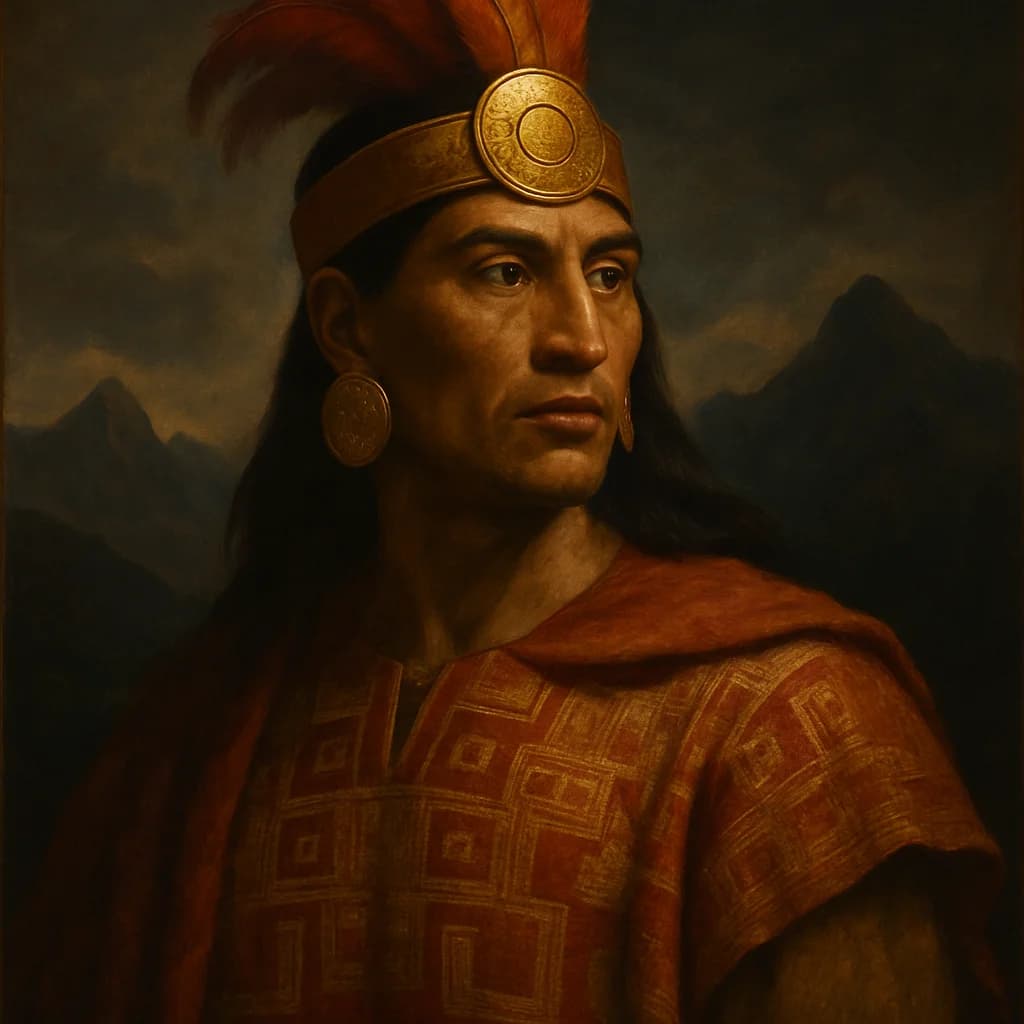
Atahualpa
The last Inca emperor spoke fluent Spanish, played chess with his captors, and negotiated his ransom in a language he'd learned in eight months of imprisonment.
Atahualpa never expected to rule an empire. Born around 1502, he was technically illegitimate, the son of Huayna Capac and a princess from Quito, but not the designated heir. When smallpox killed his father and legitimate brother in quick succession around 1525, Atahualpa found himself in a brutal civil war against his half-brother Huascar for control of the Inca Empire. He won, but the victory left the empire fractured and exhausted.
What's remarkable is how quickly this provincial prince adapted to Spanish captivity. When Pizarro's 168 men captured him at Cajamarca in November 1532, Atahualpa could have been executed immediately. Instead, he became fascinated by his captors. He learned Spanish with startling speed, mastered chess, and even began learning to read, skills that no Inca ruler had ever possessed, since the empire had no written language. Spanish chroniclers noted his sharp intelligence and regal bearing, describing how he never repeated a mistake at chess and could remember every Spanish word he'd heard.
Atahualpa famously offered to fill a room with gold for his freedom, a ransom that would equal roughly $50 million today. What's less known is that he delivered. Gold poured in from across the empire for months. But Pizarro had no intention of honoring the deal. The Spanish were terrified that Atahualpa was secretly organizing a massive rescue operation, which he probably was. On July 26, 1533, they strangled him with a garrote after a sham trial, but only after he agreed to convert to Christianity to avoid being burned alive.
His last words were reportedly spoken in perfect Spanish.
Atahualpa was the first and only Inca emperor who could read, having learned the skill during his eight months of Spanish captivity.
Why untold: History remembers him as a victim of conquest rather than recognizing his remarkable intellectual adaptation to European culture in mere months.
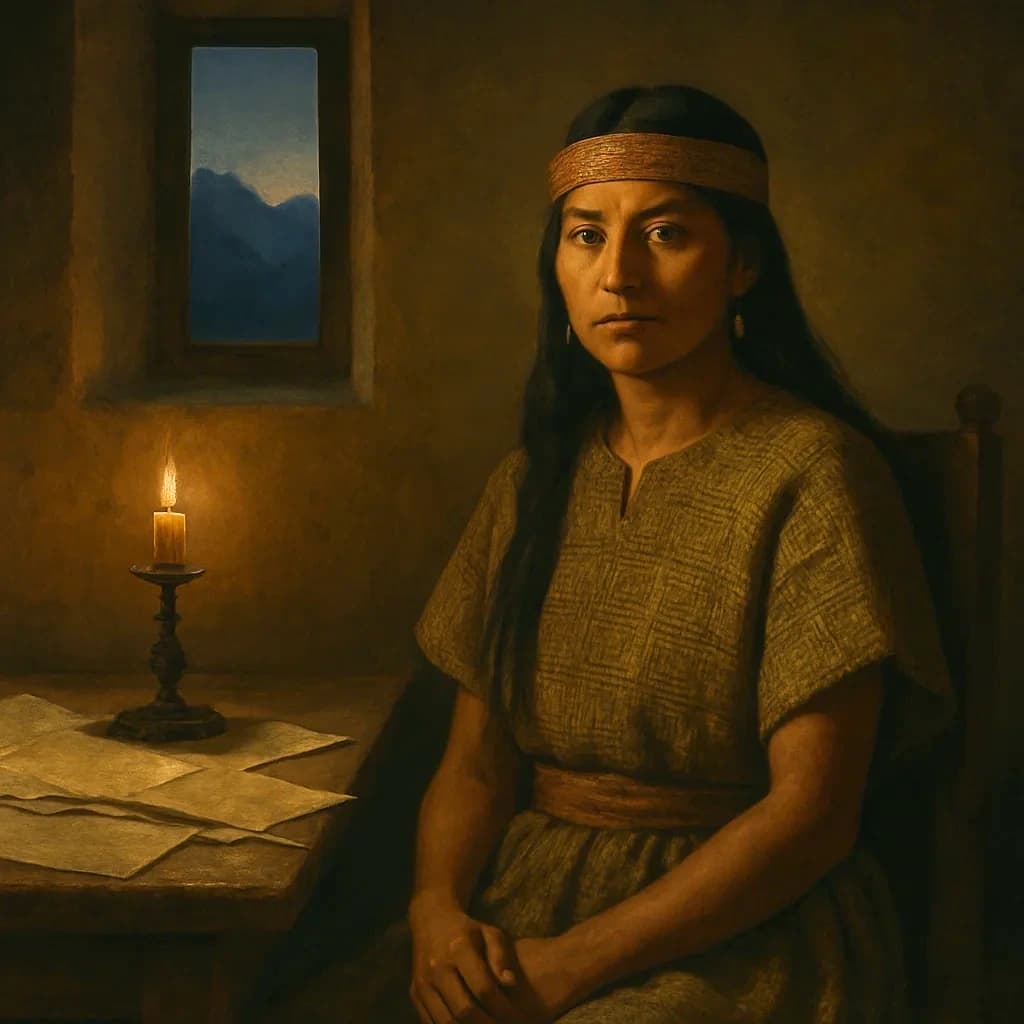
The Inca Princess Who Outplayed Her Conqueror
When the last Inca emperor died in a Spanish jail, his widow married his conqueror, and used that marriage to save everything the Spanish were trying to erase.
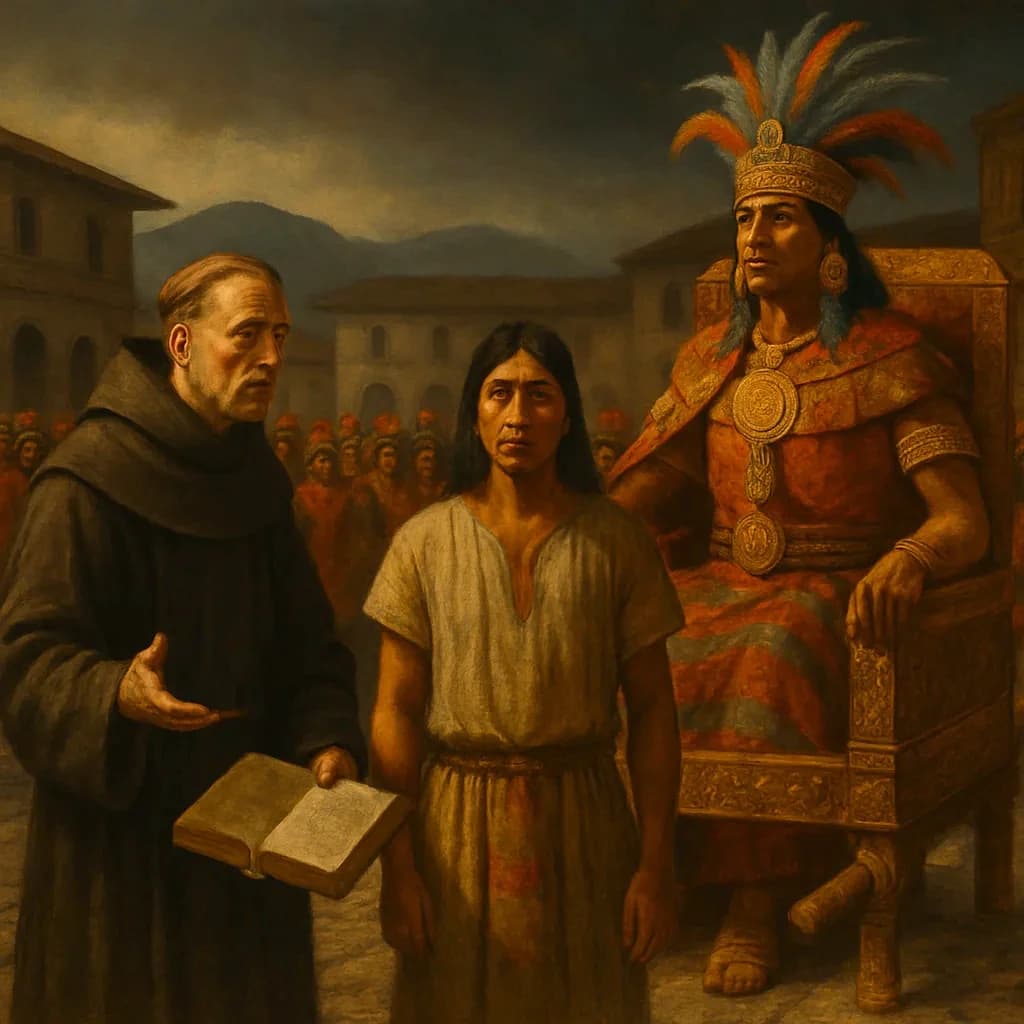
An Interpreter Chose One Word and an Empire Ended
A single interpreter, standing between two armies, chose a word. And an empire ended.
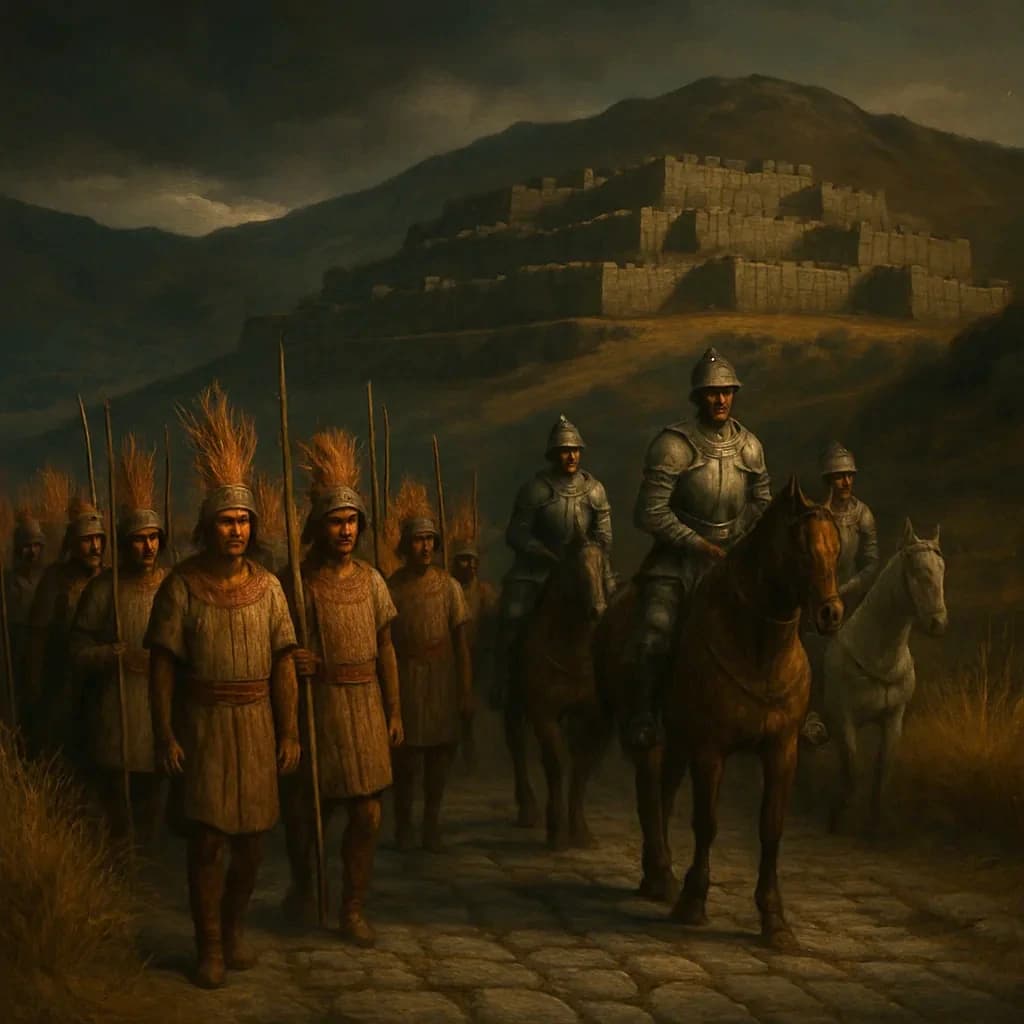
Inca Civil War: The Empire Fell Before Pizarro Arrived
Spanish guns did not topple the Inca Empire. A civil war that ended just months before Pizarro arrived did, and the losing side begged him for help.
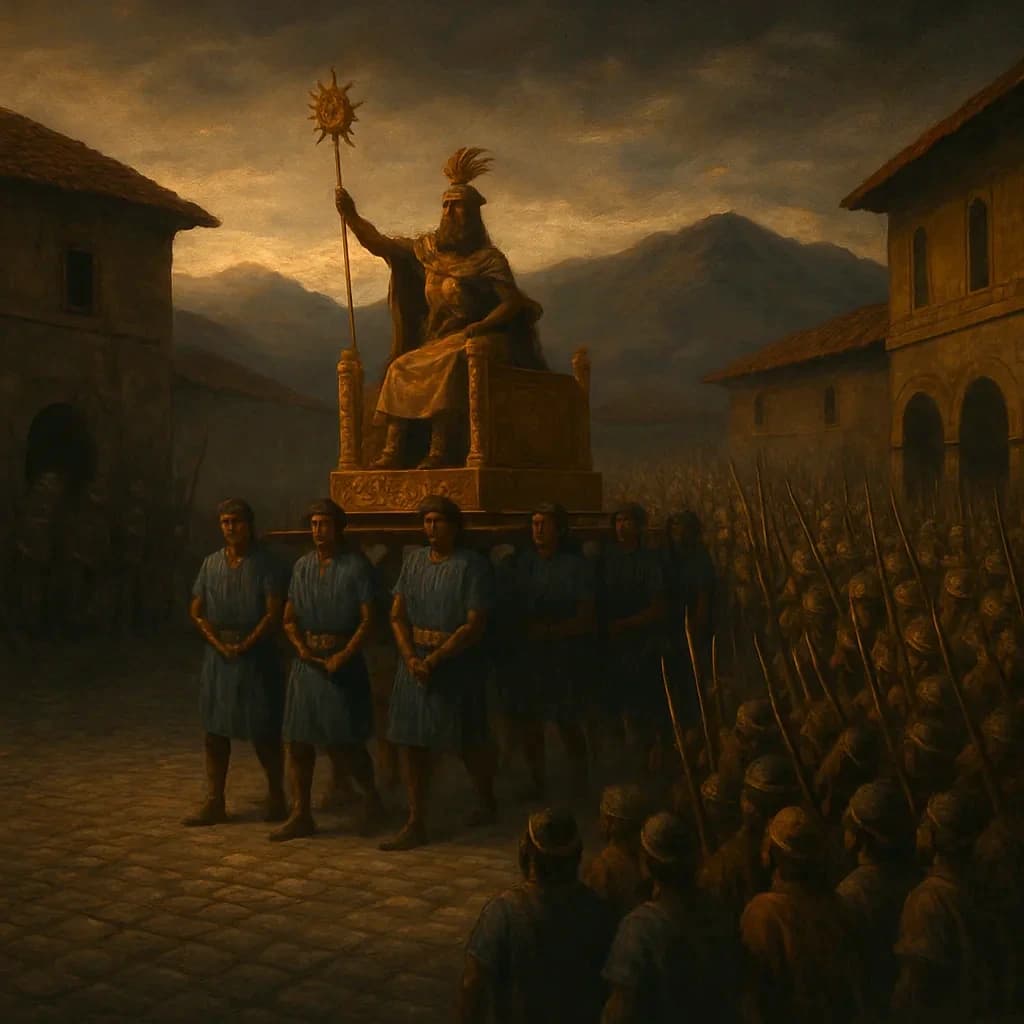
Fewer Than 200 Men Captured the Inca Emperor
Atahualpa thought he was going to a diplomatic feast. The Spanish had very different plans for the meal.
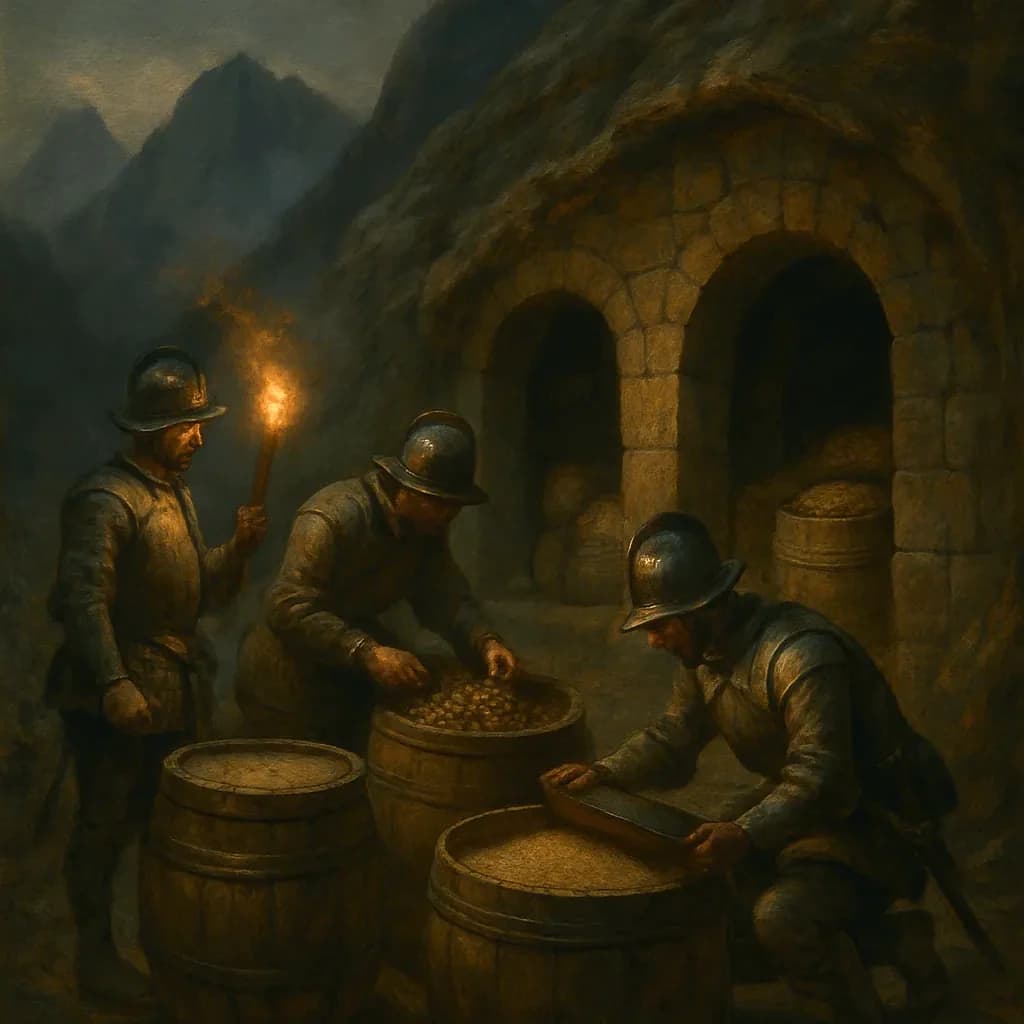
Pizarro's Secret Weapon: A Barrel of Rotting Fish
A single wooden barrel filled with rotting fish became the most valuable weapon in Spanish colonial history.
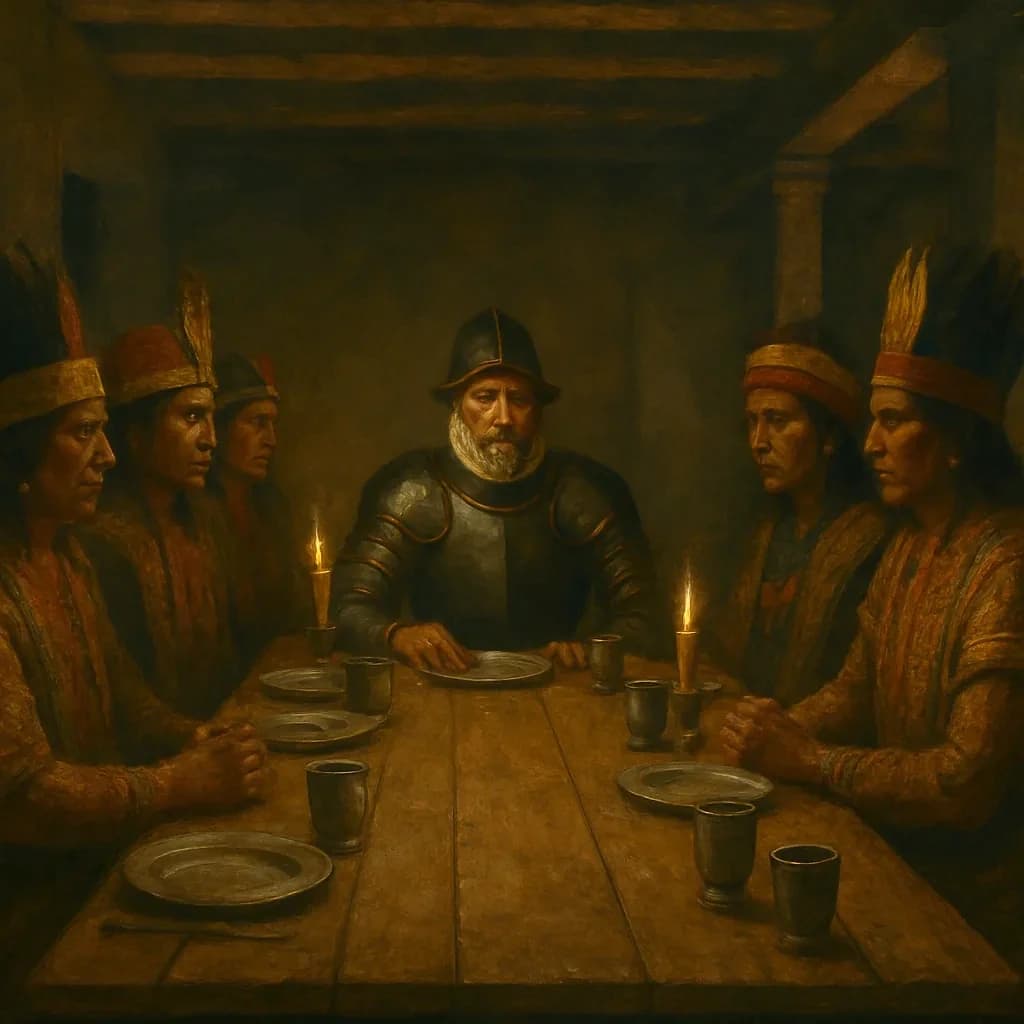
A Dinner Seating Chart Ignited the Inca Civil War
A single dinner party in 16th century Peru accidentally triggered the most destructive civil war in Incan history, over the seating arrangement.
- John Hemming, The Conquest of the Incas (1970)
- William H. Prescott, History of the Conquest of Peru (1847)
- Pedro Sancho, An Account of the Conquest of Peru (1534)