
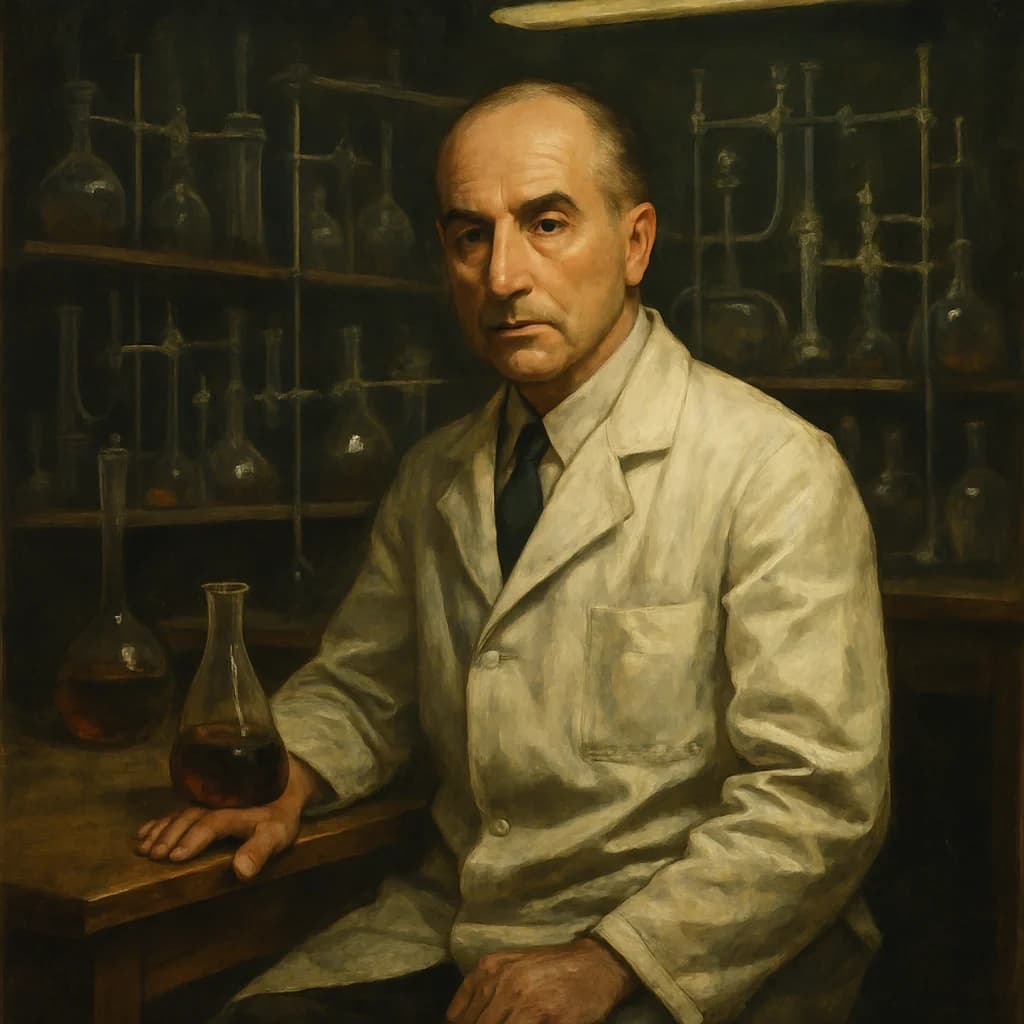
Albert Hofmann
He discovered the most powerful mind-altering substance in human history entirely by accident, spent the next fifty years insisting everyone had gotten it completely wrong, and died at 102 convinced he'd been robbed of his legacy.
Albert Hofmann was a square. This is the thing his mythologists always skip. He was a churchgoing, nature-loving, deeply conservative Swiss chemist who worked for Sandoz Pharmaceuticals in Basel, wore suits, kept meticulous records, and believed in the sanctity of the natural world with something approaching religious conviction. He was not looking for transcendence. He was looking for a vasoconstrictor.
In 1938, Hofmann synthesized lysergic acid diethylamide (LSD-25) from ergot fungus while searching for a circulatory stimulant. It showed no useful pharmaceutical properties. He set it aside. Five years later, on April 16, 1943, he went back to it for reasons he could never fully explain: a hunch, he said, an intuition that he'd missed something. While re-synthesizing the compound, a trace amount absorbed through his fingertips. He noted in his lab journal feeling dizzy and restless, and experiencing a not-unpleasant dreamlike state before cycling home. Three days later, on April 19, he deliberately dosed himself with 250 micrograms (a quantity he assumed was modest) and took what became the most famous bicycle ride in pharmaceutical history. His neighbor, summoned to help him home, transformed into a malevolent witch. The walls breathed. The world ended and reconstituted itself repeatedly. He was convinced, for a period, that he had died.
He hadn't, obviously. But what followed his survival might be the stranger story. Hofmann spent decades watching his discovery get hijacked: first by Cold War intelligence agencies running covert experiments on unwitting subjects, then by the counterculture turning it into a sacrament, then by governments criminalizing it into underground obscurity. He hated all of it. He called LSD his 'problem child' in his 1979 memoir of the same name, but the relationship was more complicated than the title suggests. He considered it a sacred medicine, a tool for reconnecting modern humans to the natural world, and he was furious that political panic had terminated legitimate research just as it was producing real results.
In 2006, at age 100, he attended a symposium in Basel marking the compound's anniversary and delivered a lecture calling for LSD's return to psychiatric research. He died two years later, in April 2008, at his home in the Swiss Jura mountains, two months after his wife of seventy years.
Hofmann also first synthesized psilocybin and psilocin in 1958, isolating the active compounds from Psilocybe mexicana mushrooms sent to him by ethnomycologist R. Gordon Wasson, meaning one man identified the active chemistry behind both of the 20th century's most consequential psychedelics.
Why untold: The counterculture absorbed Hofmann as a symbol and discarded his actual views, leaving behind a cartoon version that erased his conservative Catholic sensibility, his lifelong fury at LSD's criminalization, and his sophisticated argument that Western civilization had severed itself from nature: the very thing, he believed, that made his discovery so dangerous in the wrong hands.
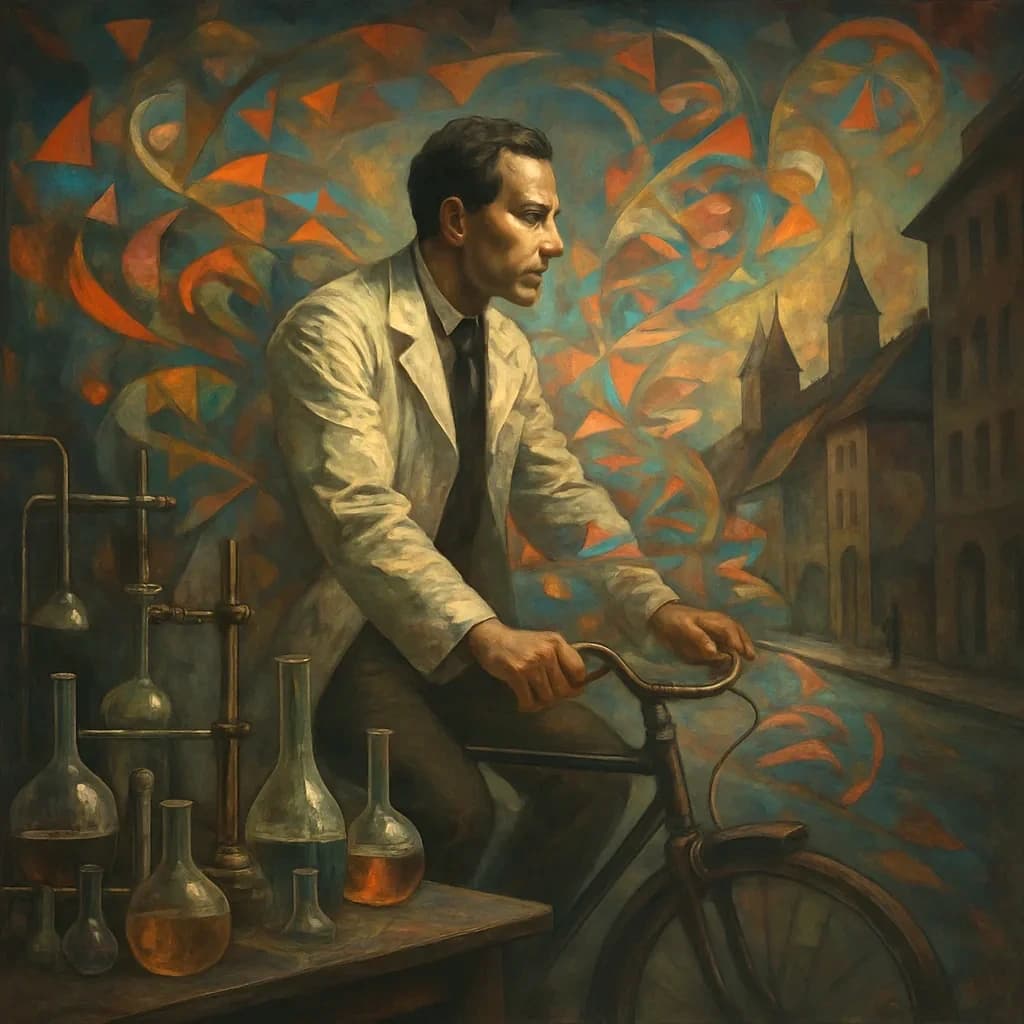
How a Swiss Chemist's Bike Ride Discovered LSD
A chance discovery in a Basel laboratory in 1943 would eventually topple governments, launch a thousand conspiracies, and convince an entire generation that reality was optional.

When Bread Killed Everyone In Pont-Saint-Esprit
An entire French town went insane for three days in 1951, and no one could explain why the bread had turned into poison.
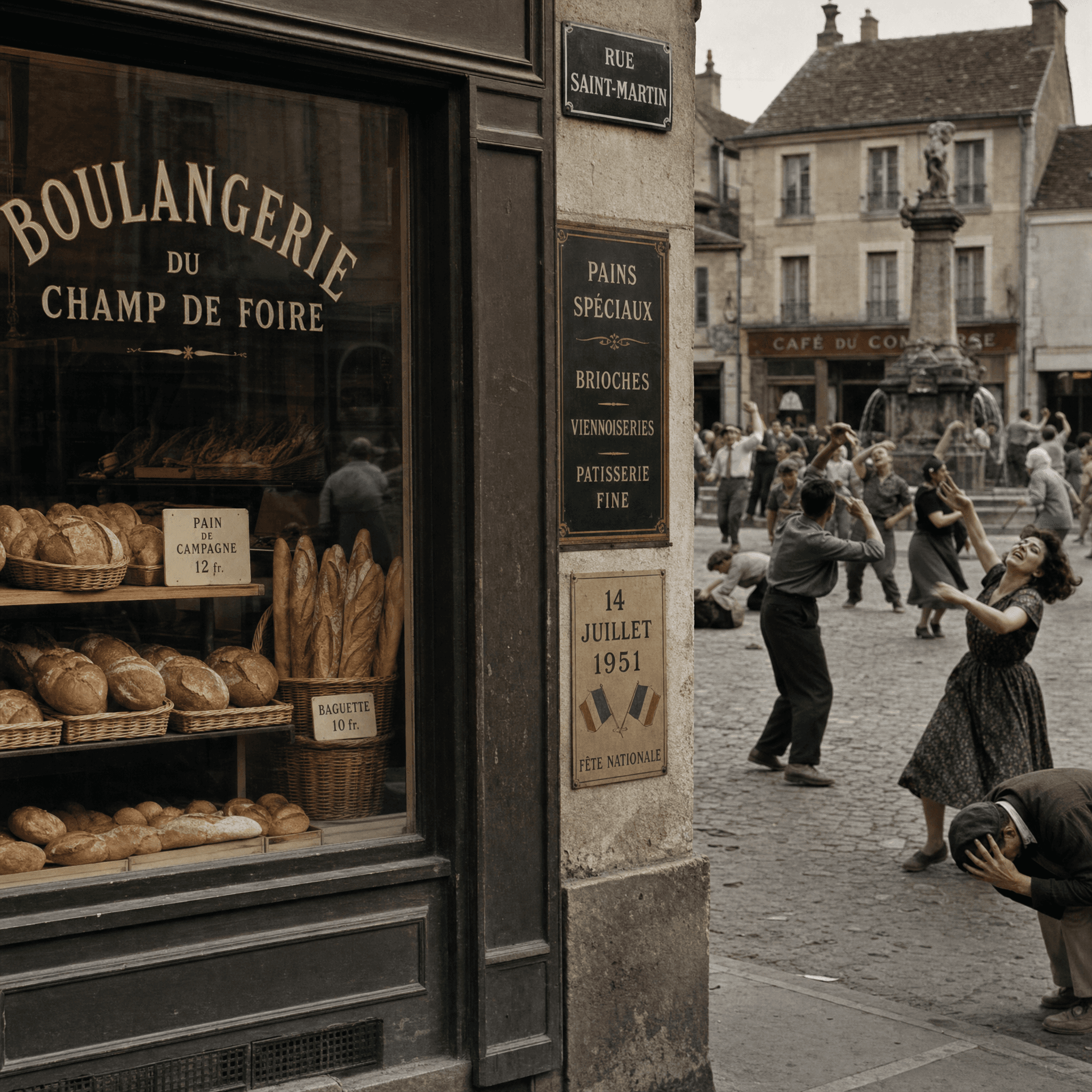
When Bread Started Screaming
In 1951, an entire French town went collectively insane overnight (dancing, hallucinating, and jumping from windows) after eating their daily bread.

A Pharmacist's Morning Walk Changed How Humans Experience Reality
A Swiss pharmacist's morning walk changed the way humans experience reality forever.
- Hofmann, Albert. LSD: My Problem Child. McGraw-Hill, 1980.
- Siff, Stephen. Acid Hype: American News Media and the Psychedelic Experience. University of Illinois Press, 2015.
- Passie, Torsten, et al. 'The Pharmacology of Lysergic Acid Diethylamide: A Review.' CNS Neuroscience & Therapeutics, 2008.