
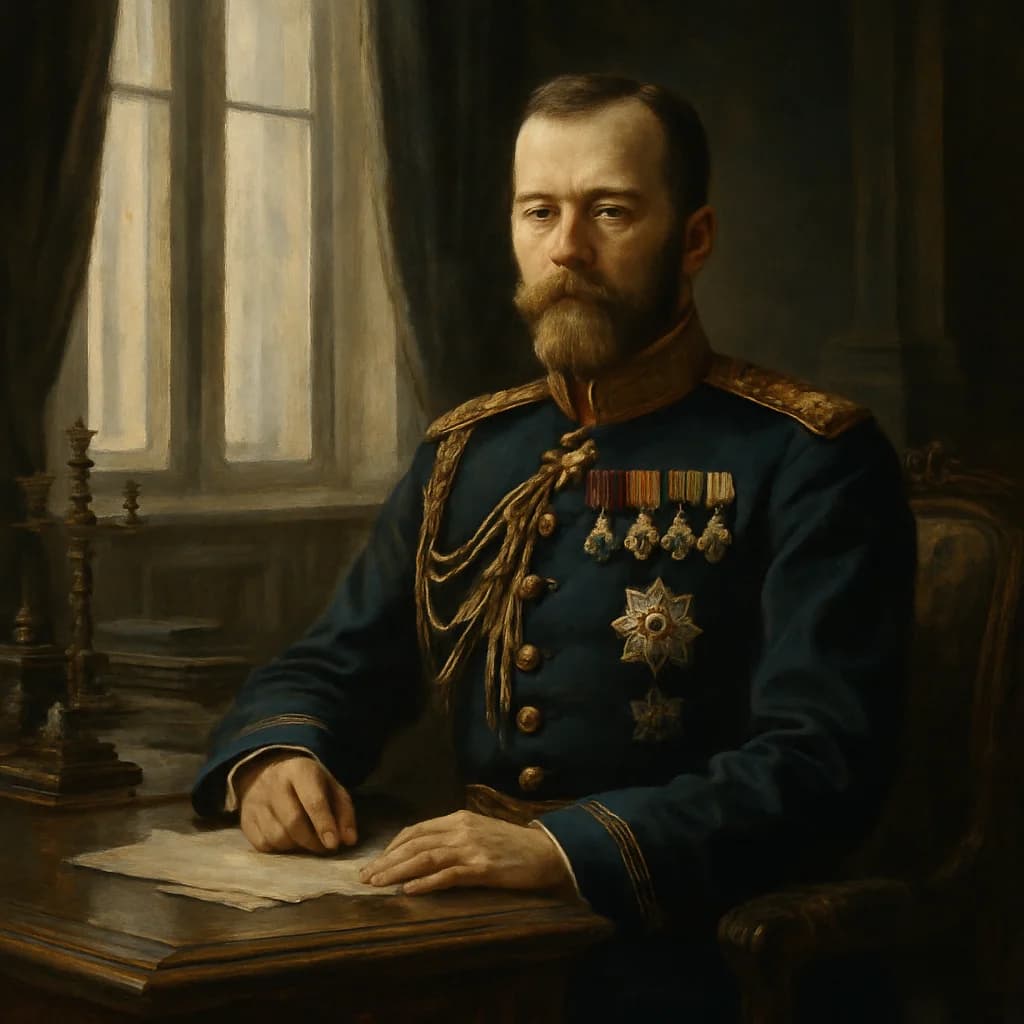
Tsar Nicholas II
The last Tsar of Russia was overthrown not by grand political forces, but by his complete inability to understand that royal mystique required actual mystery.
Nicholas II possessed perhaps the most dangerous combination imaginable for an absolute monarch: unlimited power paired with the temperament of a suburban middle manager. While his subjects imagined him as an all-knowing autocrat guided by divine wisdom, Nicholas spent his days obsessively cataloging the weather in his diary and complaining about paperwork. His journal entries read like those of a mildly depressed office worker: "Had a long boring meeting with ministers. Walked in the garden. Noticed the leaves are turning."
The gap between imperial image and prosaic reality proved fatal during the 1905 Revolution. When thousands of workers marched to the Winter Palace seeking his guidance, Nicholas wasn't even there. He was at his suburban retreat, probably noting the temperature. The massacre that followed, Bloody Sunday, shattered the paternal bond between Tsar and people that had sustained Russian autocracy for centuries. But Nicholas learned nothing. He continued treating revolutionary crises like minor administrative inconveniences, delegating crucial decisions while focusing on family picnics and amateur photography.
His obsession with normalcy extended to his tragic son Alexei's hemophilia, which the family treated as a state secret requiring increasingly desperate measures. Enter Rasputin, whose ability to calm the bleeding child gave him unprecedented influence over imperial policy. Nicholas, who couldn't manage a cabinet meeting, somehow convinced himself he could manage a supernatural faith healer. By 1917, when revolution finally came, the autocrat who claimed divine mandate was reduced to abdicating via telegram from a railway siding, asking only to be allowed to return to his garden. The mystique of absolute power, it turned out, required an absolute understanding of power, something Nicholas never possessed.
Nicholas II kept a detailed daily diary for thirty years, but spent more words describing the weather than major political crises. His entry for Bloody Sunday, when troops killed hundreds of protesters, was shorter than his notes on a family bicycle ride.
Why untold: His image as a tragic figure overwhelmed by forces beyond his control obscures how his fundamental misunderstanding of power made revolution inevitable.
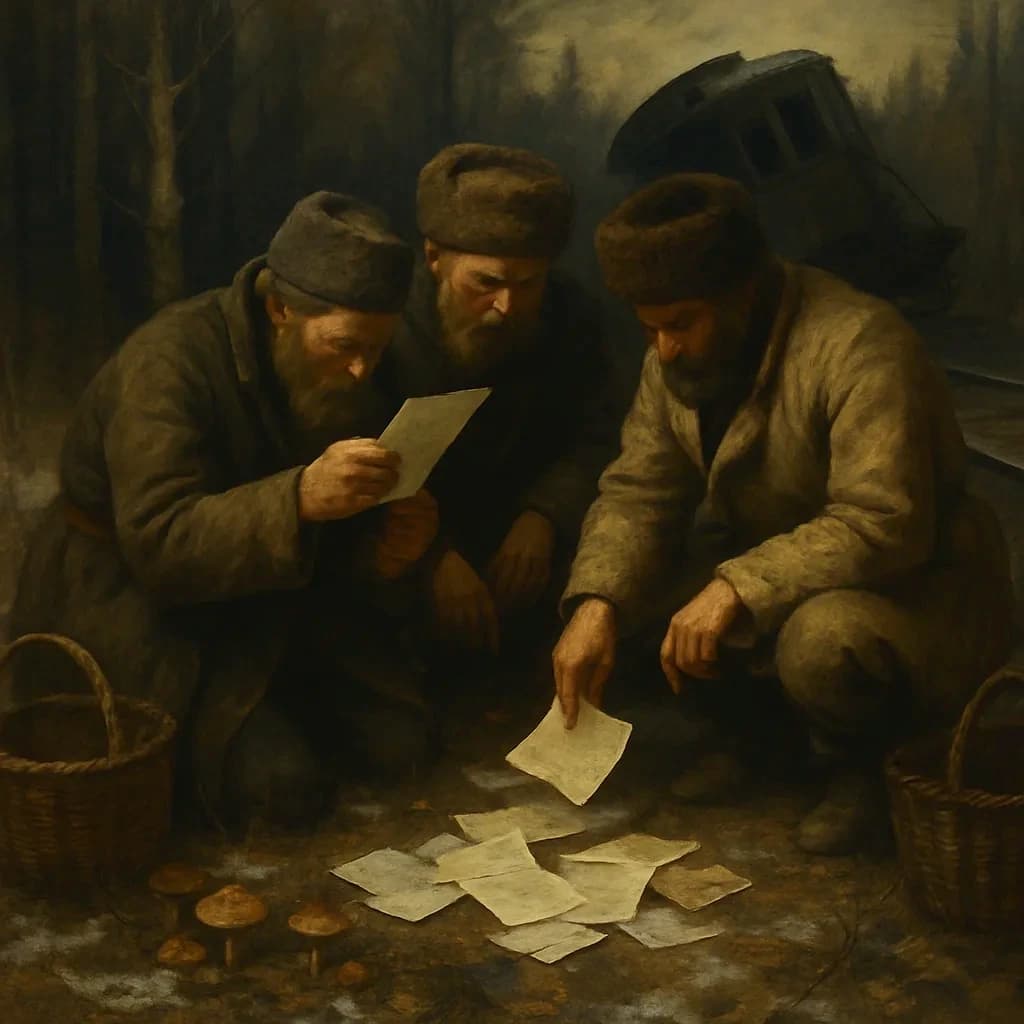
Mushroom Hunters Found the Tsar's Lost Telegrams
Three Russian peasants went foraging for mushrooms and ended 300 years of Romanov rule.
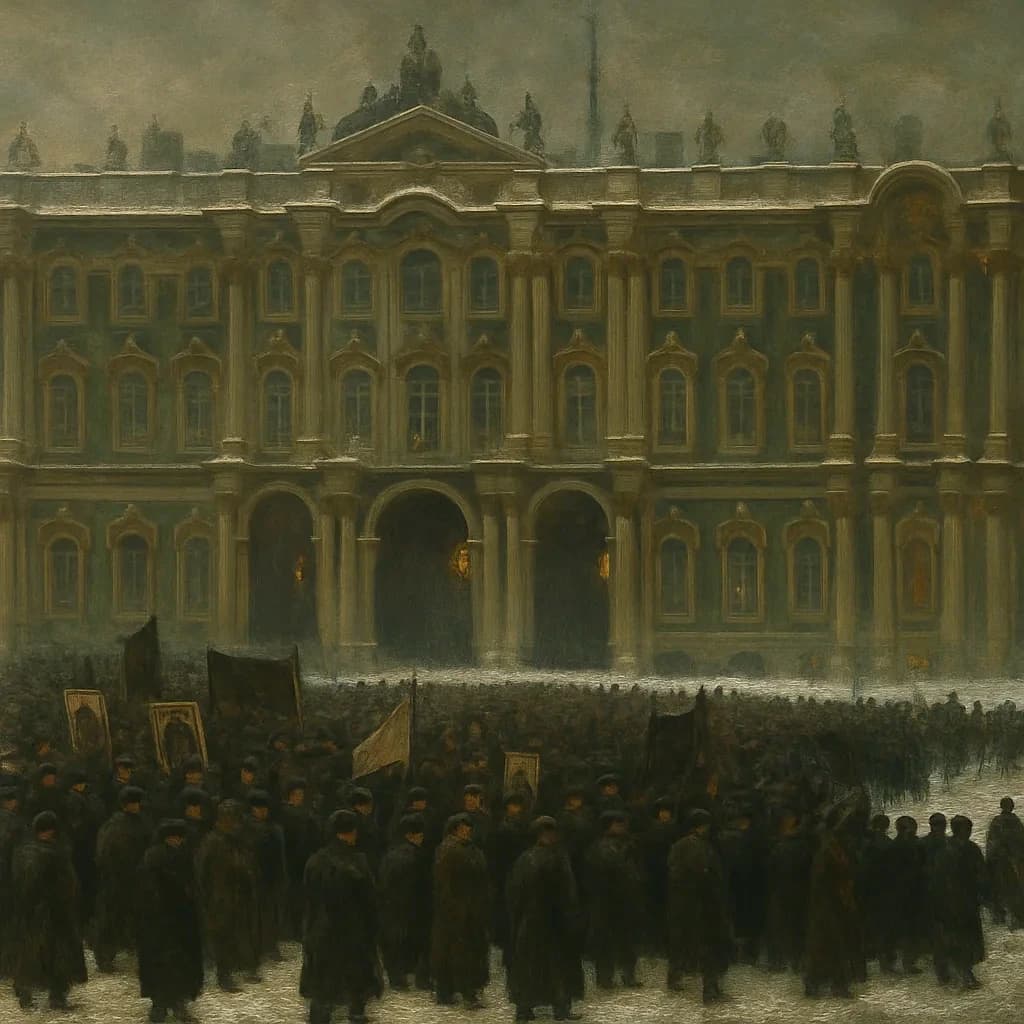
The Kitchen Maid Who Knew an Unguarded Door
A single architectural detail in the Winter Palace nearly prevented the Russian Revolution of 1905 from happening at all.
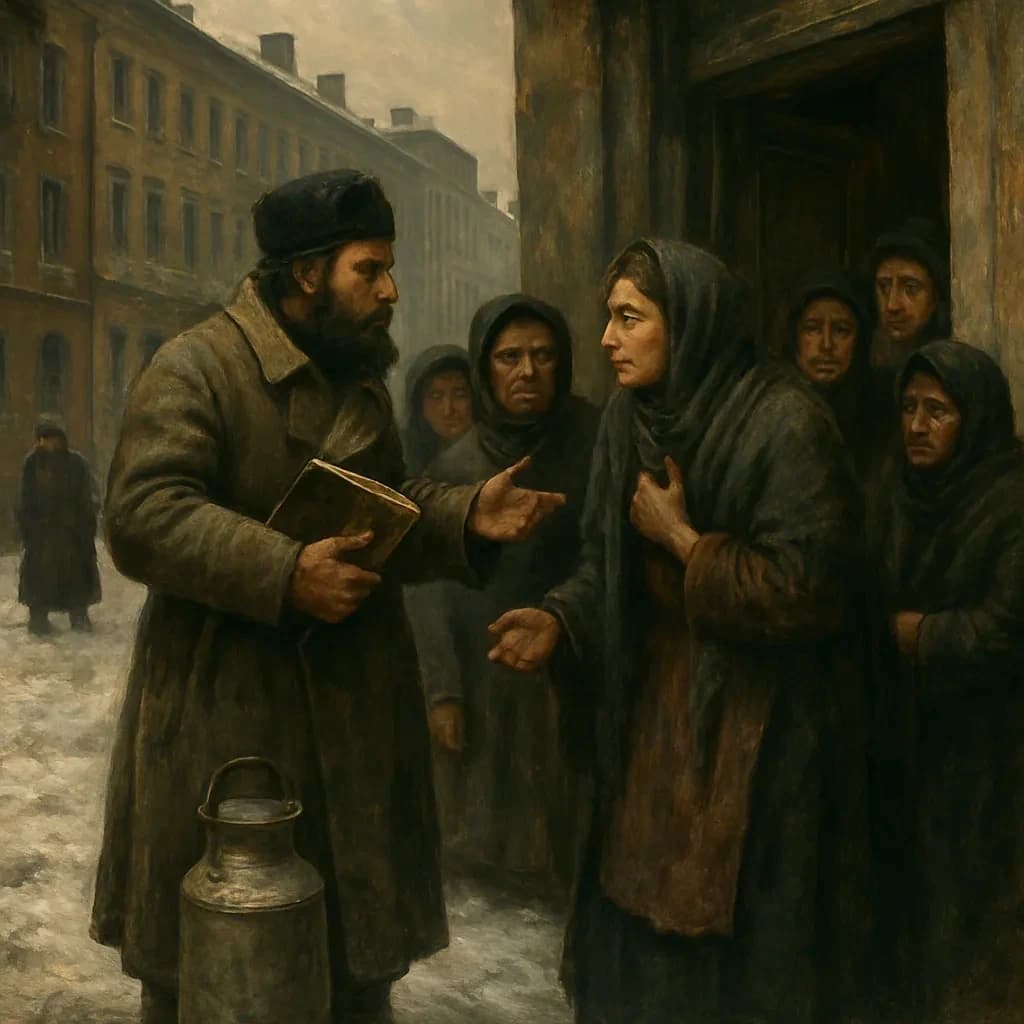
How a Milkman's Collection Day Sparked a Revolution
A St. Petersburg dairy bill collector helped trigger the revolution that would kill the Tsar and reshape the world.
- Dominic Lieven, Nicholas II: Twilight of the Empire
- Robert K. Massie, Nicholas and Alexandra
- Orlando Figes, A People's Tragedy: The Russian Revolution 1891-1924