
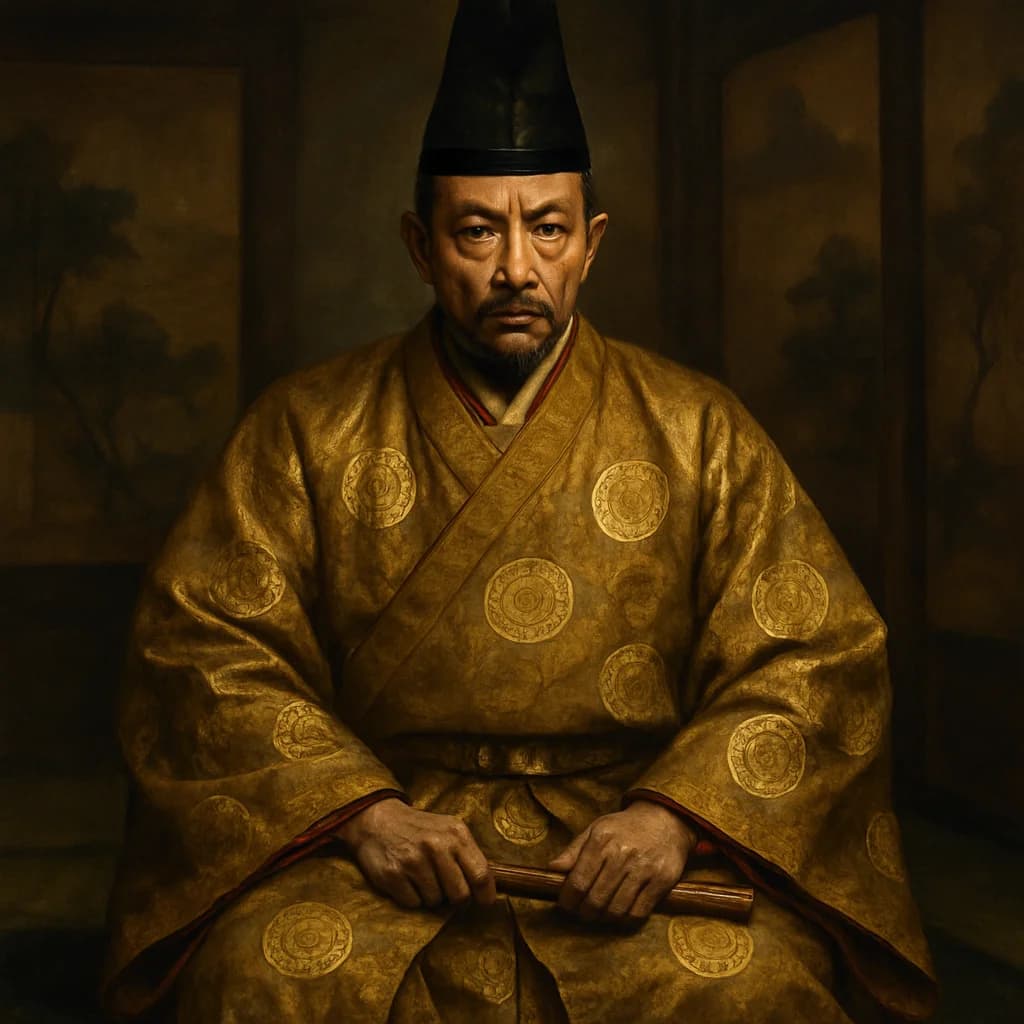
Toyotomi Hideyoshi
The man who unified Japan was so ashamed of his peasant origins that he claimed to be the reincarnation of the sun goddess.
Toyotomi Hideyoshi was born a nameless peasant in 1537, so low in society that he didn't even have a surname. His childhood nickname was "Kozaru" (little monkey), mocking his simian features and stunted growth. Yet this social nobody would orchestrate the most dramatic class betrayal in Japanese history.
He began as a sandal-bearer for Oda Nobunaga, literally warming his master's straw shoes in winter. But Hideyoshi possessed something rarer than noble blood: an almost supernatural ability to read human nature. While samurai fought with swords, he fought with psychology. He could spot which castle commander might switch sides for the right price, which rival could be neutralized through marriage rather than murder. When Nobunaga was assassinated in 1582, Hideyoshi didn't just avenge his master. He eliminated his own allies who had helped him do it, clearing his path to power.
By 1590, Hideyoshi controlled all of Japan. Then he did something unprecedented: he pulled up the ladder behind him. His 1591 class system decree froze social mobility forever: peasants must remain peasants, warriors must remain warriors. The same man who had climbed from rice fields to palaces made sure no one else could follow his path. It was the ultimate insider trading scheme, using state power to corner the market on advancement.
His paranoia about legitimacy drove him to increasingly desperate measures. He adopted the adult Tokugawa Ieyasu as his "brother," forced the emperor to grant him the invented title of "Kampaku," and launched two catastrophic invasions of Korea partly to give his samurai something to do besides plot against him. When he died in 1598, his final letters revealed a man still terrified that someone might discover what he'd always known: that power built on lies eventually collapses under its own weight.
Hideyoshi banned Christianity not for religious reasons, but because he realized Christian converts were developing loyalty to something higher than him, and crucified 26 Christians in 1597 as a warning to anyone who might choose God over their earthly ruler.
Why untold: His story is overshadowed by the samurai he defeated and the Tokugawa dynasty that replaced him, obscuring history's most successful example of a commoner destroying the very system that enabled his rise.
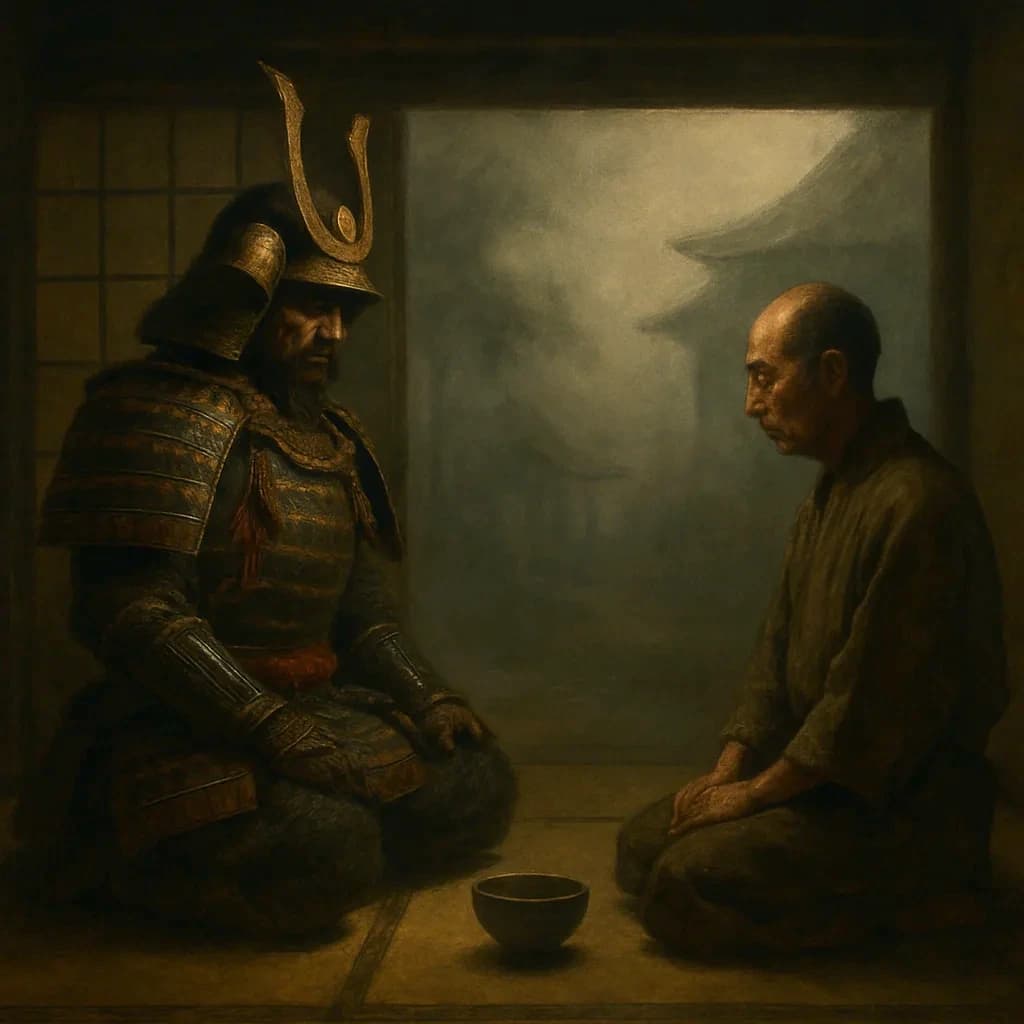
Sen no Rikyū Served a Warlord an Empty Bowl
Japan's most feared warlord knelt for tea in 1582, and the master served him nothing at all, which changed everything.
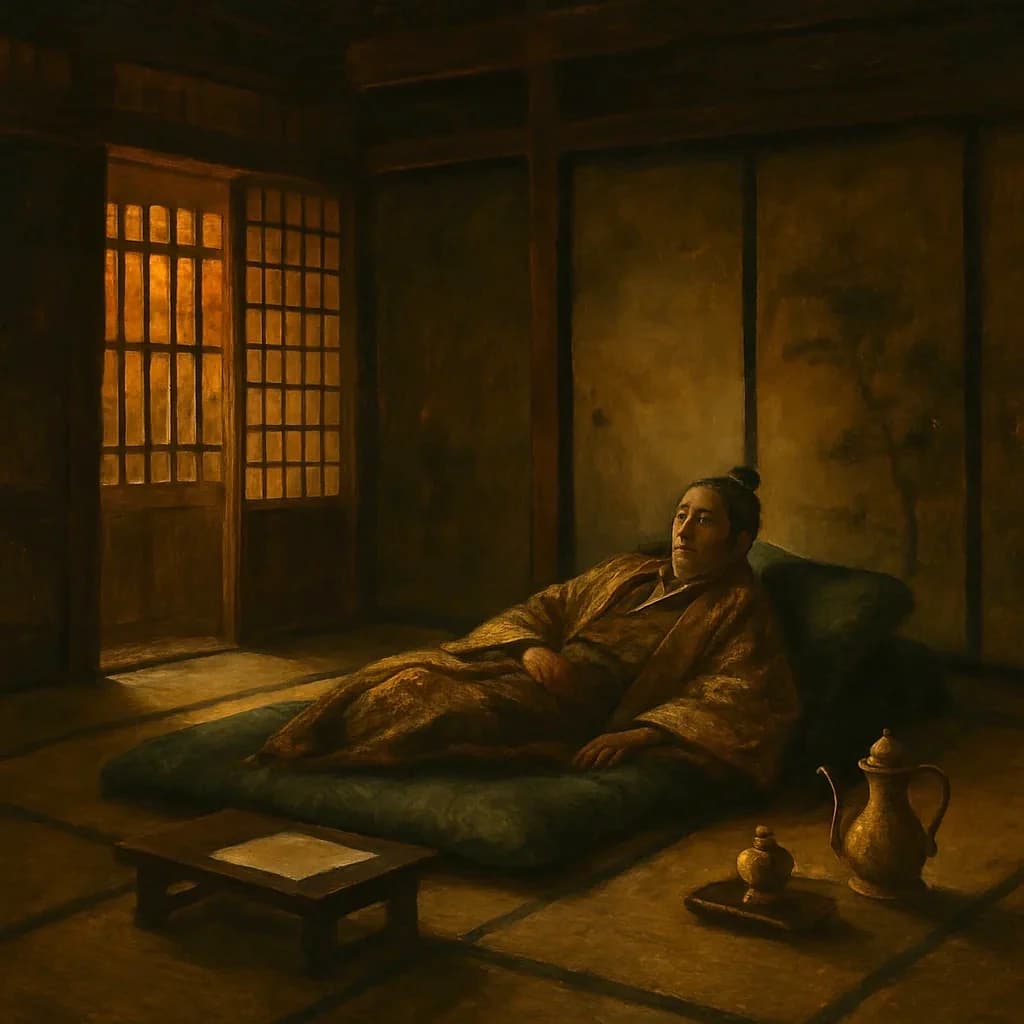
A Dying Warlord's Last Letter Couldn't Save His Five-Year-Old Heir
The most powerful man in Japan died surrounded by nobody, leaving a letter that would reshape Asia.
- Turnbull, Stephen. Toyotomi Hideyoshi. Osprey Publishing, 2010.
- Berry, Mary Elizabeth. Hideyoshi. Harvard University Asia Center, 1982.
- Sansom, George. A History of Japan 1334-1615. Stanford University Press, 1961.