
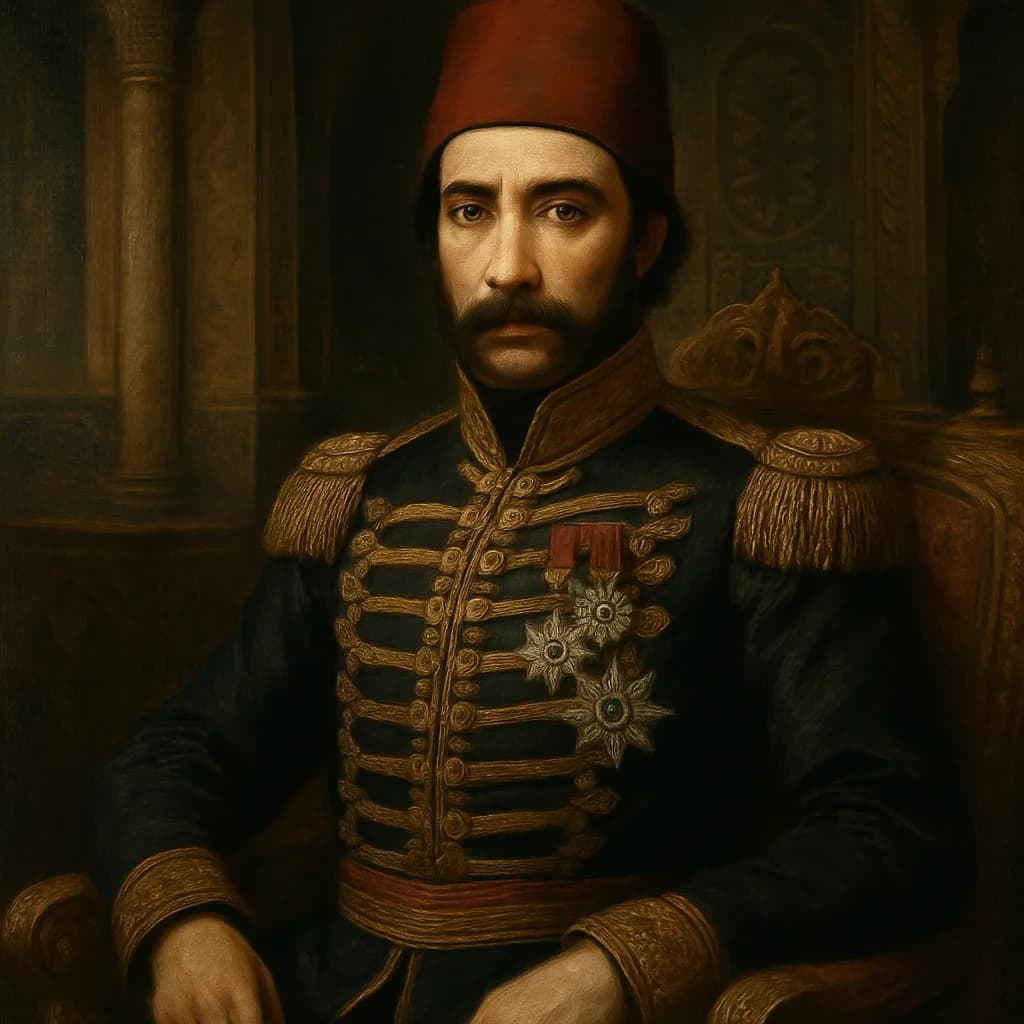
Sultan Mahmud II
The Ottoman Sultan who declared war on his own army, and won.
Mahmud II ascended the throne in 1808 with a target on his back. His predecessor had been strangled by the Janissaries, the empire's elite soldiers who had become kingmakers. For eighteen years, Mahmud smiled, nodded, and pretended to be their puppet while secretly assembling a modern army trained by European officers.
The moment came in 1826 when the Janissaries refused to accept his new military reforms. They overturned their soup cauldrons (the traditional signal of mutiny) and marched on the palace. But Mahmud was ready. He had cannons positioned around their barracks and loyal troops surrounding the city. When the smoke cleared, fifteen thousand Janissaries lay dead, and six centuries of military tradition had been obliterated in a single day.
What followed was even more radical. Mahmud banned turbans in favor of the fez, outlawed traditional robes for European-style coats, and forced his officials to learn French. He established the empire's first newspaper, opened new schools, and created a postal system. His subjects barely recognized their own empire. The man who had lived in mortal fear of his own soldiers had transformed into the most revolutionary ruler in Ottoman history.
Yet Mahmud's modernization came too late. The empire was hemorrhaging territory to nationalist uprisings and European powers. He died in 1839, just as his reforms began to bear fruit, leaving behind a partially westernized state that would continue stumbling toward collapse for another century.
Mahmud II was the first Ottoman sultan to leave Istanbul, traveling to the Bosphorus villages incognito to observe how his reforms were being received by ordinary citizens.
Why untold: His dramatic internal revolution is overshadowed by the empire's external decline during the same period.
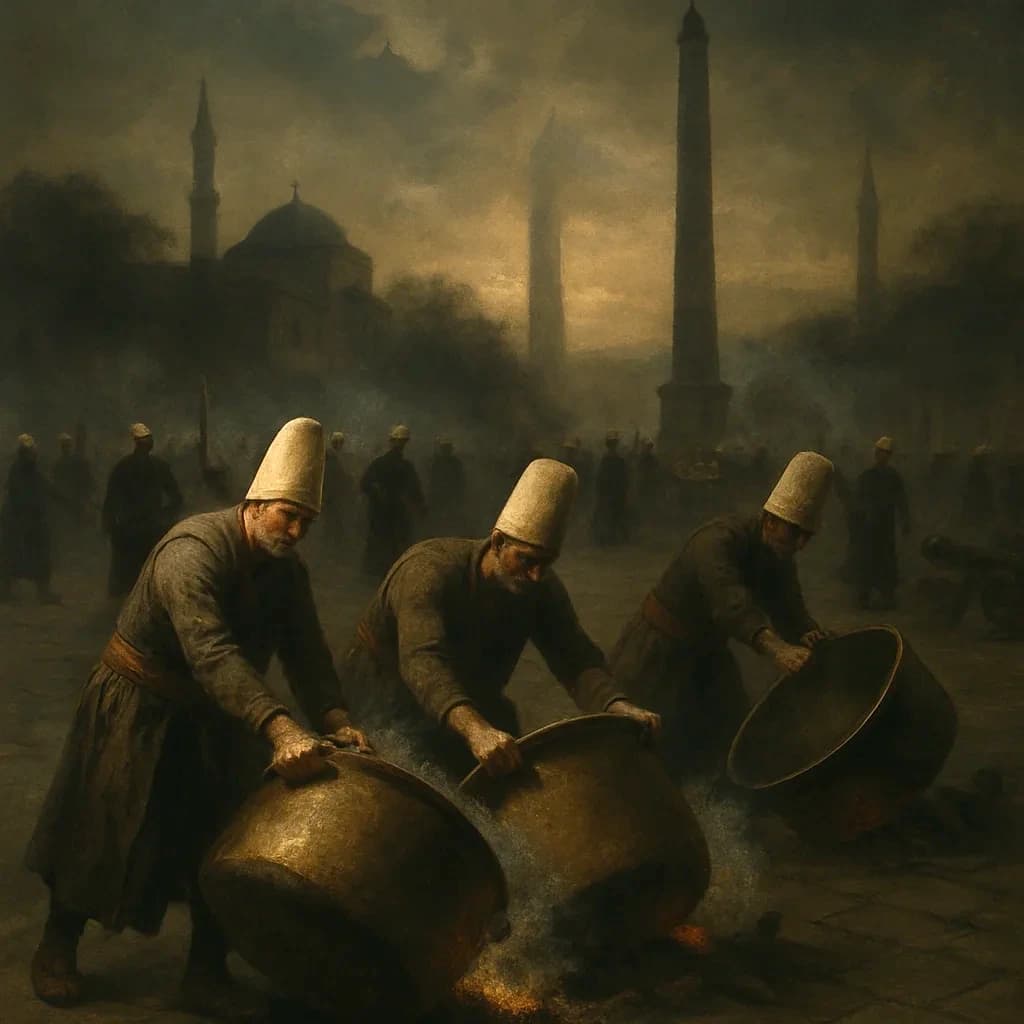
The Auspicious Incident: A Sultan Destroys His Own Army
A bowl of soup in an Istanbul barracks triggered the collapse of the Ottoman Empire's most feared military force.
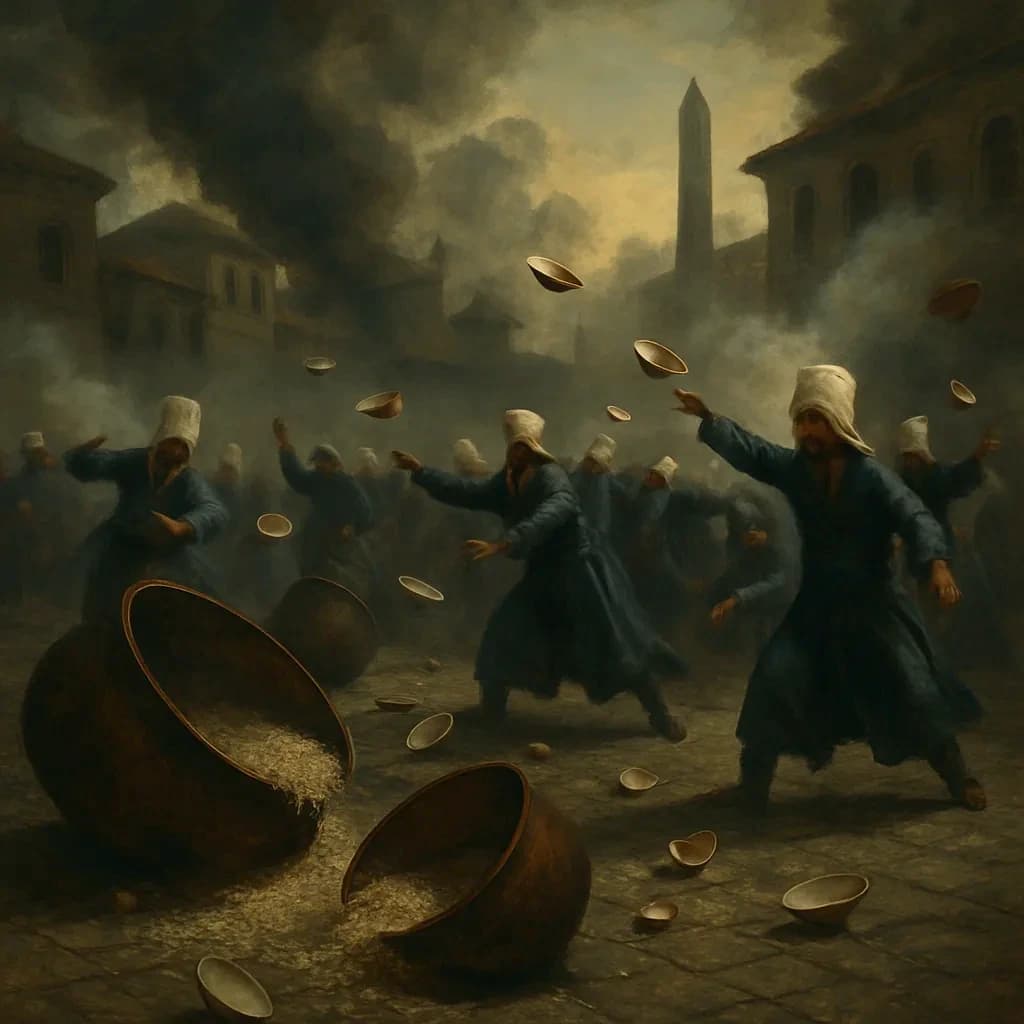
Sultan Mahmud Invited His Elite Army to Lunch
One soldier's refusal to eat his soup nearly toppled the longest-lasting empire in history.
- Stanford J. Shaw, Between Old and New: The Ottoman Empire under Sultan Selim III and Mahmud II
- Virginia Aksan, Ottoman Wars 1700-1870
- Butrus Abu-Manneh, Studies on Islam and the Ottoman Empire in the 19th Century