
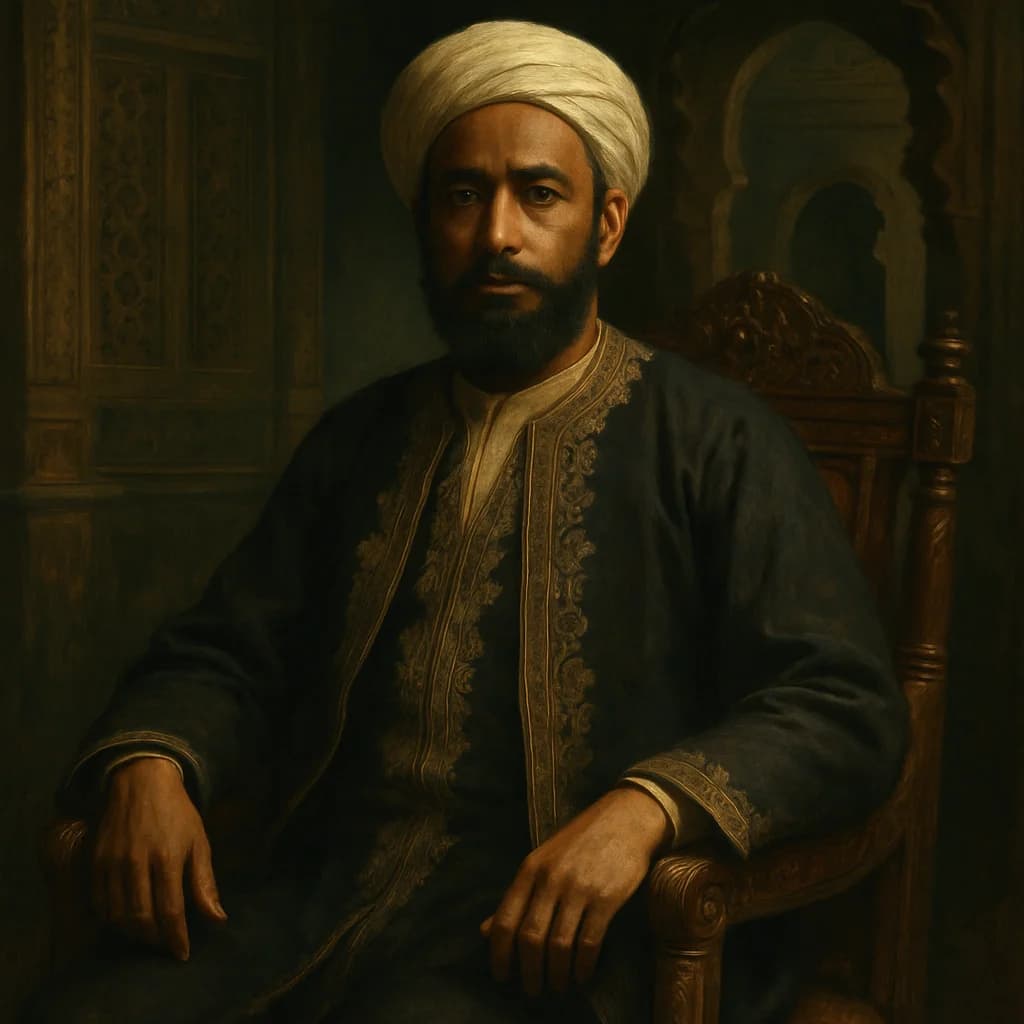
Sultan Khalid bin Barghash
The man who started the shortest war in history never actually wanted to fight it.
When Sultan Hamad bin Thuwaini died unexpectedly on August 25, 1896, his cousin Khalid bin Barghash moved fast. Within hours, he had occupied the palace in Stone Town, declared himself Sultan of Zanzibar, and began assembling what he thought was a formidable defense force. What Khalid didn't fully grasp was that the British had other plans, and a naval squadron already anchored in the harbor.
Khalid wasn't some reckless usurper drunk on power. He was the nephew of the previous Sultan, Barghash bin Said, and genuinely believed he had legitimate claim to the throne. The British, however, had grown comfortable with their puppet arrangements and preferred Khalid's more pliable cousin, Hamud bin Mohammed. When British Consul-General Basil Cave delivered an ultimatum demanding Khalid step down, the would-be Sultan found himself trapped between family honor and imperial firepower.
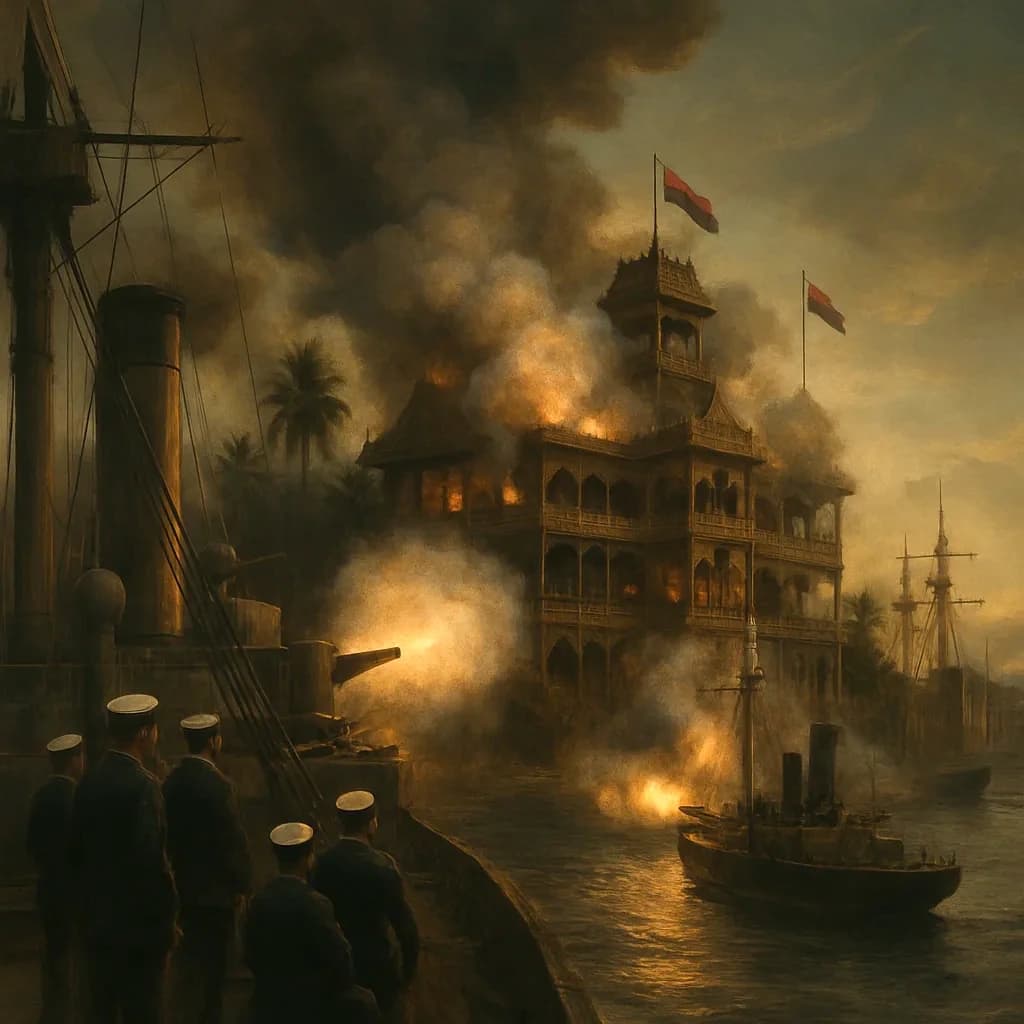
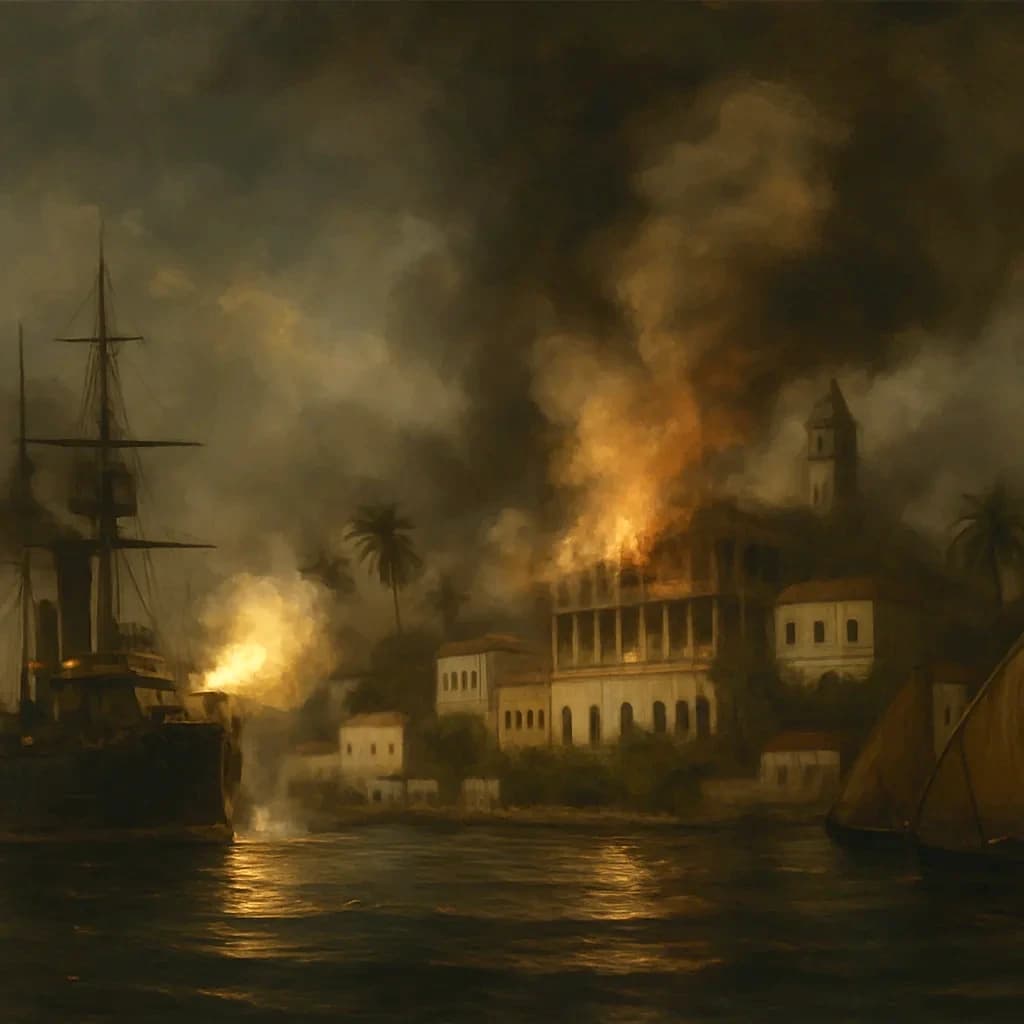
The siege lasted exactly 38 minutes on the morning of August 27, 1896. Khalid's defenders (about 2,800 men armed mostly with rifles and a few antique cannons) faced three British cruisers and two gunboats. The palace's wooden structures stood no chance against modern naval artillery. When the bombardment began at 9:02 AM, Khalid's royal yacht Al-Said became the conflict's most stubborn participant, requiring direct targeting before finally sinking.
Khalid escaped through the back of the burning palace and fled to the German consulate, where he remained for several days before sailing to German East Africa. He lived in exile for nearly two decades, eventually returning to East Africa where he died in 1927, largely forgotten except as the answer to a trivia question about the world's shortest war.
Khalid's escape route from the palace led directly through a harem, and he had to convince the women there to help smuggle him out while British shells were still falling.
Why untold: History remembers the war's brevity as a curiosity rather than examining Khalid as a person caught between traditional succession rights and colonial realpolitik.
- Bennett, Norman R. 'A History of the Arab State of Zanzibar.' London: Methuen, 1978.
- Sheriff, Abdul. 'Slaves, Spices and Ivory in Zanzibar.' London: James Currey, 1987.
- Ingrams, W.H. 'Zanzibar: Its History and Its People.' London: Witherby, 1931.