
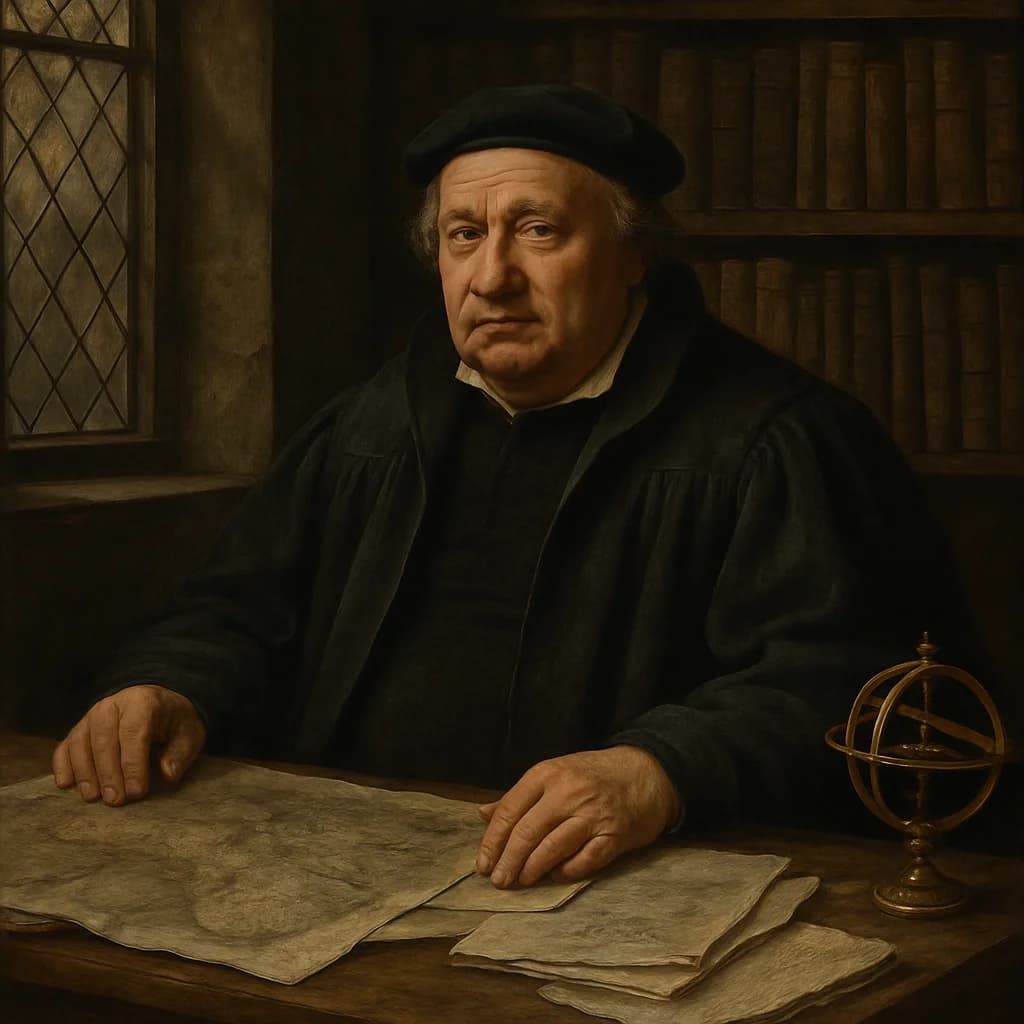
Sebastian Münster
He never left Germany, yet he personally reshaped every coastline, mountain range, and river on Earth.
Sebastian Münster was a Franciscan friar who became history's most consequential armchair traveler. Born in Ingelheim am Rhein in 1488, he spent almost his entire life within a narrow corridor of German-speaking Europe (Basel, Heidelberg, Tübingen), and yet his 1544 Cosmographia became the single most widely read geographic text of the sixteenth century, reprinted in thirty-five editions across six languages before 1600. The irony is almost unbearable: the man who told Europe what the world looked like had personally seen almost none of it.
What made Münster dangerous (in the most productive sense) was his method. He wrote letters. Hundreds of them. He sent questionnaires to merchants, priests, city officials, and minor nobility across the continent, asking them to describe their local geography, customs, and curiosities. They wrote back, and he believed them. Almost all of them. A town official in Transylvania might exaggerate a mountain's height by three hundred feet. A Portuguese sailor might conflate two separate rivers into one magnificent fictional waterway. Münster would receive the letter, integrate it into his growing manuscript, and move on. He was synthesizing an entire planet from secondhand testimony, and the errors compounded with every edition. Lakes appeared that had never existed. Rivers drained into the wrong seas. Whole cities migrated thirty miles east or west between printings.
He converted from Catholicism to Lutheranism around 1529, which cost him the patronage of half of Europe while simultaneously opening the print markets of Protestant cities. Basel, where he settled permanently, was exactly the right city at the right moment. Erasmus had died there in 1536, leaving behind a culture of ferocious scholarly production. Münster absorbed it entirely. He was producing Hebrew grammars, astronomical instruments, and annotated biblical texts simultaneously with the Cosmographia. The man slept perhaps four hours a night and still found time to write vicious marginal notes in other people's books.
He died in Basel in 1552, almost certainly of plague, while correcting proofs for yet another revised edition. The Cosmographia outlived him by a century. So did its mistakes.
Münster's Cosmographia was the first printed work to use the word 'America' for both the northern and southern continents, a terminological decision he made almost casually, in a single sentence, that permanently fixed the name across European cartography.
Why untold: Münster's reputation collapsed under the later prestige of mathematically precise cartographers like Mercator, and because his errors were so spectacular, historians of science filed him under 'cautionary tale' rather than examining the extraordinary system he built to gather geographic knowledge in an era before systematic surveying existed.
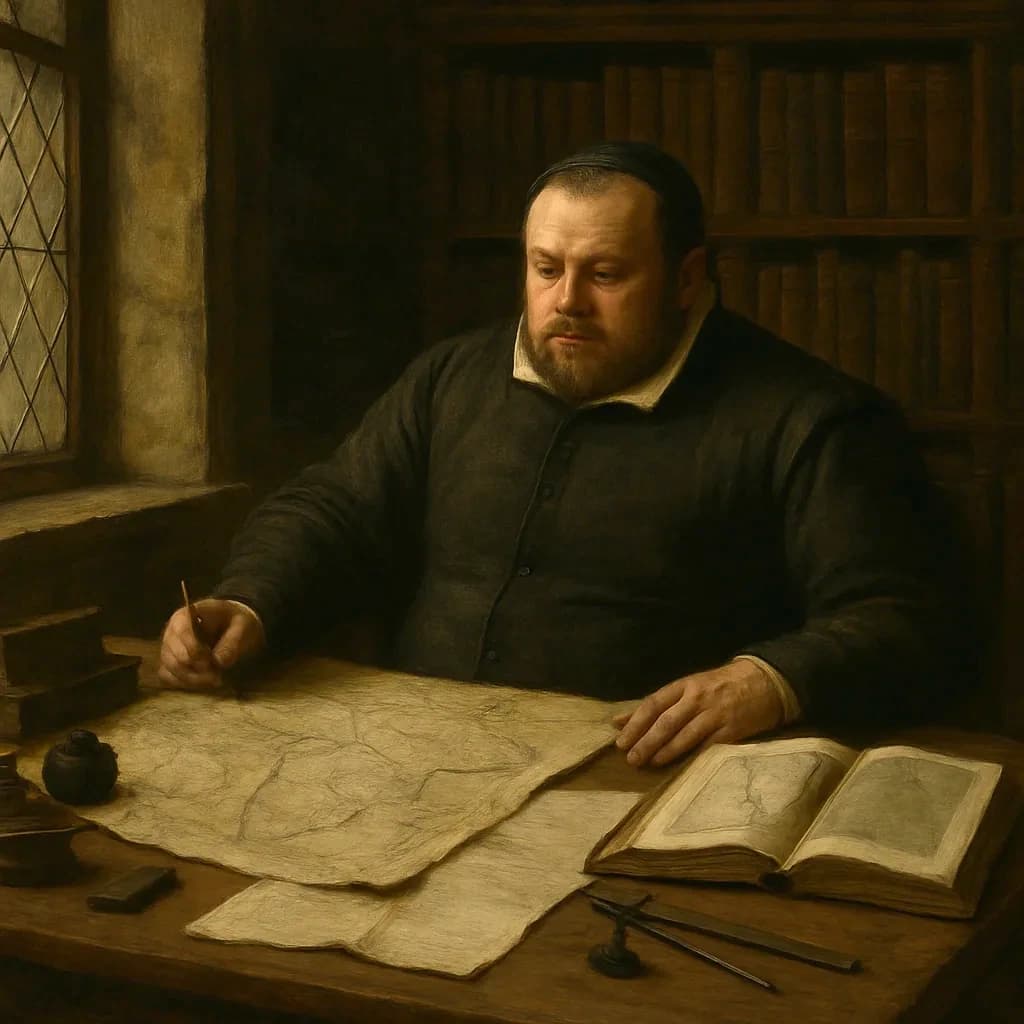
The Map That Misplaced Africa by 400 Miles
A Flemish merchant glanced at a letter he'd almost thrown away, and the shape he drew from it defined Africa for the next three centuries.
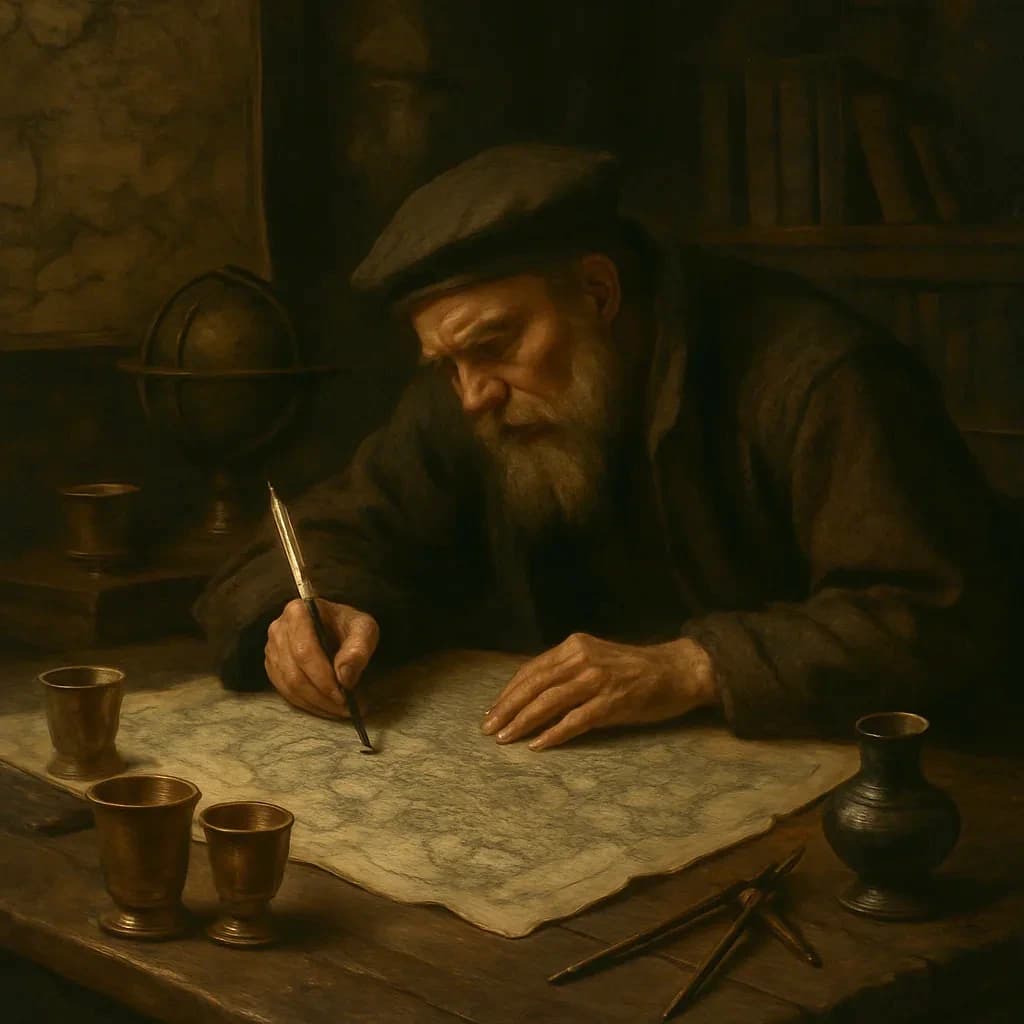
When Prague Forgot Its Name Was Paris
A mapmaker's drunken mistake in 1572 accidentally created the modern Czech Republic, and nobody noticed for three hundred years.
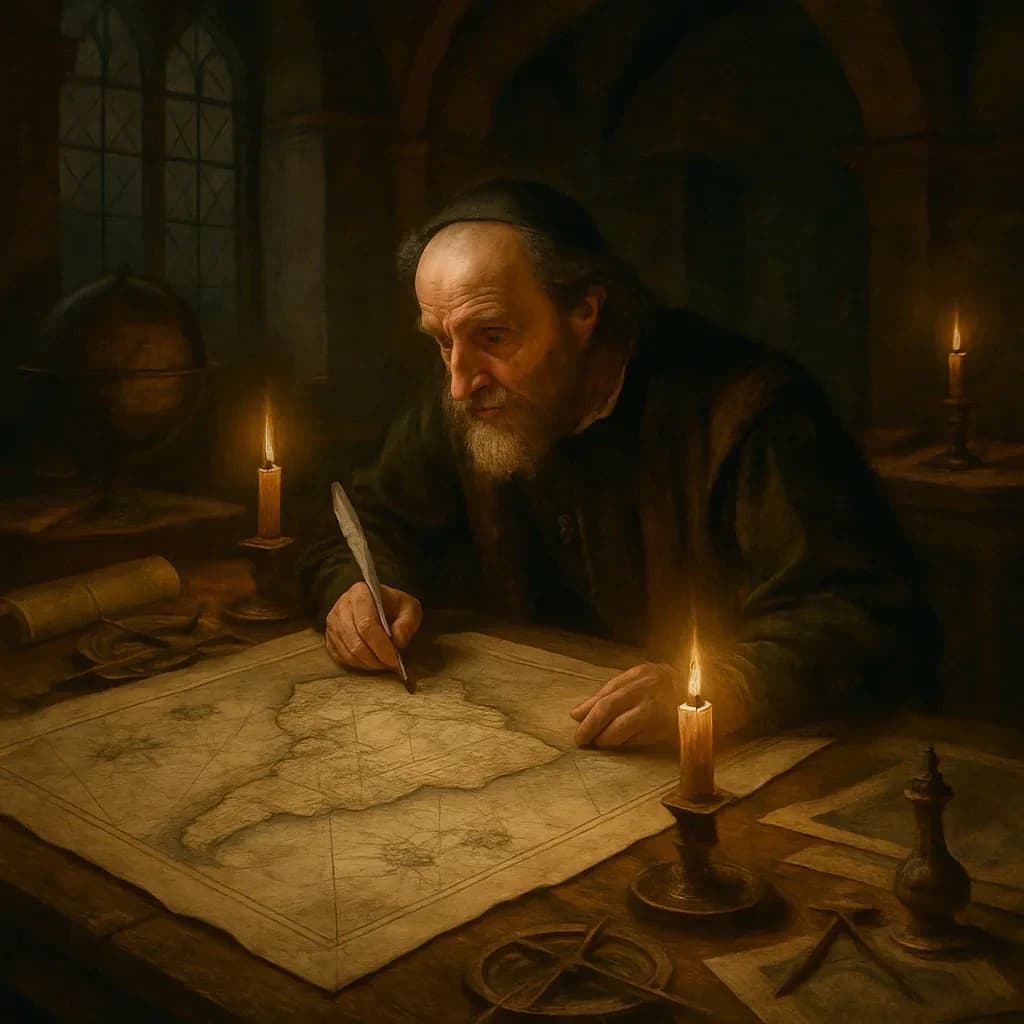
One Slipped Comma and the Golden Lake That Never Existed
A single misplaced comma on a 16th-century map killed more Spanish conquistadors than any native army.
- Matthew McLean, The Cosmographia of Sebastian Münster: Describing the World in the Reformation (Ashgate, 2007)
- Jerry Brotton, A History of the World in Twelve Maps (Allen Lane, 2012)
- Chet Van Duzer, 'Hic Svnt Dracones: The Geography and Cartography of Monsters,' in The Ashgate Research Companion to Monsters and the Monstrous (2012)