
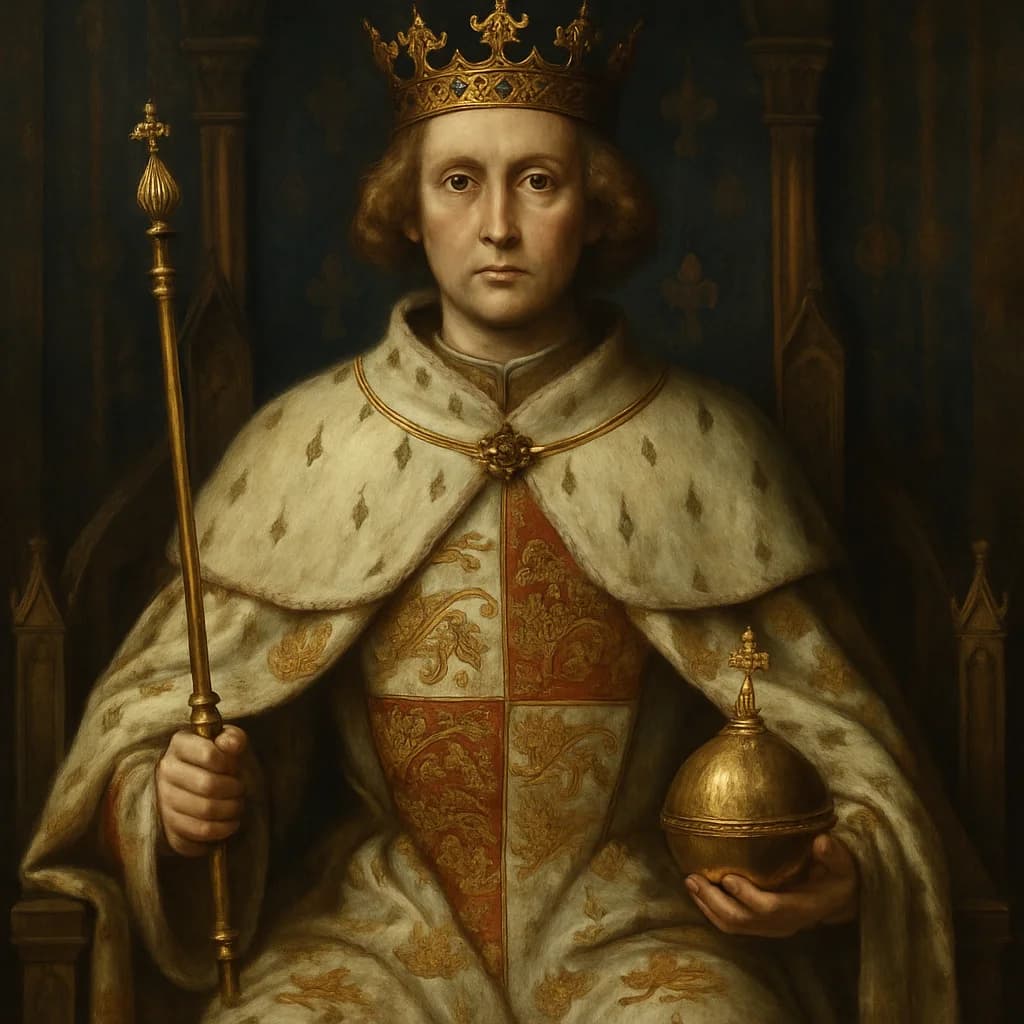
Richard II
He invented the handkerchief, commissioned the first English cookbook, and died convinced he was God's anointed, none of which saved him from being starved to death in a castle.
Richard II is remembered, when he's remembered at all, as the weak king Shakespeare made him: a man of beautiful speeches and catastrophic decisions, deposed by his cousin and neatly replaced. That reading is not exactly wrong. It's just that it skips the genuinely strange interior life of a man who was, in measurable ways, centuries ahead of his court and catastrophically out of step with it at the same time.
He was ten years old when his father died, fourteen when he inherited a kingdom mid-rebellion, and fifteen when he rode out alone at Smithfield in June 1381 to face Wat Tyler's rebel army after Tyler had just been killed in front of the crowd. The promises he made that day (freedom for every serf in England) he revoked within weeks. But the ride itself was not nothing. No one else in that field was willing to do it. That particular species of courage, the theatrical, absolute, almost delusional kind, defined him his entire life.
What rarely gets discussed is the court he built. Richard's household in the 1390s was the most culturally sophisticated in England's history to that point. He was the patron of Geoffrey Chaucer and John Gower. He commissioned the Wilton Diptych, a small portable altarpiece so exquisite that art historians still argue about its precise meaning. He is the first English monarch documented to have used a handkerchief, recorded in his household accounts, no less. The first English cookbook, *The Forme of Cury*, was compiled by his master cooks around 1390. His court consumed saffron, ginger, and exotic spices in quantities that read less like medieval England and more like somewhere else entirely.
The tragedy (and it is a genuine one) is that Richard confused aesthetic refinement with divine authority. By the late 1390s he had developed a theory of kingship so absolute it left no room for the nobility who surrounded him. He forced loans, revoked pardons, and had his own uncle, the Duke of Gloucester, smothered at Calais in 1397. When Henry Bolingbroke landed in 1399, the barons simply didn't stop him. Richard surrendered, abdicated, and was dead at Pontefract Castle by February 1400, most likely starved, possibly self-starved. He was thirty-three.
Richard II had his own face painted from life in a royal portrait (the earliest surviving realistic portrait of a reigning English monarch, now hanging in Westminster Abbey), and contemporary accounts say he would sit in silence in his throne room for hours, staring at whoever dared to meet his gaze.
Why untold: Richard's story gets flattened by the gravitational pull of Shakespeare's version, which needed him to be a passive tragic figure to make Bolingbroke's usurpation feel inevitable, erasing one of medieval England's most genuinely strange and culturally consequential reigns.
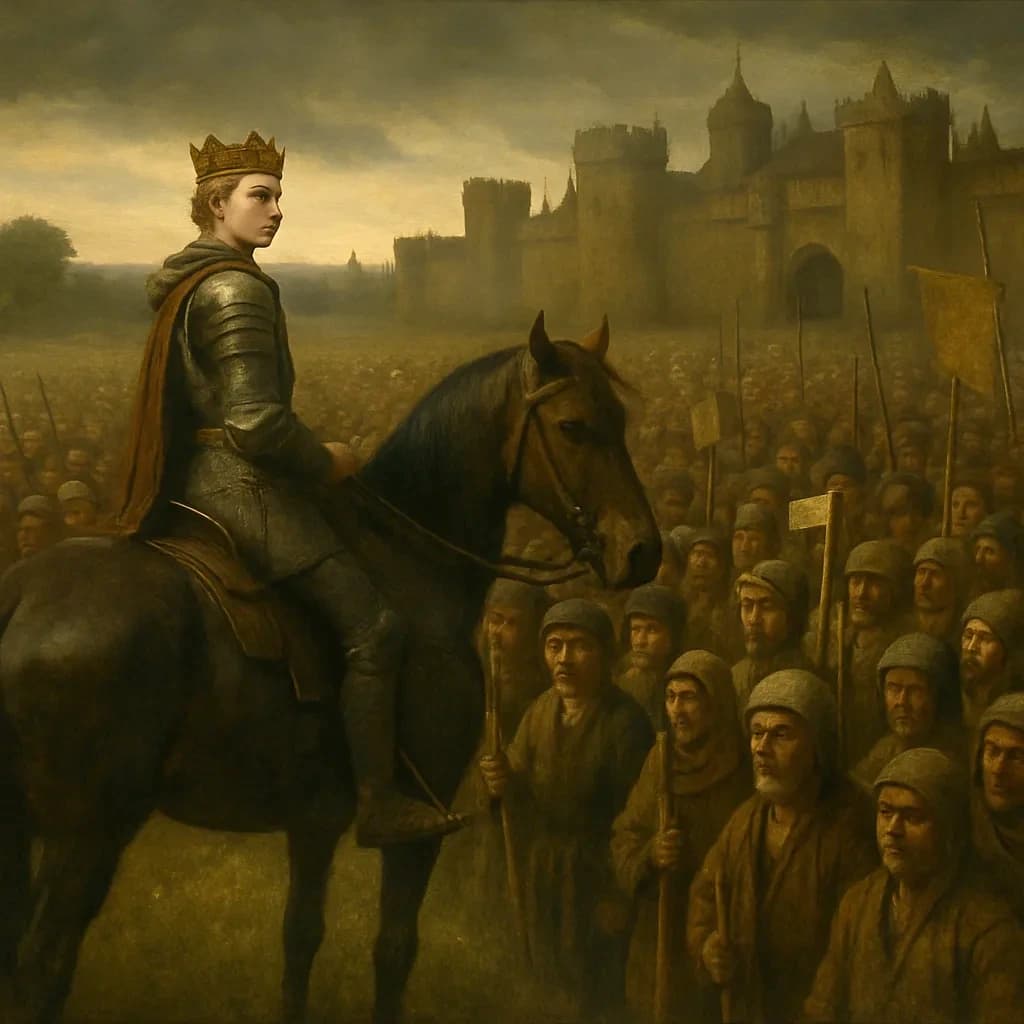
A Boy King Rode Out to Face 60,000 Rebels
A fourteen-year-old king rode out to meet a rebel army of sixty thousand men in 1381, and it almost worked.
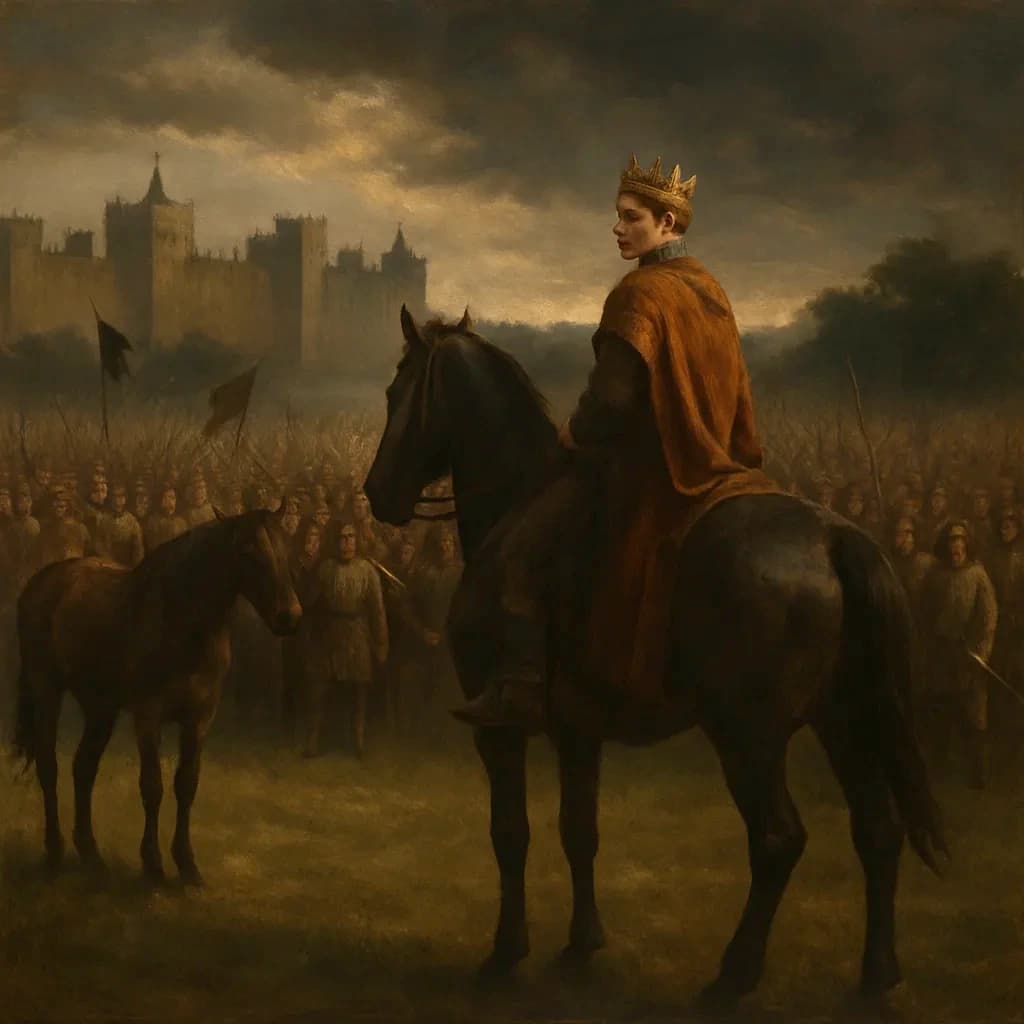
The Peasant Who Walked Into London and Almost Killed a King
In 1381, a Kentish tiler named Wat Tyler walked into a parley with Richard II and came within seconds of collapsing the English monarchy.
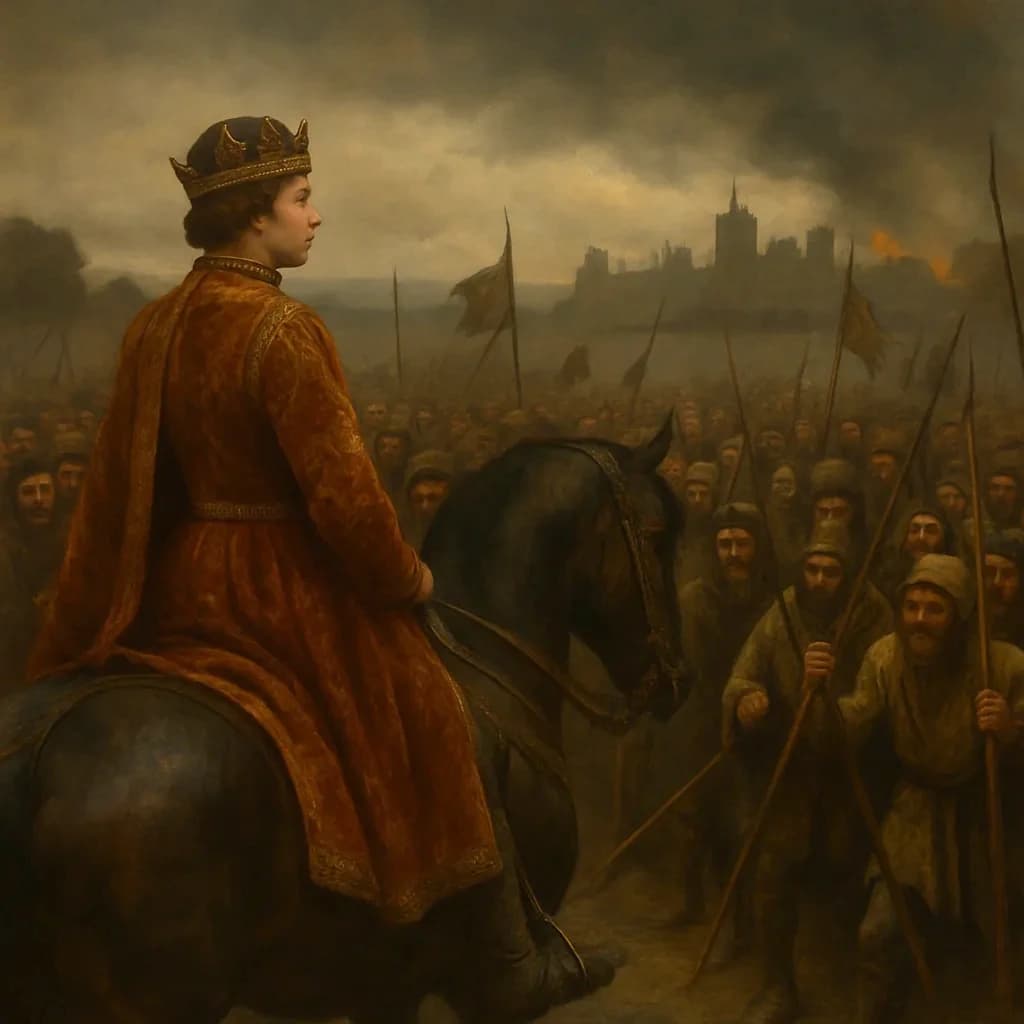
How a Boy King Broke His Word and Ended Serfdom
A teenage king rode out to meet a rebel army in a London field in the summer of 1381, and what he promised them changed everything, even though he immediately took it all back.
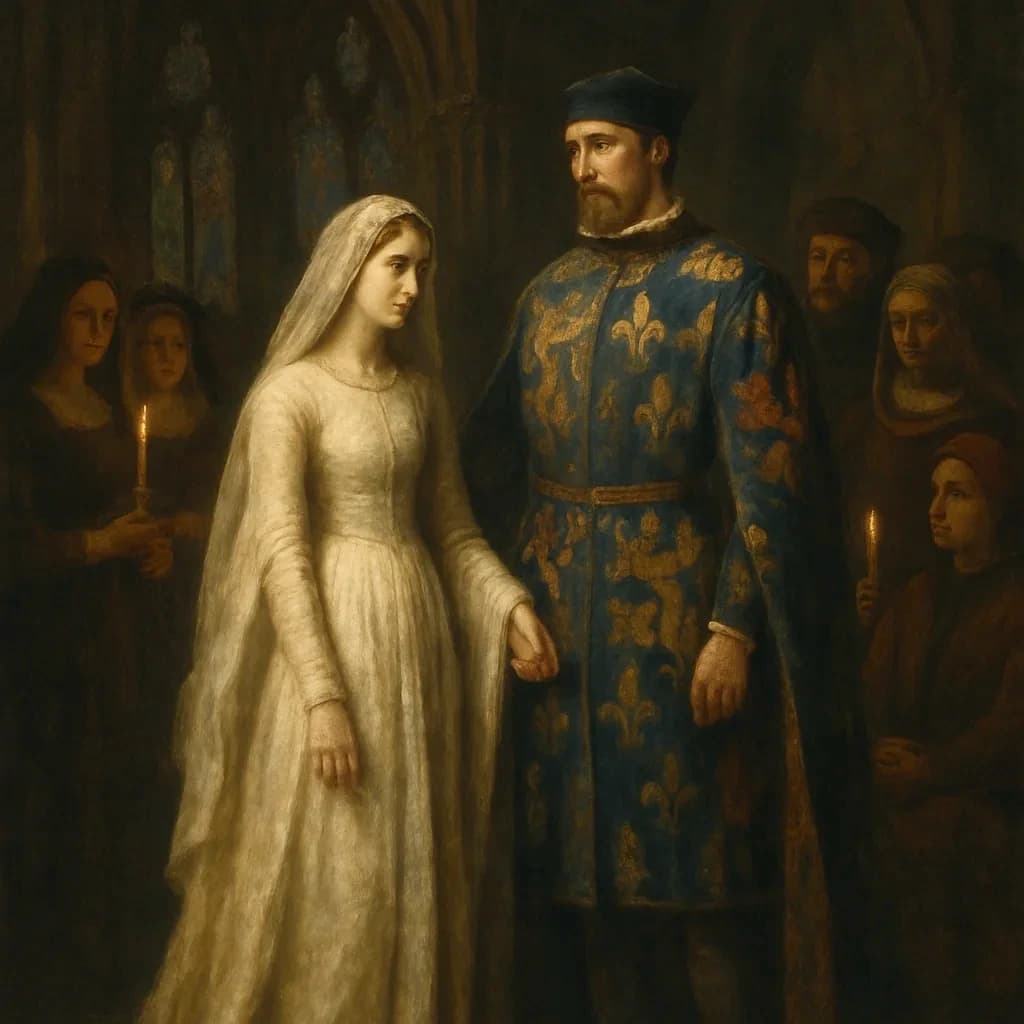
A Teenage Bride's Death Changed English History Forever
In 1369, a teenage girl's death in France changed the course of English history forever.
- Nigel Saul, 'Richard II' (Yale University Press, 1997)
- Chris Given-Wilson, 'Henry IV' (Yale University Press, 2016): for Bolingbroke's usurpation and Richard's final months
- Dillian Gordon, 'Making and Meaning: The Wilton Diptych' (National Gallery Publications, 1993)