
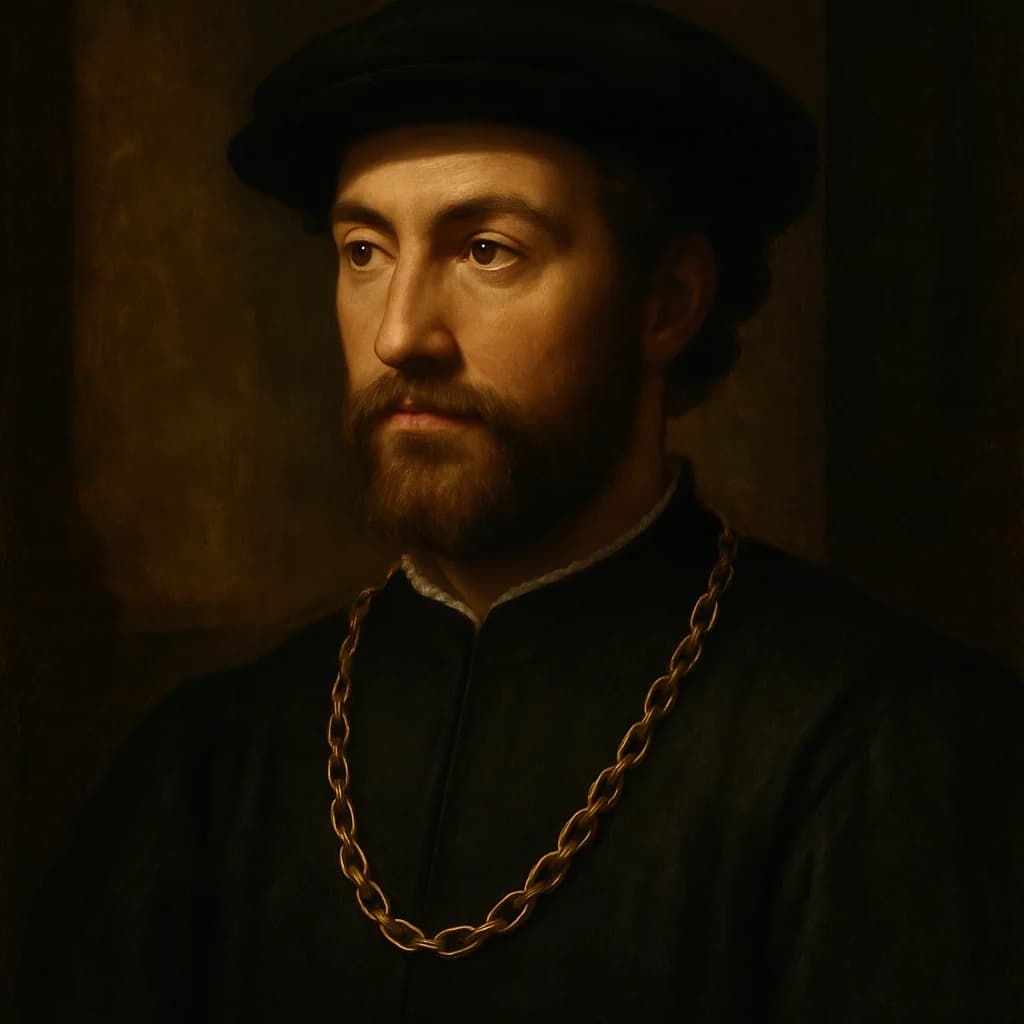
Pedro Cabral
He stumbled onto a continent by accident, reported it to the crown, and was never sent anywhere again.
In the spring of 1500, Pedro Álvares Cabral commanded the largest fleet Portugal had ever assembled: thirteen ships, twelve hundred men, a mission to open a spice route to India following Vasco da Gama's trail. He left Lisbon on March 9th. By April 22nd, he had planted a cross on a shore no Portuguese had ever seen. He called it Ilha de Vera Cruz. We call it Brazil. Then he sent one ship home to tell King Manuel I what had happened, pointed his remaining fleet back toward India, and kept going. The discovery of a continent was, in his professional estimation, a detour.
What happened on that Indian Ocean leg is the part nobody tells. Cabral lost four ships (including one captained by Bartolomeu Dias, the man who had first rounded the Cape of Good Hope) to a catastrophic storm off the African coast. He pushed on to Calicut, negotiated a trading post, watched it get attacked by Arab merchants, bombarded the city for an entire day in retaliation, then sailed to Cochin and loaded his hold with enough spices to make the expedition profitable anyway. He arrived back in Lisbon in July 1501, sixteen months after he'd left, carrying cloves and cinnamon and the news of a landmass sitting squarely in Portugal's half of the world, the half carved out by the Treaty of Tordesillas six years earlier, almost as if the line had been drawn knowing Brazil was there.
The crown rewarded him with money. They did not give him another fleet. Vasco da Gama got the next India command instead. Cabral petitioned for a new expedition, negotiated, argued, and eventually gave up. He married a noblewoman, retired to the town of Santarém, and spent the remaining thirty-odd years of his life in a quiet that seems almost surreal given what he'd done. The exact year of his death is still disputed: sometime around 1524, give or take a year. His tomb wasn't even correctly identified until 1882.
The man who legally delivered a continent to a European crown died in provincial obscurity, without a second voyage, and apparently without complaint.
The question of whether Cabral's landfall in Brazil was a genuine accident or a deliberate westward swing ordered by the crown (to stake out territory before the Spanish could) has never been definitively resolved, and Portuguese royal correspondence from the period that might settle it has never surfaced.
Why untold: Cabral's story was systematically overshadowed by the Vasco da Gama narrative, which the Portuguese crown invested in far more heavily as its imperial origin myth, leaving Cabral as a footnote to a route he never actually pioneered.
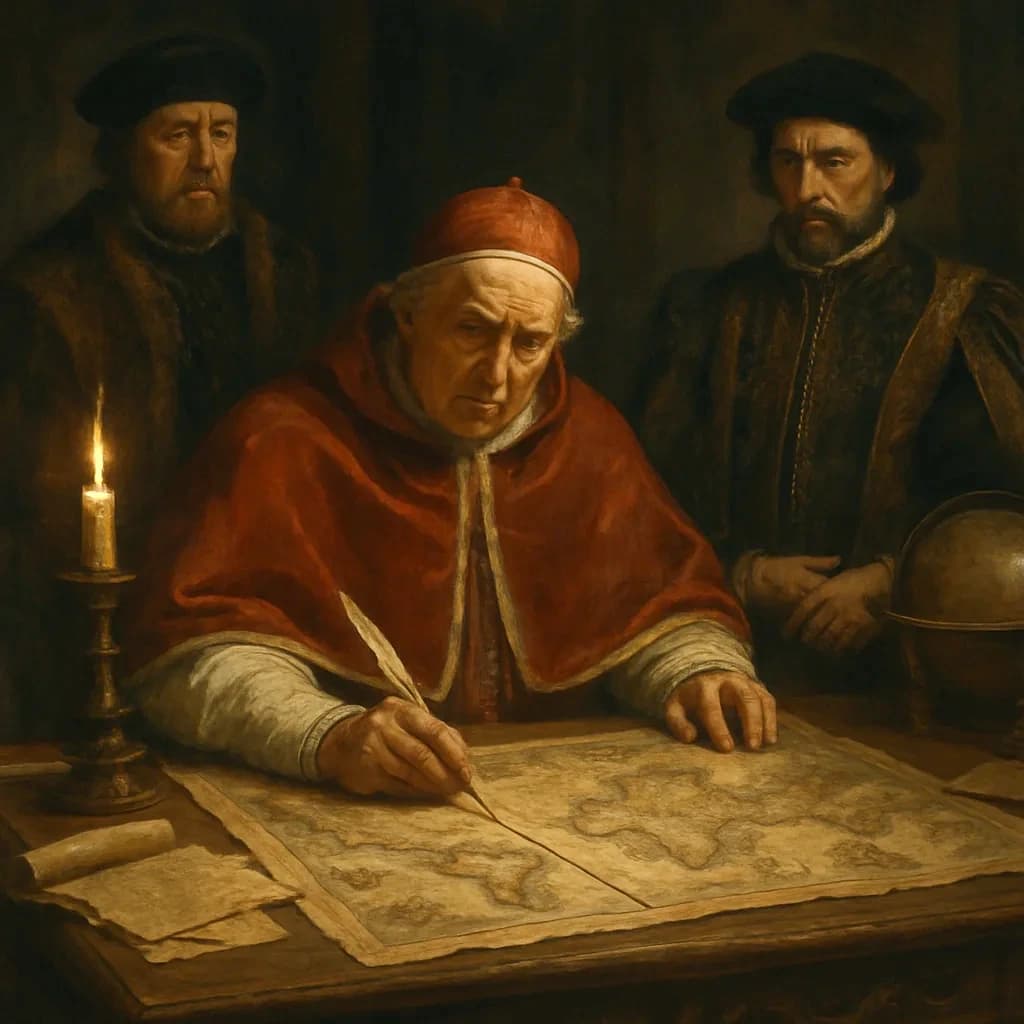
A Pope Drew a Line and Split the Globe
A papal document written in 1493 by a clerk who had never seen the Americas split the entire globe between two nations, based on a line no one could actually draw.
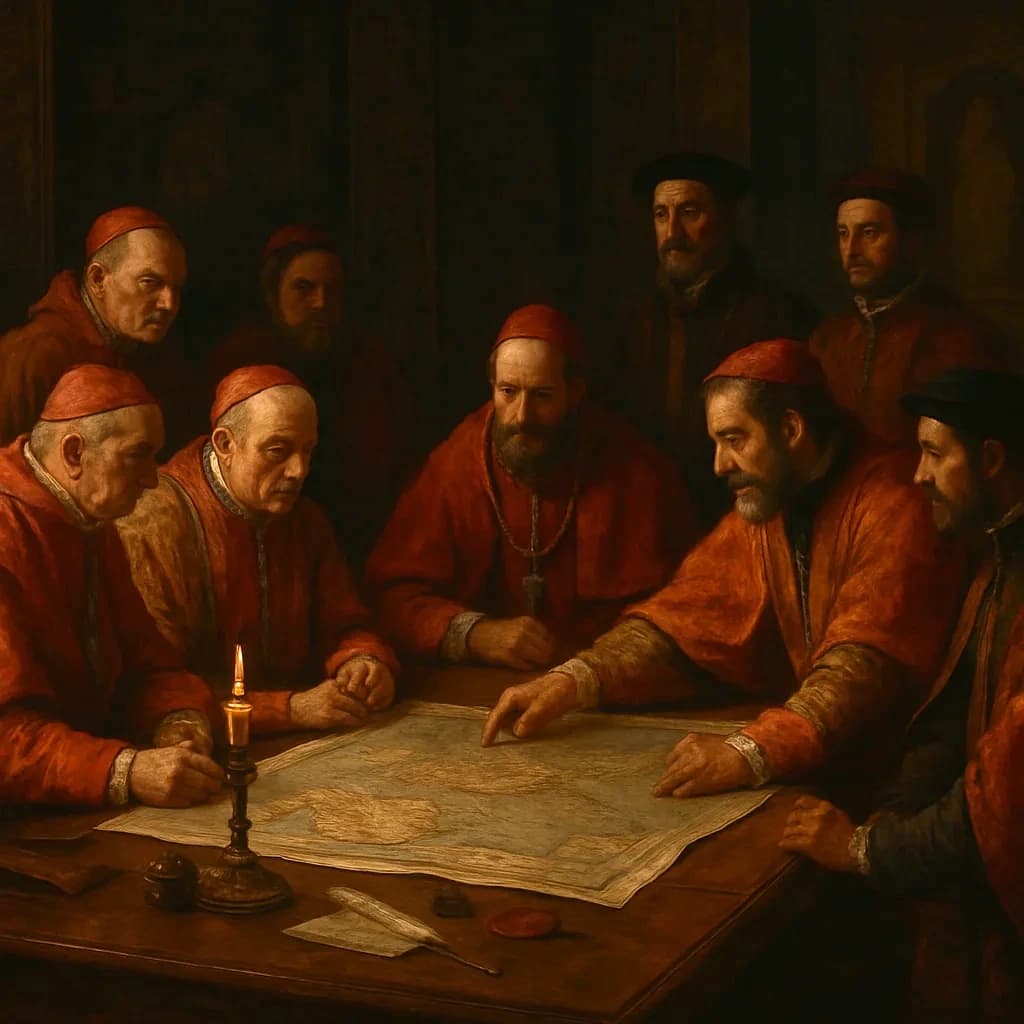
A Line on a Map, Given as a Wedding Gift
A marriage ceremony in 1494 divided the undiscovered world between two kingdoms, neither of which had ever seen it.
- William Brooks Greenlee, ed., The Voyage of Pedro Álvares Cabral to Brazil and India (Hakluyt Society, 1938)
- Bailey W. Diffie and George D. Winius, Foundations of the Portuguese Empire, 1415-1580 (University of Minnesota Press, 1977)
- Malyn Newitt, A History of Portuguese Overseas Expansion 1400-1668 (Routledge, 2005)