
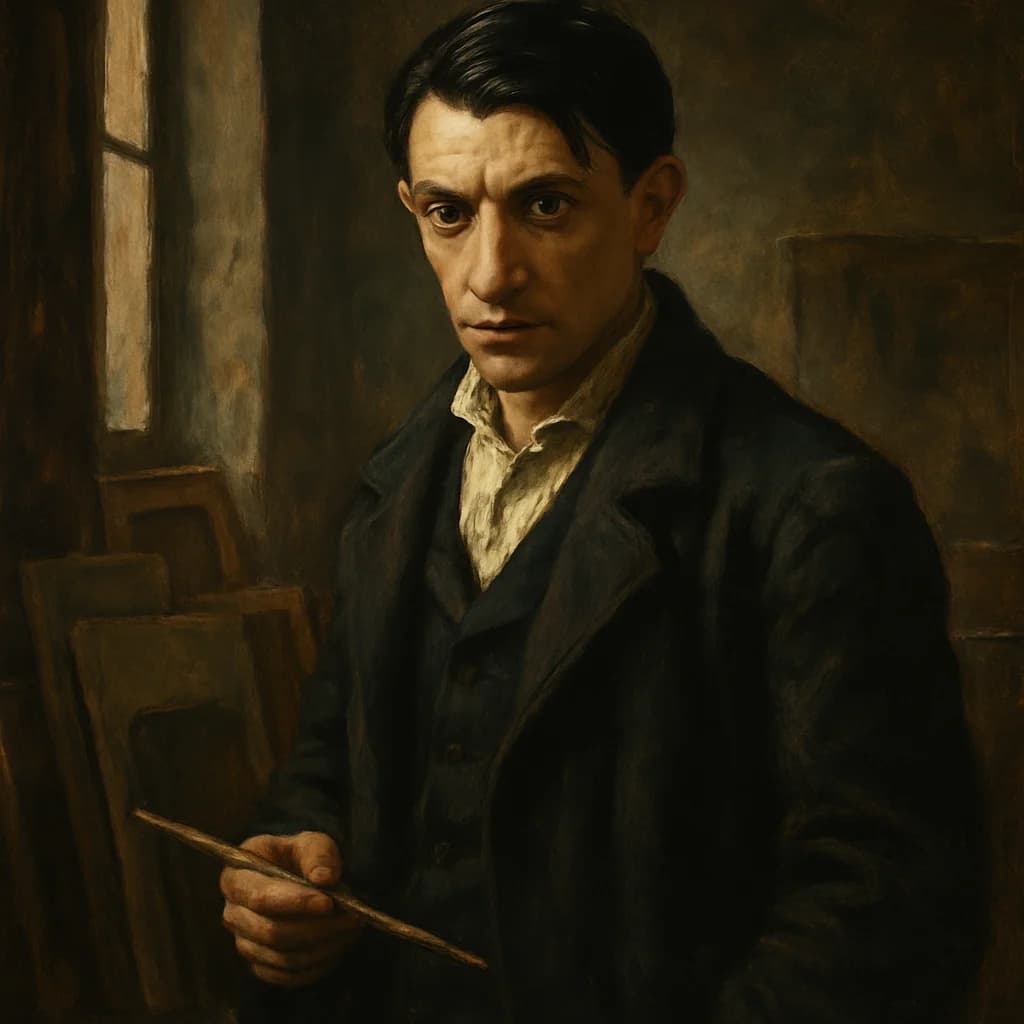
Pablo Picasso
The man who revolutionized art couldn't draw a straight line without a ruler until he was twelve.
Pablo Picasso's father was an art teacher who recognized his son's talent early, perhaps too early. By age thirteen, Picasso had surpassed his father's technical abilities, prompting the older man to hand over his brushes and vow never to paint again. This wasn't artistic encouragement; it was artistic suicide by proxy.
What most people miss about Picasso is that he was a walking contradiction machine. The man who co-founded Cubism (that angular, fragmented style that broke reality into geometric pieces) was obsessed with classical beauty. He spent hours copying Velázquez and studying ancient Greek sculptures. His famous 'Blue Period' wasn't born from artistic vision but from grinding poverty in Paris, where blue paint was the cheapest pigment he could afford. He painted blue because he was broke, not because he was sad.
Picasso's most revolutionary work, 'Les Demoiselles d'Avignon,' sat rolled up in his studio for years because literally no one would buy it. Art dealers called it commercial suicide. Even his closest friends begged him not to show it publicly. The painting that would later be hailed as the birth of modern art was initially treated like artistic leprosy. Picasso knew he had created something dangerous. He just didn't know if the world was ready for it.
His personal life was equally fractured. Picasso changed artistic styles like other men changed shirts, often abandoning entire movements he had created. He painted over 50,000 works in his lifetime, an average of two pieces per day for seventy years. The man who deconstructed visual reality couldn't sit still long enough to let any single vision define him.
Picasso's first word wasn't 'mama' or 'papa.' It was 'piz,' short for lápiz, the Spanish word for pencil.
Why untold: His technical mastery and classical training are overshadowed by the myth that modern art emerged from rejection of skill rather than mastery of it.
Fingerprints Convicted One Man and Freed Another
Fingerprint evidence (the new miracle of modern crime-solving) sent an innocent man to prison in 1911 for a murder he didn't commit, while the actual killer's prints sat in a police file the entire time.
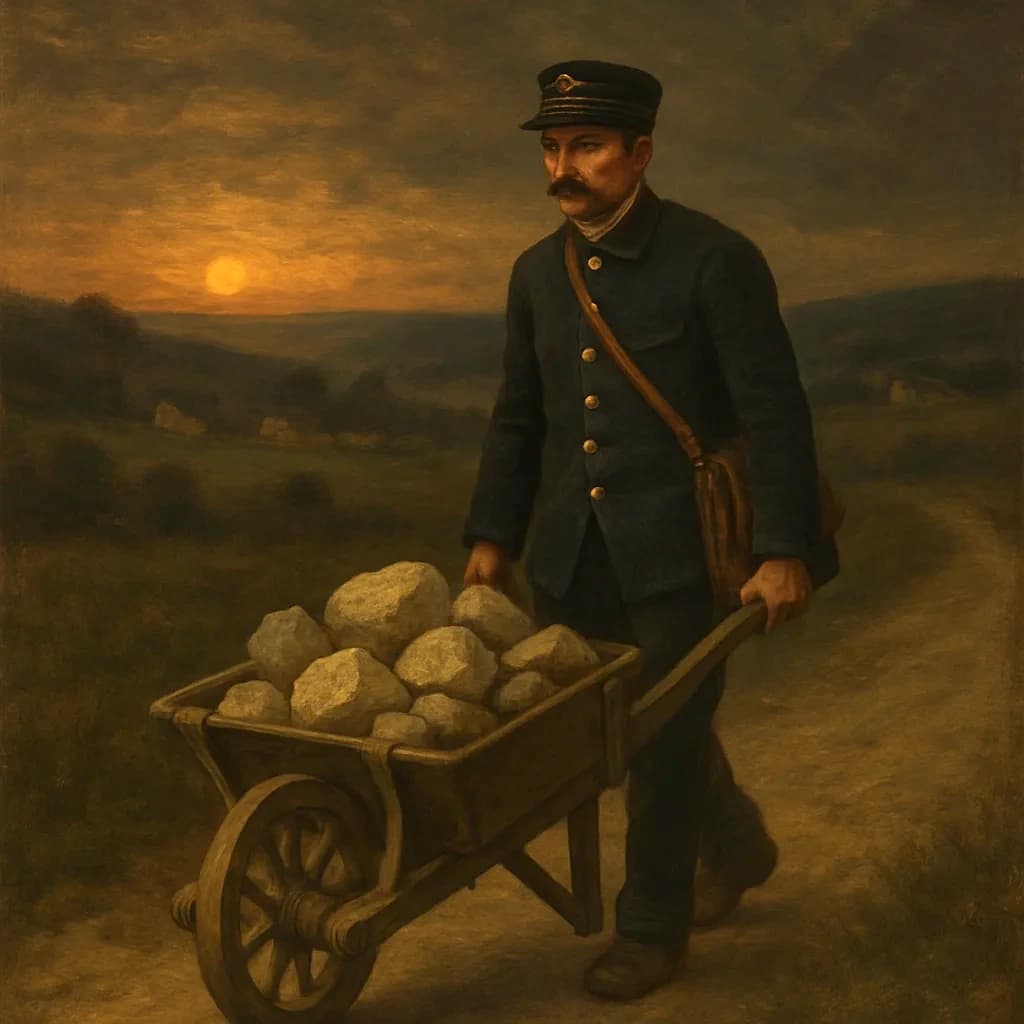
The Postman Who Spent 33 Years Building a Palace
A rural French postman spent 33 years secretly building something that would outlive the Eiffel Tower in fame, beginning in 1936.
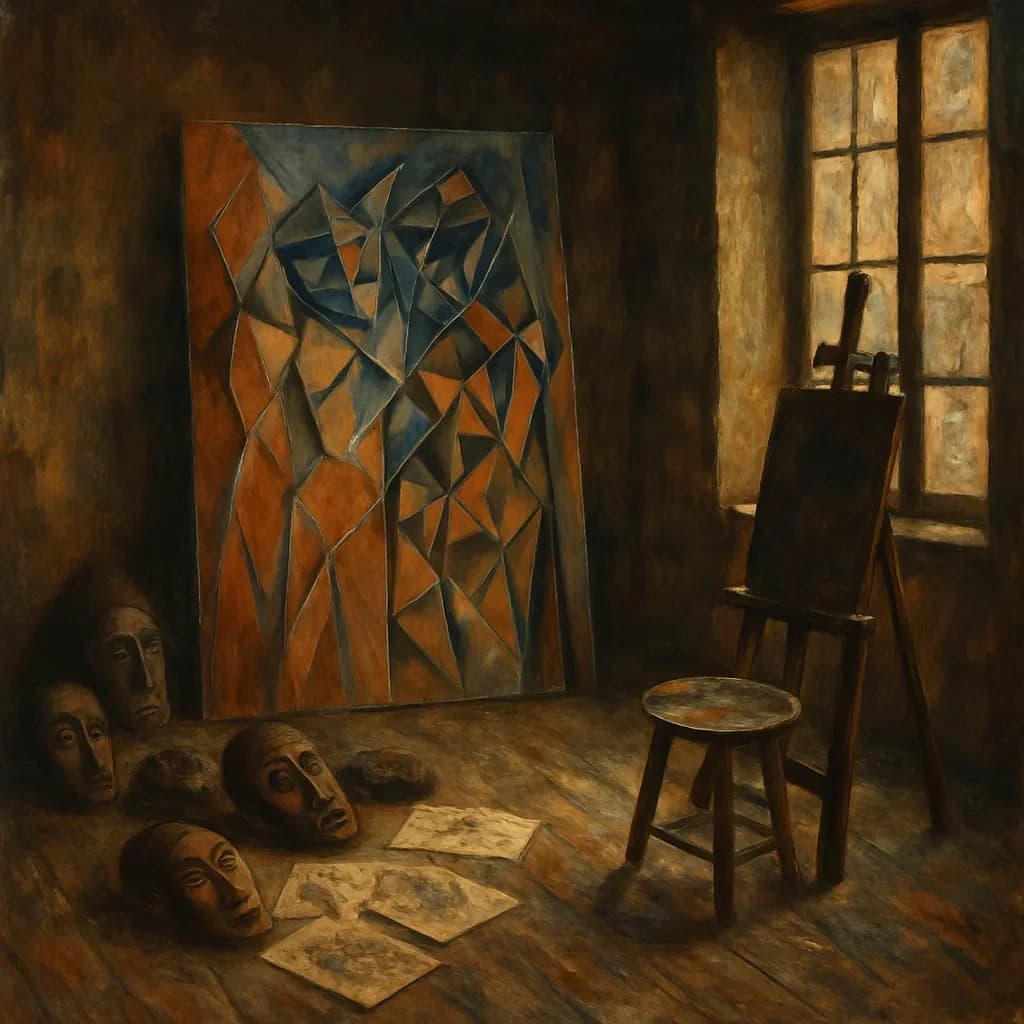
Picasso's Five Women Nobody Would Buy
Collectors refused to buy it, dealers wouldn't display it, and critics called it the end of art itself.
- Richardson, John. A Life of Picasso: The Early Years, 1881-1906. Random House, 1991.
- Berger, John. The Success and Failure of Picasso. Vintage Books, 1989.
- Daix, Pierre. Picasso: Life and Art. Thames & Hudson, 1993.