
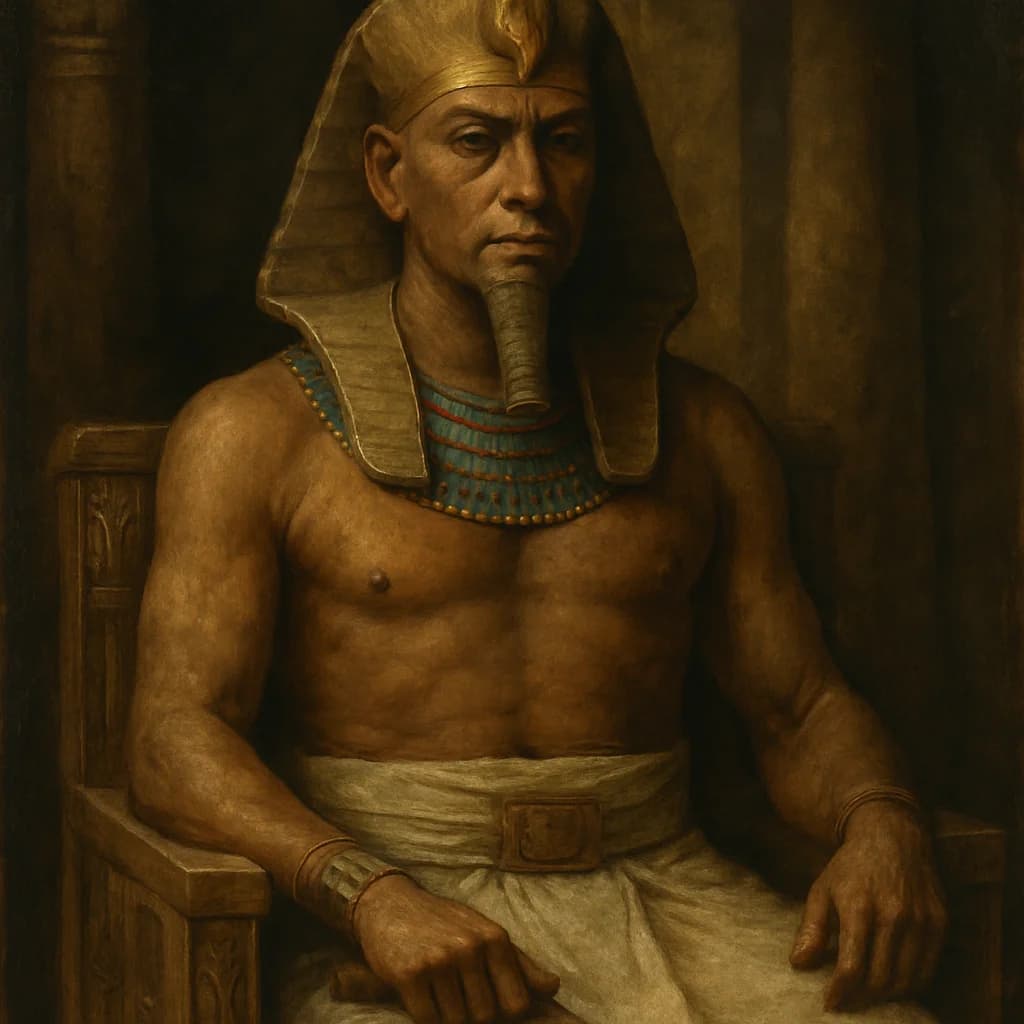
Khufu
The pharaoh who built the Great Pyramid never intended to create one of the Seven Wonders of the World. He was solving an unemployment crisis.
Khufu inherited a kingdom drowning in prosperity. The Nile's annual floods had been generous for decades, filling royal granaries to bursting while leaving thousands of farmers idle for months each year. Previous pharaohs might have seen this as a golden age. Khufu saw a powder keg.
The solution he devised around 2580 BCE was audacious even by pharaonic standards: mobilize the entire kingdom's off-season workforce to build the largest stone structure in human history. Not as punishment, but as employment. Archaeological evidence from Giza reveals a sophisticated operation that fed 20,000 workers daily with premium cuts of beef, fresh fish, and forty loaves of bread per person. Workers received medical care so advanced that bone scans show successful surgeries, including brain operations. They earned burial rights in their own necropies near the pyramid, an honor reserved for the elite.
Khufu's masterstroke wasn't architectural; it was economic. He created history's first massive public works program, transforming seasonal unemployment into national purpose. Workers rotated in three-month shifts, ensuring no family lost their primary breadwinner for too long. Teams competed for extra rations and better housing, turning construction into sport. The pharaoh himself lived on-site, sharing meals with foremen and personally inspecting the work.
When Khufu died after a twenty-three-year reign, his pyramid stood as more than a tomb. It was proof that a civilization could marshal human energy not through force, but through organization, incentives, and shared ambition. The Greeks who visited centuries later, accustomed to slave labor, couldn't fathom such cooperation. They invented the story we believed for millennia.
Khufu's workers consumed 1,800 cattle and 17,000 loaves of bread daily, making the Great Pyramid construction site ancient Egypt's largest restaurant operation.
Why untold: Greek historians, unfamiliar with Egypt's sophisticated labor systems, mischaracterized the pyramid workforce as enslaved, and this narrative stuck for over two thousand years.
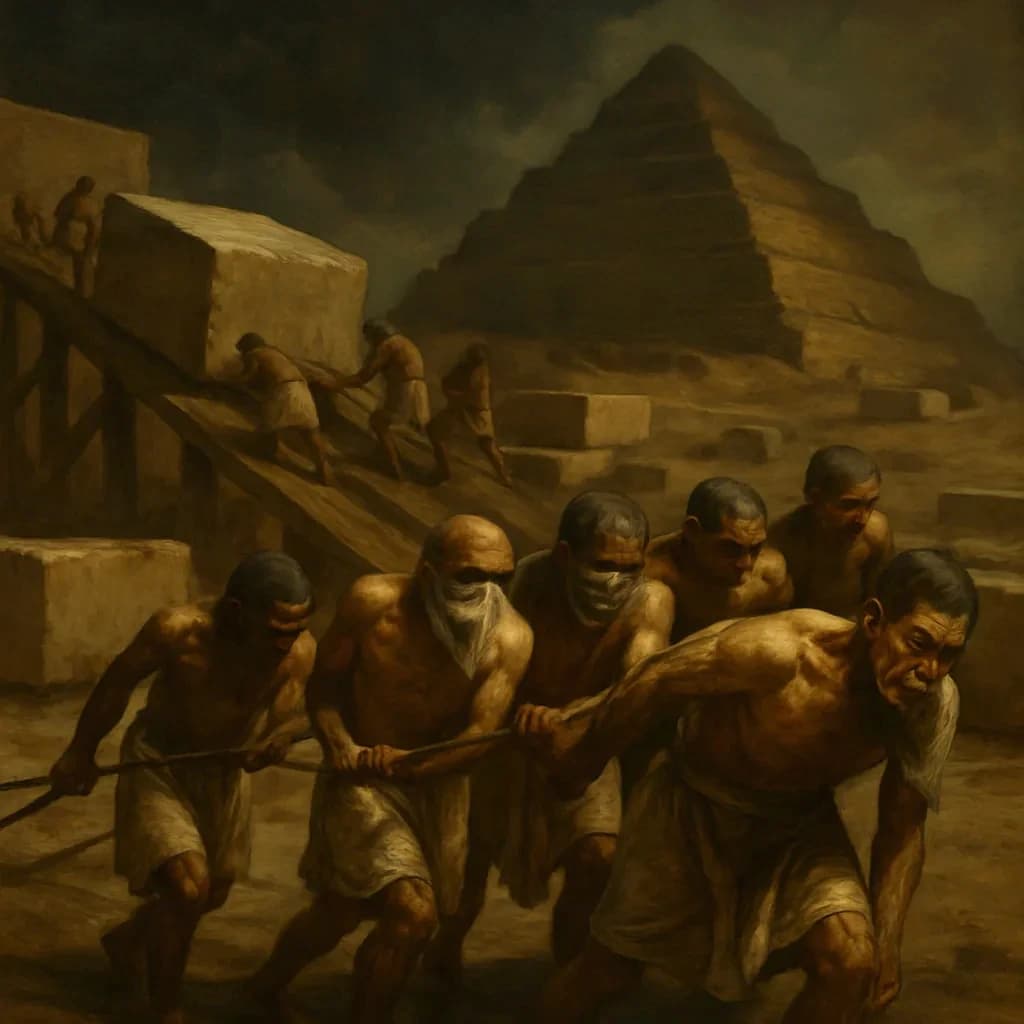
The Plague That Made Egypt's Pyramid Builders Stronger
A mysterious epidemic swept through ancient Egypt around 2580 BCE, but instead of killing the pharaohs, it handed them the workforce to build the impossible.
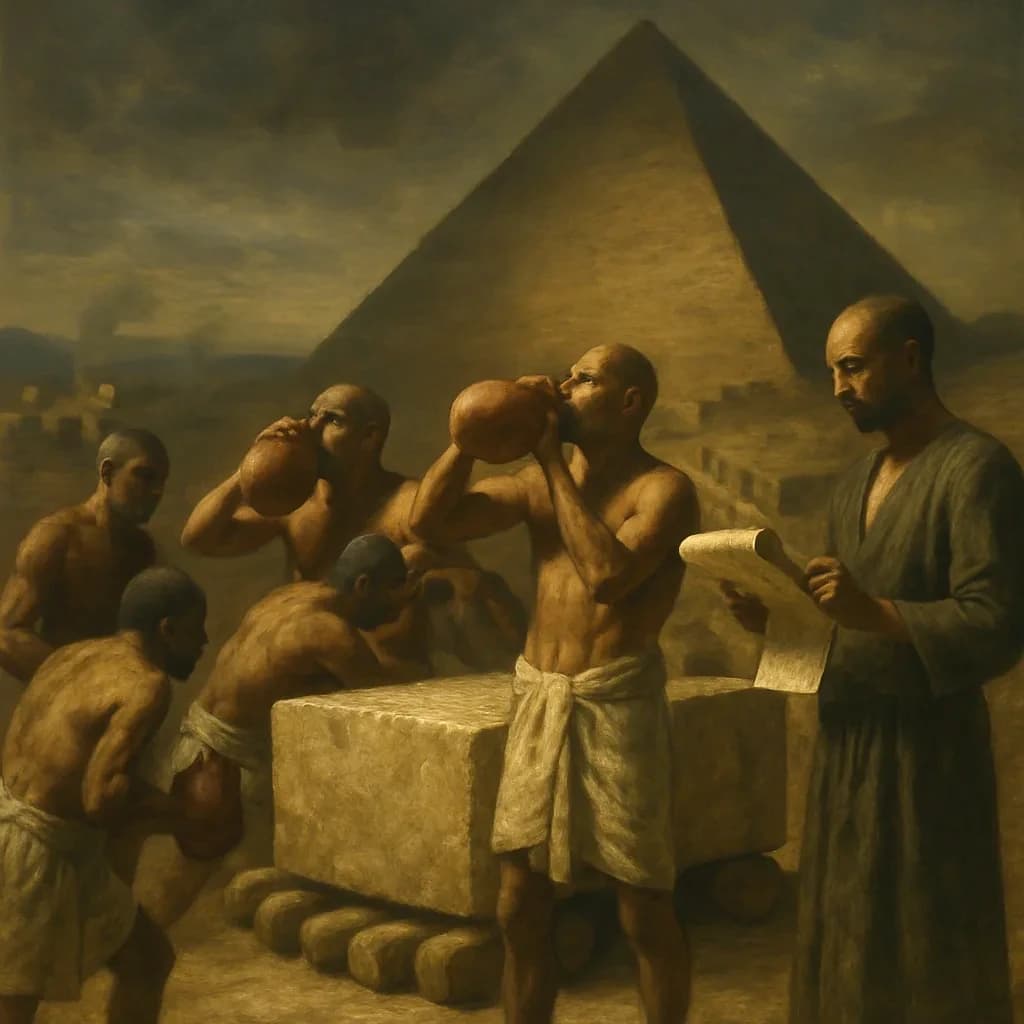
The Pyramid Builders Weren't Slaves: They Had Beer and Healthcare
The laborers who built the Great Pyramid weren't slaves. They were well-fed workers with excellent healthcare, beer rations, and their own cemetery.
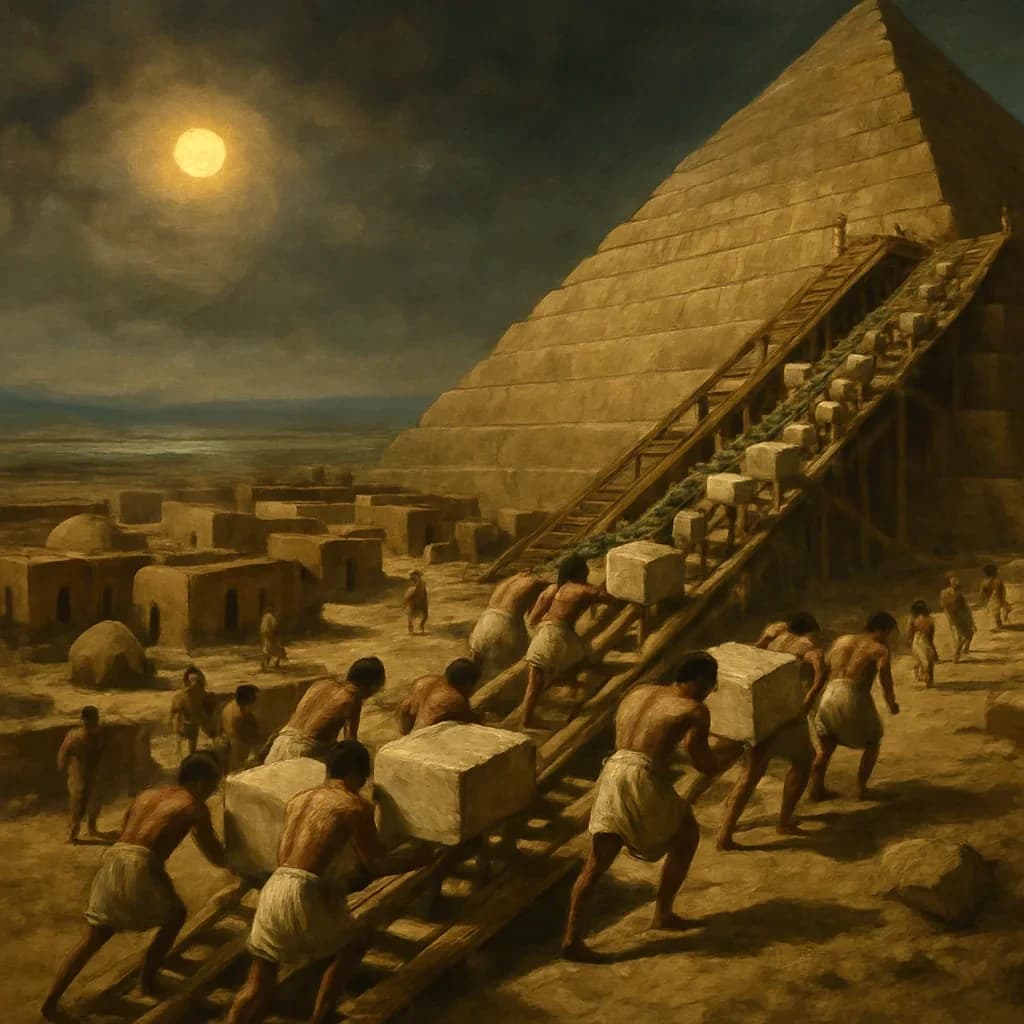
Three Meals a Day Built the Pyramids
The ancient Greek historian was wrong about slaves building the pyramids, and what really built them might be even more remarkable.
- Lehner, Mark. 'The Complete Pyramids.' Thames & Hudson, 1997.
- Hawass, Zahi. 'The Workers' Cemetery at Giza.' Archaeology Magazine, 2013.
- Shaw, Ian, ed. 'The Oxford History of Ancient Egypt.' Oxford University Press, 2000.