
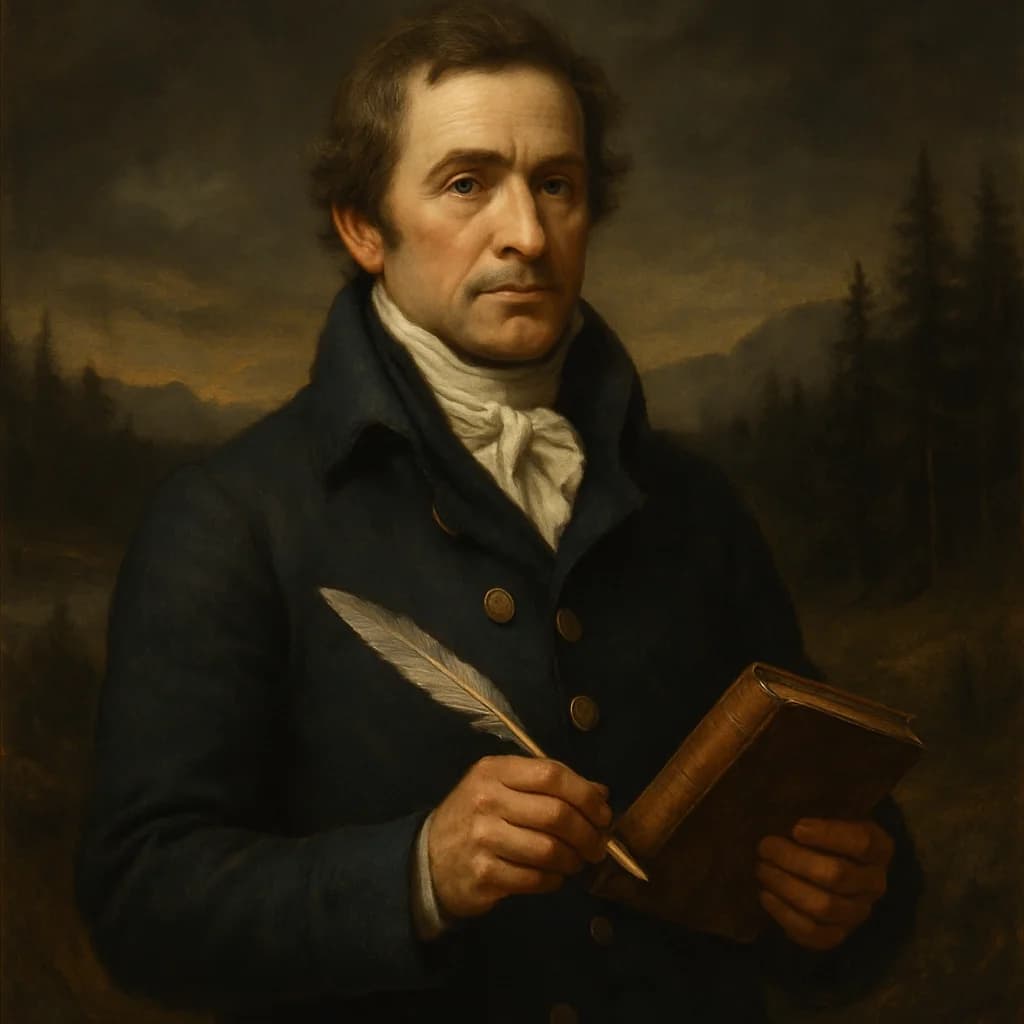
John Bradbury
John Bradbury was standing knee-deep in Missouri mud when the world ended, and he became the only scientist to document America's most violent natural disaster from the inside.
In December 1811, English botanist John Bradbury was supposed to be collecting prairie specimens for the Liverpool Botanic Garden. Instead, he found himself camping along the Mississippi River when the most powerful earthquake sequence in recorded American history began tearing the continent apart. While most witnesses fled or died, Bradbury did something extraordinary: he took notes.
The New Madrid earthquakes weren't just tremors. They were geological catastrophes that made the Mississippi River flow backward, created new lakes, and rang church bells in Boston a thousand miles away. Bradbury, trained in precise scientific observation, documented phenomena that seemed impossible. He watched the river's banks collapse in real-time, recorded the exact duration of each shock, and measured how far trees were thrown through the air. His journal entries became the only systematic scientific record of earthquakes so powerful they remain the benchmark for seismic activity in North America.
What makes Bradbury's account remarkable isn't just its scientific value. It's his unflappable British composure while documenting the apocalypse. He noted water temperature changes, wind patterns, and soil composition as the earth literally reshaped itself around him. When panicked settlers begged him to explain what was happening, he calmly admitted he had no idea, then went back to measuring aftershock intervals.
Bradbury returned to England with more than botanical samples. His earthquake observations, published in 1817, became crucial data for early American geology and seismology. Without his meticulous documentation, scientists would have had only terrified folklore to explain the most significant geological event in U.S. history.
Bradbury calculated that some New Madrid earthquake shocks lasted over seven minutes, longer than the 2004 Indian Ocean earthquake that caused the devastating tsunami.
Why untold: Bradbury's earthquake documentation is overshadowed by his botanical work, and most earthquake histories focus on the geological impact rather than the lone scientist who recorded it all.
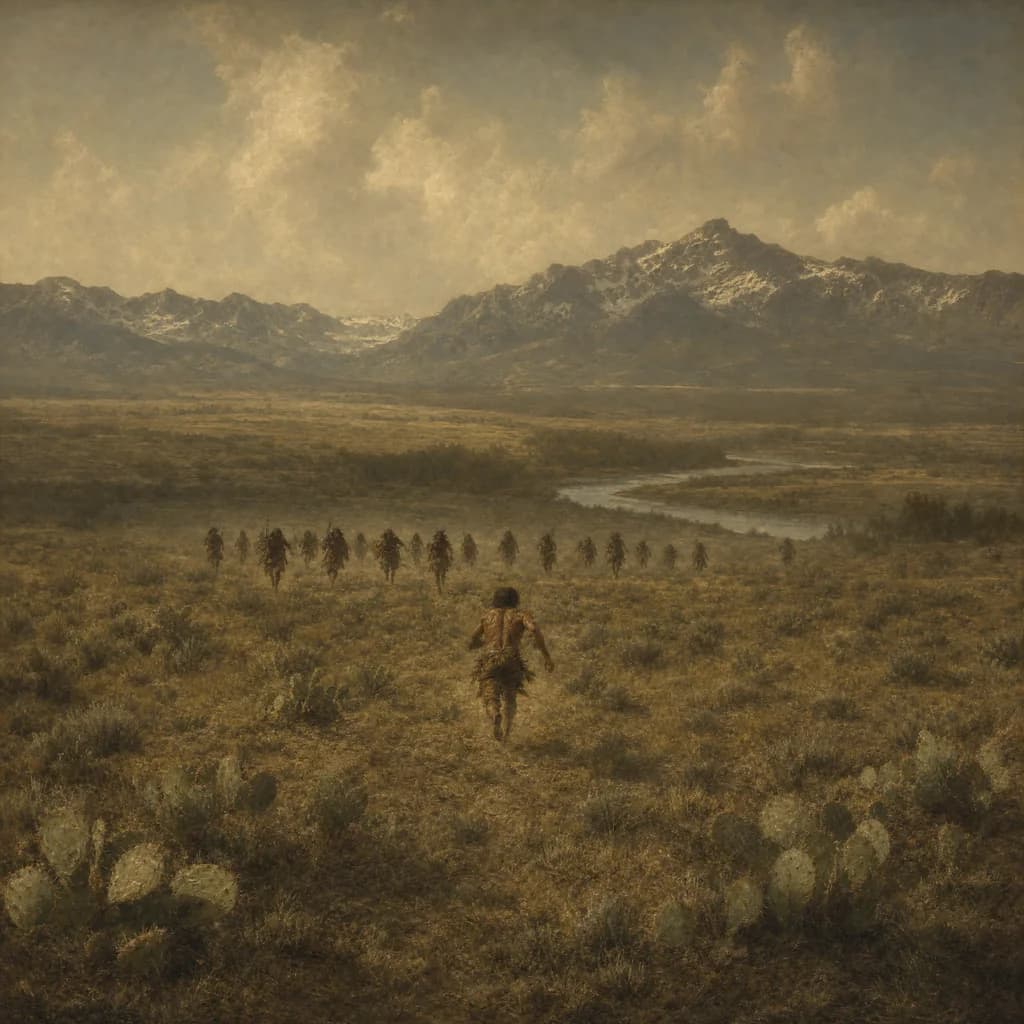
Stripped Naked, John Colter Outran a Blackfeet War Party
They took his clothes, walked him out onto the open plain, and asked whether he was a fast runner. He said he was a poor one.
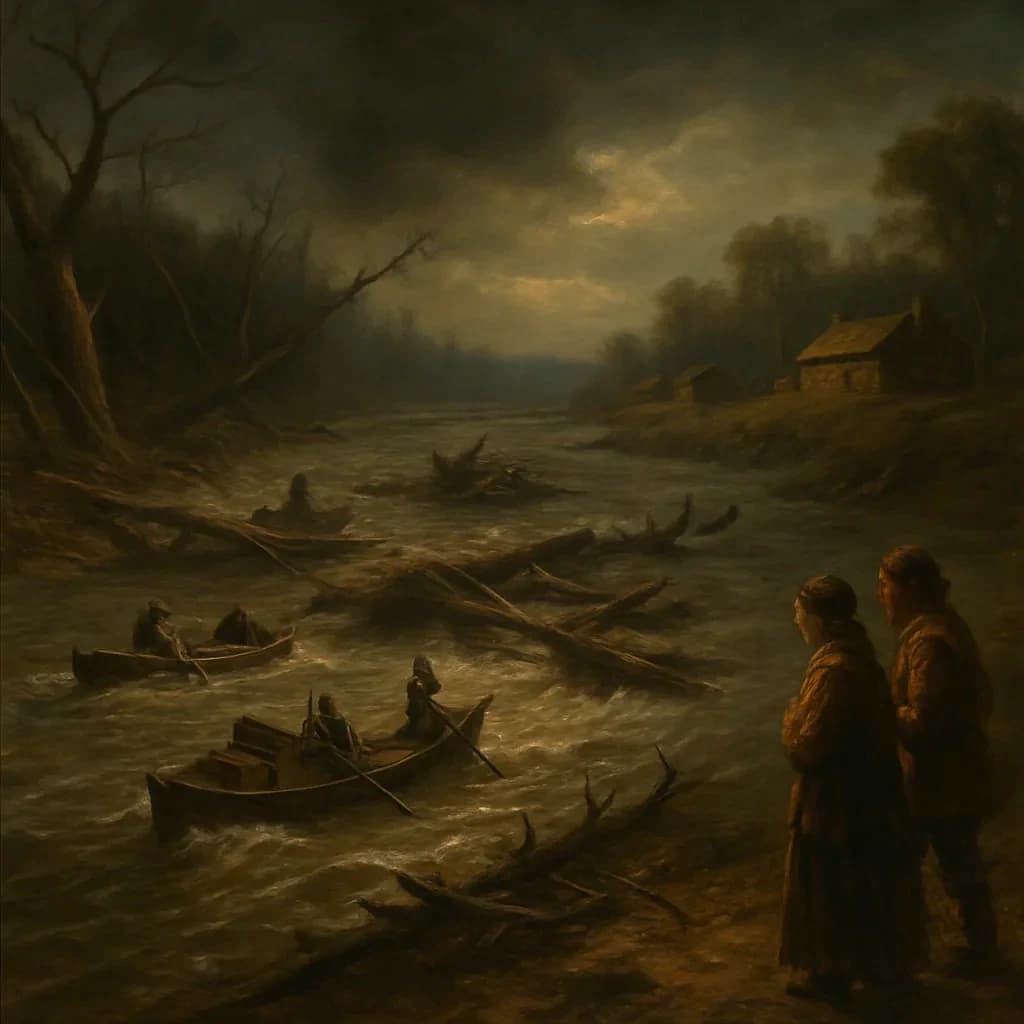
Three Days the Mississippi Ran Backward
For three days in 1812, the Mississippi River suddenly reversed direction, and nobody could explain why until a century later.
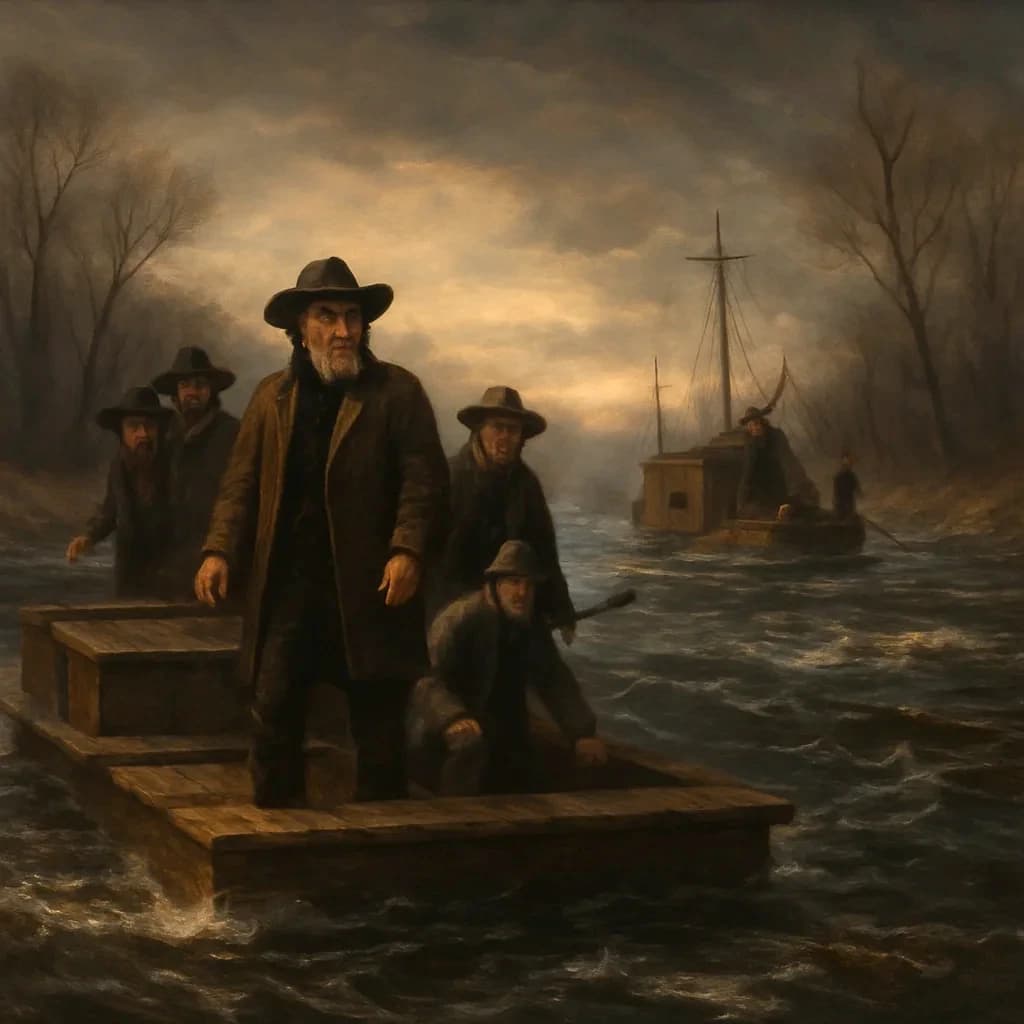
The Mississippi Ran Backwards for Three Days
In 1811, the Mississippi River reversed direction for three days, boats sailed upstream without paddle or sail, and an entire generation learned that the ground beneath America was not as solid as they thought.
- Bradbury, John. 'Travels in the Interior of America in the Years 1809, 1810, and 1811.' Liverpool: Sherwood, Neely, and Jones, 1817.
- Penick, James Jr. 'The New Madrid Earthquakes.' University of Missouri Press, 1981.
- Johnston, Arch C. and Eugene S. Schweig. 'The Enigma of the New Madrid Earthquakes of 1811-1812.' Annual Review of Earth and Planetary Sciences, 1996.