
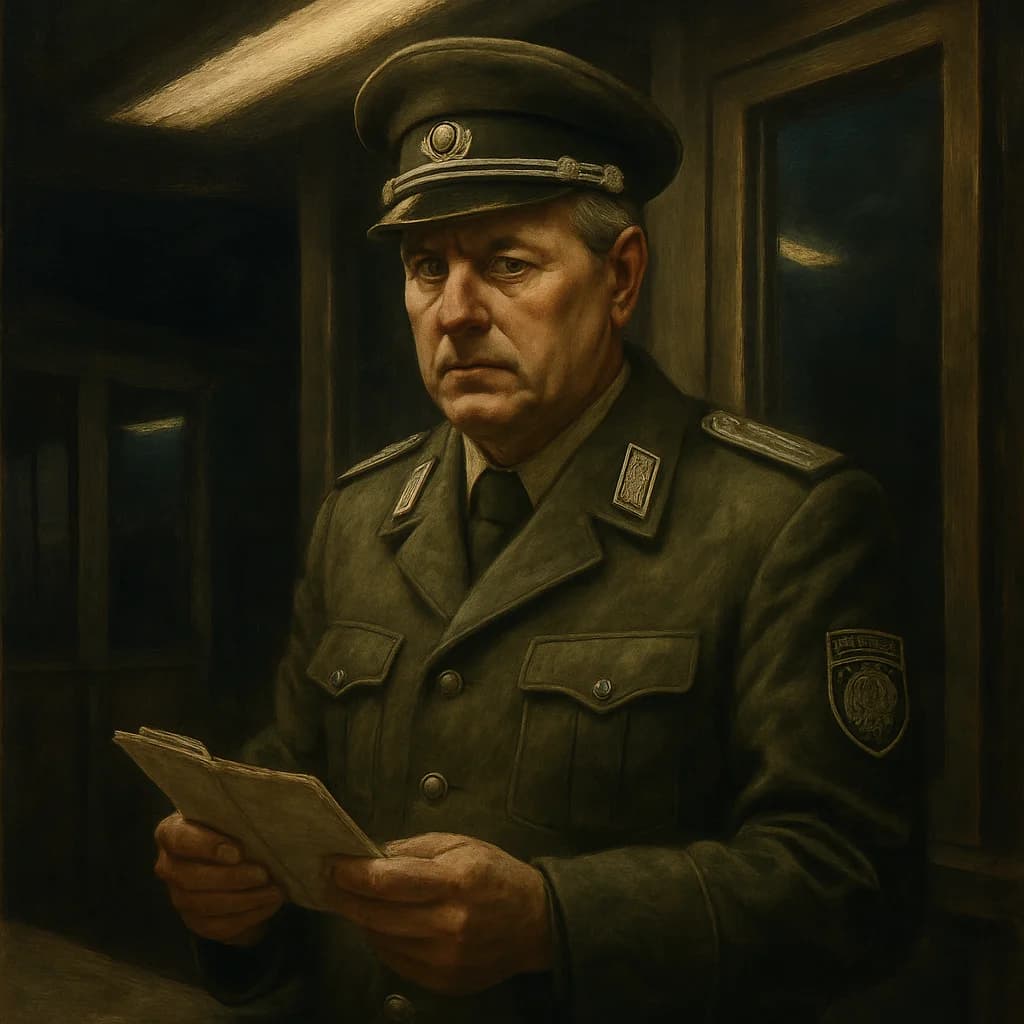
Harald Jäger
The man who accidentally ended the Cold War was watching television when he found out what he'd done.
Harald Jäger spent twenty-five years checking papers at Checkpoint Charlie, perfecting the art of bureaucratic indifference. By November 1989, he was the night shift commander at Bornholmer Straße crossing, a gray functionary in a gray uniform, processing the occasional East German with permission to visit dying relatives in the West. He had no political ambitions, no revolutionary dreams, just a methodical devotion to following orders.
Then came the evening of November 9th. A botched press conference had announced immediate border openings, but the actual orders were chaos. Thousands of East Berliners converged on Jäger's checkpoint, demanding passage. His superiors weren't answering phones. The crowd pressed against the barriers, chanting. Jäger made radio calls, filed reports, followed protocol, but the mob kept growing, and somewhere in that bureaucratic void, a terrible realization crystallized: he was alone with history.
At 11:30 PM, with no orders and no backup, Jäger walked to the barrier and lifted it himself. "We're opening," he announced to his stunned guards. Within minutes, thousands poured through. The Berlin Wall (that monument to division) dissolved into a street party. Champagne flowed. Strangers embraced. Hammers appeared from nowhere to chip concrete souvenirs.
Jäger went home, exhausted, assuming he'd be court-martialed by morning. Instead, he turned on the television to watch his spontaneous decision ripple across the globe. The Soviet empire was crumbling in real time, and it had started with one border guard who simply couldn't hold back history any longer.
Jäger kept his East German border guard uniform for years after reunification, eventually donating it to a museum, but only after his wife threatened to throw it away.
Why untold: History prefers grand narratives over bureaucratic improvisation, so the human story gets buried beneath geopolitical analysis.
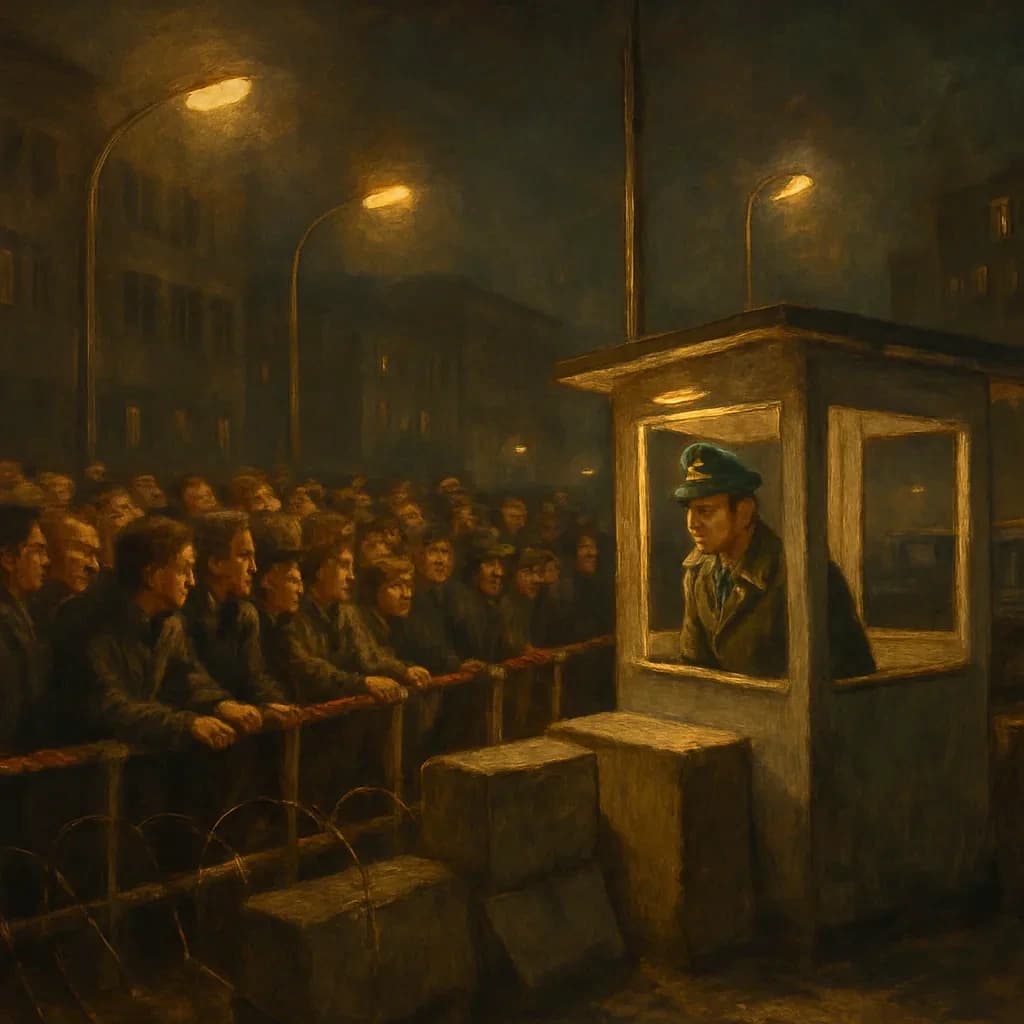
A Border Guard Made Europe's Biggest Decision Because Nobody Gave Him Orders
A mid-level border guard in East Berlin made the biggest decision in European history because nobody had told him what to do.
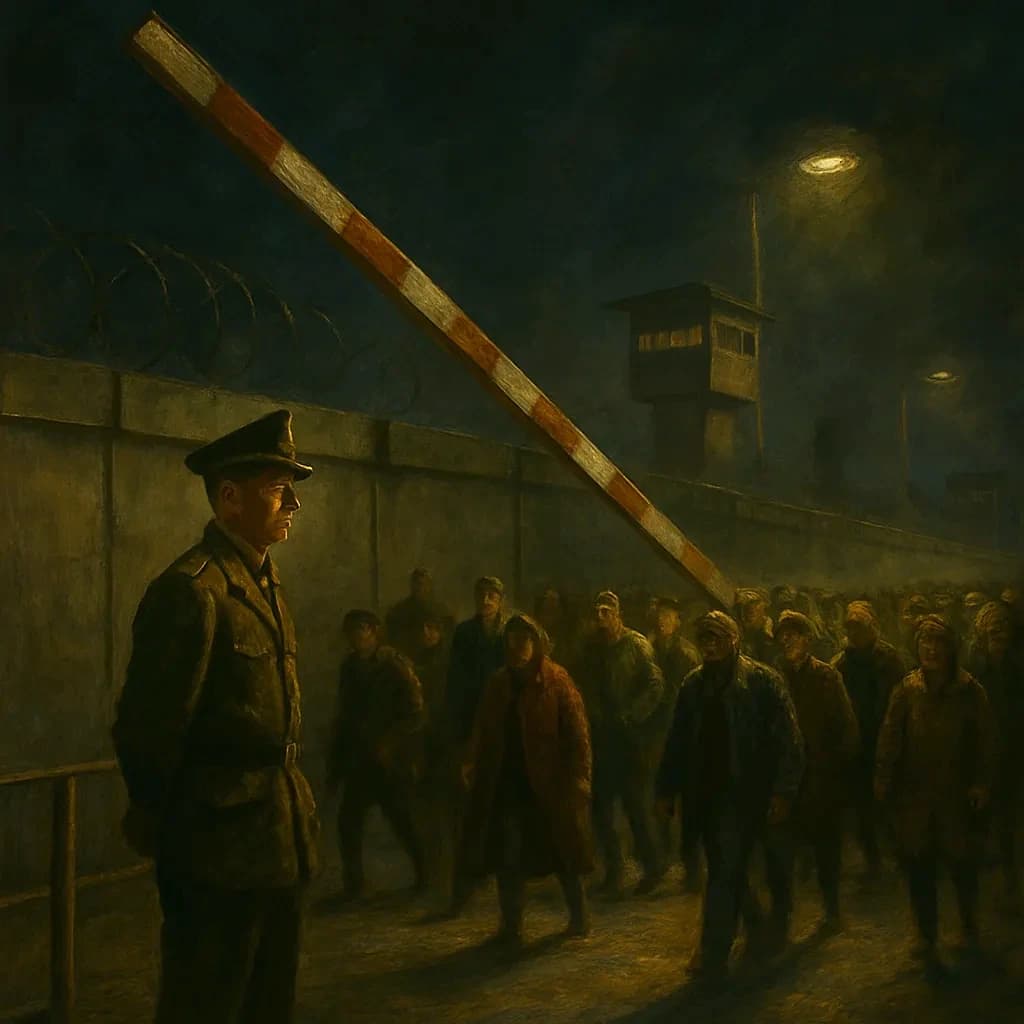
A Drunk Soldier's Wrong Door Collapsed the Berlin Wall
A drunk Russian soldier stumbled through the wrong entrance and accidentally triggered the collapse of the Berlin Wall.
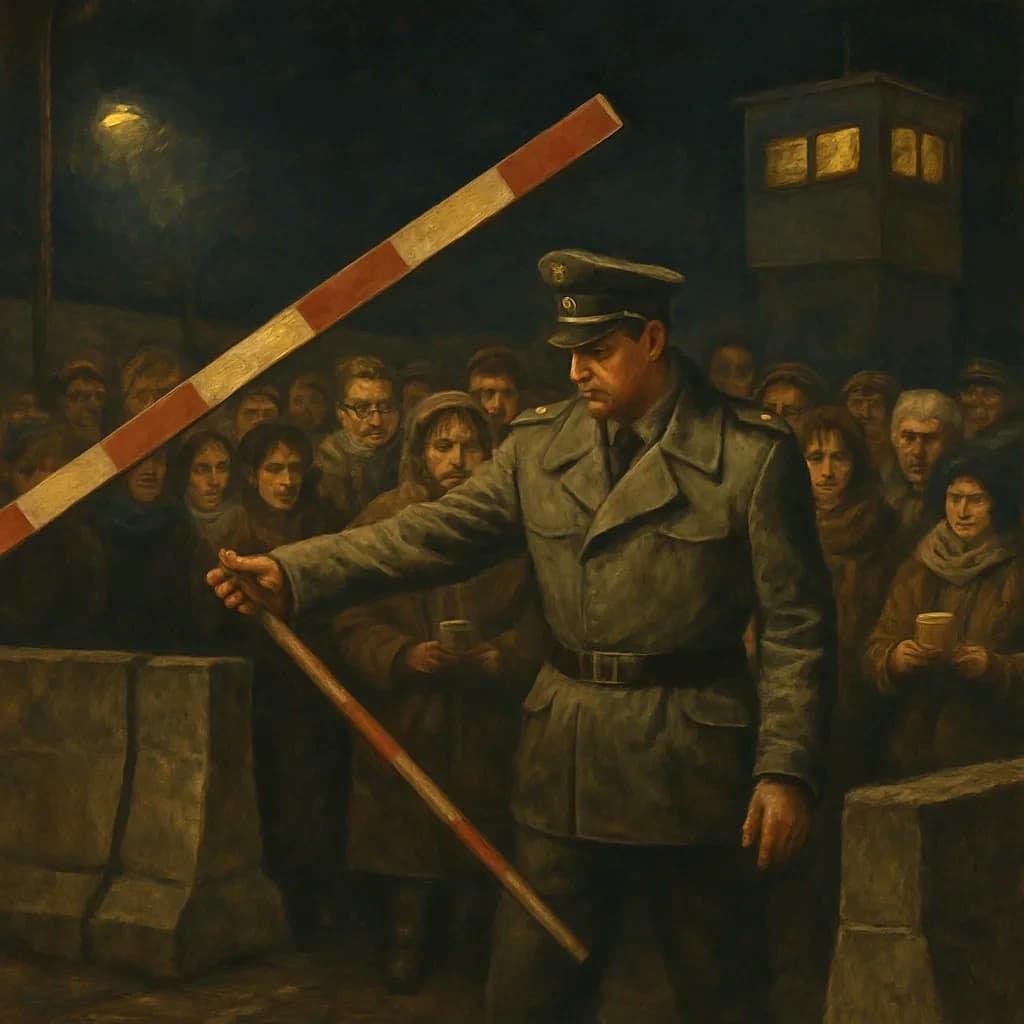
A Tired Border Guard Opened the Berlin Wall Nine Hours Early
A border guard's split-second decision on Christmas Eve 1989 opened the Berlin Wall nine hours early, and changed the world forever.
- Sarotte, Mary Elise. The Collapse of the East German Regime, 1989. Cambridge University Press, 2014.
- Jäger, Harald. Interview with Der Spiegel, November 2009.
- Maier, Charles S. Dissolution: The Crisis of Communism and the End of East Germany. Princeton University Press, 1997.