
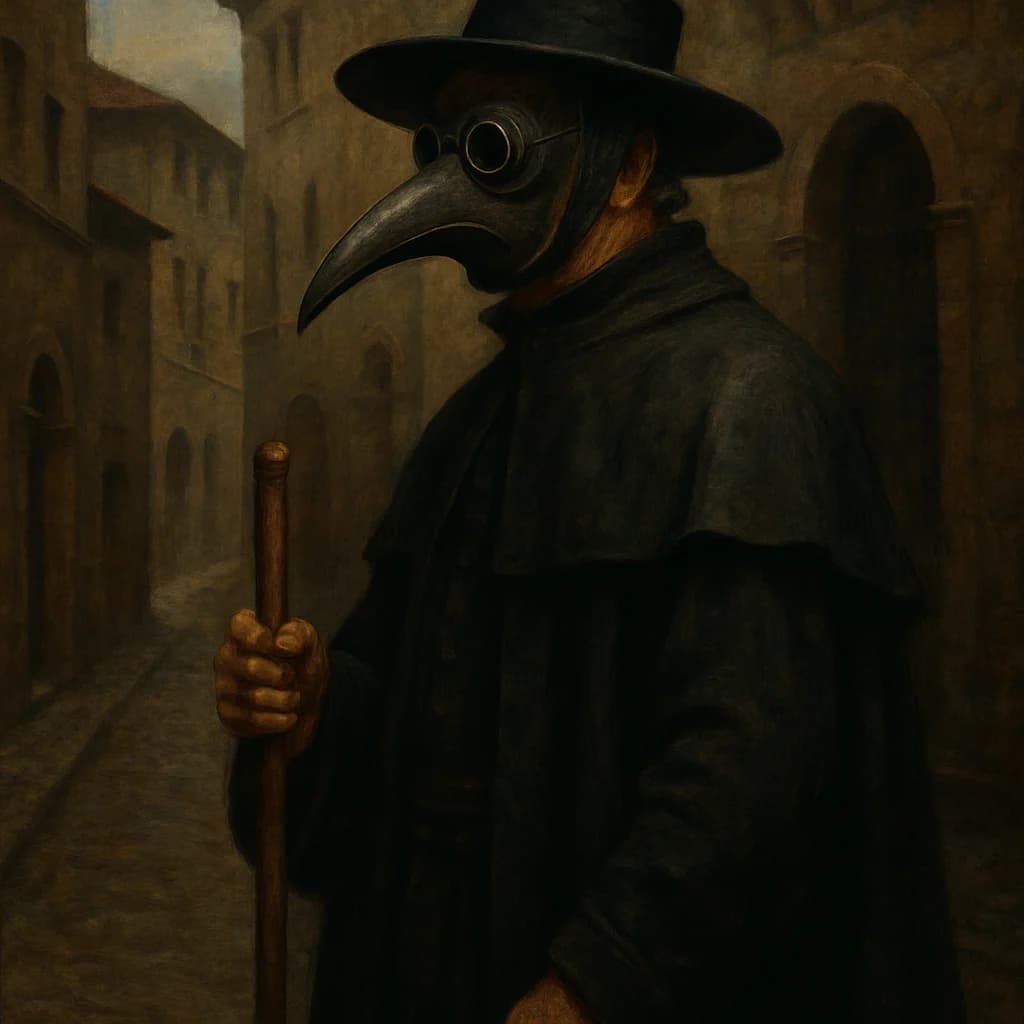
Giovanni de Ventura
The most successful plague doctor in Renaissance Italy never studied medicine.
Giovanni de Ventura arrived in Florence in 1348 carrying a leather satchel filled with useless remedies and a head full of half-remembered folk wisdom from his grandmother. He'd fled his failing apothecary shop in Pisa just ahead of his creditors, reinventing himself as a physician with forged credentials and desperate confidence. When the Black Death struck Florence that summer, the city's trained doctors fled or died within weeks, leaving only this charlatan to tend the dying.
What saved thousands wasn't de Ventura's nonexistent medical knowledge. It was his cowardice. Terrified of contagion, he refused to touch patients directly, instead observing symptoms from across rooms and prescribing treatments that required no physical contact. He burned clothes and bedding obsessively, not from any understanding of disease transmission but from pure terror of contamination. His "revolutionary" practice of isolating the sick came from his own panic, not medical insight.
By winter, Florence's death rate had dropped dramatically compared to other Italian cities. The grateful survivors hailed de Ventura as a visionary who'd discovered new principles of medicine. He accepted their praise while secretly knowing he'd stumbled into success through ignorance and fear. When Venice's plague struck in 1630, the aging de Ventura (now genuinely skilled through decades of desperate improvisation) finally understood what his accidental methods had accomplished.
He spent his final years in Venice, wearing the iconic beaked mask not as protection but as penance, treating plague victims with the same terrified precision that had once made him famous. He died in 1631, still convinced his success had been nothing but educated guessing disguised as expertise.
De Ventura's famous "beak" mask was originally designed to hold aromatic herbs he believed would protect him from bad air, but the long nose actually created distance between him and patients, accidentally reducing transmission risk.
Why untold: Medical historians have traditionally focused on formally trained physicians, dismissing accounts of successful "quacks" as folklore rather than examining how empirical observation sometimes trumped academic theory.
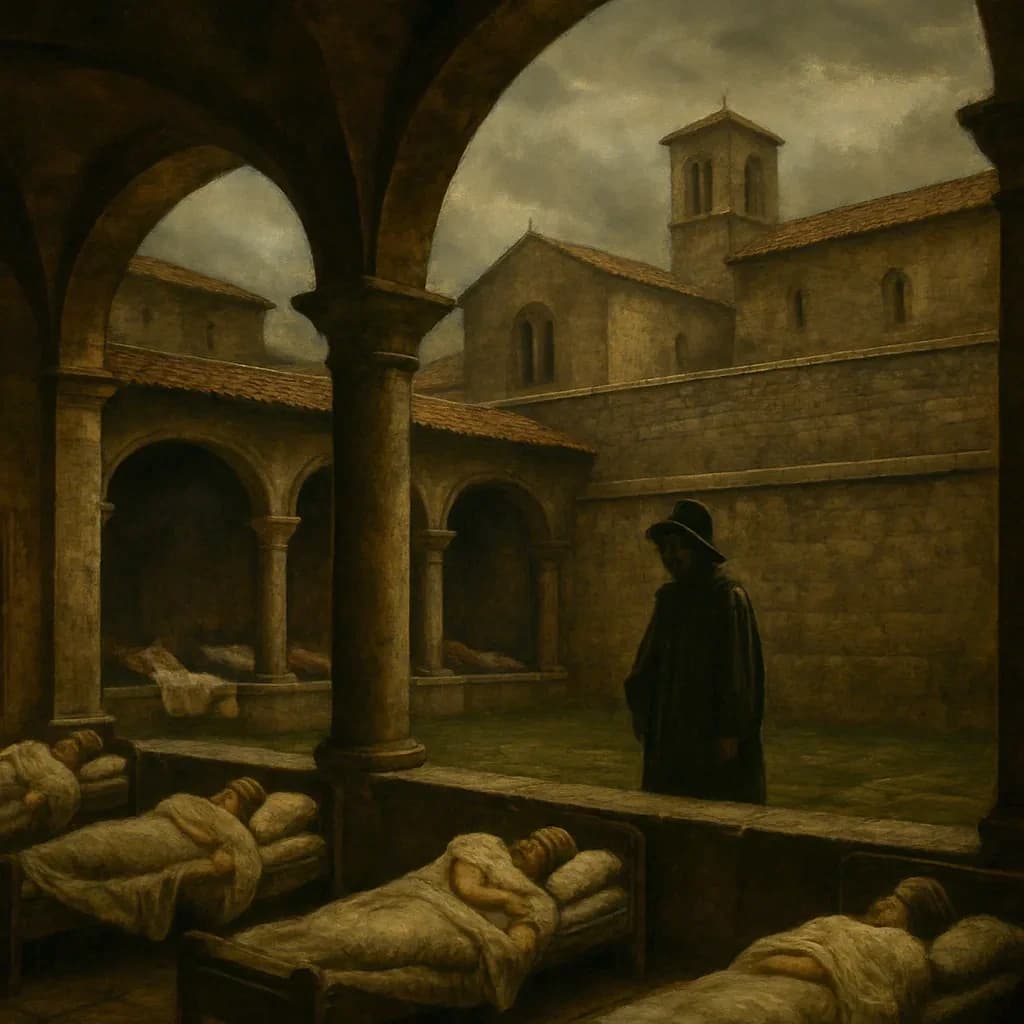
The Doctor Who Stopped Curing the Plague
When the Black Death reached Florence in 1348, the city's most famous physician discovered that all his training was worthless, but his ignorance saved thousands.
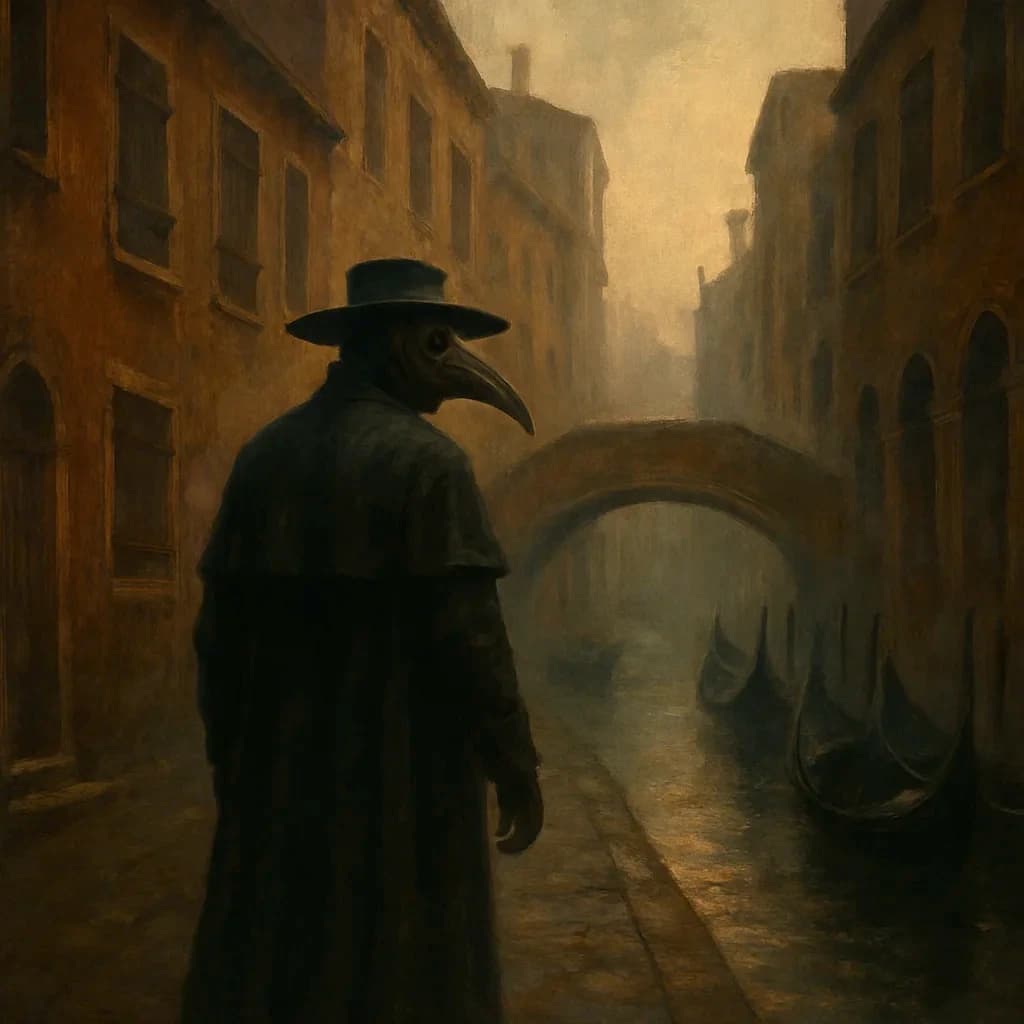
Why One Plague Doctor Stayed in Dying Venice
Venice's population was collapsing around him in 1630, and one masked physician made a choice that saved the city, and destroyed his own life.
- Cipolla, Carlo M. *Fighting the Plague in Seventeenth-Century Italy*. University of Wisconsin Press, 1981.
- Henderson, John. *Florence Under Siege: Surviving Plague in an Early Modern City*. Yale University Press, 2019.
- Cosmacini, Giorgio. *Storia della medicina e della sanità in Italia*. Laterza, 1987.