
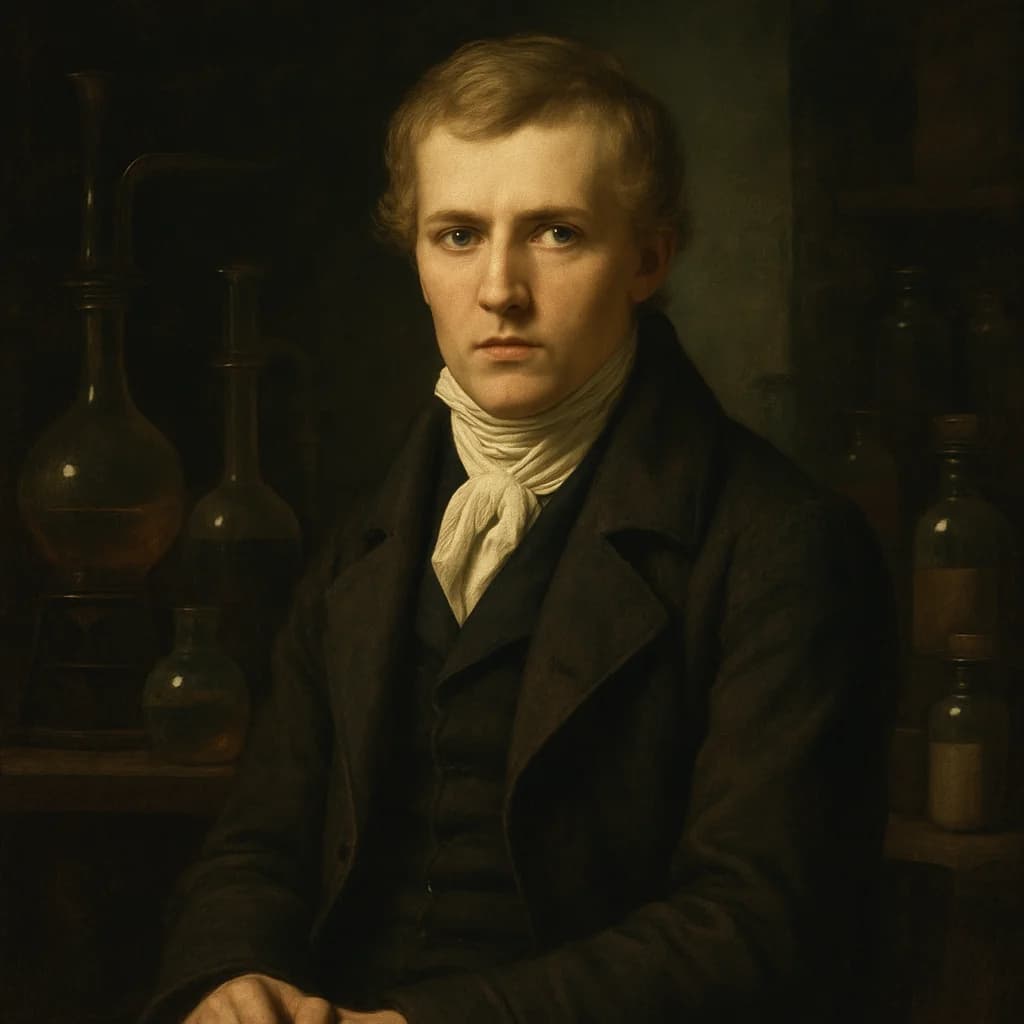
Friedrich Sertürner
The man who gave humanity its most perfect medicine and its most perfect curse was a teenage apprentice who thought he was making cough syrup.
Friedrich Sertürner was twenty years old and grinding away in a pharmacy apprenticeship in Paderborn when he decided opium wasn't working fast enough. The year was 1804, and doctors had been prescribing raw opium for millennia, a messy, unpredictable paste that sometimes relieved pain and sometimes killed patients outright. Sertürner thought he could do better.
Working alone in his master's laboratory after hours, he began dissolving opium in acid, then adding ammonia until white crystals formed. What precipitated out was something unprecedented: the first pure alkaloid ever isolated from a plant. He called it morphium, after Morpheus, the Greek god of dreams. Testing it on himself and a few brave friends, Sertürner discovered he had created something extraordinary, a painkiller ten times more potent than raw opium, with precise, measurable effects.
But the scientific establishment dismissed him completely. He was, after all, just a pharmacy apprentice with no university education. His papers were ignored, his discovery forgotten. For over a decade, Sertürner watched as the medical world continued fumbling with crude opium while his revolutionary breakthrough gathered dust. It wasn't until 1817, when respected French chemists 'rediscovered' morphine, that the world finally paid attention.
By then, Sertürner had become a successful pharmacist, but the recognition came with a terrible irony. The medicine he had created to eliminate suffering would become the template for humanity's most devastating epidemic. Every opioid that followed (from heroin to OxyContin to fentanyl) descended directly from those white crystals he had coaxed from opium as a curious twenty-year-old. He had opened a door that could never be closed.
Sertürner tested his morphine discovery on himself and three friends in his pharmacy, nearly killing all of them with an overdose that left them unconscious for hours.
Why untold: His youth and lack of formal education caused the scientific establishment to ignore his world-changing discovery for over a decade.
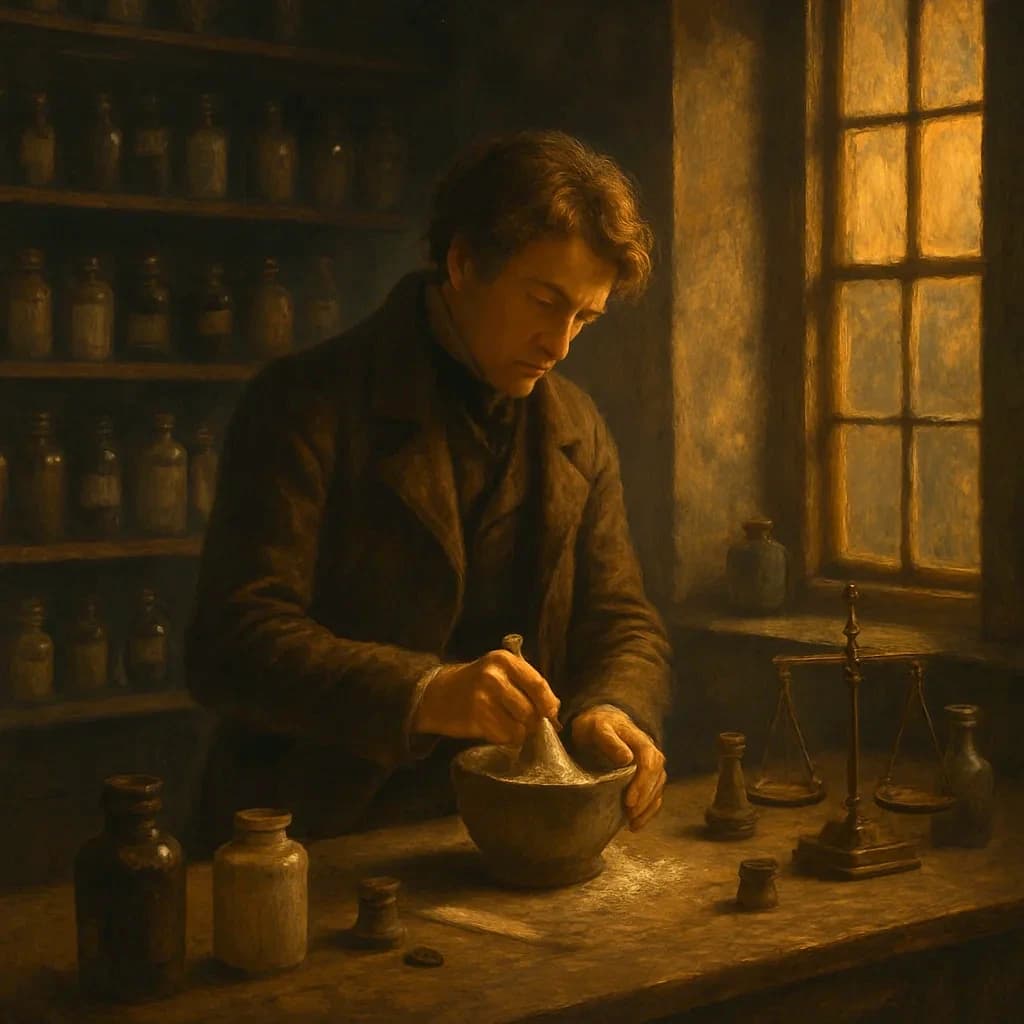
Morphine: How One Pharmacist Unleashed an Epidemic
A chemistry professor in Paderborn took his usual evening stroll and stumbled into the drug that would addict millions.
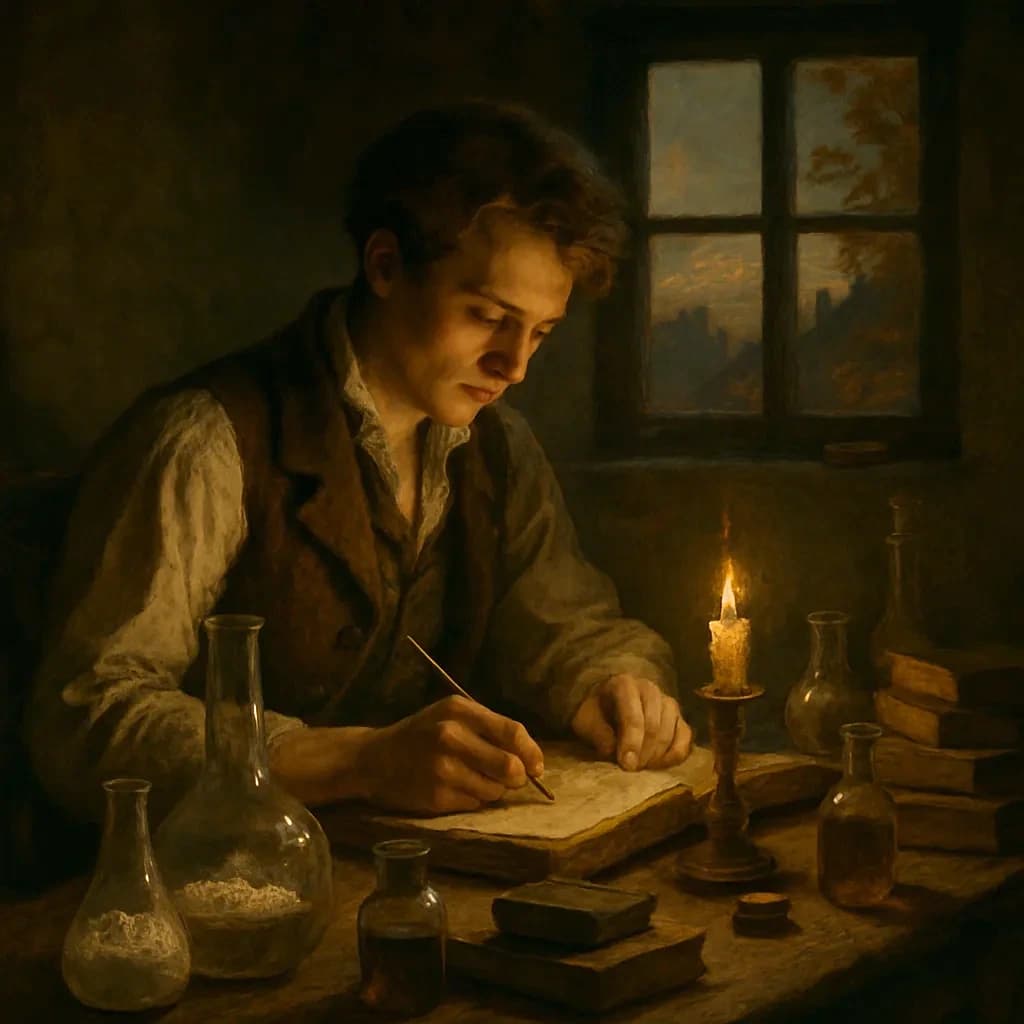
A Student's Evening Walk Uncovered Something Deadlier Than Any Weapon
In 1828, a bored chemistry student in Berlin went for a stroll and accidentally discovered something that would kill more people than any weapon in history.
- Booth, Martin. Opium: A History. New York: St. Martin's Press, 1996.
- Hodgson, Barbara. In the Arms of Morpheus: The Tragic History of Laudanum, Morphine, and Patent Medicines. Buffalo: Firefly Books, 2001.
- Macht, David I. 'The History of Opium and Some of Its Preparations and Alkaloids.' Journal of the American Medical Association 64, no. 6 (1915): 477-481.