
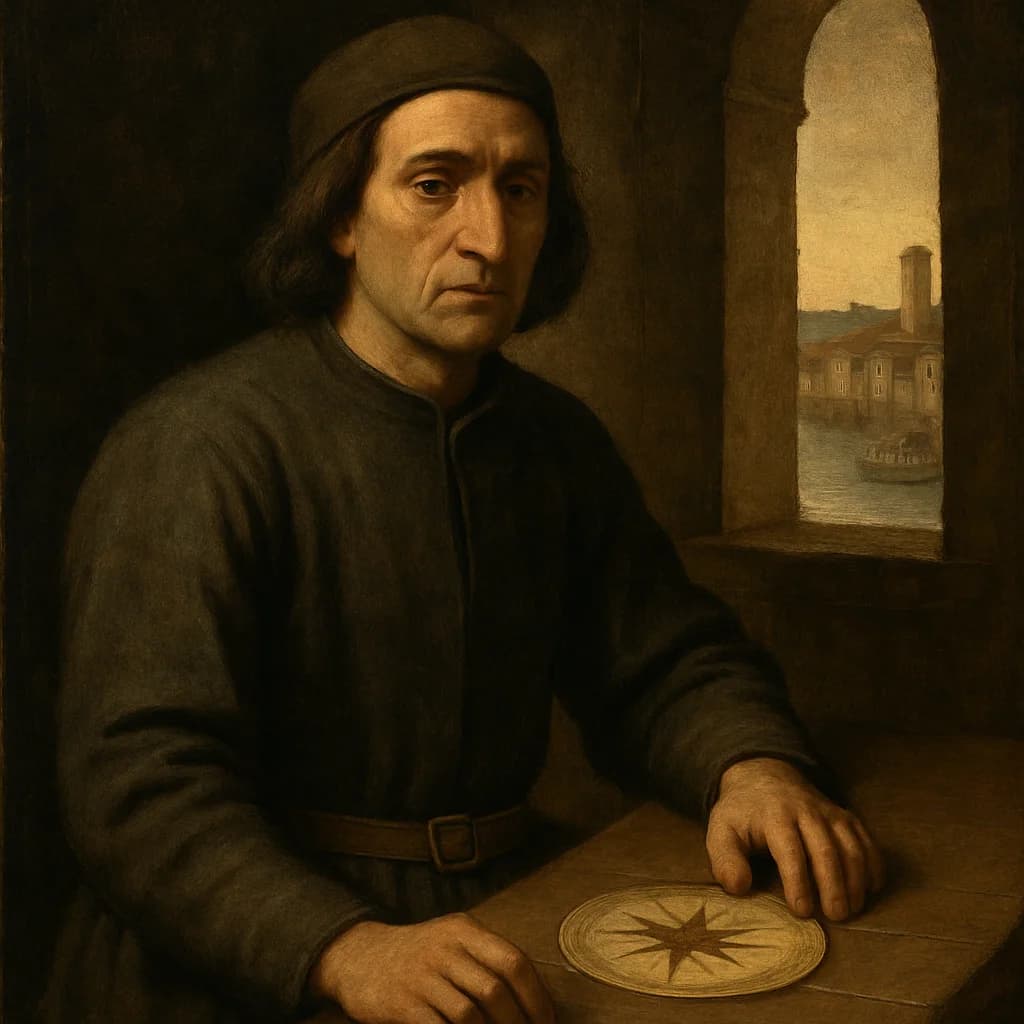
Flavio Gioja
The man credited with inventing the compass may have never existed.
Somewhere around 1302, a navigator from Amalfi named Flavio Gioja supposedly looked at a magnetized needle, attached it to a card marked with directions, and handed European sailors the tool that would eventually open the entire world. His name appears in Italian chronicles, his statue still stands in Amalfi, and schoolchildren across Italy learned his story for centuries. There is just one problem: nearly every historian who has gone looking for Flavio Gioja has come back empty-handed.
The earliest source connecting Gioja to the compass dates to 1511, more than two centuries after his supposed invention. The historian Flavius Blondus, writing in the 1450s, credited Amalfi with the compass but mentioned no individual inventor. Then a poet named Panormita added a name. Then the name stuck. By the time anyone thought to check the primary records, the legend had already calcified into fact. No birth record. No death record. No contemporary mention of any kind. The statue in Amalfi, erected in 1900, commemorates a man who may have been assembled from civic pride and literary embellishment.
What makes this stranger is that the compass itself is real, and its arrival in Europe is genuinely fascinating. Magnetic compasses appear in Chinese records by the 11th century, in Arabic sources by the 12th, and in European navigation texts by the late 1100s, meaning the tool existed in Europe at least a hundred years before Gioja supposedly invented it. The actual history involves slow, anonymous diffusion across trade routes: needles rubbed against lodestones, sailors learning from sailors, knowledge bleeding across the Mediterranean without any single eureka moment. That story (messy, collaborative, undocumented) doesn't fit on a statue.
And yet Gioja's ghost keeps doing real historical work. Because his name attached itself to the compass, it anchored the invention to Amalfi, to Italy, to a specific moment. It gave a patchy, multinational, centuries-long process the shape of a story. The irony is that the man who may not have existed helped preserve the memory of a technology that genuinely changed the world, a placeholder inventor for a placeless invention.
The word 'compass' likely derives from the Old French 'compasser,' meaning to measure or divide equally, a reference to its use in geometry long before it became a navigational instrument.
Why untold: Gioja's story persists because the myth of the lone inventor is easier to commemorate than the true history of anonymous, cross-cultural technological diffusion along medieval trade routes.
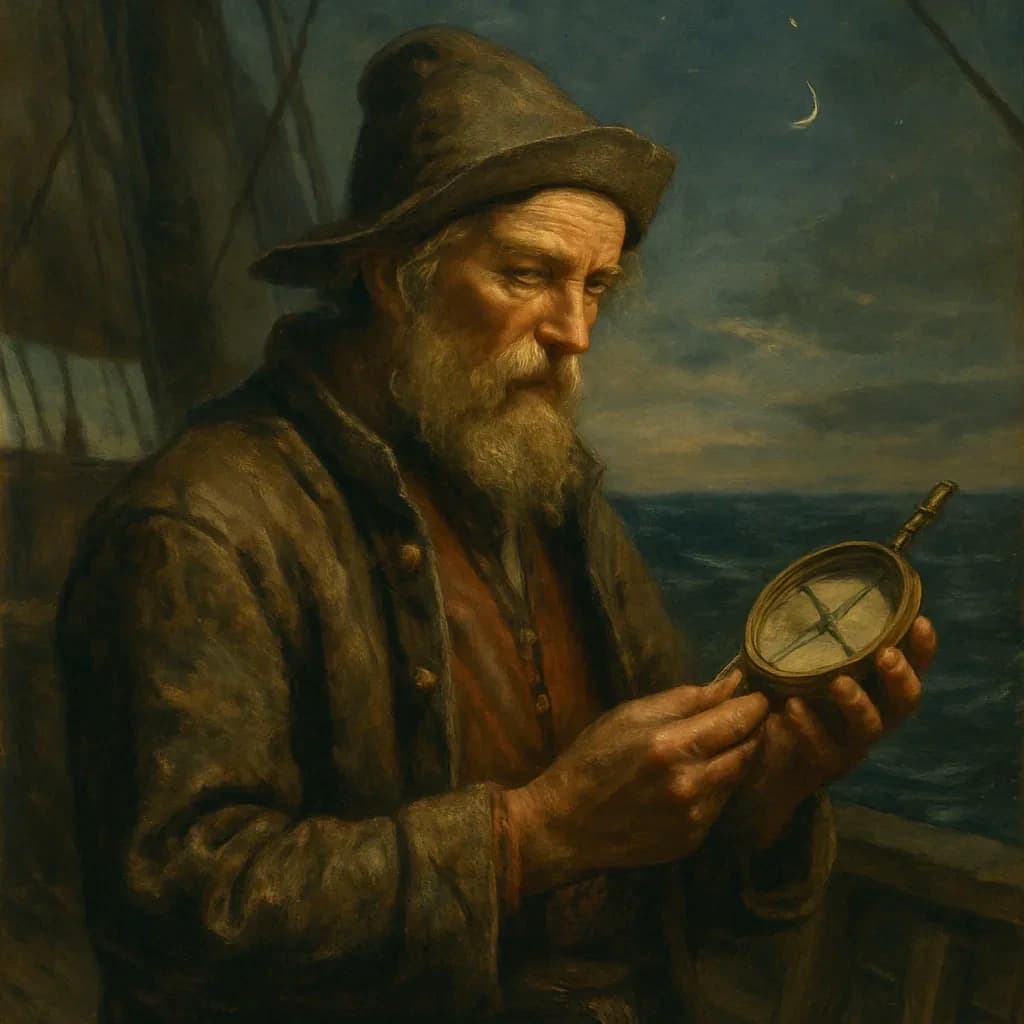
His Compass Pointed the Wrong Way and Cracked Medieval Cosmology
A Venetian navigator's malfunctioning compass led him to discover magnetic declination, and accidentally revealed that the Earth wasn't what medieval scholars thought it was.
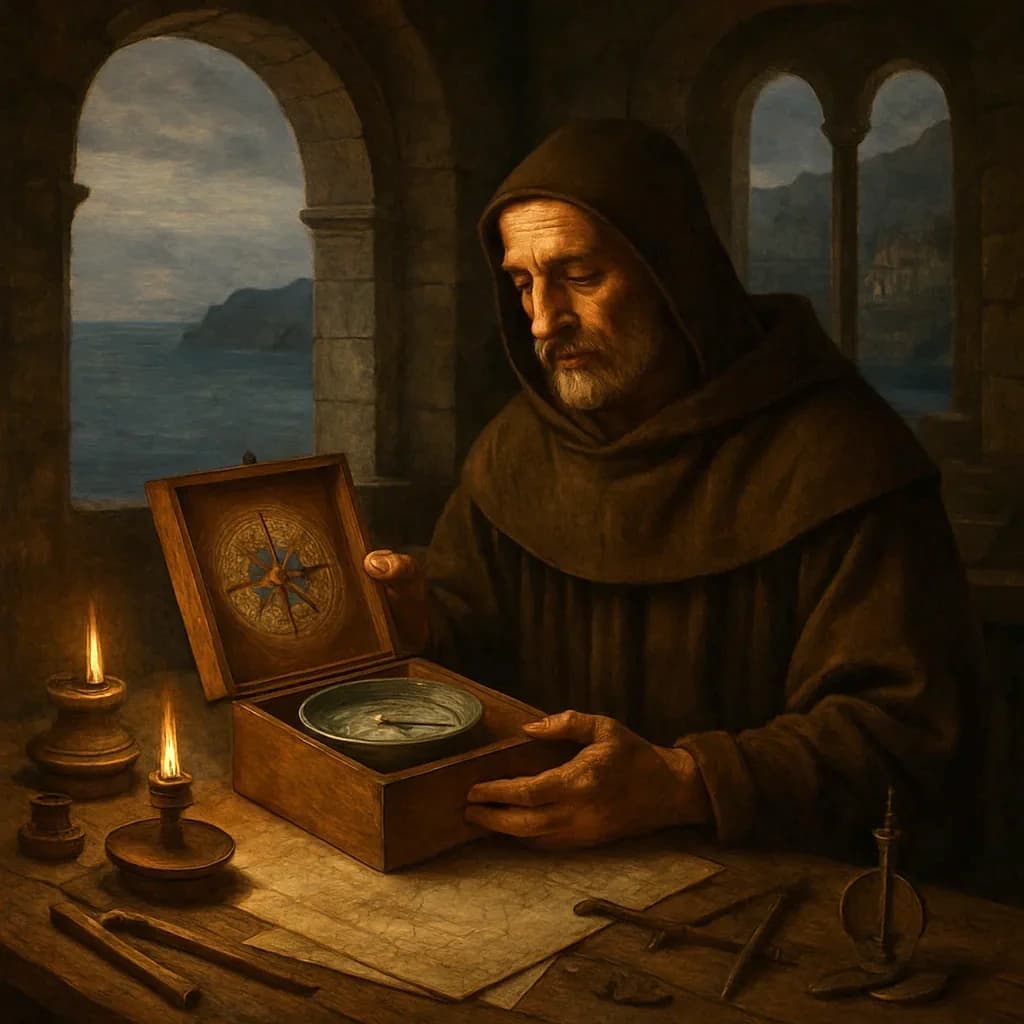
A Perfect Compass That Wrecked Ships in Clear Weather
A medieval inventor's navigation tool worked perfectly, except it kept leading sailors to their deaths.
- Silvio Bedini, 'The Compass and the Clock: Navigation and Timekeeping in the Age of Exploration,' in The Christopher Columbus Encyclopedia, ed. Silvio Bedini (1992)
- Amir Aczel, 'The Riddle of the Compass: The Invention That Changed the World' (2001), HarperCollins
- John B. Carlson, 'Lodestone Compass: Chinese or Olmec Primacy?' Science, Vol. 189, No. 4205 (1975), pp. 753-760