
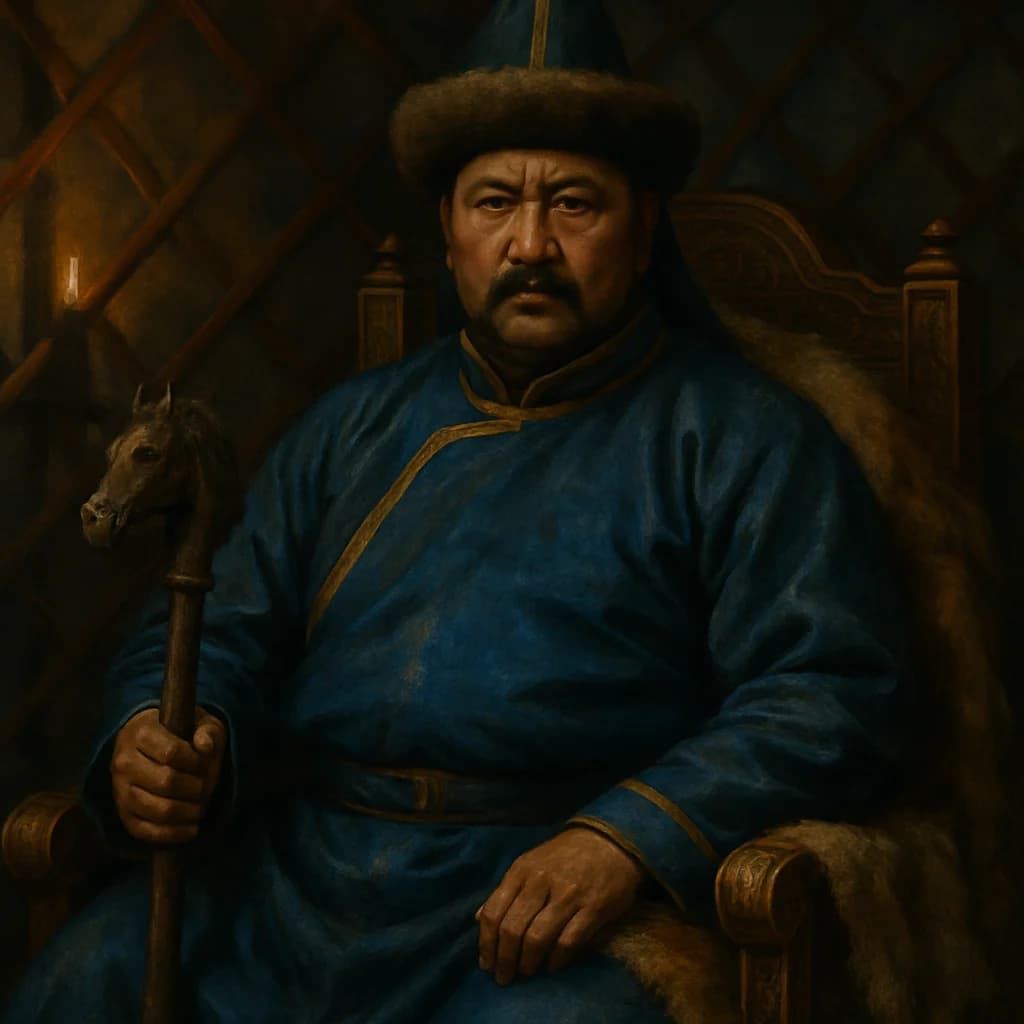
Esen Taishi
He held the Son of Heaven hostage and then, inexplicably, gave him back.
In 1449, the most powerful non-Chinese ruler in Asia had everything he wanted. The Ming emperor sat in his tent. The imperial army, a quarter million men, lay dead or scattered across the steppe at a place called Tumu Fortress. The tribute system that had kept the Mongols buying Chinese silk at humiliating exchange rates was finished. Esen Taishi, chief of the Oirat Mongols, had just pulled off the most stunning military victory since his great-grandfather's generation. And then he went home.
That decision, to ransom the emperor and retreat rather than press south, is the riddle at the center of Esen's life. He wasn't squeamish. He had spent twenty years systematically crushing every rival on the steppe: the Eastern Mongols, the Uriankhai, the Hami oasis kingdoms along the Silk Road. By the time of Tumu, his confederation stretched from Manchuria to Central Asia, the largest unified Mongol power since the fragmentation of Chinggis Khan's empire. The Ming court, which had grown comfortable calling Mongol leaders 'submissive barbarians' in official correspondence, had no framework for what Esen actually was. He wasn't a raider. He was building a state.
The ransom plan collapsed almost immediately. The Ming simply crowned a new emperor (the captured Yingzong's own brother) and declared the prisoner irrelevant. Esen held a worthless hostage for a year before releasing him for essentially nothing in 1450. What happened next is stranger still: in 1453, Esen murdered the nominal Great Khan he had been serving under and declared himself Khan of All the Mongols, the first non-Chinggisid ruler to claim that title in over two centuries. It was a political earthquake. And it lasted exactly two years before his own subordinates killed him.
He was murdered in 1455 by Alagh, one of his own commanders. The confederation he had spent decades assembling fragmented within a generation. The Ming rebuilt their northern defenses, extended the Great Wall, and filed Esen away as another defeated barbarian. The man who had come closer than anyone since Timur to reunifying the Mongol world became a footnote to an emperor he had captured and released.
Esen's manipulation of the Ming tribute system was so sophisticated that he would deliberately inflate the number of envoys in his delegations (sometimes to thousands) because Ming protocol required the court to feed, house, and gift every single one of them, effectively forcing Beijing to subsidize his treasury.
Why untold: Because the Ming dynasty wrote the history, and their official records framed Tumu as an embarrassing aberration rather than a near-collapse, which meant systematically understating Esen's strategic coherence and political ambition to preserve the narrative of inevitable Chinese resilience.
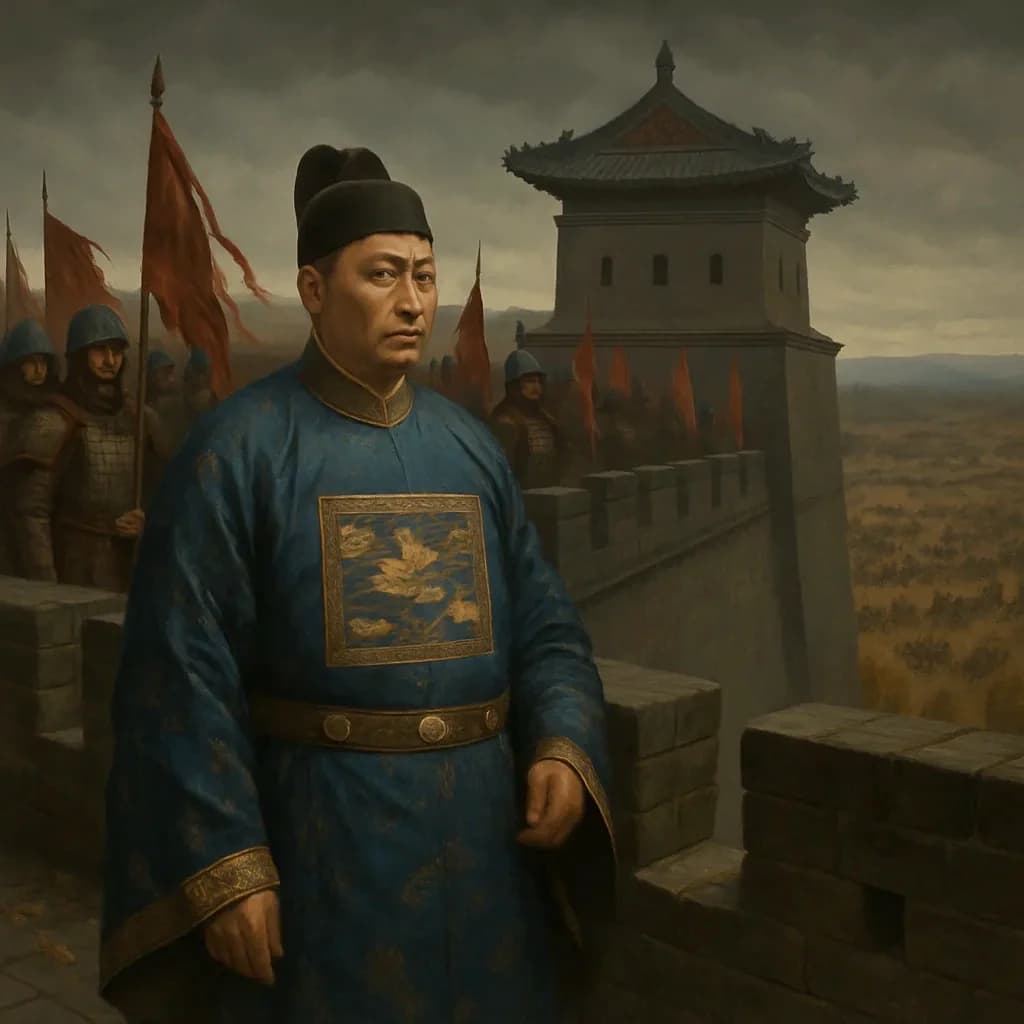
To Save the Ming, He Wrote Off the Emperor
No army, no title, no plan, yet a seamstress's son walked into the most fortified city in Asia and walked back out with the emperor.
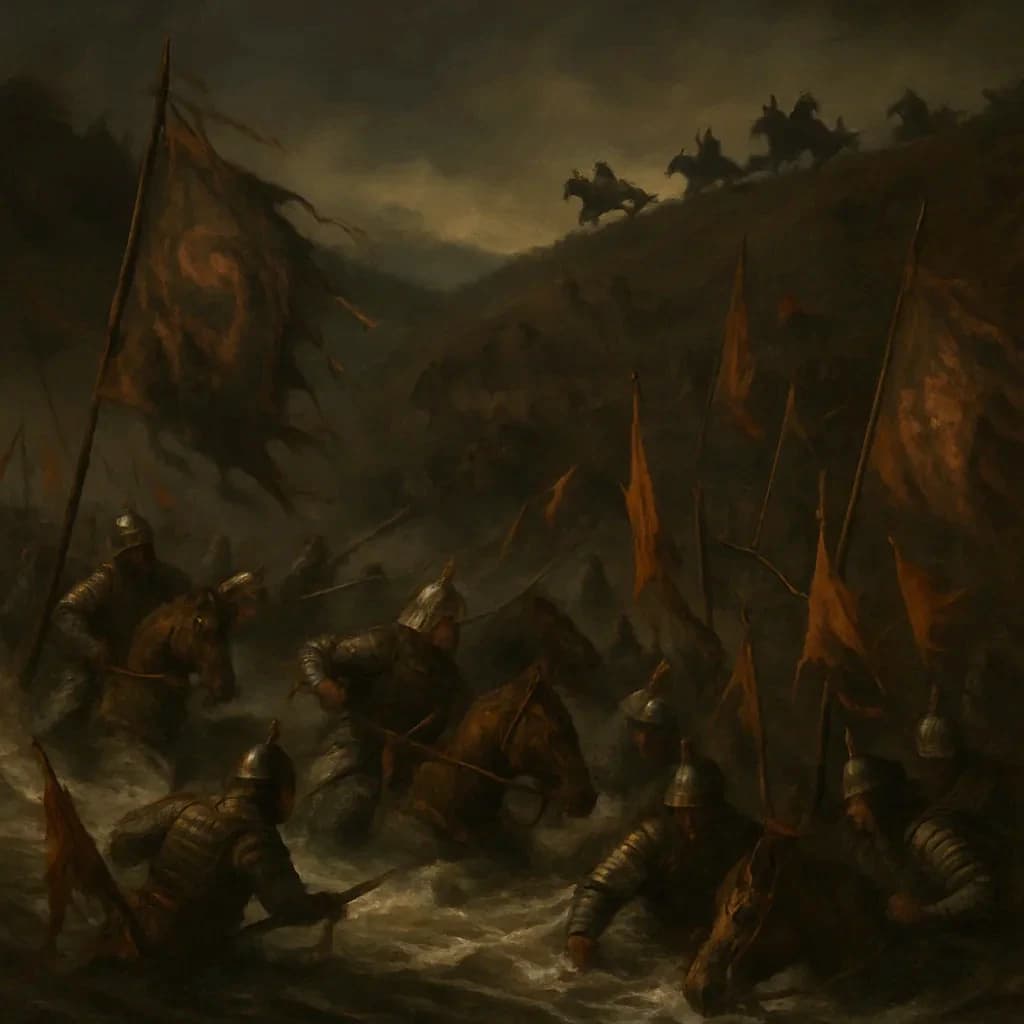
When the Emperor's Horses Learned to Swim
The most powerful ruler in China lost half his empire because he trusted his cavalry to cross a river they'd never seen before.
- Frederick W. Mote, 'The T'u-mu Incident of 1449,' in Chinese Ways in Warfare, ed. Frank Kierman and John Fairbank (Harvard University Press, 1974)
- David M. Robinson, 'Monsters, Rebels, and Rogues: Violence and the Ming Court,' in Ming China: Courts and Contacts 1400-1450, ed. Craig Clunas et al. (British Museum, 2016)
- Thomas J. Barfield, The Perilous Frontier: Nomadic Empires and China, 221 BC to AD 1757 (Blackwell, 1989)