
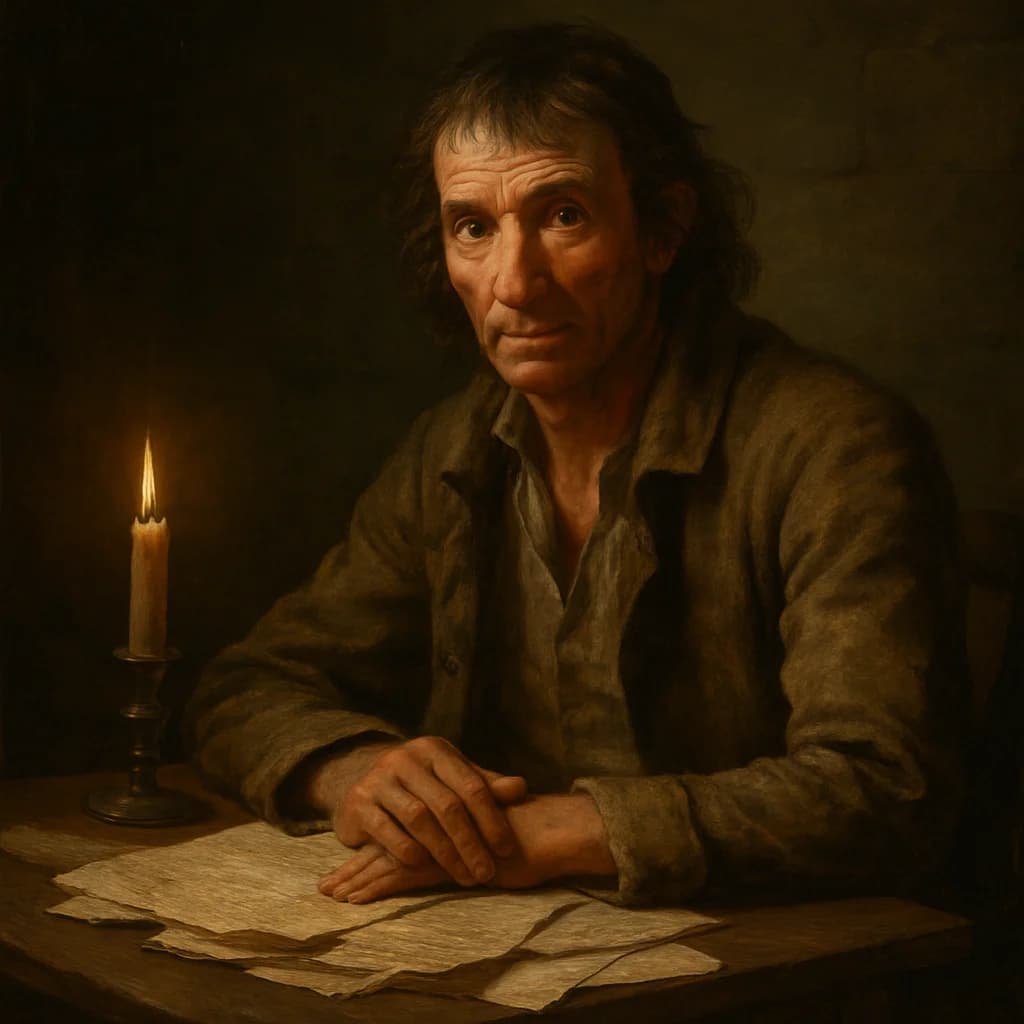
Edward Williams
He didn't forge a document. He forged an entire civilization.
Edward Williams was a stonemason from Glamorgan who, by the time he died in 1826, had single-handedly convinced the British intelligentsia that Wales possessed an unbroken druidic tradition stretching back three thousand years. The tradition was, in its modern form, roughly forty years old. He had invented most of it himself, in a hayloft, working by candlelight.
Born in 1747 in Llancarfan, Williams taught himself Latin, Greek, and Hebrew while cutting gravestones for a living. He had genuine scholarly gifts, a real appetite for the fragmentary medieval Welsh poetry that most of his contemporaries couldn't read and didn't bother to try. But somewhere between the manuscripts and the moonlight, the line between recovery and invention dissolved. He began composing poems in archaic Welsh and then discovering them. He built an elaborate false identity as Iolo Morganwg (Iolo of Glamorgan), a wandering bard and keeper of ancient secrets. By 1792, on Primrose Hill in London, he convened the first modern Gorsedd of Bards, a ceremony he claimed was continuous with pre-Roman druidism. He had written the rituals himself, probably while taking laudanum, to which he was seriously addicted for most of his adult life.
The Gorsedd was absorbed into the National Eisteddfod of Wales in 1819, and it remains there today. The robes, the stone circle, the bardic degrees: all of it traces back to Iolo's invention. What makes this genuinely strange rather than merely fraudulent is that Williams was working from real material. He knew the old texts better than almost anyone alive. His forgeries were woven so tightly into authentic medieval poetry that scholars spent over a century pulling the threads apart. G.J. Williams didn't definitively expose the scale of the fabrications until 1926, a full century after Iolo's death.
He also campaigned against slavery, supported the French Revolution, and walked from London to Cowbridge (nearly 160 miles) because he couldn't afford the coach. The man who invented Welsh antiquity did it broke, addicted, and on foot.
The Gorsedd stone circle ceremony, now watched by thousands at the Welsh National Eisteddfod every year, was staged for the first time on Primrose Hill, London, in 1792, with a handful of bemused Welsh expats as the audience.
Why untold: Because the institution Williams invented, the Gorsedd of Bards, became so central to Welsh national identity that publicly dismantling his mythology felt, for generations, like an attack on Wales itself, the full exposure was quietly delayed for a century.
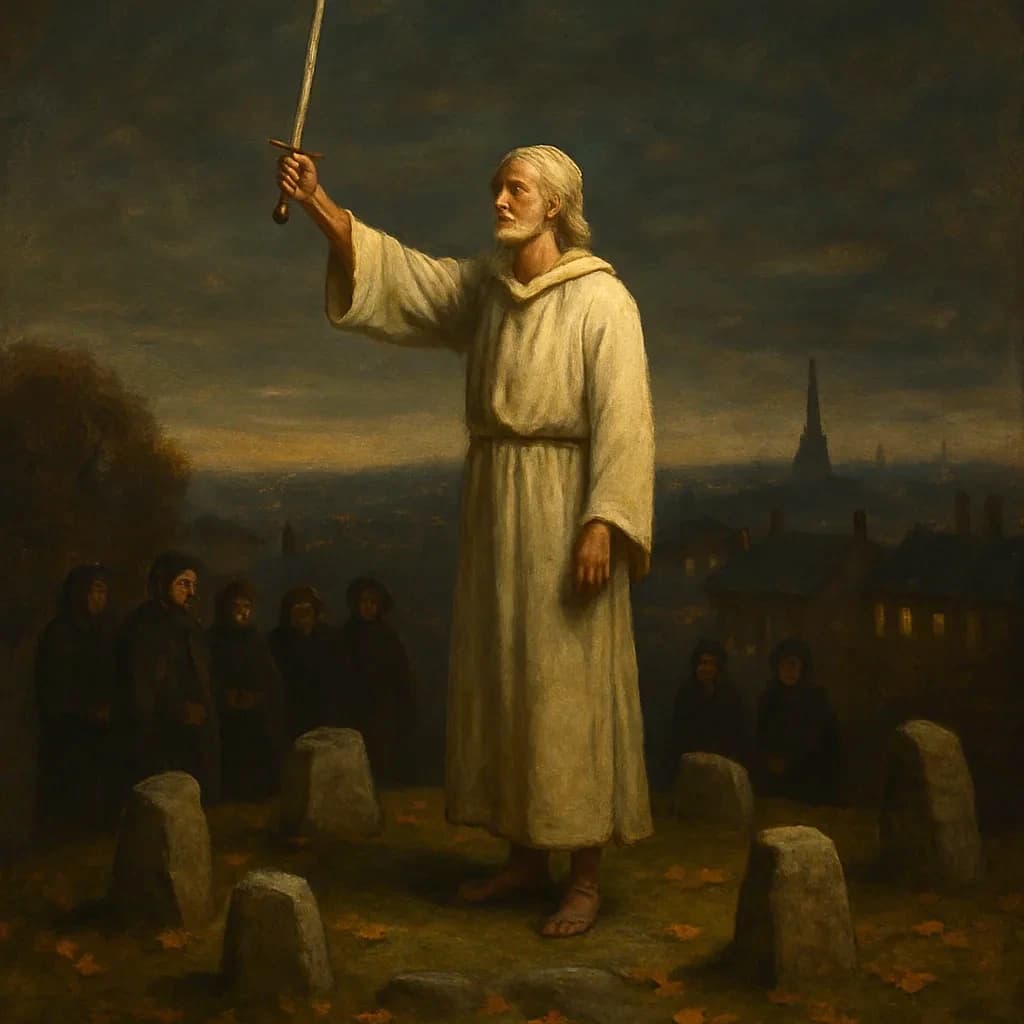
He Invented Wales's Ancient Druid Tradition
A Welsh scholar found a poem so beautiful it rewrote his nation's entire ancient history. Except, in 1778, he'd written it himself last Tuesday.
One Line in a Doctor's Notebook Changed How We See the Mind
A single line in a doctor's notebook changed how we think about the human mind forever.
- Prys Morgan, 'Iolo Morganwg' (University of Wales Press, 1975)
- G.J. Williams, 'Iolo Morganwg: Y Gyfrol Gyntaf' (University of Wales Press, 1926)
- Mary-Ann Constantine, 'The Truth Against the World: Iolo Morganwg and Romantic Forgery' (University of Wales Press, 2007)