
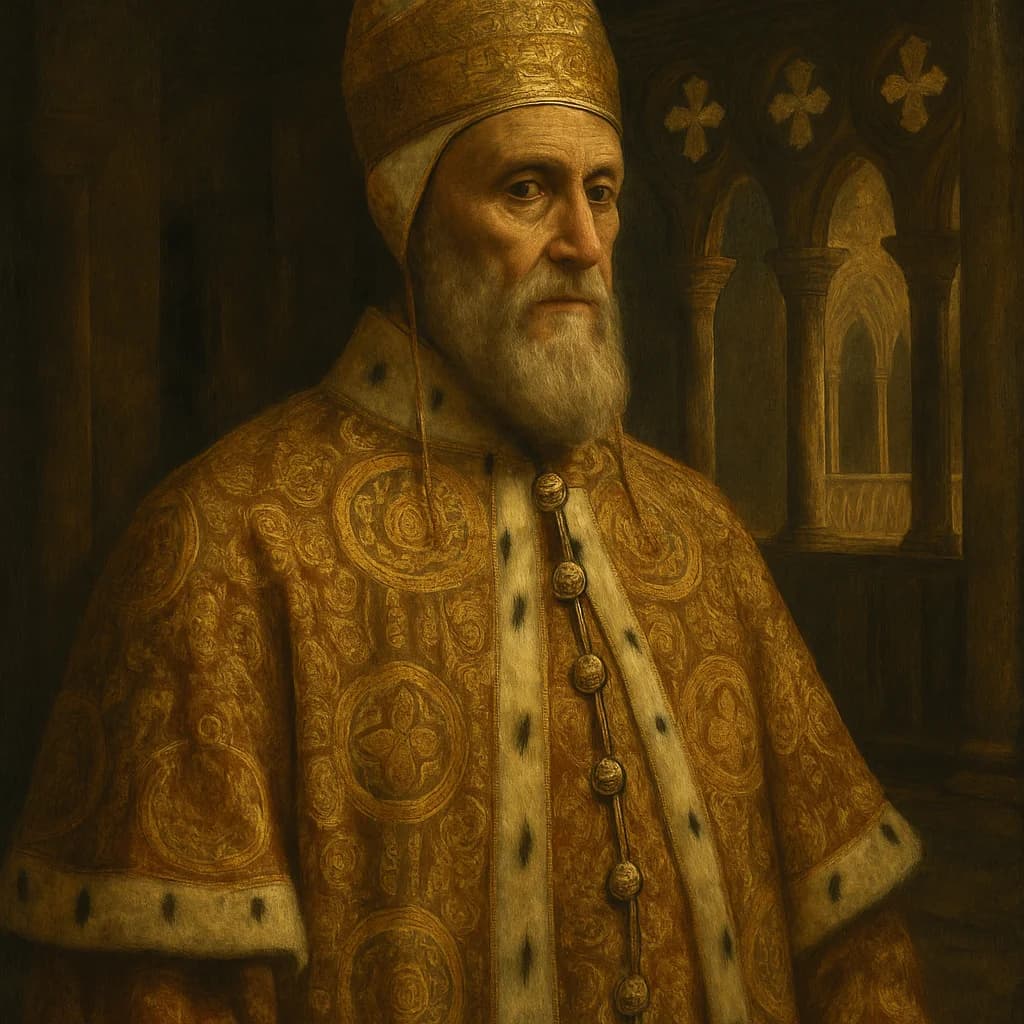
Domenico Michiel
The Doge who conquered Constantinople by accident started his career as a merchant who couldn't balance his own books.
Domenico Michiel began life as the kind of Venetian merchant who made other merchants nervous. His ledgers were chaos, his calculations legendary for their creative mathematics, and his trade ventures had a disturbing habit of either spectacular success or complete disaster. When he inherited his father's modest salt business in 1096, seasoned traders gave him six months before bankruptcy.
Then something extraordinary happened: his terrible math started making Venice rich. A miscalculation on a spice shipment to Constantinople accidentally cornered the pepper market for three years. A bungled currency exchange in Alexandria somehow secured exclusive trading rights with Egypt. By 1118, when Venice elected him Doge, Michiel had stumbled into more profitable mistakes than most merchants achieved through careful planning.
As Doge, Michiel's mathematical chaos scaled up magnificently. When the Second Crusade called for Venetian ships in 1122, he calculated transport costs so badly that Venice ended up charging the Byzantines triple the intended rate. The Byzantines, desperate for naval support, paid anyway. When his fleet accidentally captured Tyre in 1124 while en route to Jerusalem, Michiel negotiated trading privileges so advantageous that future Doges would spend decades trying to replicate his 'strategy.'
Michiel's twenty-two-year reign transformed Venice from regional salt traders into Mediterranean power brokers, not through grand design but through a series of profitable accidents that his successors would carefully study and completely misunderstand. He died in 1130, still convinced that everyone else was making trade more complicated than necessary.
Michiel's personal motto was 'Fortuna audaces iuvat' (Fortune helps the bold), which he had carved into his palace wall after a scribe pointed out he'd been spelling 'audacious' wrong in official documents for fifteen years.
Why untold: His reputation as a brilliant strategist overshadowed the chaotic reality of his decision-making process, which later Venetian chroniclers sanitized into calculated genius.
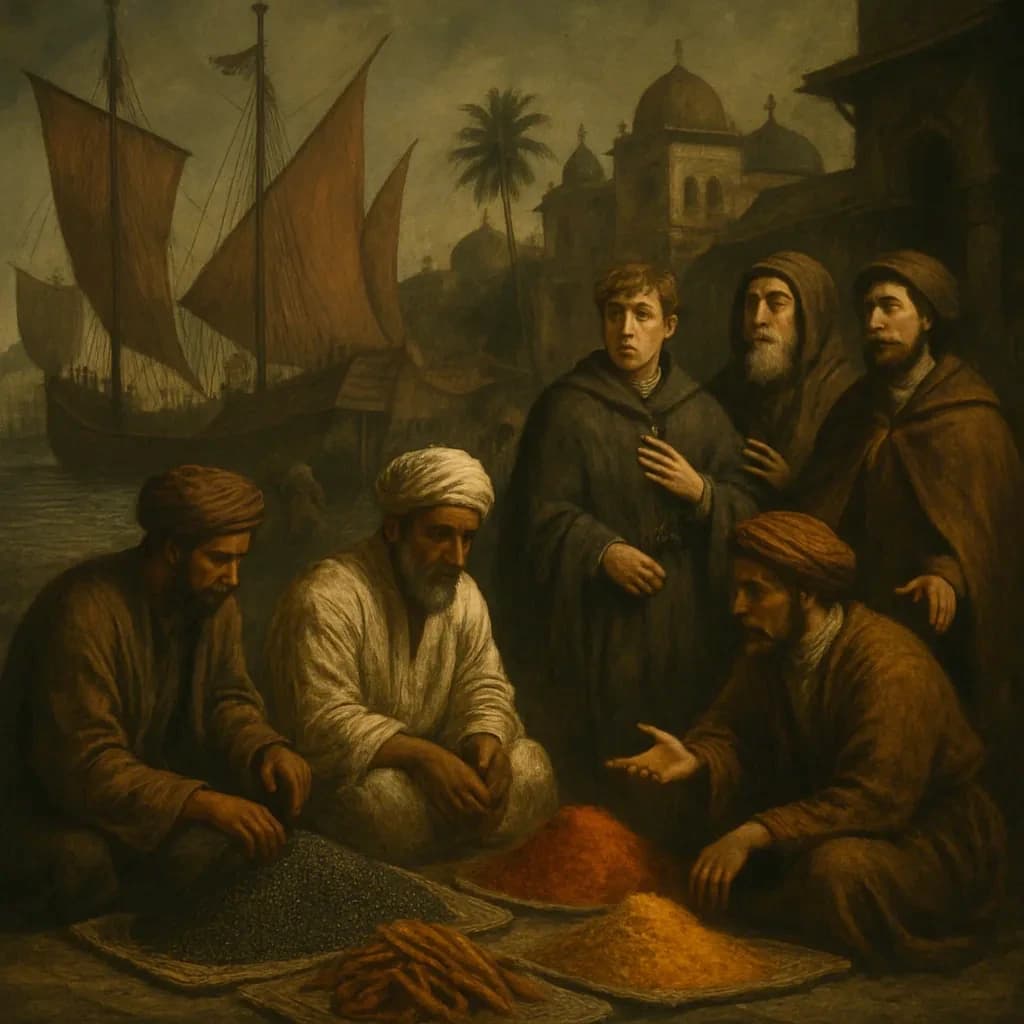
A Venetian Merchant's Bad Math Created the Spice Trade
A Venetian merchant's bad math in 1204 accidentally created the spice trade that would feed European expansion for the next four centuries.
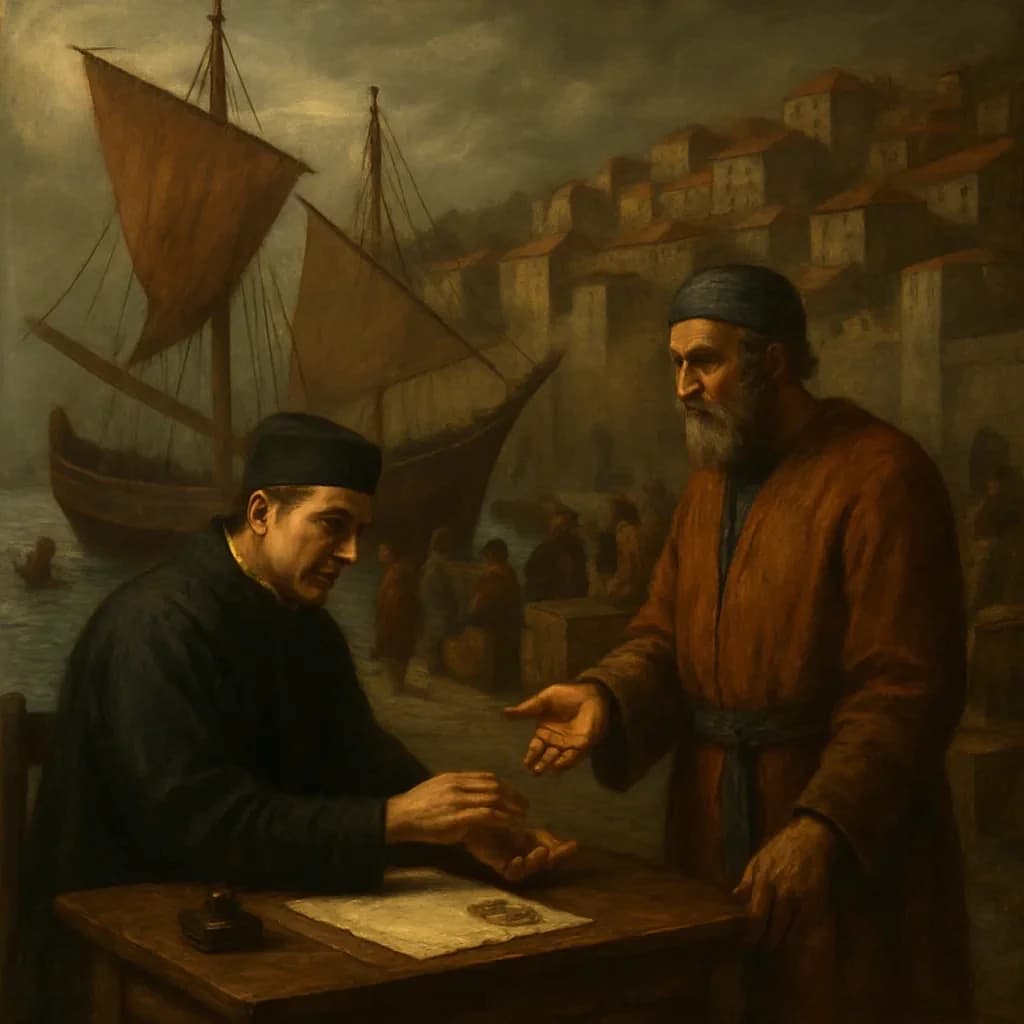
Seven Copper Coins Accidentally Bought Crete
A merchant's pocket change accidentally purchased the most strategically valuable island in the Mediterranean, and nobody noticed for six months.
- Andrea Dandolo, Chronica per extensum descripta (14th century)
- Thomas F. Madden, Venice: A New History (Yale University Press, 2012)
- Donald M. Nicol, Byzantium and Venice: A Study in Diplomatic Relations (Cambridge University Press, 1988)