
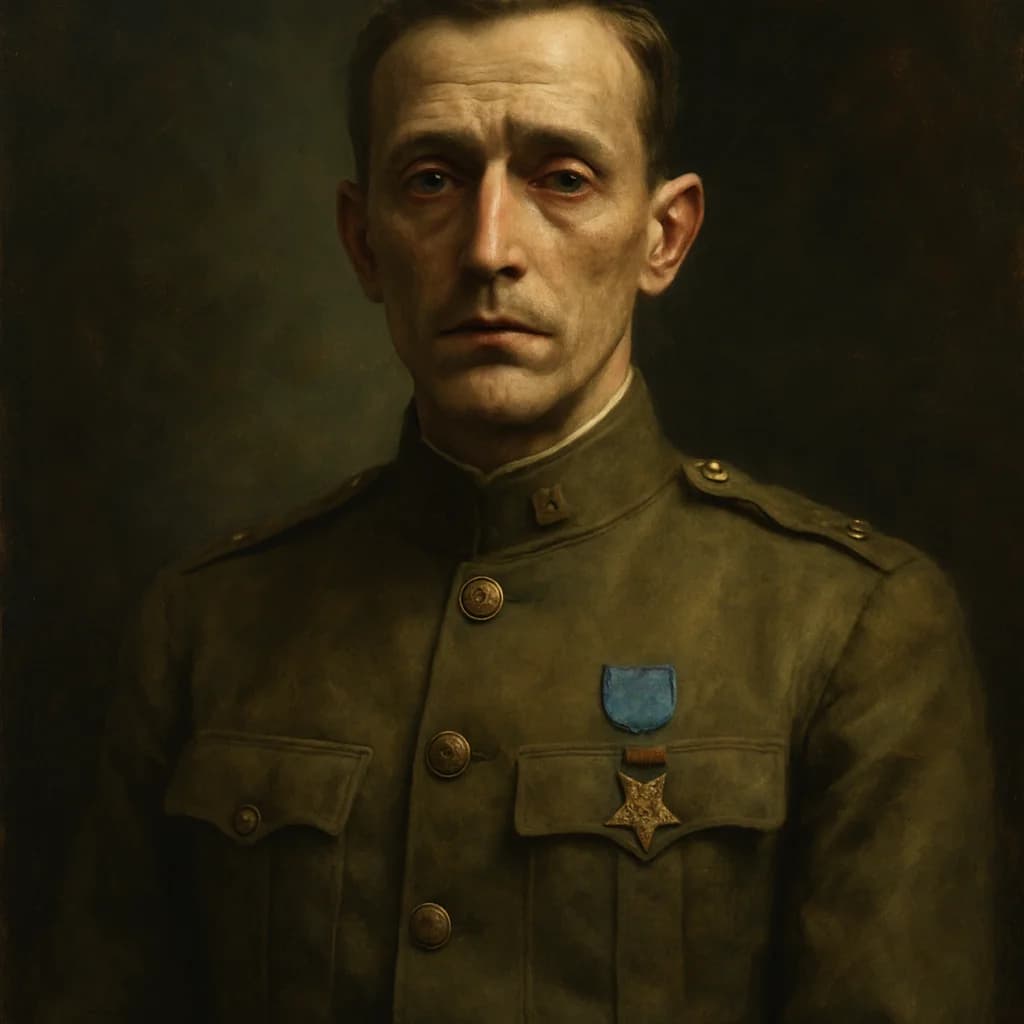
Charles Whittlesey
He came home a hero and spent three years trying to forget it, then walked off the side of a ship into the Atlantic.
Charles Whittlesey was a Wall Street lawyer before the war: a quiet, precise man who preferred contracts to conflict and had no particular appetite for glory. He volunteered anyway, in 1917, and was commissioned as a major in the 77th Division, a unit drawn almost entirely from the streets of New York City: Jewish immigrants from the Lower East Side, Italian dockworkers, men who spoke thirty different languages and had never held a rifle. He became their officer. He learned to care about them in the way that only men under sustained artillery fire can care about one another.
The Argonne pocket, October 1918. Whittlesey led roughly 550 men into a ravine on orders to advance. The flanking units never materialized. German forces closed in behind them, cutting off all supply lines, and the Lost Battalion (a name Whittlesey reportedly hated, because they were never lost, just abandoned) was surrounded for six days without food, with dwindling ammunition, and under constant fire from both German troops and, catastrophically, their own artillery. He sent carrier pigeons out one by one. Most were shot down. The last one, Cher Ami, was hit in the chest and leg mid-flight, kept flying, and delivered the message that stopped the friendly fire. When they were finally relieved, fewer than 200 of his men walked out.
After the armistice, Whittlesey returned to New York and was buried under something he never asked for: a ticker-tape parade, the Medal of Honor, dinner invitations, speeches. He was asked to speak at every memorial, every fundraiser, every commemoration. He visited wounded survivors in hospitals. He attended the funerals. He personally answered letters from Gold Star mothers who wanted to know exactly how their sons had died, and he wrote back to each one, honestly, because he thought he owed them that much. It consumed him steadily and quietly over three years.
On November 26, 1921, he boarded the SS Toloa bound for Havana on what he described as a vacation. Somewhere in the dark water between Florida and Cuba, he went over the side. He was 36 years old. No note was ever recovered.
Whittlesey was so opposed to the term 'Lost Battalion' that he publicly corrected journalists who used it. He insisted his men always knew exactly where they were; it was the Army that had lost them.
Why untold: Whittlesey's story collapses into the more photogenic narrative of Cher Ami the pigeon, which gave the battle a feel-good ending that obscured what the survival actually cost the man who orchestrated it.
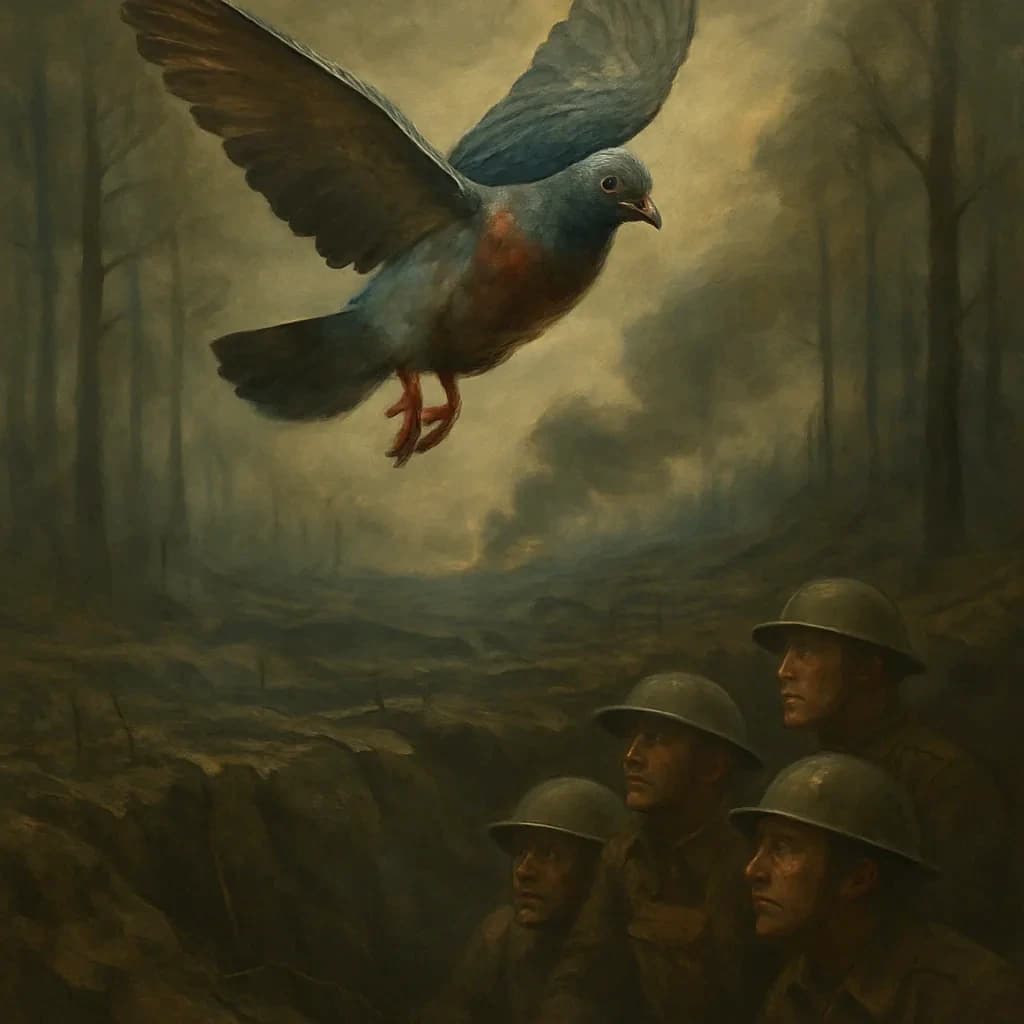
The Wounded Pigeon Who Saved 194 Men
With 194 American soldiers trapped behind enemy lines in 1918, their last hope had feathers and a tiny aluminum capsule strapped to her leg.
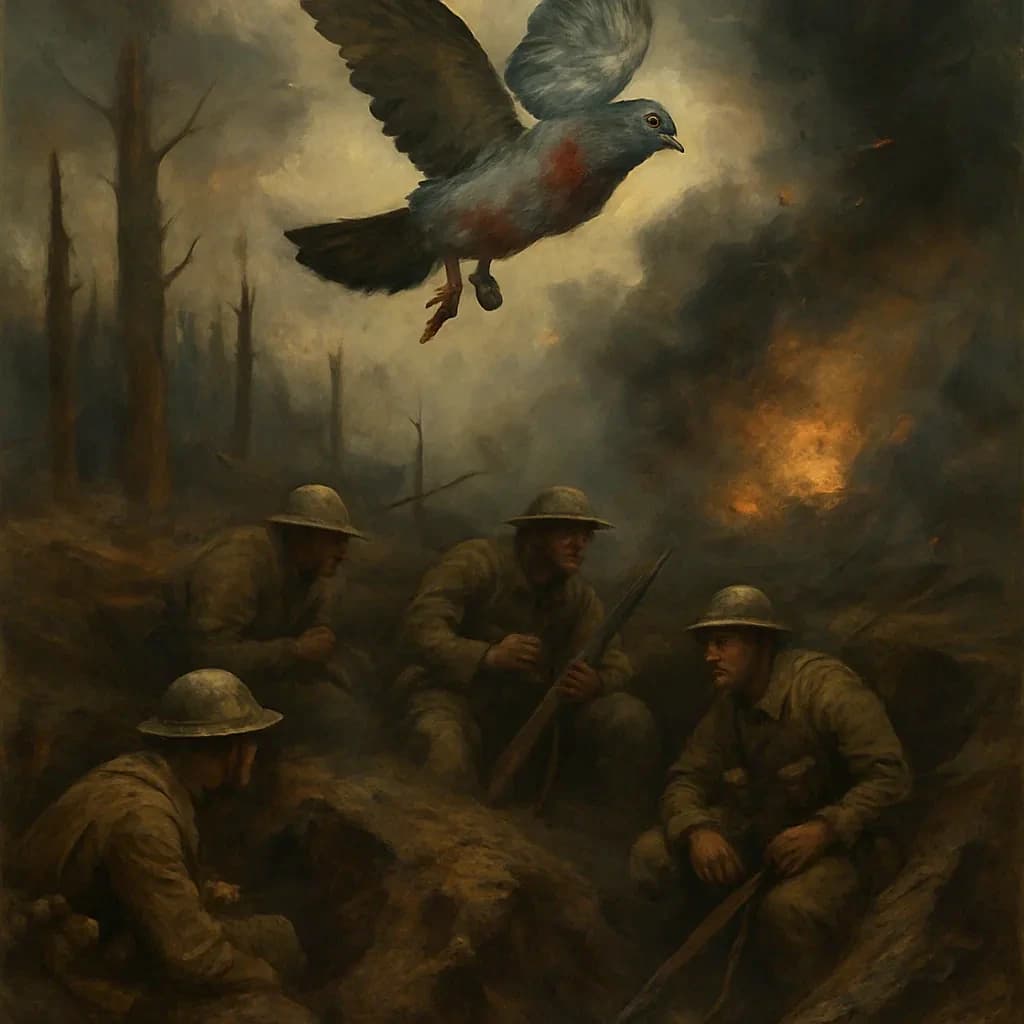
A Bullet-Torn Pigeon's 25-Mile Flight
Deep in the Argonne Forest, a single bird carried the only message that could prevent an American artillery barrage from destroying their own troops.
- Robert J. Laplander, Finding the Lost Battalion: Beyond the Valor of the 77th Division (Lulu Press, 2006)
- Edward G. Lengel, To Conquer Hell: The Meuse-Argonne, 1918 (Henry Holt, 2008)
- New York Times obituary and reporting, November 27-December 1, 1921