
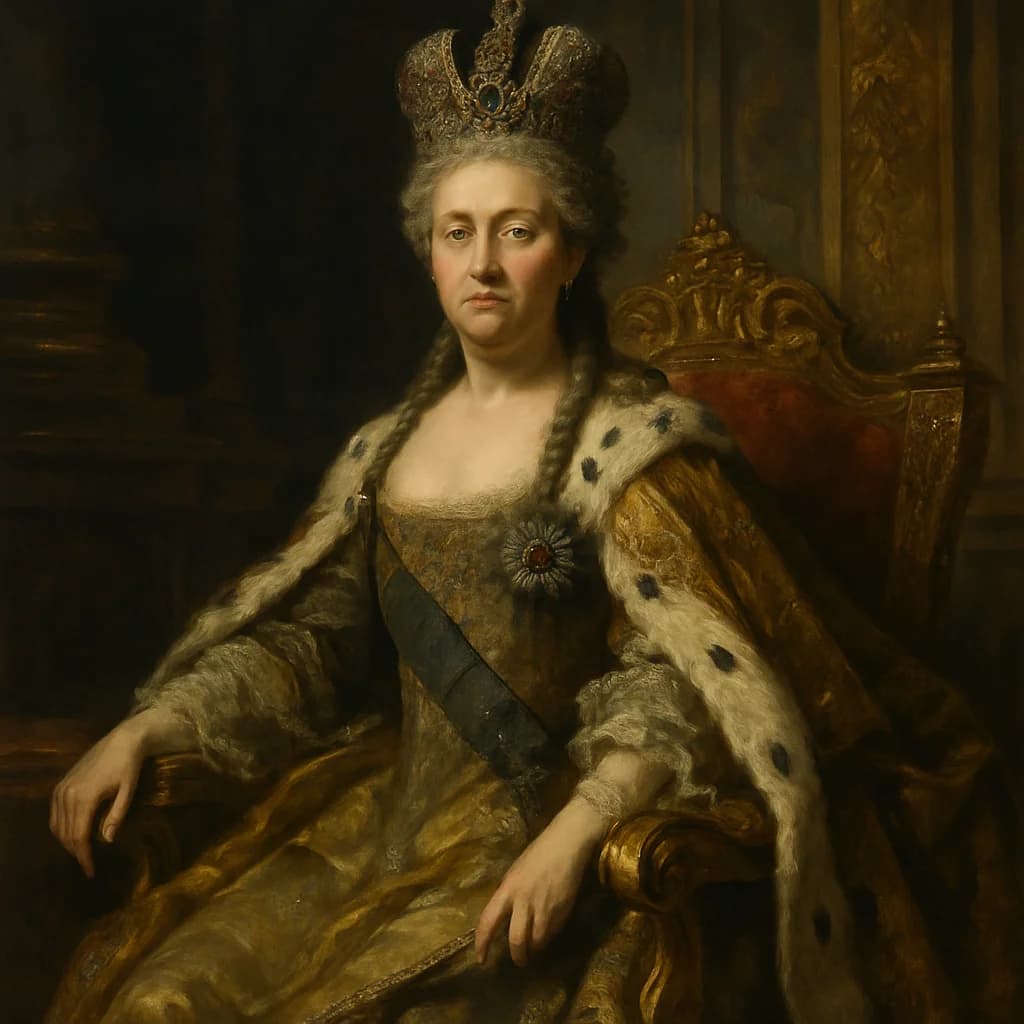
Catherine the Great
The German princess who couldn't speak Russian when she seized the Russian throne spent her first decade in power terrified that her own nobles would discover she had no legal right to rule.
Sophie Friederike Auguste arrived in Russia at fourteen, speaking no Russian and knowing nothing of Orthodox Christianity. The Prussian princess had been handpicked as a bride for the future Peter III, but within months she was plotting against everyone who had brought her there. She learned Russian by walking the palace corridors at night, repeating phrases until her German accent faded. She converted to Orthodoxy with suspicious enthusiasm, taking the name Catherine.
The woman history calls Catherine the Great ruled for thirty-four years, but her reign began with a lie that could have destroyed her at any moment. When she overthrew her husband Peter III in 1762, she had no legitimate claim to the throne. Her son Paul was the rightful heir, but Catherine simply... took power. For years, she lived in constant fear that the Senate or the Church would challenge her authority. She compensated by becoming more Russian than the Russians, commissioning propaganda that painted her as the natural successor to Peter the Great.
Her most brilliant political move wasn't military conquest but intellectual seduction. Catherine corresponded with Voltaire for fifteen years, carefully crafting her image as an Enlightened despot for European consumption. She wrote her own political theory, published essays on education, and founded Russia's first public library. But when Pugachev's Rebellion threatened her throne in 1773, she abandoned Enlightenment principles and crushed the uprising with medieval brutality.
The woman who claimed to govern by reason died clutching a pornographic novel, though court officials quickly replaced it with religious texts before announcing her death. She had spent three decades convincing Europe she was a philosopher queen while ruthlessly expanding Russian territory and entrenching serfdom. Her greatest deception wasn't fooling her enemies; it was fooling history itself about who she really was.
Catherine the Great wrote comedies and founded the Hermitage art collection by accidentally buying an entire European merchant's inventory when she meant to purchase just a few paintings.
Why untold: Her reputation as an Enlightened ruler obscured the fundamental illegitimacy of her reign and her masterful use of intellectual propaganda to mask autocratic brutality.
Ё: The Russian Letter Born From a Palace Coup
A fourteen-year-old girl sat on the Russian throne for six hours in 1774, and nobody outside the palace ever knew.
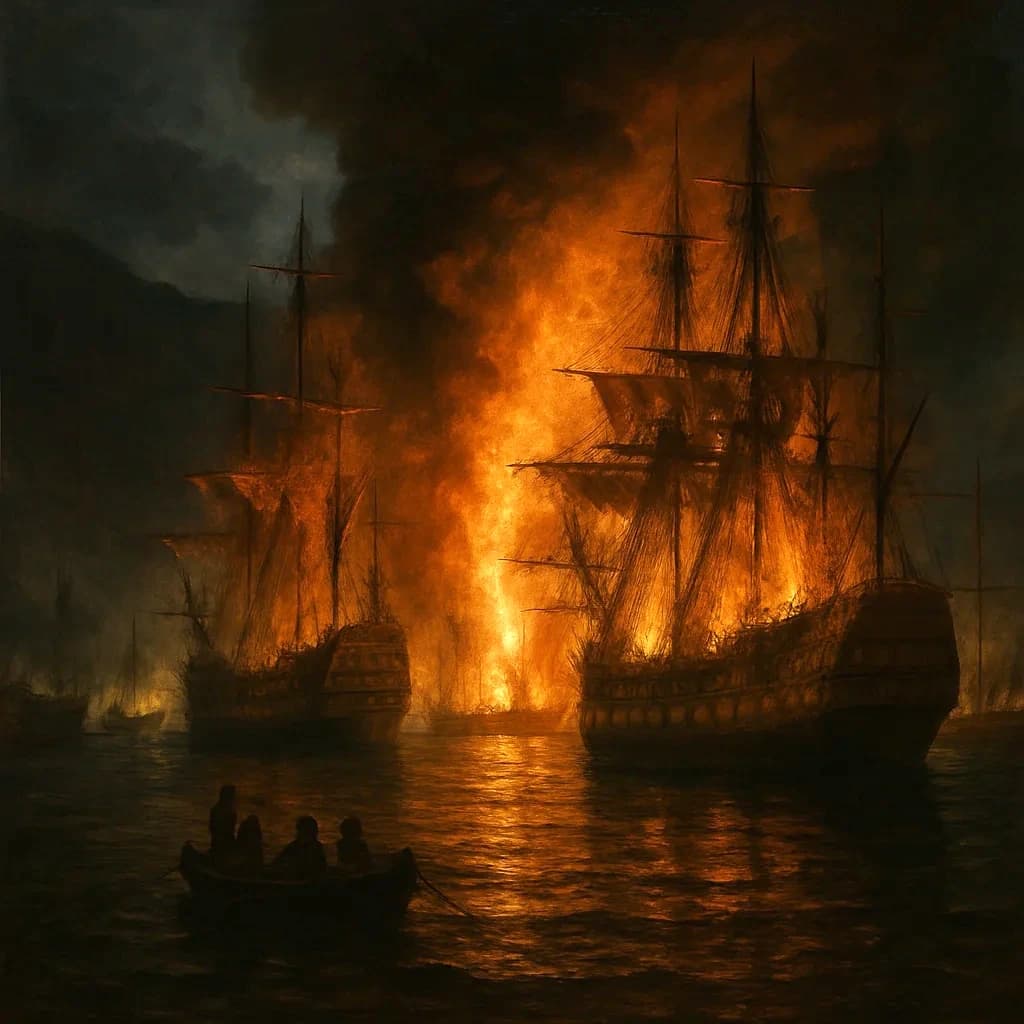
How Crooked Ledgers Burned a Navy
A single corrupt supply contract destroyed more Ottoman warships than any enemy cannon ever had.
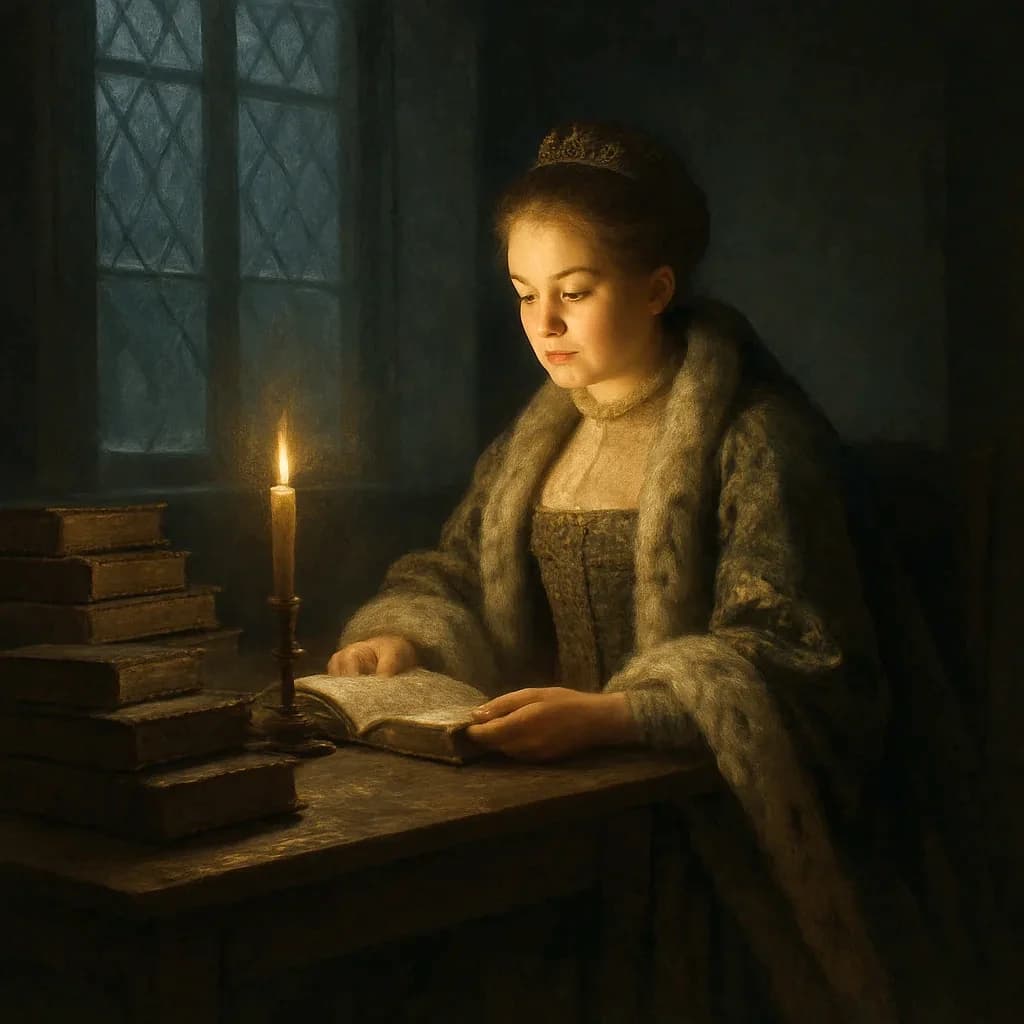
Catherine the Great: The Eighteen Years Before the Crown
Catherine the Great ruled Russia for thirty-four years. What nobody talks about is the decade before she was Catherine the Great.
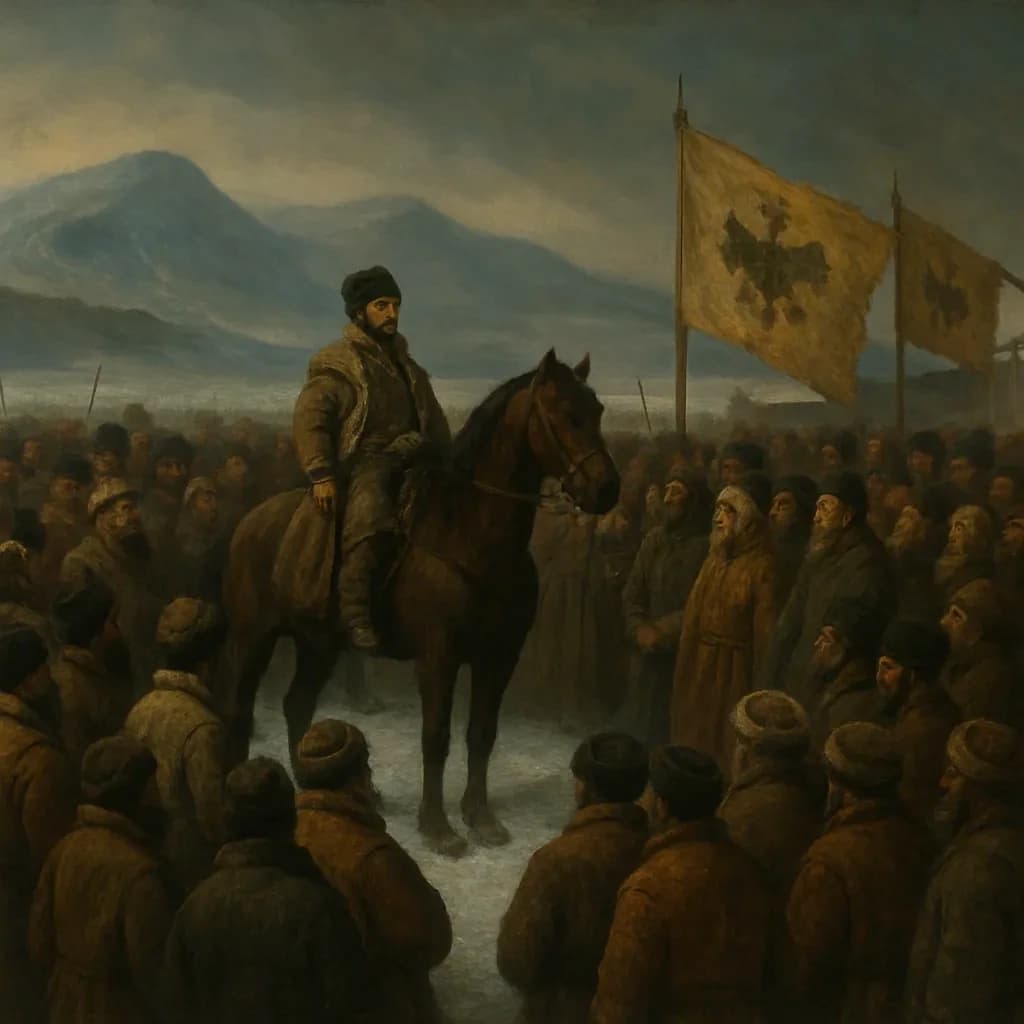
A Cossack's Lie Became Russia's Bloodiest Uprising
A forged document, delivered to the wrong man, sparked the bloodiest peasant uprising in Russian history.
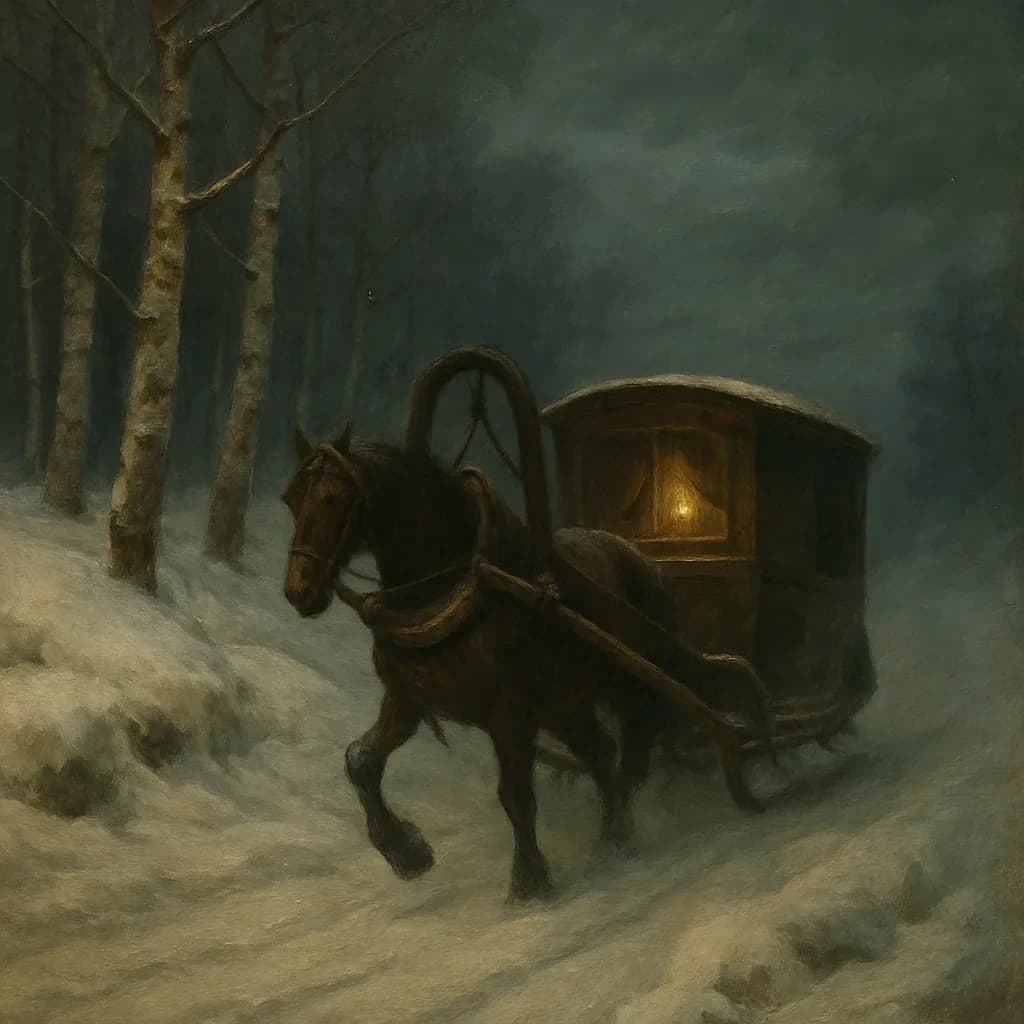
She Studied Russian by Lamplight to Win an Empire
A fourteen-year-old German princess rode through a blizzard toward Russia in the winter of 1744, and somewhere in that snowstorm, she decided to become someone else entirely.
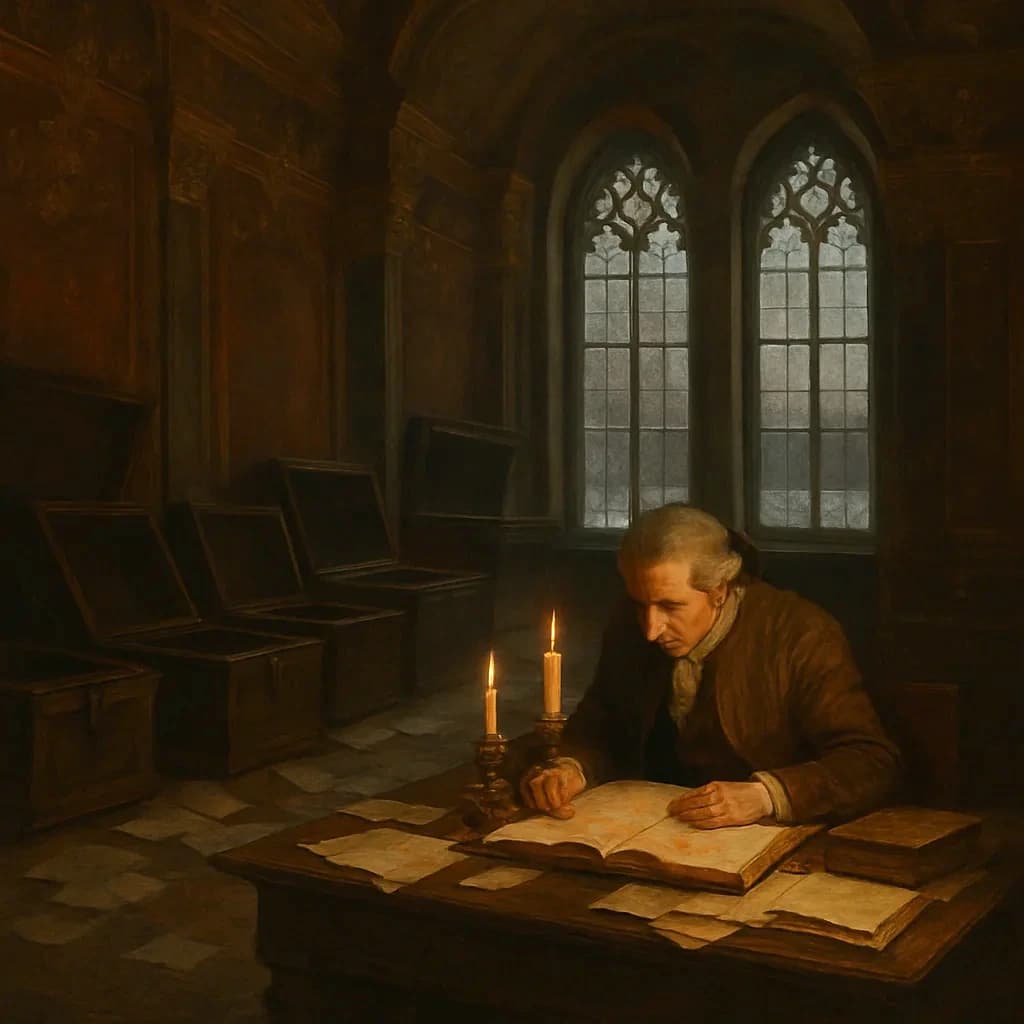
One Minister's Bad Math Bankrupted Poland
A Saxon count's miscalculation with Polish taxes created a financial black hole that devoured one of Europe's largest kingdoms.
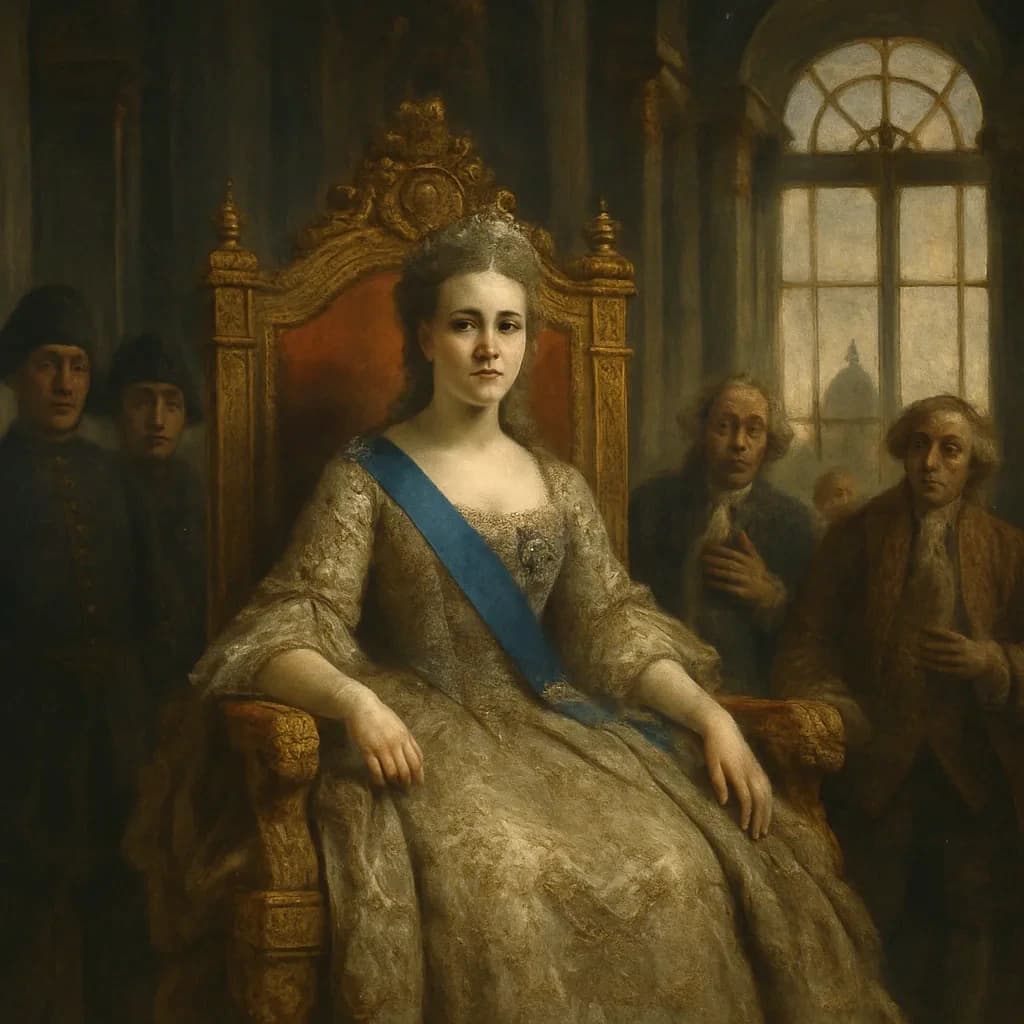
Empress of Russia for Ninety-Six Minutes
She ruled the world's largest empire for barely an hour and a half, then vanished from history completely.
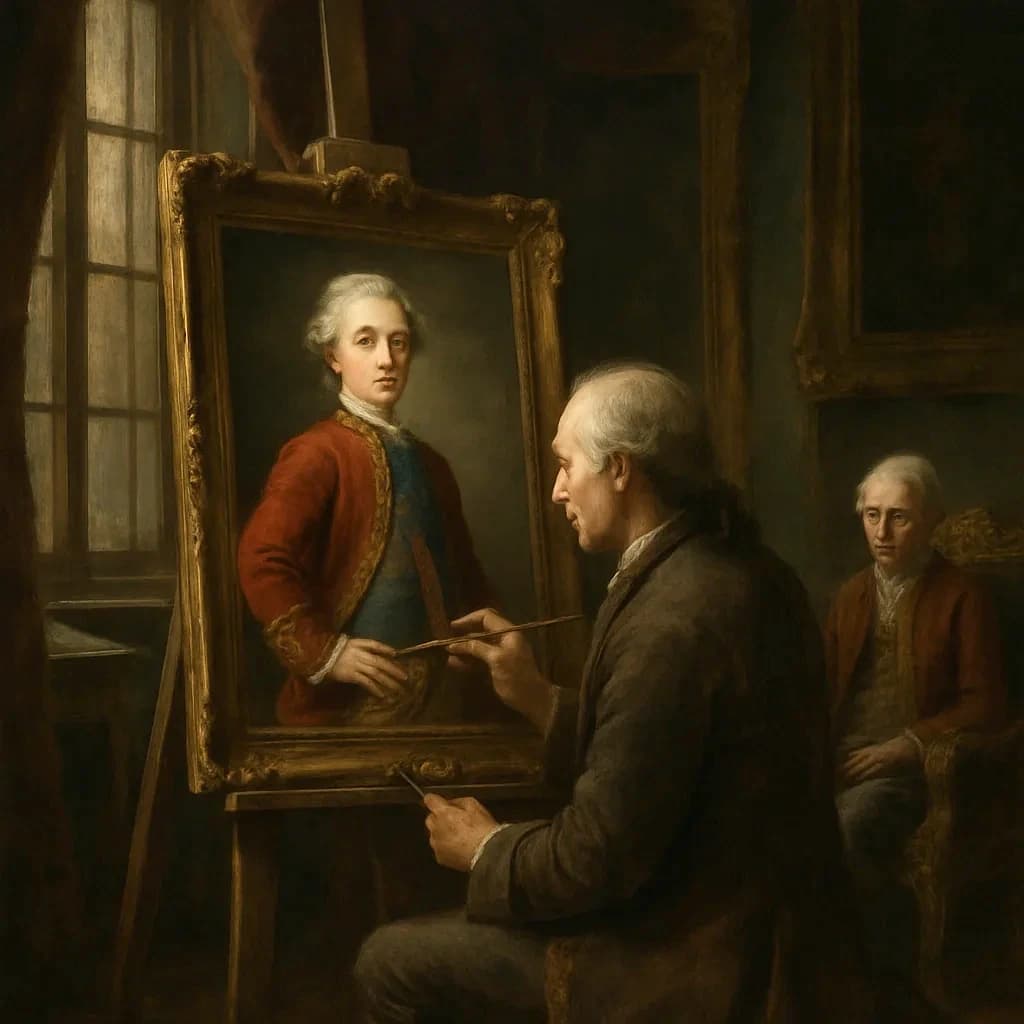
How a Flattering Portrait Created Catherine the Great
A young artist's unauthorized painting of a German prince became the most successful diplomatic coup in Russian history.
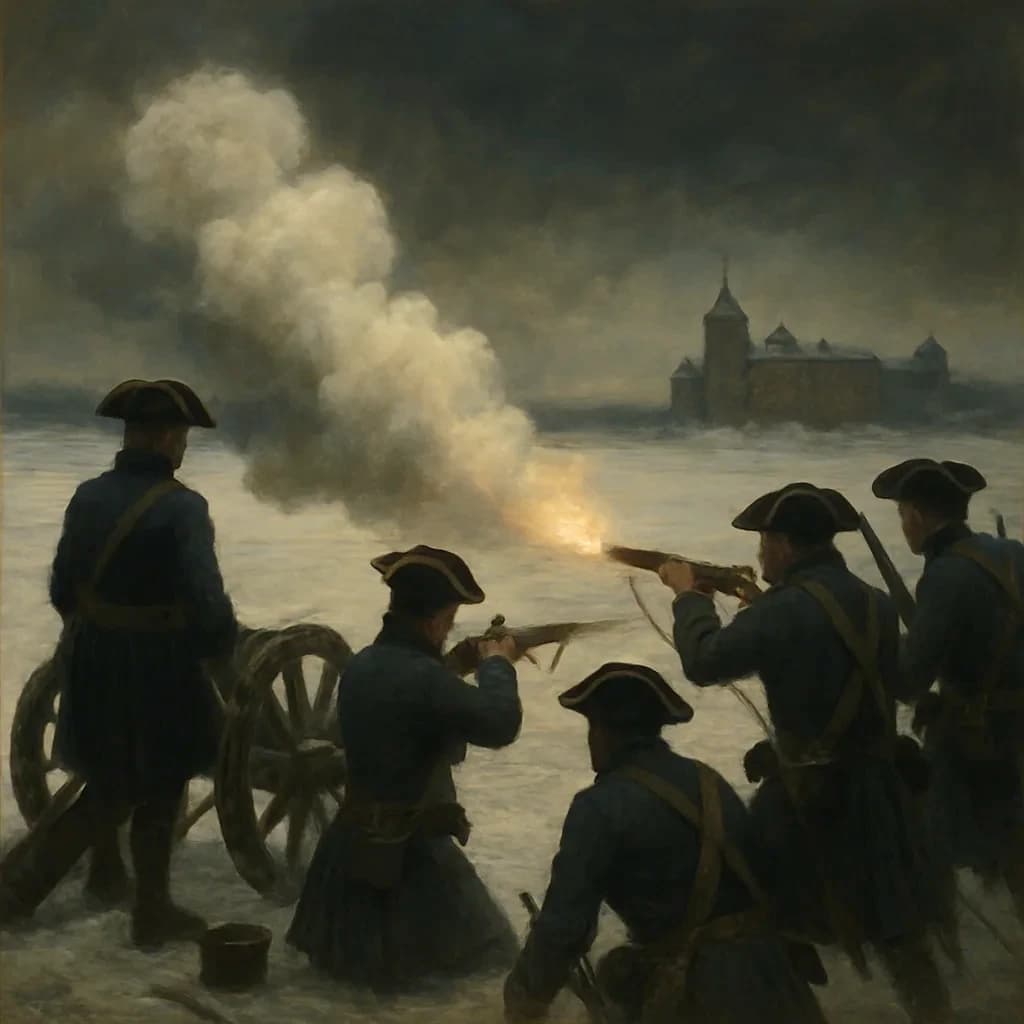
Gustav III Faked an Incident to Start a Real War
Two armies faced each other across a frozen river in 1788, but the enemy they fought wasn't the one they expected.
- Simon Sebag Montefiore, Catherine the Great & Potemkin: The Imperial Love Affair
- Robert K. Massie, Catherine the Great: Portrait of a Woman
- Isabel de Madariaga, Catherine the Great: A Short History