
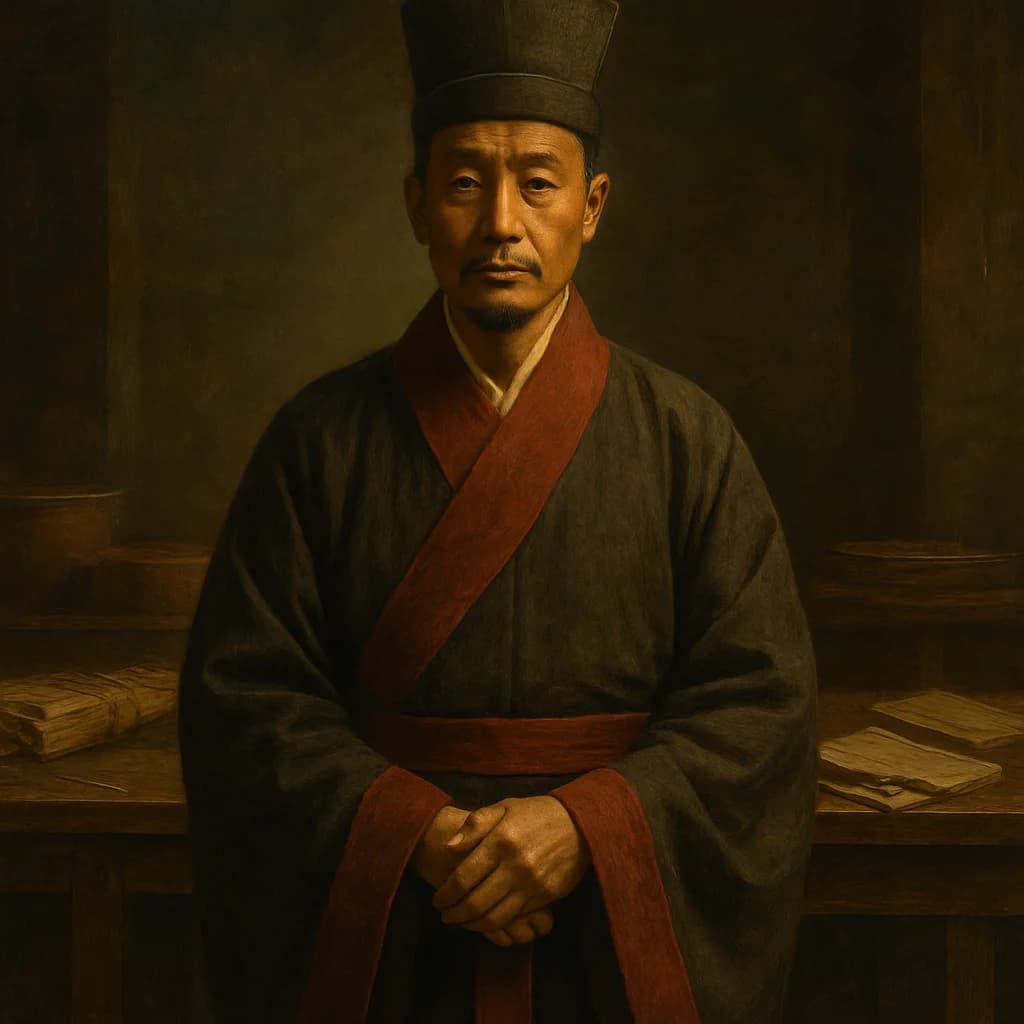
Cai Lun
The man who changed human civilization forever was trying to impress his boss.
Cai Lun stood in the imperial workshop in 105 CE, surrounded by the detritus of his experiments: soggy mulberry bark, hemp fibers, fishing nets reduced to pulp. As chief eunuch to Emperor He, he'd been tasked with finding a cheaper alternative to silk for official documents. The imperial treasury was bleeding money on expensive writing materials while bureaucracy exploded across the Han Empire.
What happened next wasn't a eureka moment. It was methodical trial and error by a court functionary who understood that advancement in the palace meant solving practical problems, not chasing glory. Cai Lun mixed his fiber soup with water, pressed it flat, and let it dry. The result looked promising: smooth, light, cheaper than silk but more durable than bamboo strips. He presented samples to the emperor with the bureaucrat's perfect pitch: this would save the state money while expanding literacy.
The emperor was pleased. Cai Lun was promoted. Neither man grasped that they'd just handed humanity its most powerful information technology until the printing press. Paper didn't just replace expensive writing materials. It democratized knowledge itself. Buddhist monks carried the technique along trade routes. Islamic scholars refined it. European mills eventually mass-produced it. Every revolution, every renaissance, every scientific breakthrough for the next millennium would unfold on descendants of Cai Lun's fiber sheets.
Yet Cai Lun himself met a distinctly earthbound end. When Emperor He died and palace politics shifted, the eunuch who'd revolutionized human communication was caught on the wrong side of a succession crisis. Rather than face execution, he took poison in 121 CE. The man who'd given the world paper chose to exit it on his own terms, a final act of control from someone who'd spent his career navigating the treacherous currents of imperial favor.
Cai Lun's original paper recipe included materials so random (old fishing nets, hemp waste, tree bark, and rags) that he was essentially the world's first recycling entrepreneur.
Why untold: Eastern innovations are often reduced to anonymous cultural achievements rather than credited to specific inventors, especially when those inventors were court eunuchs.
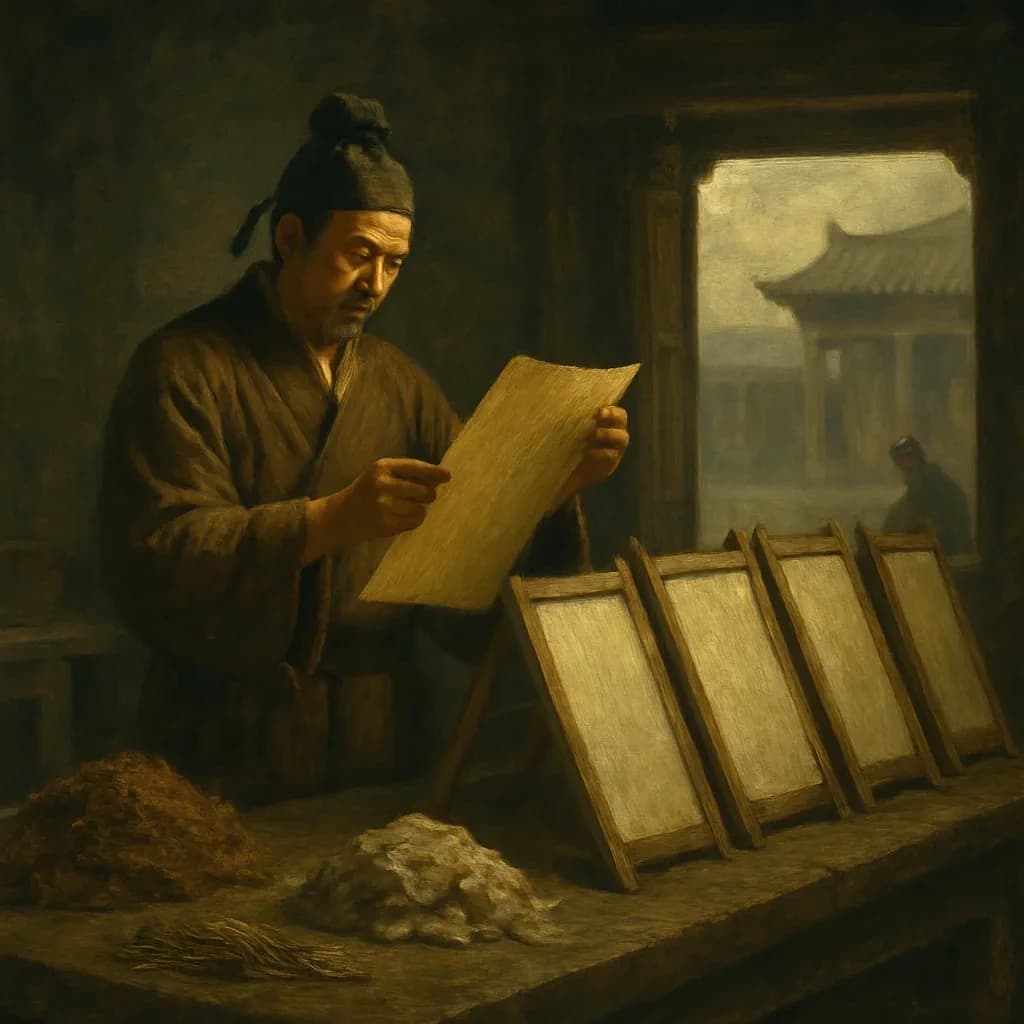
One Sheet of Mulberry Bark Changed Everything
A single sheet of mulberry bark ended the age of pyramids and started the age of ideas.
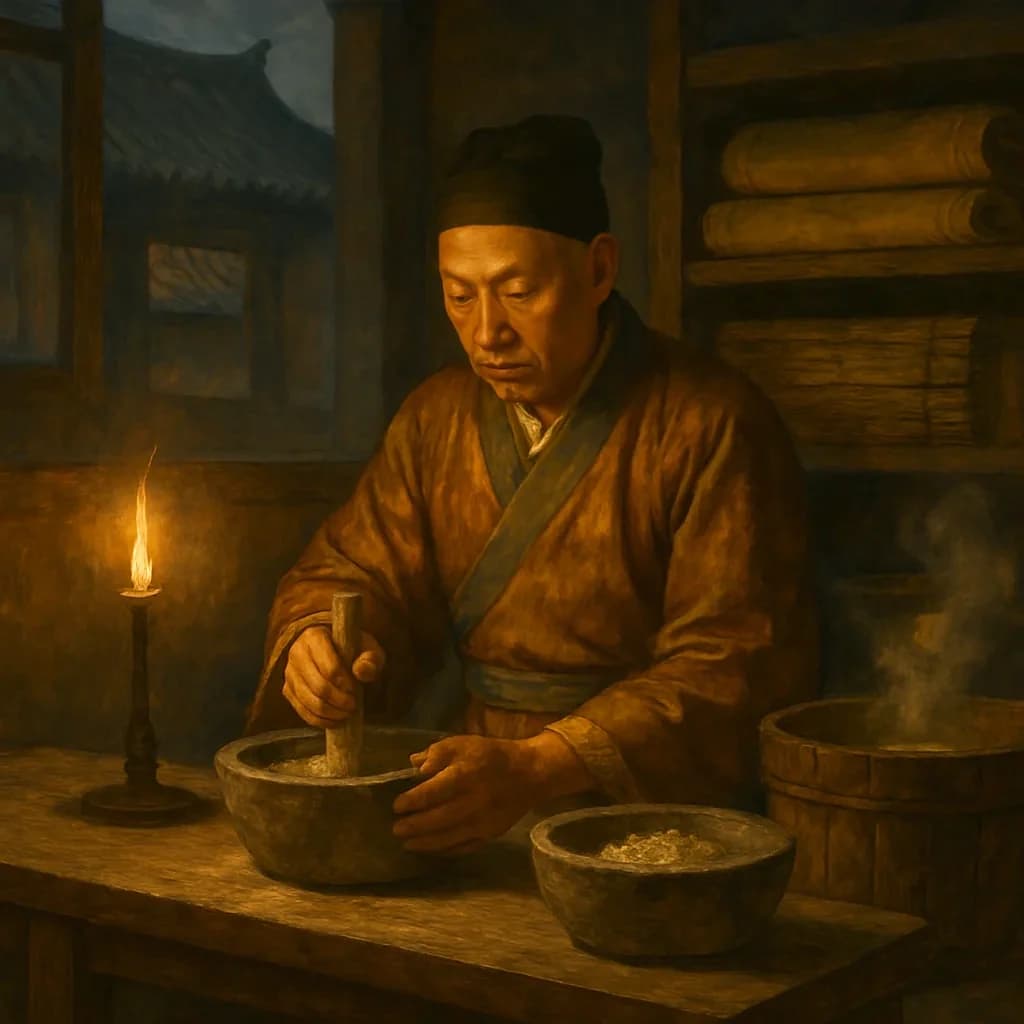
A Midnight Experiment With Tree Bark Toppled Empires
A scholar's midnight experiment with tree bark ended up toppling empires that had never heard his name.
- Needham, Joseph. Science and Civilisation in China, Volume 5: Chemistry and Chemical Technology
- Hunter, Dard. Papermaking: The History and Technique of an Ancient Craft
- Tsien, Tsuen-Hsuin. Written on Bamboo and Silk: The Beginnings of Chinese Books and Inscriptions