
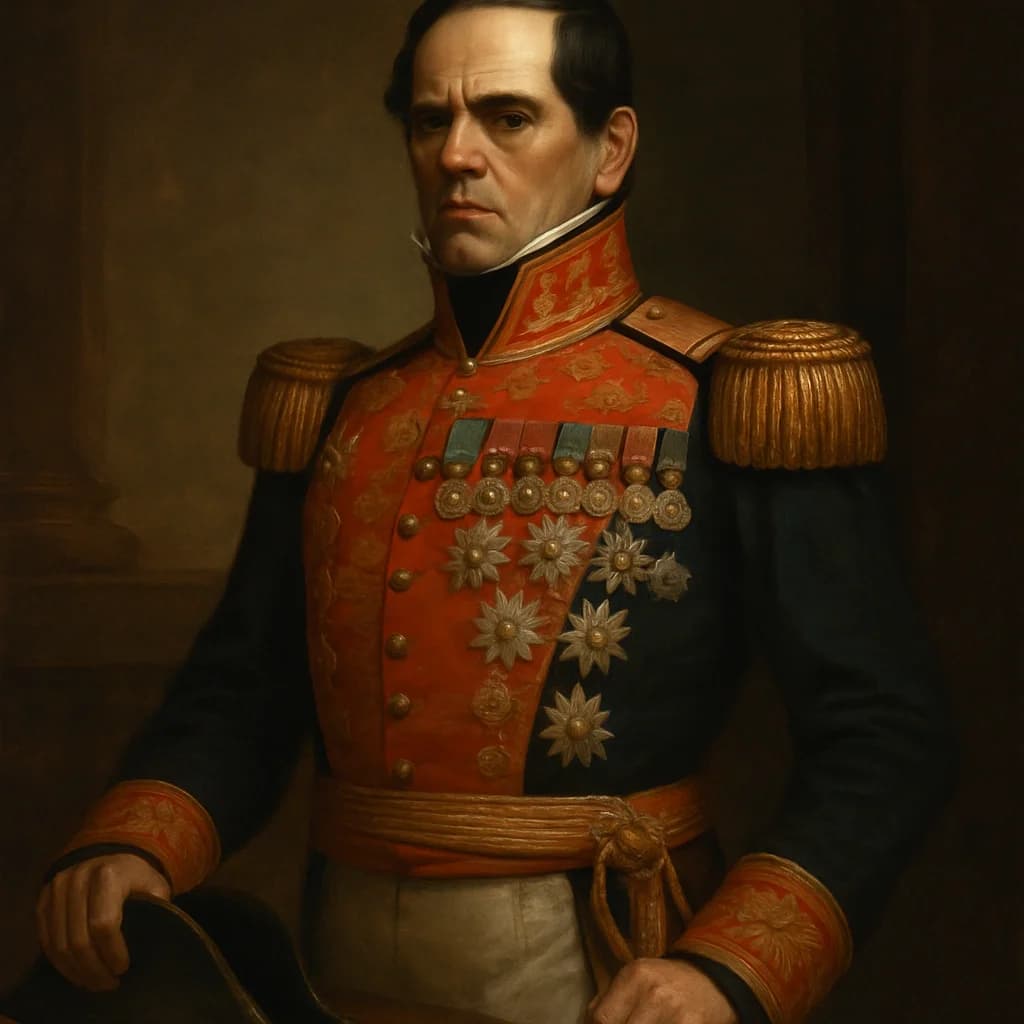
Antonio López de Santa Anna
He lost the same country three times, kept coming back for more, and died broke in the city he once ruled like a king.
Antonio López de Santa Anna was president of Mexico eleven times. Not eleven terms: eleven separate occasions, across four decades, as if the country kept forgetting what happened the last time it let him in. Born in Jalapa, Veracruz, in 1794, he had the peculiar gift of surviving every catastrophe he personally created, then reappearing months later as the solution.
The leg is where most people stop. At the Battle of Veracruz in 1838 (the so-called Pastry War, a French naval bombardment triggered partly by a French baker's claim that Mexican soldiers had looted his shop), Santa Anna took a cannonball to the left ankle. The limb was amputated and buried with full military honors in Mexico City's Santa Paula cemetery. He later had it exhumed, paraded through the capital on a carriage, and installed in an urn beneath a monument. When a mob finally tired of him in 1844, they dug the leg back up, dragged it through the streets, and screamed insults at it. A man's amputated limb became a political effigy. This was the level at which Santa Anna operated.
What gets lost in the Texas mythology is how relentlessly he kept fighting after San Jacinto. The 1836 capture was supposed to end him. He signed the Treaties of Velasco under duress and was shipped to Washington to meet Andrew Jackson, essentially a prisoner. He returned to Mexico in disgrace. Then the Pastry War leg happened, and somehow that cannonball rebuilt him. By 1842, Mexican forces under his command had retaken San Antonio twice. Not a symbolic raid: occupation, twice, within months. The independence of Texas was far less settled than American schoolbooks suggest, and Santa Anna was the reason why.
He sold the Mesilla Valley to the United States in 1853 (the Gadsden Purchase, 29,000 square miles of what is now southern Arizona and New Mexico), partly to fund his own government and personal debts. He died in Mexico City in 1876, nearly blind, almost entirely forgotten, having outlived his own legend by about thirty years. The country he had shaped, sold, lost, and recaptured in pieces had simply moved on without him.
Santa Anna spent part of his final exile on Staten Island, New York, where he introduced his secretary to chicle (the sap of the sapodilla tree he chewed habitually), which eventually led to the commercial development of chewing gum.
Why untold: Santa Anna's role as the villain of the Alamo narrative flattened a genuinely complex forty-year career into a single defeat, making it easy for both American and Mexican historiography to ignore the ways he shaped the territorial boundaries of modern North America.
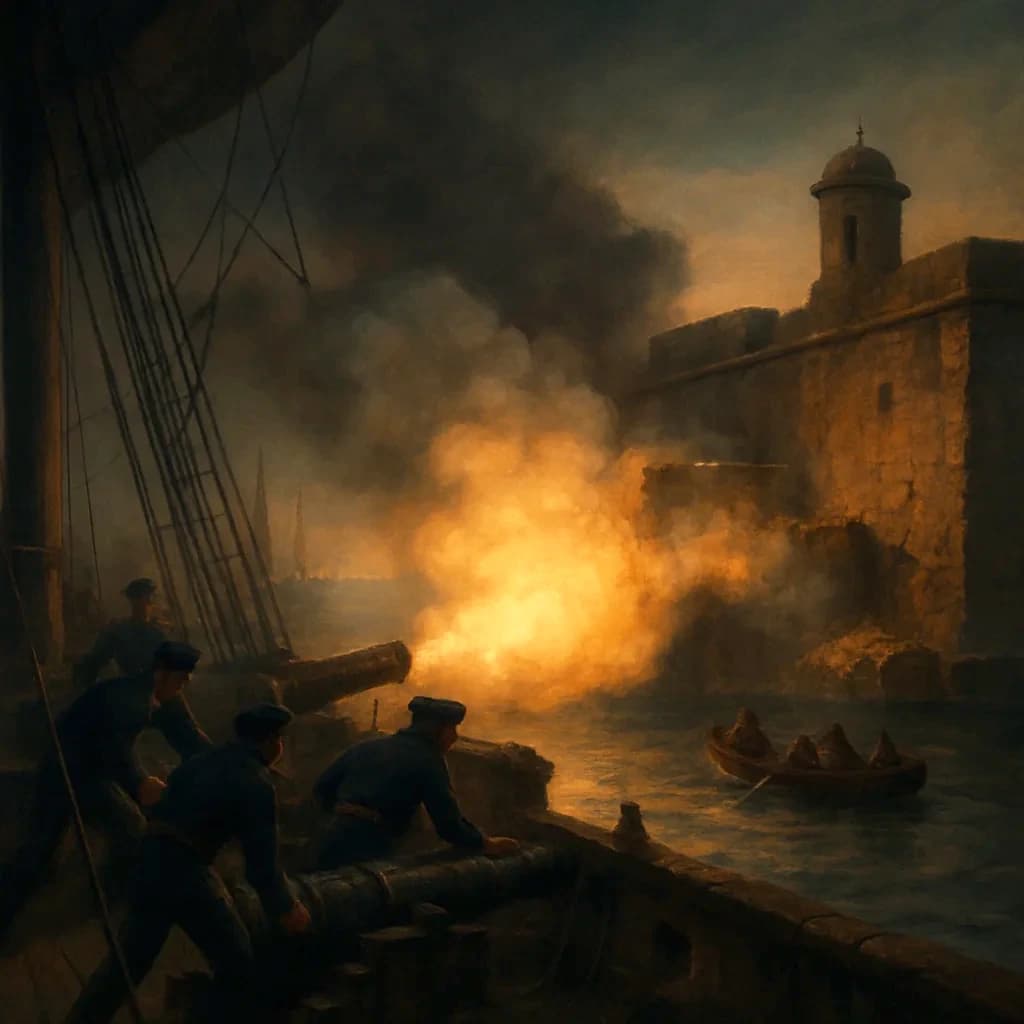
The Pastry War: How a Looted Bakery Started an Invasion
A French confectioner's wrecked pastry shop became the pretext for a war that would cost a Mexican general his leg.
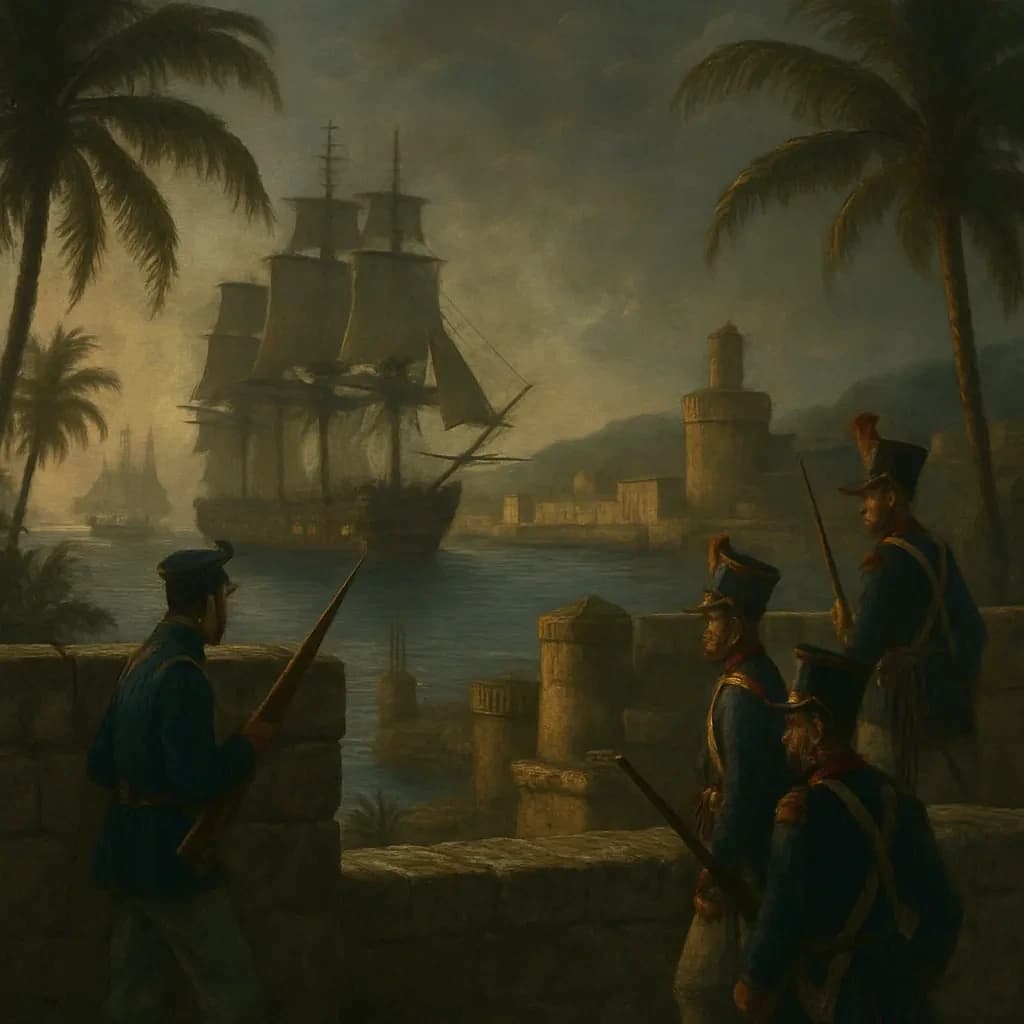
A Pastry Chef's Unpaid Bill Sent France to War with Mexico
A French pastry chef's unpaid bill in 1838 triggered an international war over 60,000 pesos.
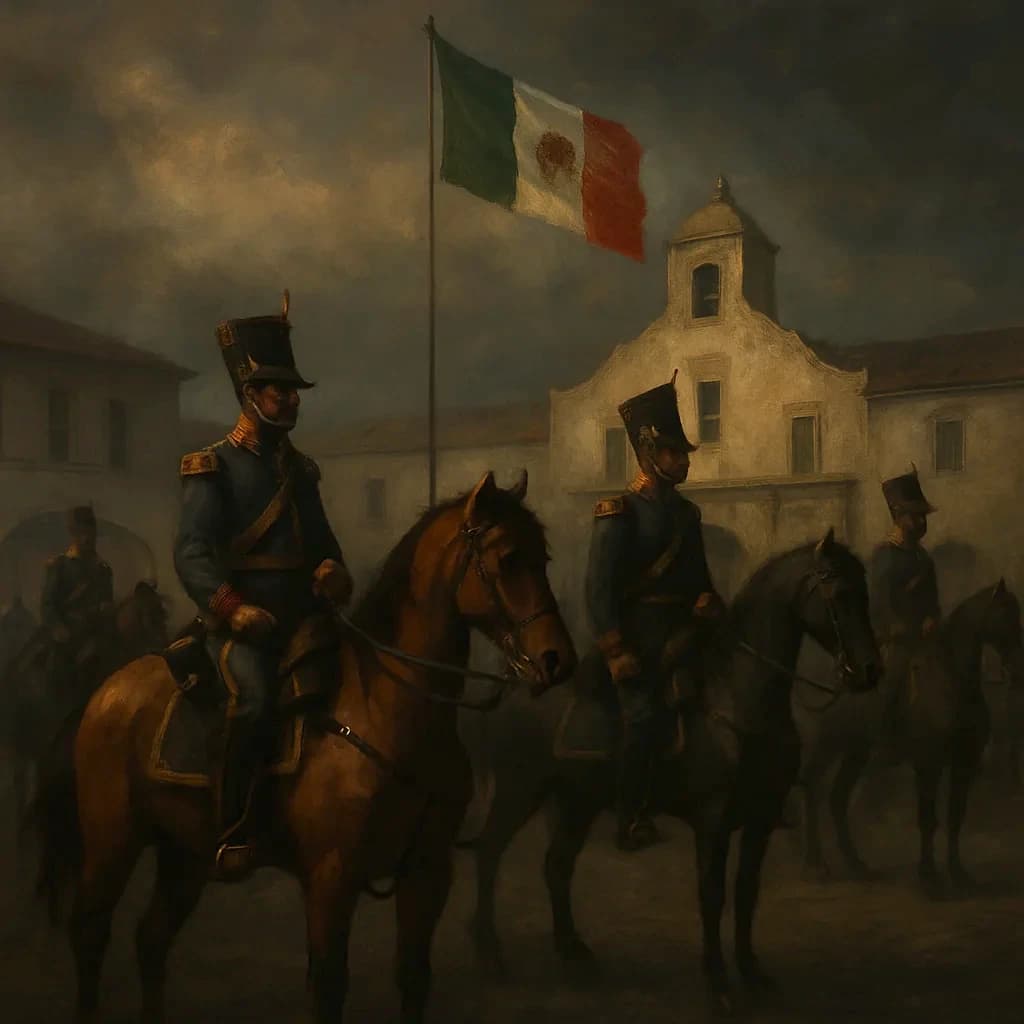
Mexico Took San Antonio Back, Twice
A Mexican general captured San Antonio in 1842 and held it for nine days, two years after Texas supposedly won its independence.
- Will Fowler, Santa Anna of Mexico (University of Nebraska Press, 2007)
- Enrique Krauze, Mexico: Biography of Power (HarperCollins, 1997)
- David J. Weber, The Mexican Frontier, 1821-1846: The American Southwest Under Mexico (University of New Mexico Press, 1982)