
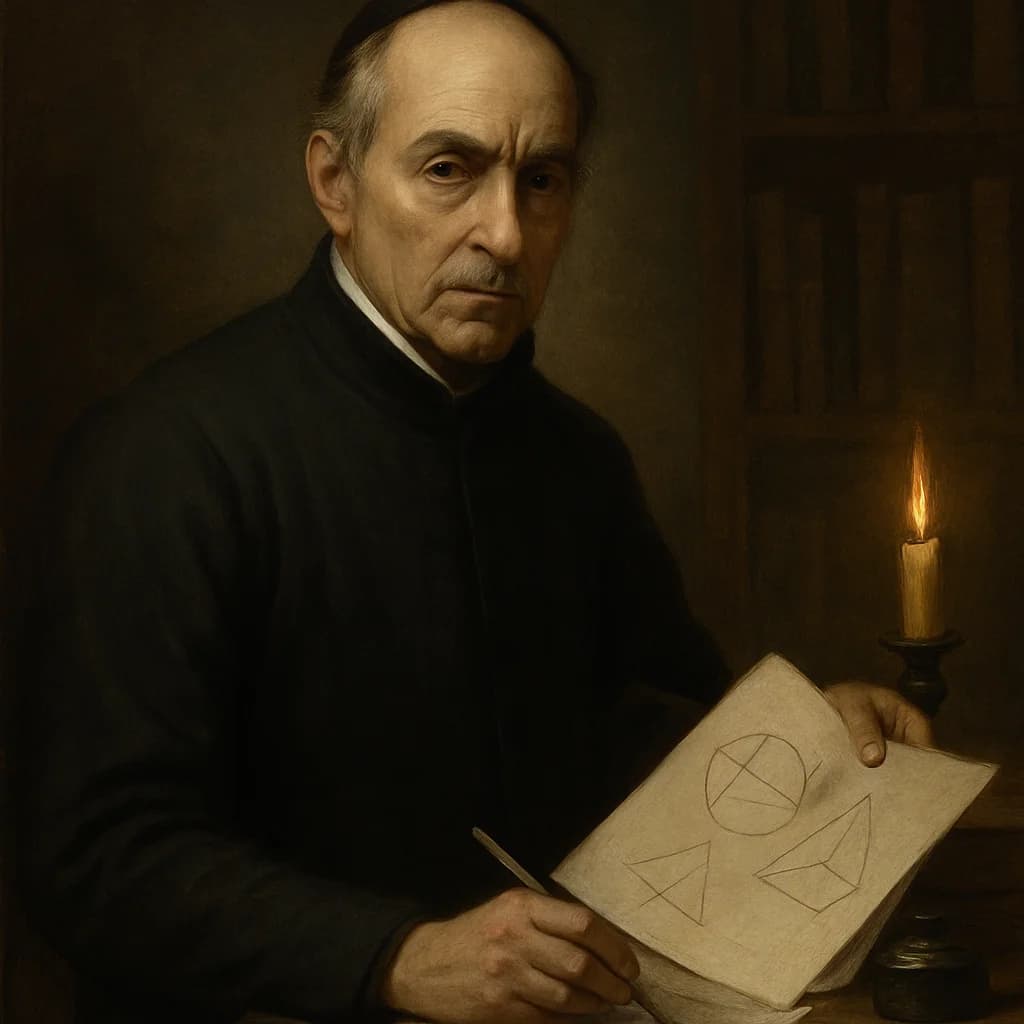
António Vieira
The most dangerous Jesuit in Portuguese history used mathematics to prove God wanted slavery abolished, and accidentally ignited a revolution that terrified three continents.
António Vieira wielded calculus like a weapon against empire. In 1654, this Portuguese priest stood before the Inquisition clutching sheets of mathematical proofs that slavery violated divine geometry. Using Euclidean principles and biblical numerology, he demonstrated that forced labor created economic paradoxes that defied God's perfect mathematical order. The Inquisition wasn't amused.
But Vieira's calculations had already escaped Lisbon's libraries. Smuggled aboard sugar ships, his mathematical treatises reached Brazil's plantations, where literate slaves discovered that a European priest had provided scientific proof of their liberation. The equations spread like wildfire through underground networks, translated into dozens of African languages. When the Palmares Quilombo erupted in 1655, rebels carried copies of Vieira's formulas as sacred texts, believing mathematical law superseded imperial law.
The Portuguese crown panicked. Here was insurrection armed not with machetes but with mathematics, infinitely more dangerous because it couldn't be confiscated. Vieira found himself exiled to Rome, his books burned in three separate auto-da-fé ceremonies. But the damage was irreversible. His proof that slavery was geometrically impossible had given rebels something no amount of military force could destroy: the certainty that mathematics itself demanded their freedom.
Vieira spent his final decades calculating the precise date of Christ's return: 1666, he determined, based on the mathematical patterns hidden in Revelation. He died in 1697, still convinced that numbers contained divine truth. He never learned that his slavery calculations had inspired revolts from Angola to Macau, each rebellion invoking the Jesuit's sacred geometry.
Vieira's mathematical proofs against slavery were so convincing that the Dutch West India Company secretly commissioned Leiden mathematicians to find errors in his calculations, and failed.
Why untold: His mathematical approach to theology was suppressed by both the Inquisition and later secular historians who preferred to remember him only as a conventional missionary.
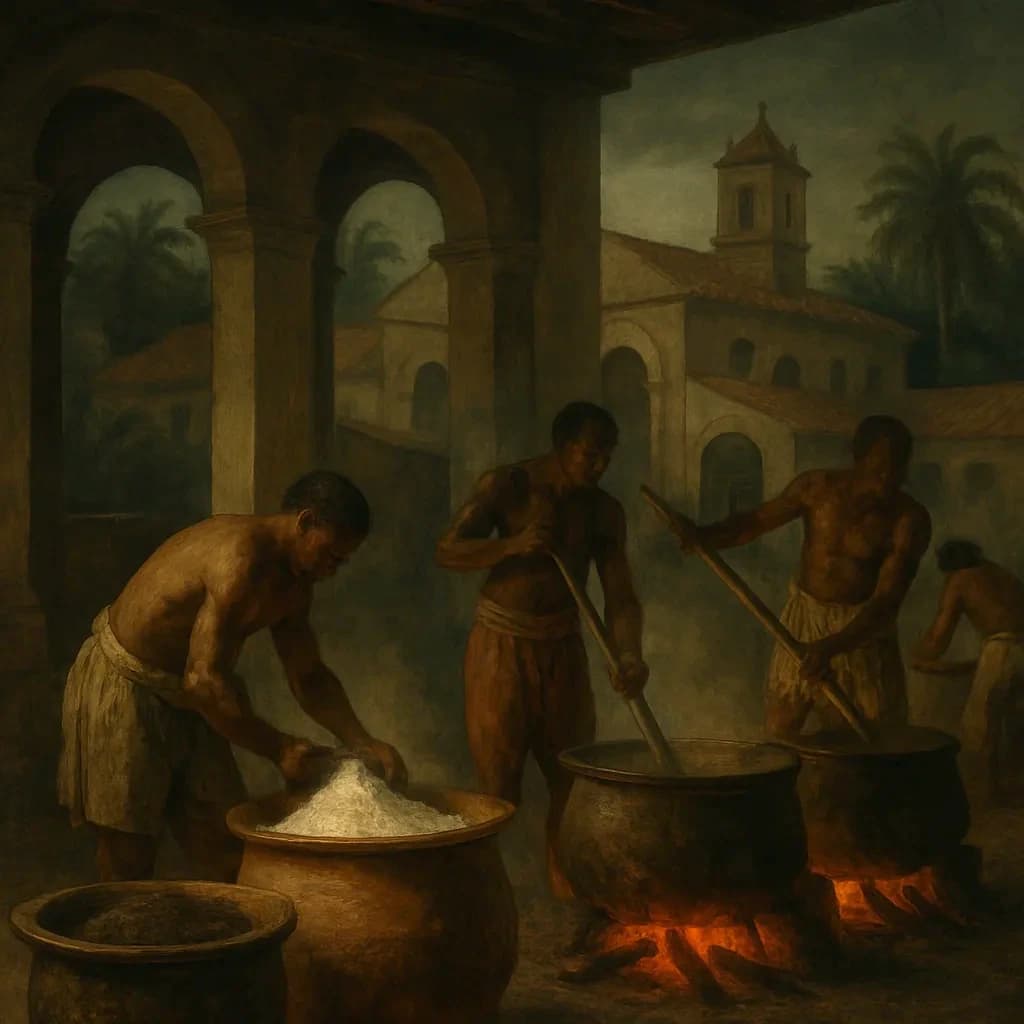
Sweetened With Lead: How Brazil's Whitest Sugar Killed 15,000
A Portuguese doctor's sugar-refining breakthrough looked like pure genius, until it killed more people than any plague.
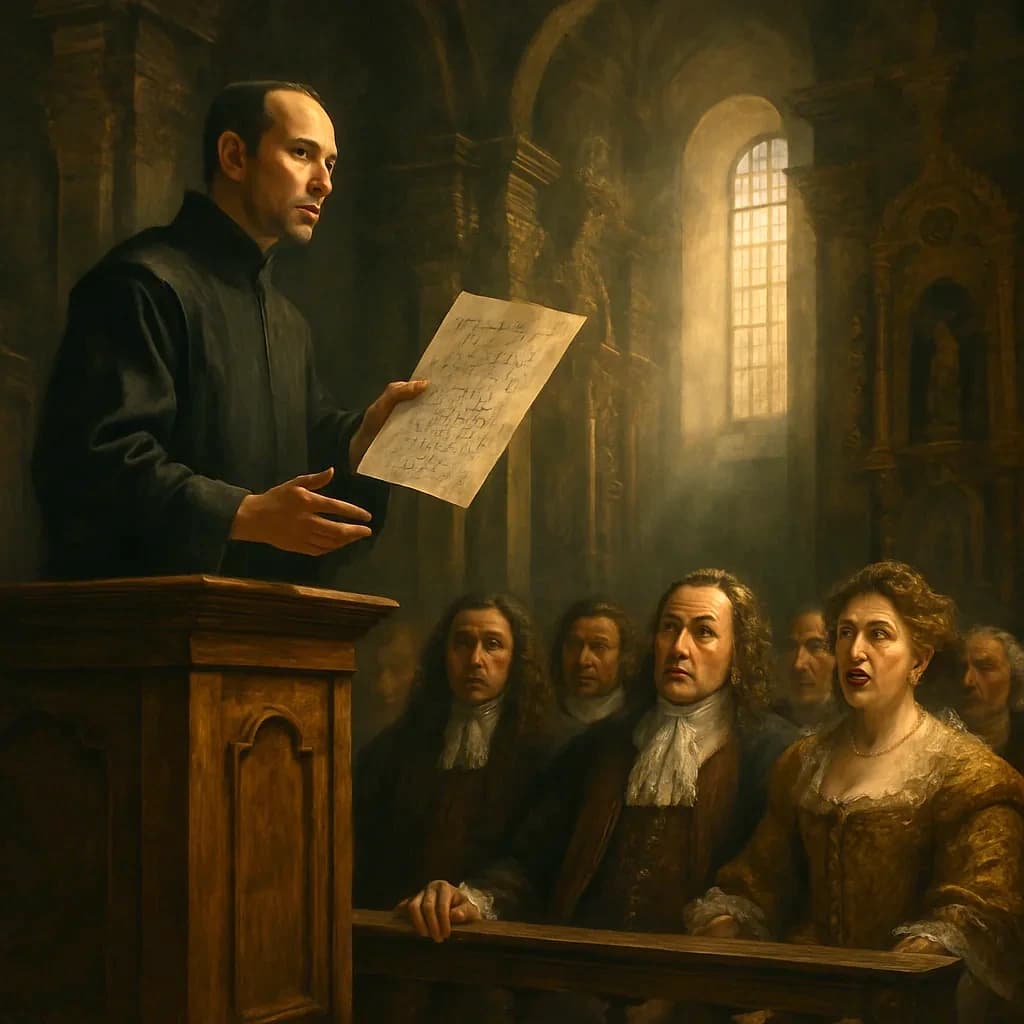
A Math Proof Against Slavery, and the Revolt It Lit
A Jesuit mathematician set out to prove that slavery was mathematically impossible, and the result triggered the largest slave revolt in history.
- José Eduardo Franco, 'António Vieira and the Inquisition' (University of Lisbon Press, 2008)
- Stuart Schwartz, 'Sugar Plantations in the Formation of Brazilian Society' (Cambridge University Press, 1985)
- Thomas Cohen, 'The Fire of Tongues: António Vieira and the Missionary Church' (Stanford University Press, 1998)