
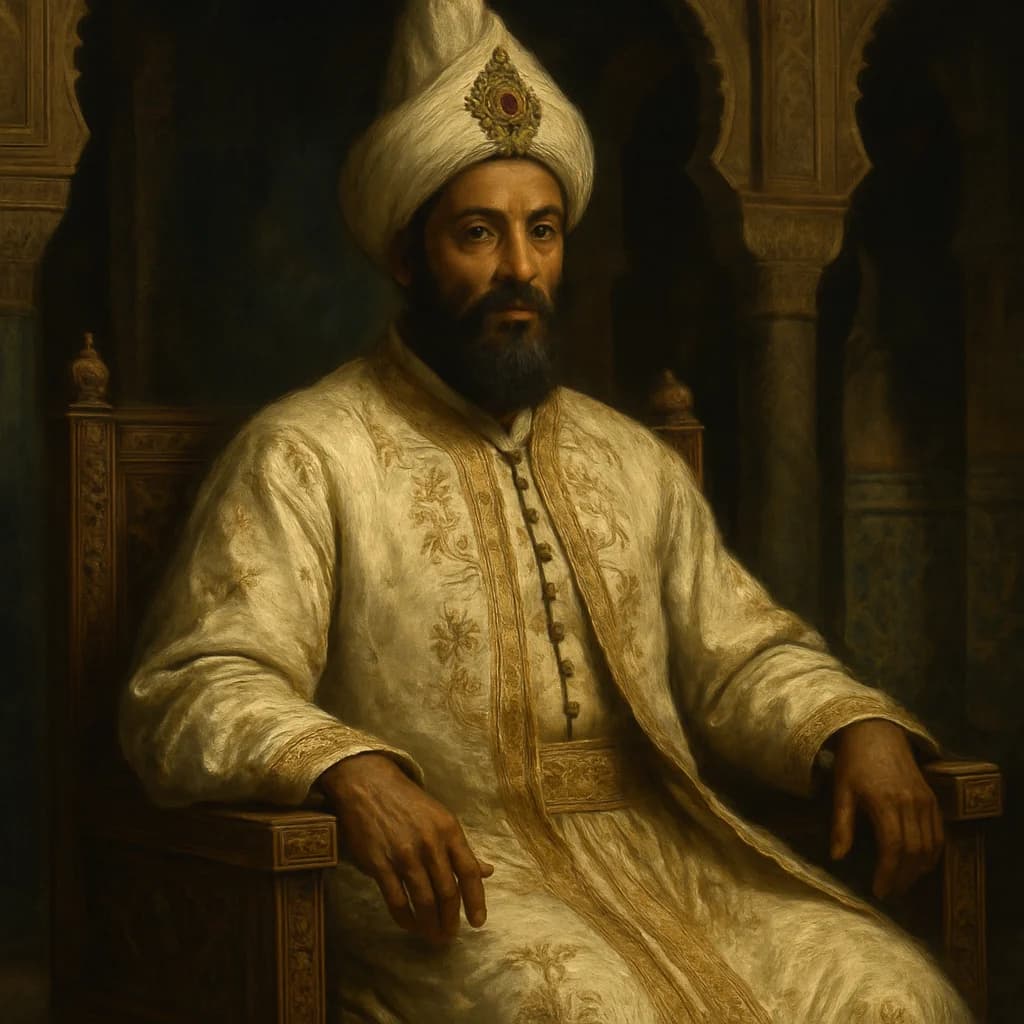
Ahmad al-Mansur
The Moroccan sultan who conquered three empires and negotiated with Elizabeth I died convinced he owned a mountain of pure gold that never existed.
Ahmad al-Mansur earned his name ("the Victorious") by doing something no North African ruler had managed in centuries: he made Europe beg. After defeating a massive Portuguese invasion at the Battle of the Three Kings in 1578, al-Mansur didn't just capture territory. He captured King Sebastian of Portugal himself, along with thousands of nobles whose ransom money transformed Morocco overnight into one of the world's wealthiest nations.
Suddenly flush with Portuguese gold, al-Mansur began playing a game few sultans dared attempt: treating European monarchs as equals. He exchanged ambassadors with Elizabeth I of England, offering military alliance against their mutual Spanish enemy. English merchants flocked to Moroccan ports, and al-Mansur's court became a destination for European diplomats bearing gifts and promises. But the Portuguese ransoms were finite, and al-Mansur's appetite for grand projects was not.
This is where the gold obsession began consuming him. Medieval Arabic texts spoke of vast gold mines south of the Sahara, in the legendary empire of Songhai. Al-Mansur became convinced these mines could fund his dreams of Mediterranean conquest indefinitely. In 1591, he dispatched 4,000 soldiers (many of them Spanish prisoners armed with the latest muskets) on an impossible march across the Sahara to capture Timbuktu and its supposed gold.
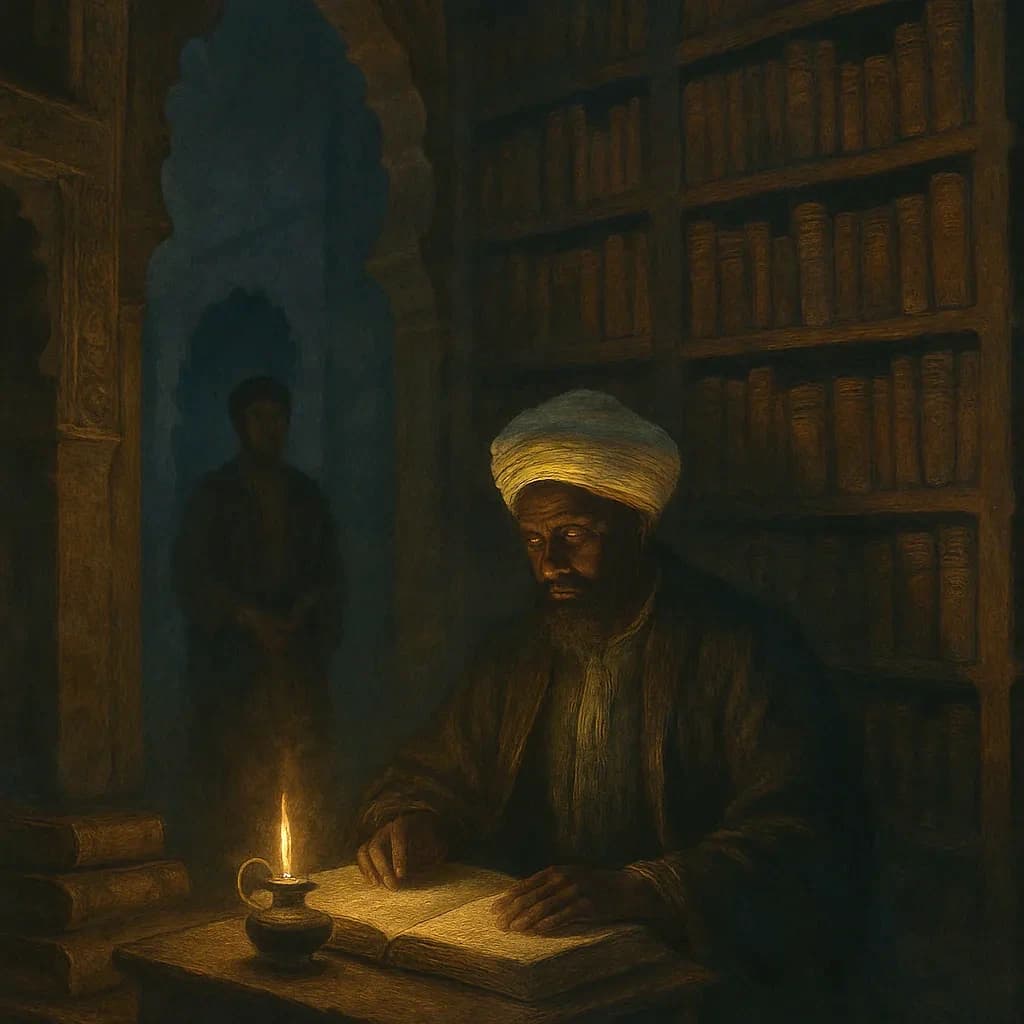
The army reached Timbuktu, scattered its defenders, and sent word of victory back to Marrakech. But instead of gold mines, they found libraries. Timbuktu's real wealth lay in hundreds of thousands of manuscripts: scientific treatises, philosophical works, astronomical charts that European scholars wouldn't discover for centuries. Al-Mansur's soldiers, expecting to load camels with gold ingots, instead found themselves governing a city of books. The sultan died in 1603, still waiting for the Saharan gold that existed mainly in medieval imagination, while his armies slowly withered in the desert, guarding the world's most valuable library without knowing it.
Al-Mansur's palace in Marrakech used so much Italian marble and crystal that Venetian merchants established a permanent trading post just to supply his construction projects.
Why untold: His story gets overshadowed by the Ottoman Empire's expansion, obscuring how a North African ruler briefly rivaled European powers as an equal diplomatic partner.
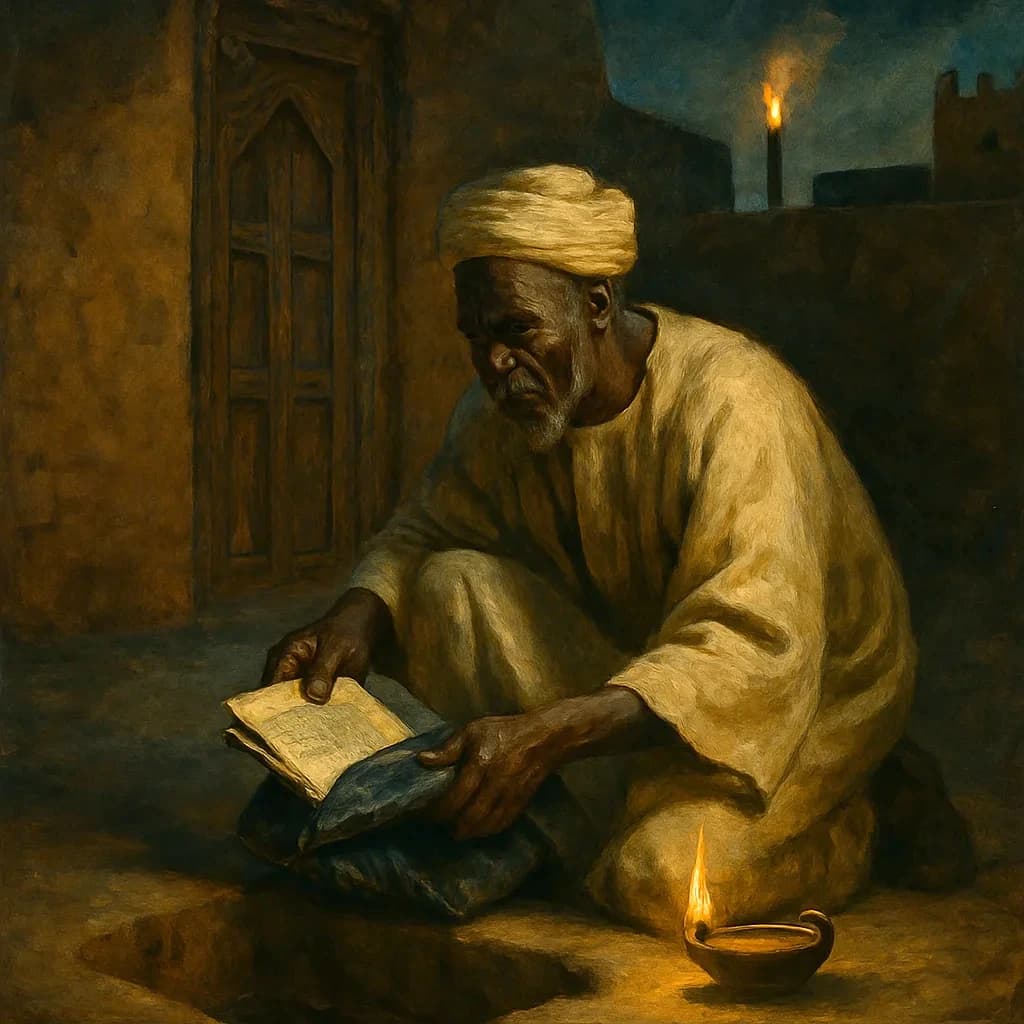
He Told the Soldiers His Library Was a Latrine
When the Moroccan army sacked Timbuktu in 1591, one scholar hid his library in a ditch and told the soldiers it was a latrine.
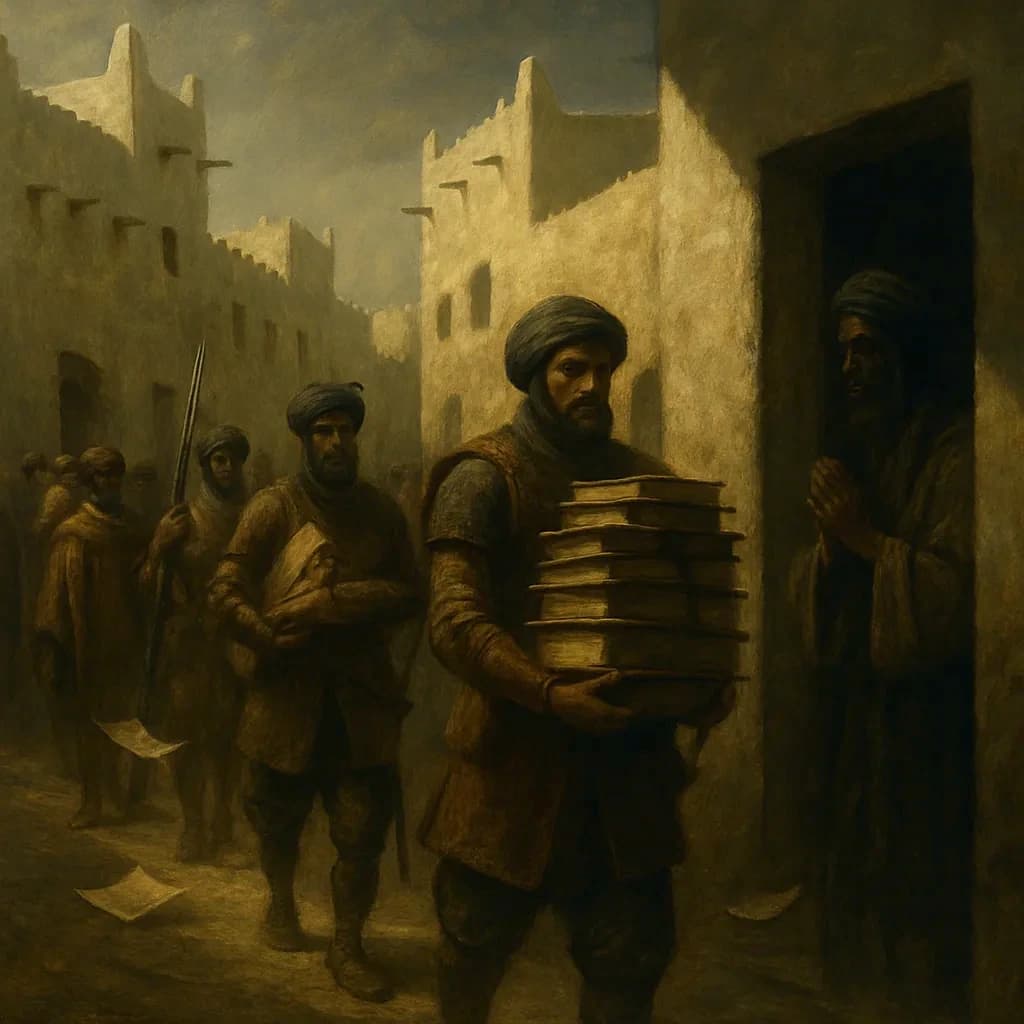
When an Unpaid Army Looted Timbuktu's Libraries
A bankrupt Moroccan sultan couldn't pay his army, so he let them loot a library instead, and erased six centuries of African scholarship in an afternoon.
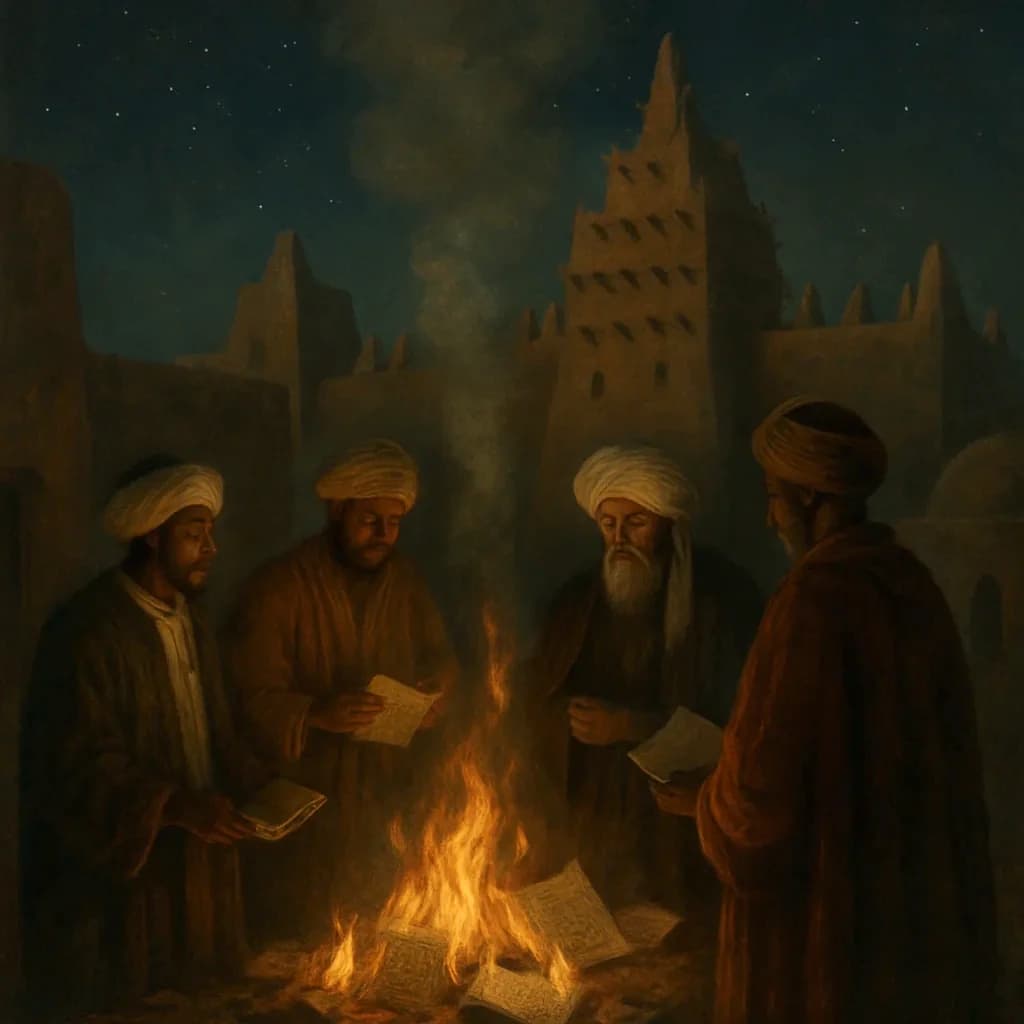
Timbuktu Burned Its Own Libraries at Midnight
The Moroccan army that conquered Timbuktu in 1591 came for gold, but the city's scholars were already feeding something far more valuable to the flames.
Timbuktu Held More Books Than Any City on Earth
While Europeans were burning books as heretical, a West African city held more manuscripts than anywhere else on Earth.
- Mercedes García-Arenal, Ahmad al-Mansur: The Beginnings of Modern Morocco (2009)
- François-Xavier Fauvelle, The Golden Rhinoceros: Histories of the African Middle Ages (2018)
- Nabil Matar, In the Lands of the Christians: Arabic Travel Writing in the Seventeenth Century (2003)