
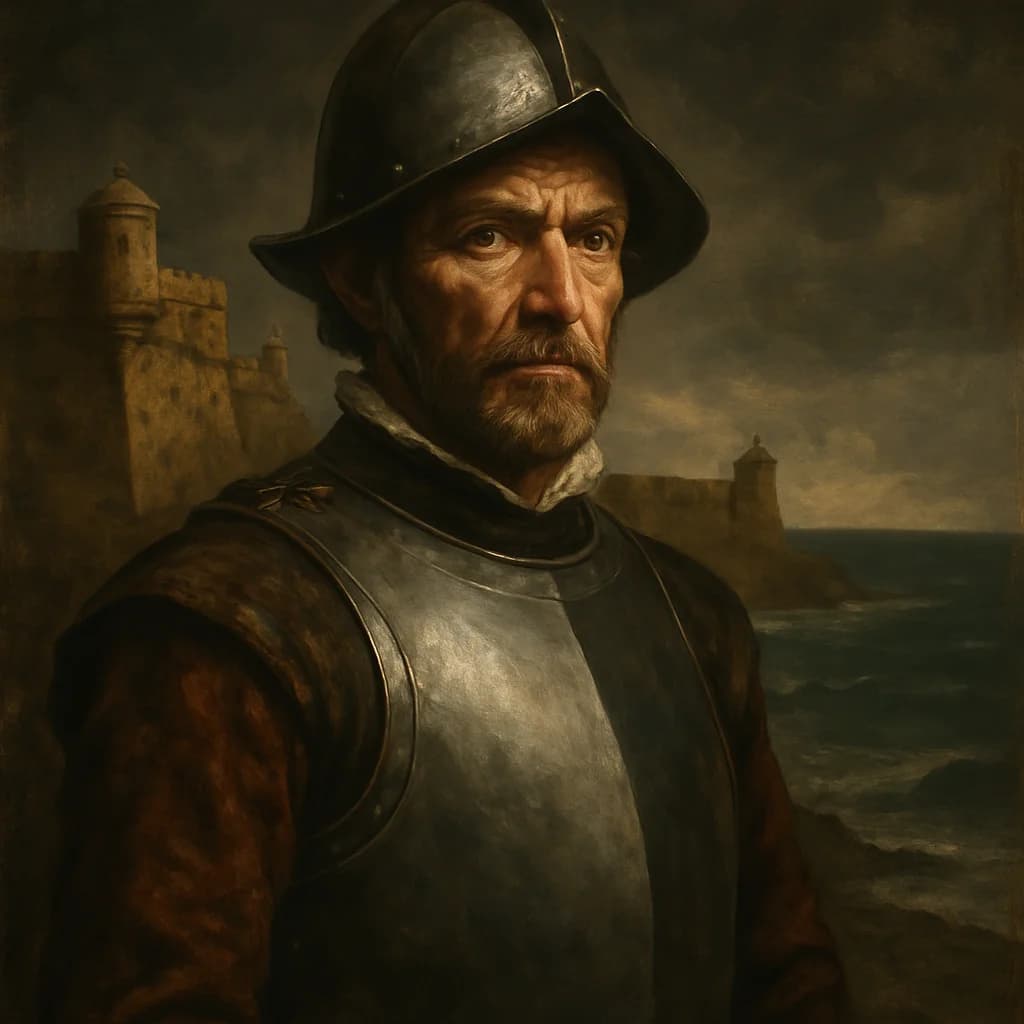
Afonso de Albuquerque
The man who built an empire by burning his own ships behind him wasn't trying to conquer the world. He was trying to bankrupt it.
Afonso de Albuquerque arrived in the Indian Ocean in 1509 with a startling strategy: destroy the economy, not just the enemy. While other conquistadors dreamed of gold and glory, this Portuguese noble understood something more devastating: control the trade routes, and you control everything else.
His method was ruthless accounting. Albuquerque didn't just capture ports; he calculated exactly which ones would strangle Muslim trade networks. When he seized Hormuz in 1515, he wasn't thinking about the fortress walls or the strategic harbor. He was thinking about the fact that every Persian rug, every bag of Indian spices, every Chinese silk had to pass through that narrow strait. Cut off Hormuz, and you could watch the Mamluk Empire's treasury slowly bleed to death.
The man who would become known as the "Portuguese Mars" was actually more like a medieval CFO with a fleet. He built his empire on a foundation of seized customs houses and redirected merchant ships. His conquest of Malacca in 1511 wasn't a military victory. It was a hostile takeover of Southeast Asian commerce. He understood that in a world where a single shipload of nutmeg could buy a palace, controlling the shipping lanes was worth more than controlling armies.
Albuquerque died in 1515, exhausted and largely forgotten by Lisbon, convinced he had failed. He had no idea that his network of fortified trading posts would outlast the very empire that sent him, some holding out for decades after Portugal itself had moved on to other obsessions.
Albuquerque once offered to sell the Ottoman Sultan a Portuguese-built fortress in India (while Portuguese troops were still defending it) as part of an elaborate bluff to convince the Ottomans that Portugal controlled more territory than it actually did.
Why untold: Military historians focus on his battles while economic historians ignore his warfare, leaving the synthesis of his commercial-military strategy largely unexplored.
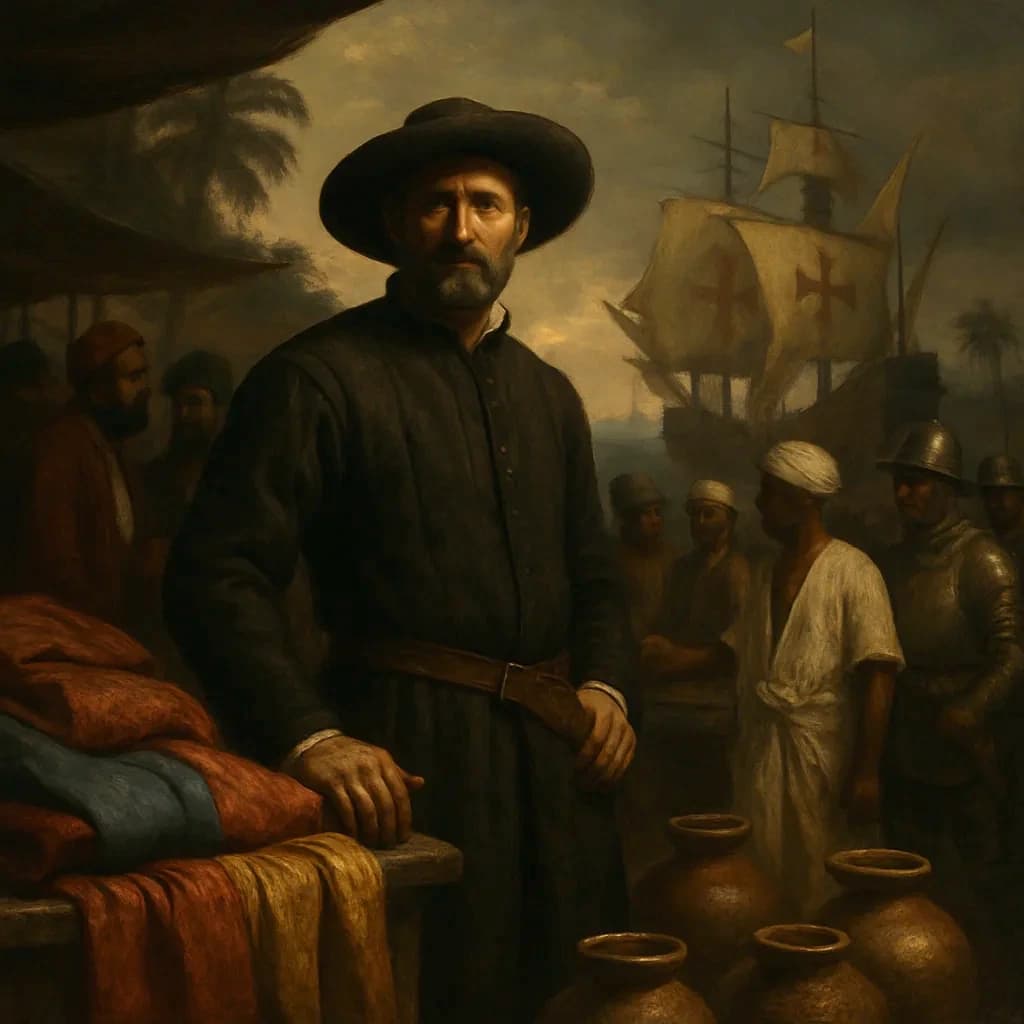
The Fabric Trader Who Handed Portugal Goa
A Genoese merchant showed up to a war with nothing but cloth samples, and walked away owning the most important port in Asia.
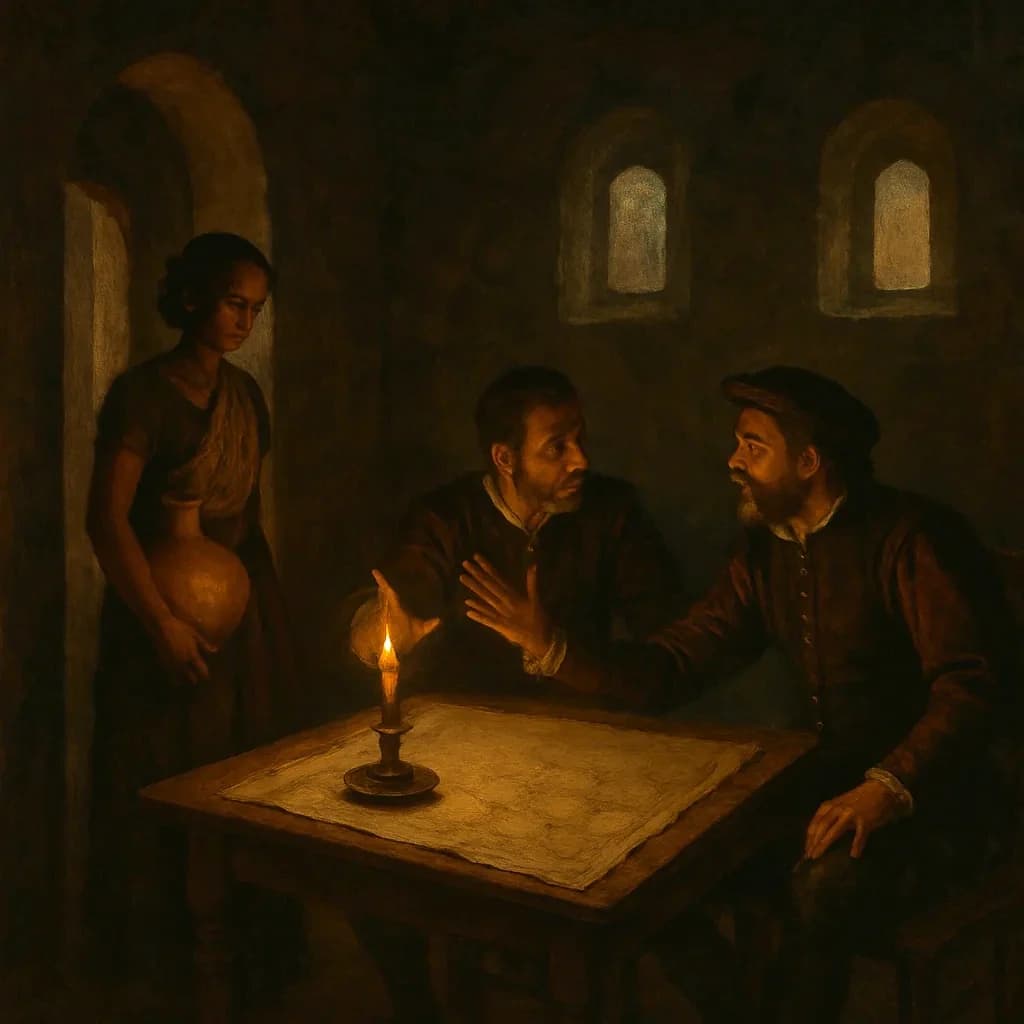
She Passed Portugal's War Secrets to Bijapur
A teenaged girl in a Portuguese trading post memorized everything the colonizers said, and then used it to destroy them.
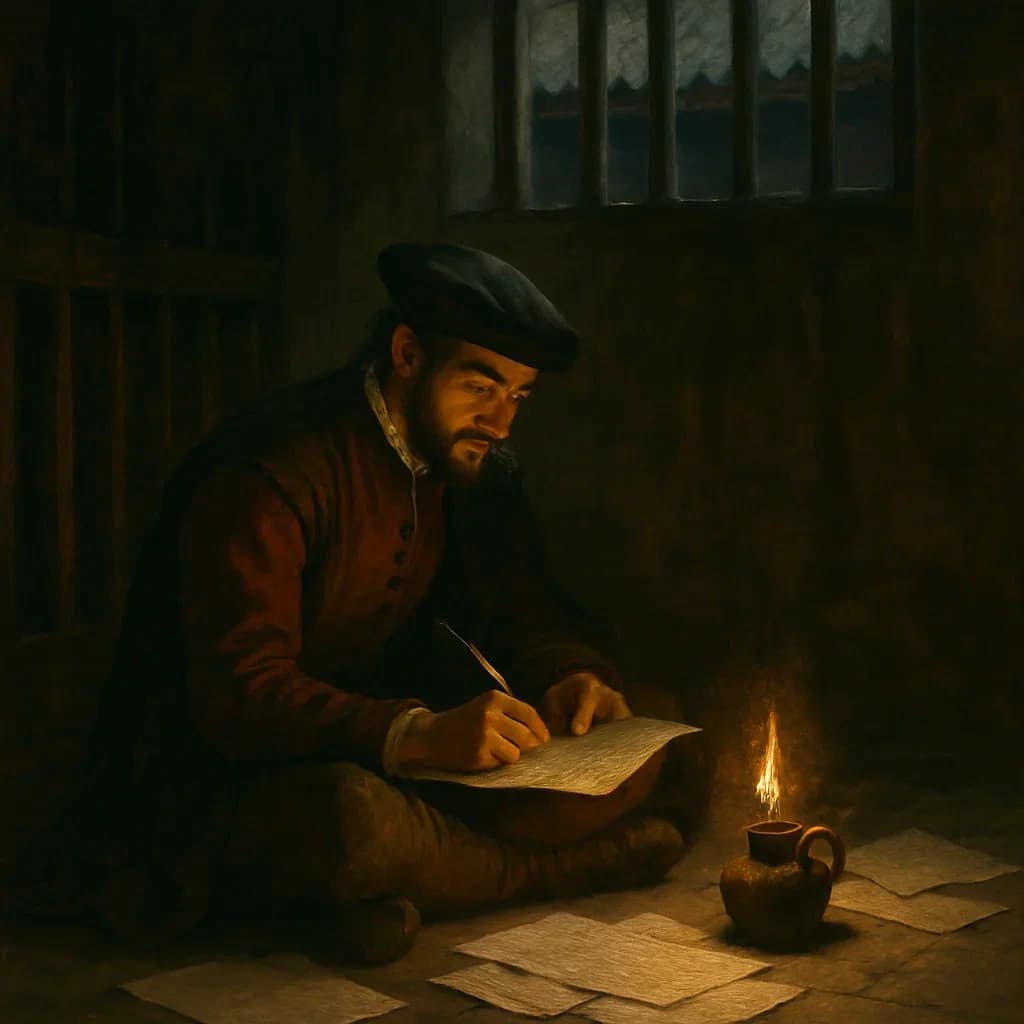
A Captive Mapmaker's Ransom Was the True Location of Asia
In 1520, a Portuguese mapmaker was offered his freedom in exchange for one thing: tell us where Asia really is.
Portugal Bought Malacca With a Ledger, Not Cannons
Armed with a ledger book and not a single soldier, one man conquered more territory than most emperors.
Fifty Years of Siege on an Island Everyone Forgot
A Portuguese garrison held a tiny island against overwhelming odds for half a century, long after their own empire had forgotten they existed.
- Sanjay Subrahmanyam, The Portuguese Empire in Asia, 1500-1700
- Roger Crowley, Conquerors: How Portugal Forged the First Global Empire
- João Paulo Oliveira e Costa, O Estado da Índia