
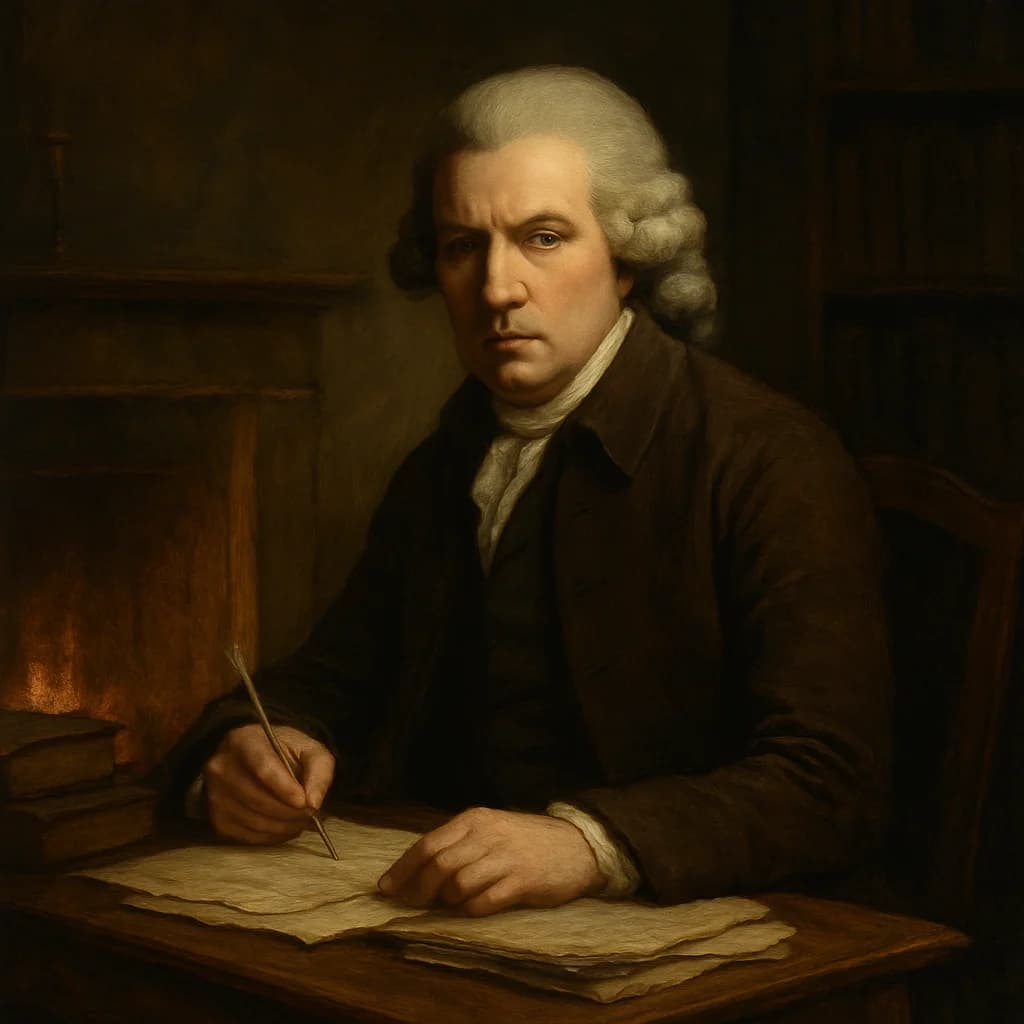
Adam Smith
The man who invented capitalism spent his final years burning most of his work and confessing he'd gotten everything wrong.
Adam Smith died in 1790 with a bonfire. For weeks before his death, he methodically fed manuscripts to the flames in his Edinburgh study: notes, drafts, entire volumes of research he'd accumulated over decades. His friends begged him to stop. Smith refused. Whatever he'd discovered in his final investigations, he deemed it too dangerous for publication.
The world remembers Smith for *The Wealth of Nations*, but he never intended to write about economics. He was a moral philosopher obsessed with human sympathy: how strangers could feel genuine concern for each other's suffering. His first book, *The Theory of Moral Sentiments*, argued that markets only worked when people cared about fairness and human dignity. He spent seventeen years writing it, agonizing over every sentence about ethics and emotion.
*The Wealth of Nations* came almost by accident. Smith had been hired to tutor a young duke on a grand tour of France, where he met the physiocrats, French economists who believed in natural economic laws. Their mathematical confidence intrigued him. But Smith's "invisible hand" appears exactly once in 900 pages, and he meant it as a warning: markets could work for good only when guided by moral sentiment and justice. Without those constraints, he argued, they'd create exactly the inequality and exploitation he witnessed in 18th-century Britain.
The burning manuscripts likely contained Smith's mature thoughts on this contradiction: how his moral philosophy and economic observations had evolved after watching decades of industrial change. He'd grown increasingly troubled by the gap between his idealistic market theory and the brutal realities of early capitalism. His housekeeper reported that in his final months, Smith spoke constantly about "unintended consequences" and "terrible misunderstandings."
Smith was so absent-minded that he once fell into a tanning pit while walking and talking with a friend, and another time put bread and butter in a teapot, drank it, and declared it the worst tea he'd ever tasted.
Why untold: Free-market advocates have claimed Smith as their patron saint while ignoring his moral philosophy and his own doubts about unconstrained capitalism.
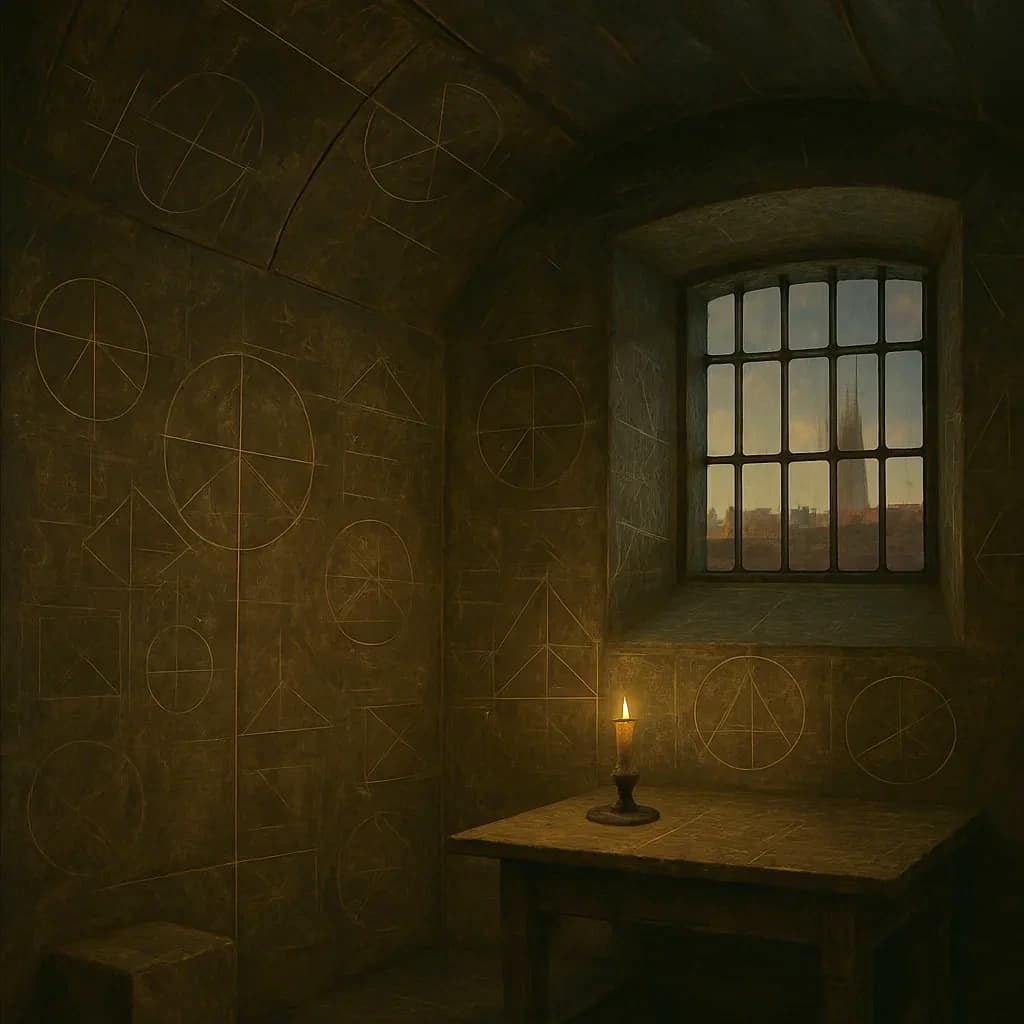
A Prince Invented Economics in a Venetian Prison
Locked in solitary confinement for seventeen years, a Habsburg prince filled the walls with math problems and laid the foundation of modern economics.
Slavery Lost the Argument on Money, Not Morality
A single sentence buried in Montesquieu's legal theory gave abolitionists the argument that slavery was economically irrational, and doomed an entire economic system.
- Nicholas Phillipson, *Adam Smith: An Enlightened Life* (2010)
- Jesse Norman, *Adam Smith: What He Thought, and Why it Matters* (2018)
- Ian Simpson Ross, *The Life of Adam Smith* (1995)